Published: July 31st, 2026
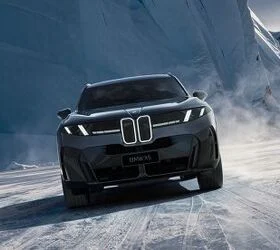
German automotive titans are currently navigating a turbulent period, marked by significant workforce reductions and comprehensive restructuring initiatives. BMW has initiated the process of laying off 8,000 employees, while Volkswagen has announced a plan to shed an estimated 35,000 jobs within Germany over the coming years. Globally, Volkswagen is reportedly considering even more substantial cuts, potentially impacting up to 100,000 positions. These widespread reductions underscore a profound industry-wide challenge, with German manufacturers often serving as an early indicator of broader automotive sector pressures.
BMW and Volkswagen: Deep Cuts Amidst Shifting Markets
The scale of BMW’s workforce reduction was first reported by The Guardian, which also highlighted parallel developments within the Volkswagen Group. Porsche, a subsidiary of Volkswagen, has concurrently announced 5,000 job cuts as part of its ongoing strategic realignment. These figures represent a stark reality for the legacy automakers, who are confronting a complex interplay of technological disruption, evolving market demands, and intense global competition.
Volkswagen’s ambitious restructuring, which includes the substantial domestic layoffs, signals a determined effort to streamline operations and adapt to a rapidly changing automotive landscape. The sheer magnitude of the potential global cuts at VW suggests a strategic pivot aimed at enhancing efficiency and competitiveness in a market increasingly defined by new entrants and evolving consumer preferences.
Mercedes-Benz: China’s Impact and Internal Efficiencies
Mercedes-Benz is also experiencing a significant impact, with notable layoffs occurring in China attributed to declining sales within the region. Beyond these market-specific challenges, the luxury automaker is simultaneously pursuing a national restructuring plan that includes offering voluntary buyouts to thousands of employees. This initiative is part of a longer-term strategy that has seen Mercedes-Benz exploring concepts such as optimizing working hours and accelerating production automation.
The drive for increased efficiency has been explicitly articulated by Mercedes-Benz CEO Ola Källenius. In June 2026, Källenius stated, "The cost per ‘hour must decrease – in development, sales, administration, and production … we should work more for the same pay in all areas." This statement reflects a broader industry trend where companies are seeking to reduce operational expenditures in response to mounting pressures.
Executive Compensation and the Widening Pay Gap
In a rare move that has garnered attention, Källenius himself took a 30 percent pay cut for the 2025 fiscal year, a period during which bonuses were withheld and compensation for the general workforce was reduced. While this gesture acknowledges the challenging economic climate for employees, it also highlights the persistent disparity in compensation. Källenius’s continued earnings in the millions stand in stark contrast to the wages of assembly line workers, underscoring a significant and widening pay gap between top executives and the broader workforce.
This disparity is a recurring theme in corporate America and globally, where the gap between executive compensation and that of average employees has expanded exponentially since the early 1980s. The narrative of CEOs receiving substantial severance packages even after company failures, while employees face job losses, is a source of considerable public frustration. While acknowledging that competent leadership can drive positive outcomes, the issue of disproportionate pay remains a critical point of discussion.
Underlying Industry Headwinds: Electrification, China, and Software
The struggles of German automakers are indicative of broader challenges facing the entire automotive industry. These include the costly and complex transition to electrification, the shifting dynamics of the Chinese market, and the integration of advanced software into vehicles.
The Electrification Gamble: High Costs, Lower Returns
Volkswagen Group was among the first legacy automakers to commit heavily to electrification, partly in response to past scrutiny over diesel emissions. Despite considerable investment and government subsidies, the widespread adoption of electric vehicles (EVs) has not always met initial expectations. The astronomical development costs associated with EV technology, coupled with a lower-than-anticipated consumer uptake rate, have transformed electrification into a significant financial burden for many manufacturers. While some automakers have found success, the overall "take rate" for EVs has often fallen short of projections, leading to considerable financial strain.
China’s Evolving Automotive Landscape
German brands were pioneers in establishing joint ventures with Chinese companies, anticipating sustained growth in the region. However, this strategy has had unintended consequences. The collaborative ventures have empowered Chinese companies with advanced foreign technology, enabling them to develop their own competitive domestic brands. Consequently, Chinese automakers are now increasingly capturing market share, posing a significant challenge to established foreign players. Both Porsche and Mercedes-Benz have publicly acknowledged the detrimental impact of the situation in China on their businesses, a sentiment echoed by BMW and other Volkswagen Group entities. The once-unending growth market has matured, and local competition has intensified dramatically.
The Software Dilemma: Promises and Pitfalls
The push into proprietary in-car software and connectivity, initially envisioned as a pathway to new revenue streams through partnered marketing, vehicle subscriptions, and data harvesting, has also encountered significant headwinds. While automakers believed integrated software would accelerate these new revenue streams, consumer enthusiasm for in-car technology has waned, with many drivers expressing dissatisfaction with the complexity and intrusiveness of modern automotive software.
The development of this software has proven to be exceedingly expensive. Volkswagen, for instance, invested billions in its in-house software subsidiary, only to face numerous delays and ultimately seek external solutions. Coding issues have become a pervasive problem as the industry transitions to "software-defined vehicles." Despite the emphasis on cybersecurity, the design of modern vehicles has inadvertently made them more susceptible to external attacks and data breaches, raising serious concerns about user privacy and vehicle security.
Geopolitical and Economic Pressures: Tariffs and Raw Materials
Beyond technological and market shifts, external economic and geopolitical factors are exacerbating the challenges. Tariffs have significantly increased the cost of exporting vehicles, further inflating prices for consumers who are already grappling with rising vehicle costs. Regional conflicts have also contributed to escalating raw material prices, allowing suppliers to dictate terms amid global uncertainty.
Government Regulations and Shifting Luxury Perceptions
Government emission regulations continue to play a crucial role, influencing vehicle design and appeal. The shift away from larger, more powerful engines, driven by stringent environmental standards, has potentially alienated some traditional luxury car buyers. The concept of luxury itself is being redefined, with automakers attempting to position advanced technology as the new premium offering. However, this effort is complicated by the increasing trend of making formerly standard features subscription-based. While some brands may offer enhanced infotainment systems, many core functionalities can now be replicated by mainstream rivals at a lower price point. Without the traditional advantages of more potent powertrains, enhanced reliability, or superior comfort, the value proposition of many luxury vehicles is being questioned.
A Harbinger for the Industry
The challenges faced by German automakers serve as a critical case study for the entire automotive sector. As BMW stated in response to its planned layoffs, the company is "proactively shaping the profound changes taking place in its operating environment. These include the technological transformation of the automotive industry, geopolitical uncertainties, changing market conditions and developments in China."
The industry as a whole would be well-advised to monitor the strategies and outcomes of these German brands. The solutions they develop to navigate these complex issues could offer valuable insights and potentially provide a roadmap for other manufacturers facing similar, albeit varying, degrees of severity. The current turbulence in the German automotive sector is not an isolated event but a signal of broader transformations that will likely shape the future of personal transportation globally.
[Images: BMW, Mercedes-Benz, Volkswagen Group]
Become a TTAC insider. Get the latest news, features, TTAC takes, and everything else that gets to the truth about cars first by subscribing to our newsletter.