The landscape of space exploration and utilization is undergoing a profound transformation, marked by a rapid acceleration in technological innovation, ambitious missions, and an expanding roster of state and commercial actors. From breakthroughs in rocket propulsion and the establishment of robust orbital infrastructures to pioneering deep space scientific discoveries and the foundational steps towards lunar colonization, humanity’s engagement with the cosmos is more dynamic and multifaceted than ever before. This era is characterized by a drive for faster development cycles, enhanced orbital capabilities, strategic defense mechanisms, and a deeper understanding of the universe, all while navigating the inherent complexities and challenges of the space environment.
Advancements in Space Propulsion and Launch Systems
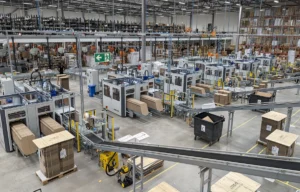
A cornerstone of this new space age is the relentless pursuit of more efficient, cost-effective, and rapidly manufacturable propulsion systems. Recent developments underscore a significant shift towards additive manufacturing (3D printing) for critical rocket components. A new 3D-printed rocket engine, for instance, has emerged as a game-changer, promising to enable faster test-and-learn cycles and rapid production. This innovation dramatically reduces the time and cost associated with traditional manufacturing processes, which often involve complex machining and assembly of numerous parts. Companies like Relativity Space have championed this approach, aiming to print entire rockets, significantly streamlining the supply chain and allowing for greater design flexibility. The implications are far-reaching, from accelerating the development of next-generation launch vehicles to democratizing access to space by lowering launch costs.
Concurrently, the operational prowess of current systems continues to advance. SpaceX’s Starship, a fully reusable super heavy-lift launch vehicle, recently achieved its most successful splashdown yet following a flight that launched Starlink satellites. This milestone highlights the growing maturity of reusable rocket technology, which is central to reducing the cost of space access and enabling ambitious missions to Mars and beyond. The ability to reliably launch and recover such massive vehicles is critical for deploying large satellite constellations, ferrying cargo and crew to orbital stations, and supporting future deep-space endeavors. The continuous iteration and improvement of systems like Starship are testament to an engineering philosophy that prioritizes rapid development and learning from flight experience.
Beyond traditional rocket propulsion, the broader field of advanced flight is also seeing a resurgence, with the "supersonic comeback" drawing closer than it has been in decades. While primarily focused on atmospheric flight, advancements in supersonic and hypersonic technologies have direct implications for future space transportation, including point-to-point travel and advanced launch assist systems. Companies like Boom Supersonic are developing new commercial aircraft capable of exceeding the speed of sound, leveraging cutting-edge materials and aerodynamic designs. This push for speed and efficiency in atmospheric flight could eventually converge with space launch technologies, creating new paradigms for accessing and utilizing space.
Securing Earth Orbit: Satellite Networks and Defense Strategies
The proliferation of satellites in Earth’s orbit has necessitated equally advanced systems for communication, navigation, observation, and defense. The US Space Force is set to benefit from next-gen "flatellites" developed by Rocket Lab, designed to help track airborne threats. These compact, often mass-produced satellites represent a trend towards distributed sensing and robust constellation architectures, enhancing space domain awareness and providing critical data for national security. The ability to deploy numerous small, specialized satellites quickly and efficiently allows for resilient surveillance capabilities, making it harder for adversaries to disrupt or evade detection.
Reinforcing vital infrastructure, the US has also approved the world’s first private constellation to strengthen navigation, serving as a crucial GPS backup. The Global Positioning System (GPS) is integral to modern life, but its vulnerabilities to jamming, spoofing, and even solar events necessitate redundant solutions. Private constellations offer an independent and resilient alternative, ensuring continuity of navigation and timing services for critical civilian and military applications. This move underscores a growing recognition of space as a critical infrastructure domain that requires diversification and commercial participation for enhanced security.
Innovations in satellite autonomy are also transforming orbital operations. The US Air Force (USAF) has successfully demonstrated an onboard neural network that guides satellites, significantly reducing the need for ground control. This artificial intelligence integration allows satellites to make real-time decisions, respond to anomalies, and execute complex maneuvers autonomously. Such capabilities enhance operational efficiency, reduce latency, and free up valuable ground control resources, paving the way for more sophisticated and resilient space architectures, especially for rapidly evolving military and intelligence applications.
The growing complexity of orbital activity also demands advanced tools for tracking and identifying objects. Quantum-inspired software is emerging as a powerful solution, capable of shrinking models by 99% to identify unknown objects in orbit. This technology is vital for space situational awareness, helping to differentiate between active satellites, space debris, and potential threats. By leveraging quantum computing principles, these systems can process vast amounts of data more efficiently, providing clearer insights into the increasingly crowded orbital environment and supporting collision avoidance strategies.
Beyond tracking, active defense against celestial threats is becoming a tangible reality. China has proposed a deep-impact nuclear strategy to deflect Earth-threatening asteroids, a bold concept that highlights the global concern over planetary defense. This follows China’s preparations to hit an asteroid using a projectile traveling at 26 times the speed of sound, demonstrating a kinetic impactor approach. These initiatives, while varying in methodology, signify a serious global commitment to protecting Earth from potentially catastrophic asteroid impacts. The concept of kinetic impactors involves slamming a spacecraft into an asteroid to alter its trajectory, a method successfully demonstrated by NASA’s DART mission. Nuclear options, while controversial, are considered for larger, more immediate threats where kinetic impact might be insufficient. These efforts raise complex questions about international cooperation, ethical considerations, and the governance of such powerful defensive capabilities.
Another fascinating orbital concept is the development of a new "space mirror" satellite, which aims to bring sunlight to Earth even during the night. While seemingly futuristic, this technology could offer solutions for illuminating disaster zones, providing temporary light for agricultural purposes, or even augmenting solar power collection in specific regions. Such projects push the boundaries of how orbital assets can directly impact terrestrial life and infrastructure.
The New Lunar Rush: Infrastructure, Resource Utilization, and Deep Space Ambitions
The Moon is rapidly re-emerging as a focal point for international space efforts, not merely as a scientific target but as a strategic outpost for future human expansion. A mission-ready Moon excavation system, developed by Interlune and Vermeer, is targeting 2028 for NASA’s lunar base construction. This autonomous equipment is crucial for in-situ resource utilization (ISRU), enabling the extraction of water ice, helium-3, and other valuable materials from the lunar regolith. The ability to "live off the land" on the Moon will drastically reduce the logistical burden and cost of establishing and sustaining a permanent human presence, paving the way for research stations, mining operations, and even a stepping stone for missions to Mars.
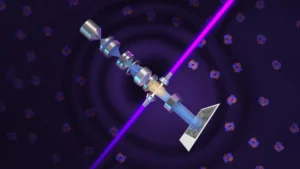
Adding to the lunar infrastructure proposals, China has outlined plans for a laser-powered energy tower near the Moon’s south pole to transmit wireless power. This ambitious project seeks to harness solar energy in the perpetually sunlit regions of the lunar poles and wirelessly beam it to other areas, including lunar bases or rovers operating in shadowed craters. Such a system could provide a sustainable and versatile power grid for future lunar operations, overcoming the challenges of long lunar nights and enabling continuous activity.

However, the increasing activity in space also carries consequences for celestial bodies. A SpaceX rocket piece is notably on a collision course with the Moon, expected to crash at 5,400 mph. While this particular incident stems from a discarded upper stage of a Falcon 9 rocket from a 2015 mission, it underscores the growing problem of space debris not only in Earth orbit but also impacting other bodies in our solar system. The impact of such objects can create new craters, disturb pristine lunar environments, and, in some cases, provide unexpected scientific observation opportunities for astronomers.
Pioneering Deep Space: Scientific Discoveries and the Search for Life
Beyond Earth’s immediate vicinity, humanity’s quest to understand the universe continues unabated, driven by powerful new telescopes and analytical techniques. Recent years have yielded discoveries of "7 strangest objects discovered in the Universe," proving that reality is often weirder than fiction. These findings include exotic phenomena like hypervelocity stars, rogue planets, and peculiar cosmic structures that challenge existing astrophysical models. Each discovery expands our understanding of the fundamental laws governing the cosmos and the incredible diversity of celestial bodies and events.
Similarly, the identification of "7 most stunning exoplanets discovered in recent years" fuels the excitement surrounding the search for life beyond Earth. These exoplanets range from potentially habitable worlds orbiting distant stars to gas giants with bizarre atmospheric conditions, offering tantalizing clues about planetary formation and evolution. Advanced telescopes, such as the James Webb Space Telescope, are providing unprecedented insights into the atmospheres of these distant worlds, searching for biosignatures that could indicate the presence of life.
The ongoing search for extraterrestrial intelligence (SETI) is also evolving. Astronomers are rethinking where to hunt for alien signals, moving beyond traditional radio frequencies to explore new avenues, including optical signals, neutrinos, or even subtle gravitational wave patterns. This shift reflects a maturing scientific approach, acknowledging the vastness of potential communication methods and the need to broaden our search strategies to maximize the chances of detection.
Cutting-Edge Research and Commercialization
The space environment itself is becoming a laboratory and a platform for unprecedented commercial ventures. SpaceX’s collaboration with Nvidia exemplifies this, as the company picks Nvidia’s Rubin chips as the brain of the Starmind AI1 orbital data center satellite. This initiative heralds the advent of "edge computing" in space, where data processing and AI computations occur directly in orbit rather than being transmitted back to Earth. This capability is critical for missions requiring real-time analytics, such as advanced Earth observation, autonomous satellite operations, and rapid response systems, significantly reducing latency and bandwidth demands.
In a pioneering medical breakthrough, kidney and liver tissues were printed in space, addressing a critical Earth problem. The microgravity environment offers unique advantages for bioprinting, allowing for the creation of more complex and robust tissue structures than often possible on Earth. This research holds immense promise for regenerative medicine, organ transplantation, and drug development, potentially revolutionizing healthcare by providing new ways to grow human tissues and organs. It also represents a significant step towards enabling long-duration human spaceflight and potential off-world settlements by ensuring the availability of medical solutions independent of Earth.
Challenges and the Path Forward
Despite the rapid advancements, the space sector faces significant challenges. The increasing number of launches and deployed satellites contributes to the growing problem of space debris, posing a threat to active spacecraft and future missions. Events like the SpaceX booster’s collision course with the Moon highlight the need for comprehensive space traffic management and debris mitigation strategies. The long-term sustainability of orbital environments hinges on international cooperation and adherence to responsible space practices.
Technical failures, though less frequent, also underscore the inherent risks of space operations. NASA’s Swift rescue spacecraft, a mission primarily dedicated to detecting gamma-ray bursts, recently spun out of control after losing two reaction wheels. Such incidents illustrate the fragility of space hardware and the complexities of remote diagnostics and recovery efforts. Maintaining and repairing assets in orbit remains a significant hurdle, though advancements in robotic servicing (like Northrop’s robotic spacecraft launched by SpaceX to extend satellite life without refueling) are beginning to address this.
The convergence of scientific, commercial, and military uses of space also creates complex governance and coordination challenges. The approval of private GPS constellations, the deployment of military-focused flatellites, and national asteroid defense proposals all highlight the need for robust international frameworks to ensure peaceful and sustainable use of outer space.
Implications for Humanity
The current surge in space endeavors holds profound implications for humanity. Technologically, these innovations push the boundaries of engineering, materials science, and artificial intelligence, yielding benefits that often trickle down to terrestrial applications. Economically, the burgeoning space industry is creating new markets, jobs, and investment opportunities, with commercial entities playing an increasingly dominant role alongside traditional government agencies.
Scientifically, our understanding of the universe is expanding at an unprecedented rate, from the discovery of exotic cosmic phenomena to the identification of potentially habitable exoplanets. This knowledge not only satisfies our innate curiosity but also reshapes our philosophical understanding of our place in the cosmos. The practical applications, such as enhanced navigation, global communication, and climate monitoring, directly improve quality of life on Earth.
Ultimately, humanity is on the cusp of transitioning from merely observing space to actively inhabiting and utilizing it. The foundational work in propulsion, orbital infrastructure, lunar exploration, and advanced research sets the stage for a future where humanity is a multi-planetary species, capable of sustainably expanding its presence and capabilities beyond Earth. This ongoing journey into space is not just about rockets and satellites; it is about extending the reach of human ingenuity, fostering international cooperation, and securing a more resilient and inspiring future for generations to come.