Gordon Murray Automotive (GMA) has officially pulled back the curtain on its latest creation, the S1, a remarkable modern-day tribute designed to evoke the spirit and engineering prowess of the iconic McLaren F1 supercar. This highly anticipated release from GMA’s Special Vehicles division represents a distinct evolution from its predecessor, the S1 LM, offering a more refined and touring-focused interpretation of Murray’s seminal automotive masterpiece.
While the S1 LM, revealed just last year, drew its inspiration from the formidable F1 GTR that conquered the Le Mans 24 Hours, the new S1 shifts its focus to the original 250mph F1 road car. This fundamental reorientation has led to a comprehensive redesign, most notably a complete rebodying of the vehicle. The styling has been deliberately softened, moving away from the aggressive, track-oriented aerodynamics of the S1 LM. Instead, the S1’s design is "optimised for mechanical grip, rather than high downforce," a philosophy that harks back to the nuanced handling characteristics of the original F1.
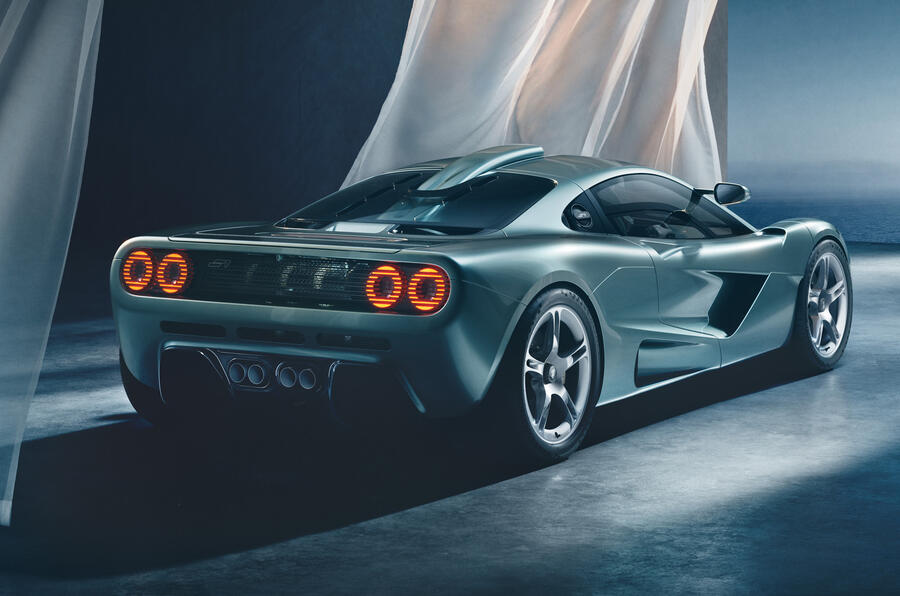
The visual departure from the S1 LM is immediate and significant. The colossal rear wing, the aggressive race-style front splitter, and the deep side skirts, all hallmarks of the LM variant, have been removed. In their place, a new, sophisticated active aerodynamic system has been integrated at the rear. This advanced technology works subtly to maintain exceptional road-holding at high velocities without the visual drama of a fixed, oversized wing. This approach underscores GMA’s commitment to balancing extreme performance with a more accessible driving experience.
Further differentiating the S1 are its newly designed headlights. These feature integrated running lights, providing a distinct visual signature that sets it apart from the S1 LM and subtly references the illuminated elements of contemporary performance vehicles. Complementing the updated lighting are a set of new, lightweight wheels. These are not merely a styling choice; they are directly inspired by an early design concept for the McLaren F1 that Gordon Murray himself presented in 1992, adding a layer of historical continuity and bespoke design.
In terms of its dynamic capabilities, the S1 offers a more compliant ride compared to the S1 LM. It sits 10mm higher, a seemingly minor adjustment that contributes to a more comfortable experience over varied road surfaces. The suspension system has been meticulously tuned for increased compliance, yet GMA asserts that this comes with a "minimal penalty to steering precision and feedback." This fine-tuning is a testament to the engineering philosophy that underpins all of Gordon Murray’s creations: a relentless pursuit of an engaging and communicative driving experience, even in a more comfort-oriented package.
At its core, the S1 shares its fundamental architecture with the already acclaimed GMA T50. This means it is powered by the same extraordinary 681bhp, 4.2-litre Cosworth V12 engine, paired with a manual gearbox. However, for the S1, this potent powertrain has been reconfigured to deliver a broader torque range. This adjustment is crucial for its intended purpose, facilitating "effortless touring" and making the V12’s immense power more accessible and usable in a wider array of driving scenarios, from relaxed cruising to spirited acceleration.

Despite its less hardcore remit and the inclusion of a higher-specification cockpit, the S1 presents a compelling paradox. The cabin boasts three leather-clad seats, a more robust sound system, and enhanced sound deadening for a more refined atmosphere. Yet, remarkably, the carbonfibre-bodied S1 tips the scales at a lower weight than the standard T50. This achievement highlights GMA’s unwavering dedication to lightweight construction, a core principle that has defined Gordon Murray’s career and remains central to the performance envelope of his vehicles.
The S1 is positioned as a more accessible, though still exceptionally exclusive, proposition than the S1 LM. While only five units of the LM were planned for production, the S1 will see a slightly larger run of 64 units. This increased production number allows GMA to bring the essence of the McLaren F1 experience to a broader, albeit still select, group of enthusiasts.
A Legacy Reimagined: The Genesis of the S1
The unveiling of the S1 is not an isolated event but rather the culmination of Gordon Murray’s ongoing project to celebrate and reinterpret the legacy of the McLaren F1. Murray, a visionary engineer renowned for his groundbreaking work at McLaren, including the design of the F1, has consistently expressed a desire to create vehicles that capture the magic of his most famous creation. The T50, launched in 2020, was the first major step in this direction, serving as a spiritual successor to the F1, complete with a central driving position and a naturally aspirated V12 engine.
The S1 LM followed in 2023, demonstrating GMA’s capability to produce highly specialized, track-focused variants. Its design was a direct nod to the F1 GTR’s racing pedigree, incorporating elements like a larger splitter, a substantial rear wing, and a focus on extreme aerodynamic downforce. This variant was a clear statement of intent, showcasing the extreme performance potential derived from the T50’s platform.
The introduction of the S1 signifies a natural progression in this narrative. After exploring the track-focused capabilities of the S1 LM, GMA has turned its attention to the road-going aspect of the F1’s legacy. The original F1 road car, while immensely fast and capable, was also lauded for its surprising usability and comfort for a car of its performance class. The S1 aims to capture this duality, offering a supercar experience that can be enjoyed on longer journeys as well as spirited drives. This thoughtful evolution demonstrates a deep understanding of what made the F1 so special beyond its outright speed.
Engineering for the Road: Key Differentiators of the S1
The distinction between the S1 and its predecessors lies in several key engineering choices, all aimed at enhancing the road-going experience without compromising the core performance DNA.
Aerodynamics: From Downforce to Down-to-Earth
The most apparent change is the revised aerodynamic philosophy. The S1 eschews the extreme downforce-generating elements of the S1 LM. This decision is rooted in the understanding that excessive downforce can negatively impact ride comfort and high-speed stability on public roads. The new active aero system at the rear is designed to be more intelligent and adaptive, providing stability and grip when needed without the constant drag and stiffness associated with large wings. This approach allows for a more fluid and less intrusive aerodynamic presence, contributing to a quieter and more comfortable ride.
Suspension and Ride Height: Comfort Meets Control
The 10mm increase in ride height, coupled with suspension tuning for greater compliance, directly addresses the practicality of the S1 as a touring vehicle. While many supercars compromise ride comfort for outright handling, the S1 prioritizes a more forgiving suspension setup. GMA’s claim of minimal compromise to steering precision is a significant engineering feat, suggesting that the chassis and steering systems are so inherently well-designed that they can absorb more road imperfections without sacrificing driver feedback. This balance is crucial for a car intended for longer distances.
Powertrain Calibration: Effortless Performance
The reconfigured V12 engine with its broader torque range is central to the S1’s touring focus. While the peak horsepower remains impressive, the emphasis on a more accessible and usable torque curve means that drivers will experience stronger, more immediate response at lower engine speeds. This translates to easier overtaking, smoother acceleration from a standstill, and a more relaxed driving experience when not pushing the car to its limits. The manual gearbox, a non-negotiable element for enthusiasts, ensures that the driver remains fully engaged with the mechanical symphony of the V12.
Interior Refinements: A Sanctuary of Speed
The enhancements to the cockpit further solidify the S1’s touring credentials. The inclusion of three leather seats, a more powerful sound system, and increased sound deadening transforms the cabin from a spartan environment to a more luxurious and comfortable space. This not only makes long journeys more enjoyable but also broadens the appeal of the S1 to those who appreciate a refined interior as much as blistering performance. The three-seat configuration, a direct homage to the F1’s unique layout, remains a signature feature.
Production and Market Position: A More Accessible Icon
With 64 units planned, the S1 represents a significant increase in production volume compared to the ultra-exclusive S1 LM. This strategic decision by GMA allows for a wider distribution of its modern interpretation of the F1. While still a highly limited and exclusive vehicle, the S1 is positioned to reach a larger segment of the ultra-luxury supercar market. This move suggests a growing confidence in the brand and its ability to meet demand for its meticulously crafted automobiles.
The S1 is not merely a car; it is a statement of automotive reverence. It aims to capture the essence of what made the McLaren F1 a legend: its groundbreaking engineering, its exhilarating performance, and its surprising duality. By focusing on a more touring-oriented experience, Gordon Murray Automotive has crafted a vehicle that honors the F1’s road-going capabilities, offering a compelling blend of comfort, usability, and the raw, visceral thrill that only a naturally aspirated V12 engine and a manual gearbox can provide. This latest creation is poised to carve out its own significant chapter in the enduring legacy of Gordon Murray’s automotive genius.