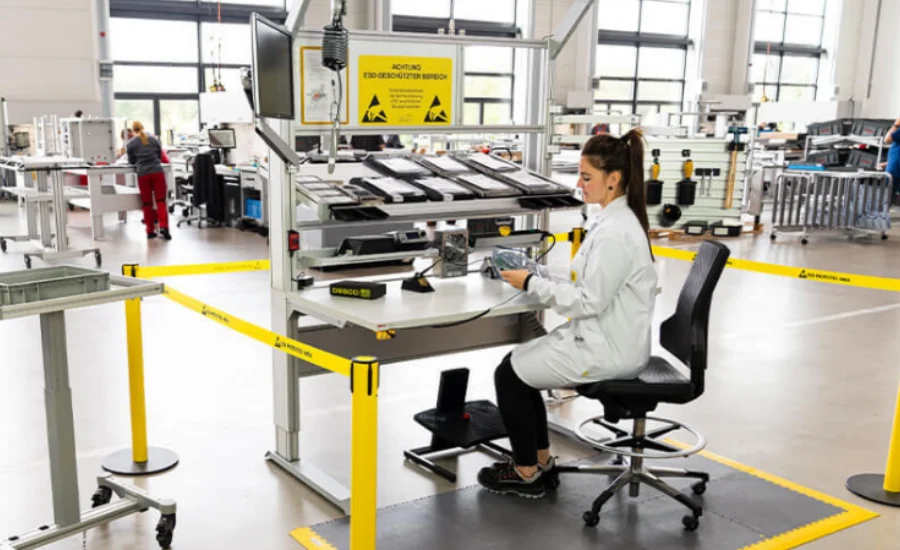
The introduction of the item Work Bench System marks a significant advancement in manufacturing solutions for the medical production sector, directly addressing critical industry demands for superior quality, stringent compliance, and optimized productivity. This innovative system, characterized by its ergonomic, height-adjustable, and modular design, empowers medical production teams to operate with unparalleled precision, comfort, and flexibility. By fostering clean and efficient workflows, the item Work Bench System offers a robust framework that can rapidly adapt to the ever-evolving landscape of medical products, manufacturing processes, and complex regulatory requirements, thereby setting a new benchmark for operational excellence in a highly sensitive industry.
The Imperative for Precision and Adaptability in Medical Manufacturing
The medical device and pharmaceutical manufacturing sectors are unique in their absolute reliance on precision, sterility, and unwavering adherence to regulatory standards. Unlike many other industries, errors in medical production can have profound, life-altering consequences, necessitating manufacturing environments that minimize risk at every turn. Furthermore, the industry is in a perpetual state of flux, driven by rapid technological advancements, emerging medical discoveries, and increasingly personalized healthcare solutions. This dynamism demands manufacturing infrastructure that is not only robust and reliable but also inherently adaptable. Traditional fixed workstations often struggle to keep pace with these demands, leading to inefficiencies, ergonomic issues for operators, and difficulties in scaling or reconfiguring production lines for new products or processes. The item Work Bench System directly confronts these challenges by providing a foundational element for a modern, responsive manufacturing ecosystem.
Ergonomics as a Cornerstone of Quality and Well-being
One of the most critical features of the item Work Bench System is its emphasis on ergonomics. In environments where intricate tasks are performed repeatedly over long durations, the physical well-being of operators is paramount, not just for their health but also for maintaining product quality. Musculoskeletal disorders (MSDs) are a prevalent issue in manufacturing, leading to absenteeism, reduced productivity, and increased healthcare costs. A 2022 report by the Bureau of Labor Statistics indicated that MSDs account for a significant portion of all non-fatal occupational injuries and illnesses requiring days away from work. For precision tasks, even minor discomfort can lead to decreased concentration, increased error rates, and ultimately, compromised product quality.
- Mitigating Musculoskeletal Disorders (MSDs): The height-adjustable nature of the item Work Bench System allows each operator to customize their workstation to their optimal working posture, whether standing or sitting. This adjustability reduces static loading on muscles, minimizes awkward postures, and promotes natural movement, significantly lowering the risk of back pain, wrist injuries (like carpal tunnel syndrome), and other common MSDs. By enabling operators to alternate between standing and sitting, the system combats fatigue and improves circulation, crucial for maintaining focus during extended periods of detailed work.
- Enhancing Operator Comfort and Focus: A comfortable operator is a focused operator. When physical discomfort is minimized, cognitive resources can be fully dedicated to the task at hand, leading to fewer errors and higher quality output. The ergonomic design also extends to the logical arrangement of tools, components, and displays, ensuring everything is within easy reach and sight, reducing unnecessary movements and cognitive load. This holistic approach to ergonomics not only safeguards employee health but also directly contributes to the consistency and precision vital for medical device assembly. Industry studies often highlight a direct correlation between ergonomic improvements and a reduction in product defects, sometimes by as much as 15-20% in precision manufacturing settings.
Modularity and Flexibility: Adapting to a Dynamic Industry
The medical manufacturing landscape is characterized by rapid innovation and diverse product portfolios, ranging from intricate surgical instruments to complex diagnostic equipment. This necessitates production lines that can quickly reconfigure to accommodate new product launches, varying production volumes, or specialized processes. The modularity of the item Work Bench System is a direct response to this need.
- Supporting Lean Manufacturing Principles: The system’s modular design inherently supports lean manufacturing principles, which aim to eliminate waste and maximize efficiency. Workstations can be easily scaled up or down, reconfigured, or moved to optimize workflow for different product lines or batch sizes. This flexibility allows manufacturers to implement single-piece flow, U-shaped cells, or other lean layouts without significant downtime or investment in new infrastructure. The ability to quickly adapt layouts minimizes work-in-progress, reduces lead times, and improves overall operational agility.
- Rapid Process Changeovers and Scalability: In an industry where time-to-market can be a critical competitive advantage, the ease of reconfiguring production lines is invaluable. The item Work Bench System allows for rapid changeovers between product variants or entirely new products, reducing the downtime traditionally associated with retooling. Components, fixtures, and accessories can be swapped out efficiently, enabling manufacturers to respond swiftly to market demands or regulatory updates. This scalability also means that a company can start with a smaller setup and expand as production needs grow, offering a future-proof investment that evolves with the business.
Ensuring Uncompromising Quality and Regulatory Compliance
For medical production, quality and compliance are non-negotiable. Regulatory bodies such as the FDA in the United States, the European Medicines Agency (EMA), and other international authorities impose stringent requirements on manufacturing processes, documentation, and product traceability. The item Work Bench System is designed to inherently support these critical aspects.
- Reducing Human Error and Rework: A well-organized, ergonomically sound, and intuitively designed workstation directly contributes to reducing human error. When operators are comfortable, have clear access to tools and instructions, and work within a logical flow, the chances of mistakes decrease significantly. This reduction in errors translates to fewer defective products, less rework, and a substantial decrease in scrap rates, which is particularly costly in medical manufacturing due given the high value of materials and components. By minimizing distractions and optimizing the physical environment, the system creates conditions conducive to consistent, high-quality output, a cornerstone of regulatory approval and patient safety.
- Streamlined Validation and Auditing Processes: Compliance often involves rigorous documentation and validation of manufacturing processes. Workstations that promote consistent workflows and provide integrated solutions for data capture (e.g., through digital displays or integrated sensors) can significantly streamline these efforts. The structured and standardized nature of the item Work Bench System components can simplify process validation, as changes to the physical setup are easier to document and control. During audits, a clean, organized, and ergonomic production environment reflects positively on a manufacturer’s commitment to quality management systems, such as ISO 13485 (Medical devices – Quality management systems – Requirements for regulatory purposes). The transparency and orderliness supported by such systems can make audit processes smoother and more efficient.
Quantifiable Gains: Boosting Productivity and Efficiency
Beyond quality and compliance, the tangible benefits of the item Work Bench System extend directly to enhanced productivity and operational efficiency. These improvements are critical for maintaining competitive advantage in a global market.
- Optimized Workflow and Throughput: By providing a customizable and logical layout for tools, parts, and information, the system optimizes the workflow for each specific task. This reduces wasted motion, minimizes search times for components, and ensures a smooth, uninterrupted production flow. The result is often a measurable increase in throughput and cycle time reduction. For instance, studies on workstation optimization in manufacturing have shown productivity gains ranging from 10% to 30% simply by improving ergonomics and layout efficiency. This directly impacts a manufacturer’s capacity to meet demand and improve delivery schedules.
- Investment in Workforce Retention: In an era of skilled labor shortages, attracting and retaining talent is a major concern for manufacturers. Investing in advanced, ergonomic workstations signals a company’s commitment to employee well-being and provides a more appealing work environment. Operators who feel valued and are provided with tools that minimize physical strain are more likely to be satisfied, productive, and less likely to seek employment elsewhere. This reduction in turnover saves significant costs associated with recruitment and training, further contributing to overall productivity.
Industry Perspectives: Expert Insights on Advanced Workstation Solutions
Industry analysts and manufacturing leaders increasingly recognize the strategic importance of advanced workstation solutions like the item Work Bench System. "The shift towards highly specialized and often personalized medical devices demands a manufacturing infrastructure that is not only robust but also inherently agile," states Dr. Evelyn Reed, a leading consultant in medical manufacturing operations. "Systems that integrate ergonomics, modularity, and digital readiness are no longer a luxury but a fundamental necessity for companies aiming to stay competitive and compliant in this rapidly evolving sector."
A hypothetical product manager for item, Sarah Chen, elaborates on the design philosophy: "Our goal with the Work Bench System was to create a solution that empowers the operator while simultaneously enhancing the overall production process. We focused on intuitive adjustability and a vast array of modular components to ensure that each workstation can be precisely tailored, not just to the task, but to the individual performing it. This human-centric approach, we believe, is key to unlocking new levels of precision and efficiency in medical production."
Furthermore, a representative from a fictional medical device manufacturer, "MediTech Innovations," shared their perspective: "Implementing modern, adaptable workstations has been transformative for our assembly lines. We’ve seen a noticeable improvement in operator morale, a reduction in quality control issues linked to human error, and a remarkable ability to reconfigure our lines with minimal disruption when we introduce new products. It’s an investment that pays dividends in both tangible productivity gains and intangible benefits like a healthier, more engaged workforce."
The Broader Implications: Shaping the Future of Medical Production
The adoption of advanced workstation systems like the item Work Bench System is indicative of a broader trend in manufacturing towards Industry 4.0 and smart factory concepts. These systems are foundational elements that enable greater automation, data integration, and predictive maintenance. By providing a stable, adaptable, and ergonomically optimized platform, they facilitate the seamless integration of robotics, augmented reality tools for assembly guidance, and sensors for real-time performance monitoring.
In the long term, such systems contribute to a more resilient supply chain within the medical sector. The ability to quickly pivot production, scale operations, and maintain high-quality standards under varying conditions enhances a manufacturer’s capacity to respond to global health crises, supply chain disruptions, or sudden shifts in market demand. Moreover, by fostering a culture of precision and continuous improvement, these workstations help future-proof medical manufacturing operations against unforeseen challenges and competitive pressures. They represent a tangible commitment to operational excellence, employee welfare, and ultimately, the safety and efficacy of medical products that impact millions of lives.
In conclusion, the item Work Bench System is more than just a piece of furniture; it is a strategic asset for medical manufacturers. By synergizing ergonomics, modularity, quality, and compliance, it provides a comprehensive solution that elevates the performance of medical production teams. As the demands on the medical industry continue to intensify, innovative solutions that boost quality, ensure regulatory adherence, and enhance productivity will be indispensable, with advanced workstation systems leading the charge towards a more precise, efficient, and human-centric future of manufacturing.