The concept of "dual-use" in business, particularly within the technology and manufacturing sectors, has often been met with skepticism. Companies frequently tout their products’ applicability across both defense and civilian markets without providing a clear strategic framework for how this dual functionality translates into tangible success. However, a recent analysis published in War on the Rocks in January 2025, titled "Dual-Use Is a Strategy, Not a Category (Nor a Trap)," offers a compelling redefinition. It posits that true dual-use lies not merely in a product’s potential applications but in a company’s overarching business model that demonstrably serves both sectors with distinct, yet integrated, strategies. This perspective provides a crucial lens through which to evaluate companies like Haddy, a Florida-based enterprise that has emerged as a genuine contender in the dual-use manufacturing space.
Haddy’s operational model, which integrates robotic arm 3D printers with CNC milling capabilities, manufactured by the Dutch company CEAD, showcases a strategic approach to dual-use that resonates with the War on the Rocks analysis. Operating from a substantial 30,000-square-foot facility, Haddy has successfully positioned itself to serve a diverse clientele, including major entities like Disney, renowned for its theme park design and entertainment ventures, and a growing roster of defense contractors. This broad reach is not accidental but a deliberate application of a business model designed to leverage advanced manufacturing for both commercial and security-related needs.
The company’s involvement extends beyond its primary facility. Haddy has provided critical infrastructure and manufacturing services to Red Cat Holdings, a prominent US drone manufacturer. This collaboration has enabled Red Cat to produce drone boats at a facility in Georgia, underscoring Haddy’s capacity to support complex, large-scale projects within the defense sector. This multifaceted engagement highlights Haddy’s adeptness at tailoring its advanced additive manufacturing solutions to meet the specific demands of disparate industries.
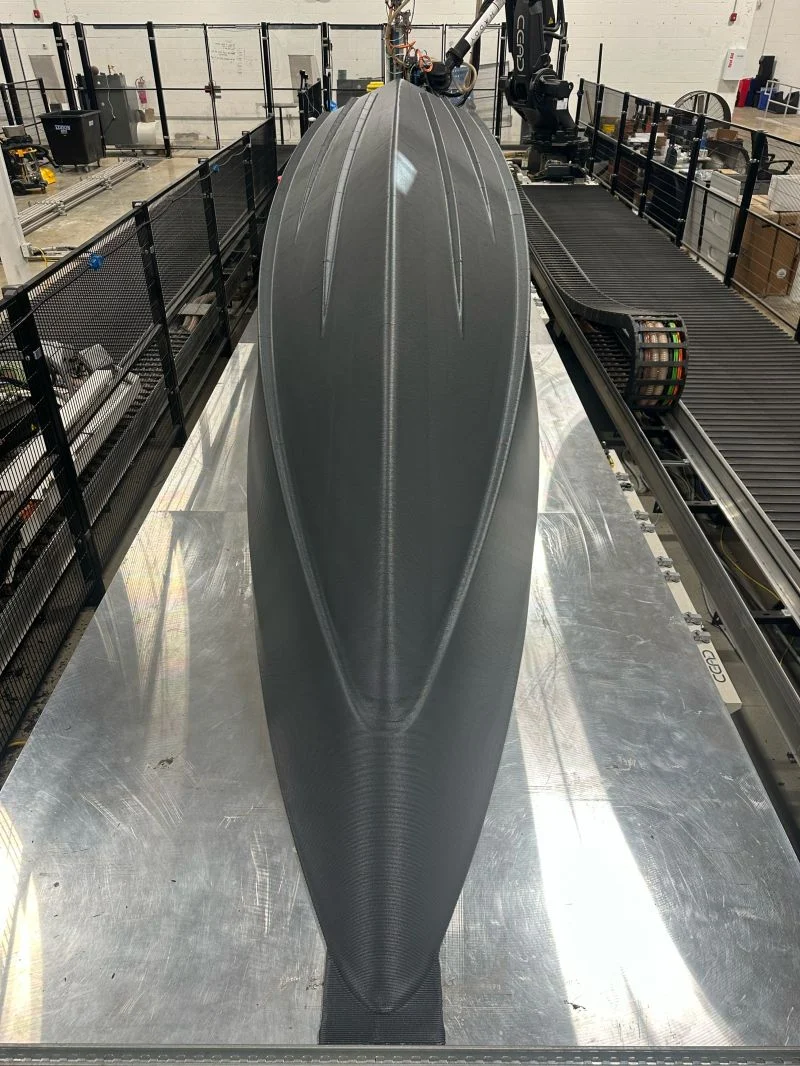
Recent developments further solidify Haddy’s position as a leader in this evolving dual-use landscape. The company recently announced the successful 3D printing of a new vessel, the TF-179, for an undisclosed customer. This project is particularly significant given the escalating global interest in autonomous maritime systems. While the specific client remains confidential, the timing of this announcement aligns with a notable surge in demand for drone boats, a trend observed during large-scale military exercises.
The Rise of Autonomous Maritime Systems and Haddy’s Strategic Positioning
The burgeoning demand for drone boats is not a niche phenomenon but a significant development within the broader defense and logistics sectors. Recent military exercises, particularly those conducted in the Indo-Pacific region, have underscored the strategic importance of autonomous systems. The US military’s recent "largest advanced manufacturing demonstration" during exercises like RIMPAC (Rim of the Pacific) prominently featured 3D-printed drone boats. These demonstrations serve as crucial testing grounds for emerging technologies, showcasing their potential to revolutionize naval operations, logistics, and surveillance.
The RIMPAC exercises, which occur biennially, are the world’s largest international maritime warfare exercise. They bring together naval forces from numerous countries to enhance interoperability and test new operational concepts. The inclusion of advanced manufacturing technologies, such as 3D-printed drone boats, signifies a paradigm shift in military procurement and operational strategy. The ability to rapidly prototype and deploy unmanned vessels offers significant advantages in terms of cost-effectiveness, speed of deployment, and reduced risk to human personnel.
Haddy’s business model is a clear embodiment of the strategic dual-use concept. The company manufactures large-format goods from composite materials, a capability that holds immense value for both the defense and civilian markets. For the defense sector, these composite materials are crucial for creating lightweight, durable, and high-performance unmanned vehicles, including drone boats, which are increasingly vital for reconnaissance, patrol, and logistical support in contested maritime environments. The Indo-Pacific, with its vast archipelagos and complex maritime challenges, presents a particularly fertile ground for the deployment of such technologies.
On the civilian side, Haddy’s expertise in large-format 3D printing translates into the production of furniture and fixtures for theme park design, exemplified by its association with Disney. This demonstrates a versatile application of its core manufacturing competencies. The common thread connecting these seemingly disparate markets is the demand for efficiently produced, large-scale composite components. Haddy has strategically aligned its production capacity and technical expertise to meet this demand, capitalizing on growth drivers in both sectors.
A Foundation for Growth and Future Diversification
The straightforward nature of Haddy’s dual-use strategy is precisely what makes it effective. By focusing on a core competency – large-format composite manufacturing using advanced robotic 3D printing and milling – the company can serve a wide array of needs. However, as both the defense and civilian markets continue to evolve and become more saturated with similar technologies, Haddy will need to build upon this foundational strength with increasingly sophisticated capabilities to maintain its competitive edge.
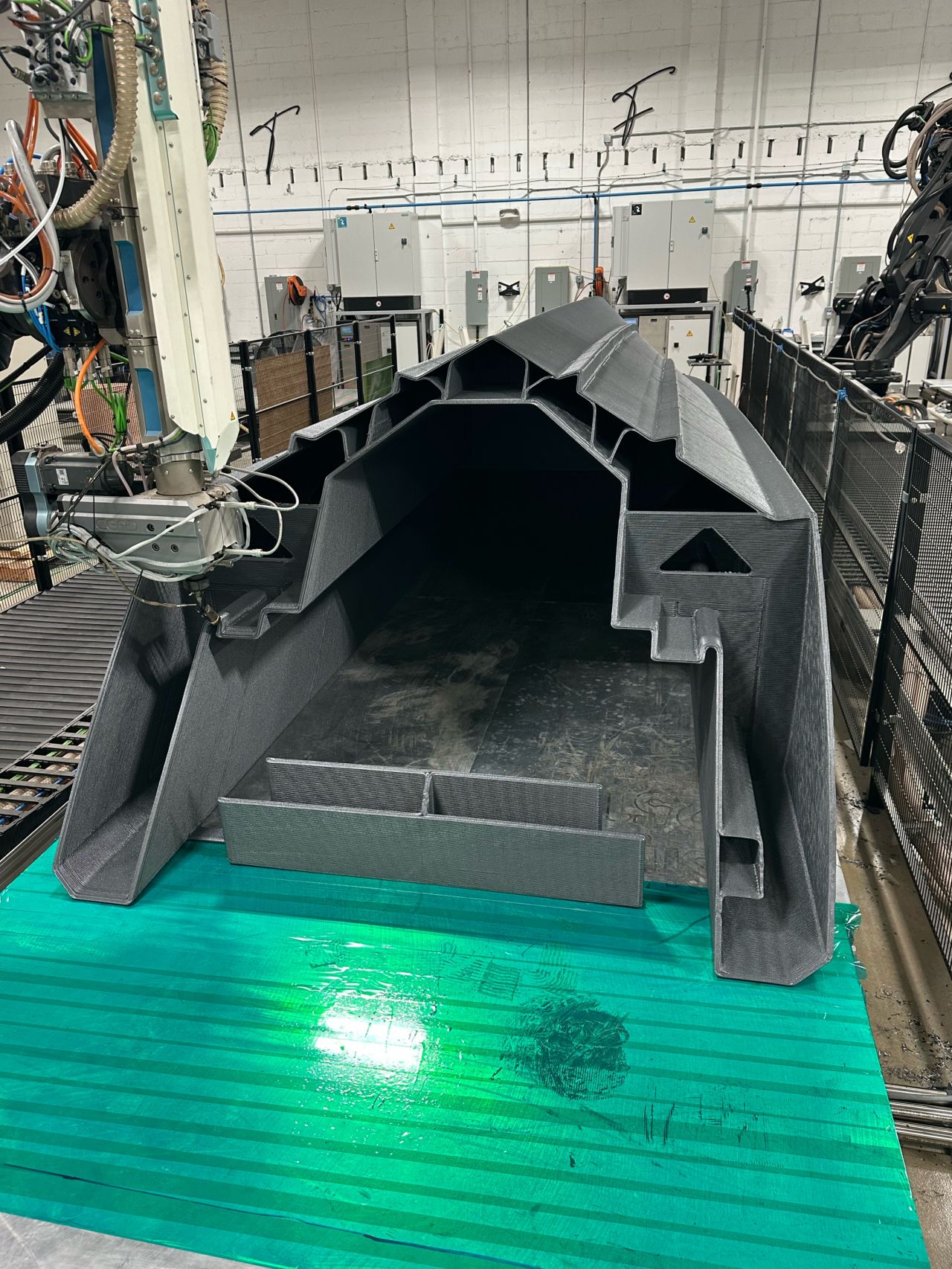
The competitive landscape for robotic arm composite manufacturing is indeed becoming crowded. Numerous companies are entering this space, often employing comparable technological approaches. To distinguish itself further, Haddy is already taking proactive steps. Its provision of manufacturing infrastructure services to Red Cat Holdings, for instance, demonstrates a commitment to supporting its partners’ end-to-end production needs, going beyond simply supplying components.
A logical next step for Haddy would be to develop a more explicit strategy for targeting the commercial market for drone boats. While the defense sector currently drives much of the innovation and demand, the potential for commercial applications is substantial. This would involve moving its dual-use strategy beyond a process-centric approach to encompass both the manufacturing process and the end products themselves.
The Unfolding Potential of Drone Boats in the Commercial Sphere
The market for drone boats is still in its nascent stages, but this early entry presents a significant advantage for companies like Haddy. The potential for drone boats to revolutionize various industries is immense, mirroring the trajectory of aerial drones. The author of the initial analysis posits that drone boats for delivery could become as viable a market as aerial drone delivery. This assertion is grounded in practical considerations, particularly concerning societal impact.
The proliferation of low-altitude airspace filled with flying machines raises complex questions about noise pollution, privacy, and public acceptance. In contrast, delivery drones operating on waterways present a potentially less disruptive alternative from a societal perspective. This makes maritime autonomous systems a more palatable and perhaps faster-to-adopt solution for certain logistics challenges.
Beyond delivery services, drone boats offer a wide array of potential applications analogous to those of aerial drones in the civilian realm. These include industrial and environmental monitoring, such as surveying waterways, monitoring water quality, inspecting infrastructure like bridges and dams, and supporting marine research. The ability of these vessels to operate autonomously for extended periods, equipped with various sensors and payloads, makes them ideal for data collection in challenging or hazardous environments.
Furthermore, the technology developed for defense-oriented drone boats can readily be adapted for civilian uses, creating a virtuous cycle of innovation and market expansion. For example, the robust hull designs and advanced navigation systems developed for military applications could be refined for commercial use in cargo transport, passenger ferries in specific contexts, or even recreational applications.
Strategic Implications and Future Outlook
Haddy’s success hinges on its ability to continually innovate and adapt within this dynamic dual-use environment. The company’s strategic focus on advanced additive manufacturing for large-format composite parts positions it well to capitalize on the growing demand for unmanned systems and custom-fabricated components across multiple sectors.
The company’s existing client base, spanning both high-profile civilian entities and defense contractors, provides a strong foundation for future growth. As the defense sector increasingly prioritizes rapid prototyping, on-demand manufacturing, and the deployment of advanced autonomous systems, Haddy’s capabilities become even more critical. The recent emphasis on advanced manufacturing demonstrations by the US military, particularly in the context of naval exercises, signals a clear strategic direction that favors companies like Haddy.
Looking ahead, Haddy’s commitment to developing a comprehensive dual-use strategy—one that encompasses both process innovation and product diversification—will be key to its long-term success. By actively exploring and cultivating the commercial potential of drone boats and other maritime autonomous systems, Haddy can further solidify its position as a leader in a rapidly evolving technological landscape. The company’s ability to leverage its core manufacturing expertise to address critical needs in both defense and civilian markets offers a compelling model for the future of manufacturing, demonstrating that dual-use, when strategically executed, is not a mere descriptor but a powerful engine for growth and innovation.