WASHINGTON — The aerospace manufacturing sector finds itself at a pivotal juncture, experiencing a robust surge in commercial aviation demand and an unprecedented increase in global defense spending. Yet, this period of immense opportunity is shadowed by a deepening crisis: a severe and persistent shortage of skilled workers. Industry leaders report that the primary impediment to capitalizing on new orders and expanding production is not a lack of market demand, but rather the inability to recruit and retain the specialized engineering and manufacturing talent required to build the next generation of aircraft and defense systems. This talent gap threatens to bottleneck growth, delay critical deliveries, and potentially compromise national security objectives.
The Intensifying Talent Gap
A comprehensive workforce study, recently conducted by the Aerospace Industries Association (AIA) in collaboration with consulting firm McKinsey & Company, illuminates the scale of this challenge. The study’s findings are stark: engineering talent and skilled manufacturing labor consistently rank as the two most difficult positions for the industry to fill. This struggle persists despite significant efforts by companies to bolster recruitment initiatives, offer more competitive wages, and expand internal training and apprenticeship programs. The specialized nature of aerospace manufacturing, requiring precision, advanced technical skills, and stringent quality control, makes these roles particularly critical and difficult to staff.
Among aerospace and defense companies surveyed, a striking 76 percent identified engineering as not only their highest-demand hiring category but also their most intractable position to fill. This encompasses a broad spectrum of roles, from aeronautical and mechanical engineers designing intricate components to software engineers developing complex avionics systems. The scarcity of these professionals can directly impede research and development, slow down product innovation, and delay certification processes for new aircraft and technologies.
The challenge extends acutely to the factory floor, where 56 percent of companies reported similar difficulties in staffing skilled manufacturing positions. These roles are the backbone of production, including highly specialized assemblers, precision welders, machinists, composite technicians, and other production workers who bring designs to life. The intricacies of modern aircraft and defense platforms demand a level of craftsmanship and technical proficiency that cannot be quickly acquired, often requiring years of training and on-the-job experience.
Dual Pressures: Commercial Boom and Defense Imperatives
The current labor shortage is exacerbated by a confluence of macroeconomic and geopolitical factors. On the commercial front, the global aviation industry is experiencing a vigorous rebound following the severe downturn induced by the COVID-19 pandemic. Airlines are renewing and expanding their fleets to meet burgeoning passenger demand, particularly in international travel, and to modernize with more fuel-efficient aircraft. Major manufacturers like Boeing and Airbus have accumulated backlogs stretching for years, representing thousands of commercial aircraft orders. Fulfilling these commitments requires a consistent and expanding workforce.
Simultaneously, geopolitical tensions across various regions—including the ongoing conflict in Ukraine, instability in the Middle East, and strategic competition in the Indo-Pacific—have spurred a significant increase in defense spending globally. Governments are investing heavily in upgrading existing military capabilities, developing advanced weapon systems, and replenishing stockpiles. This has translated into a substantial uptick in orders for fighter jets, transport aircraft, missile systems, satellites, and other sophisticated defense technologies. The imperative to meet these national security requirements adds another layer of urgency to the industry’s production challenges, placing immense pressure on an already strained labor pool.
The report succinctly captures this dynamic, noting that "Increased demand amidst geopolitical conflict, supply chain challenges, and a need for continued innovation" are colliding head-on with an "increasingly constrained labor pool." This creates a complex operational environment where manufacturers are attempting to ramp up output after years of grappling with supply chain disruptions, only to be met by a new, equally formidable hurdle.
The Persistent Problem of Attrition
While recruitment presents a significant barrier, the study also highlights that retaining existing workers remains an even larger and more insidious challenge for the aerospace sector. The industry’s attrition rate, though showing a modest improvement from its peak, remains alarmingly high compared to other sectors, leading to a continuous drain of talent and institutional knowledge.
In 2024, the industry’s attrition rate stood at approximately 14.5 percent, a slight decrease from the 17 percent peak observed in 2022, a period often characterized by the "Great Resignation." While this modest improvement is welcome, aerospace continues to shed employees at rates significantly higher than the national average for all industries, which typically hovers around 3-4% annually for voluntary turnover. This high churn creates an expensive and disruptive cycle for manufacturers already struggling to find replacements. The cost of turnover includes not only recruitment and onboarding expenses but also the significant time and resources invested in training new employees, who may take months or even years to reach full productivity in specialized roles.
The problem is particularly acute on the factory floors, where hourly, non-exempt production employees experience substantially higher turnover than their salaried counterparts. Non-exempt attrition reached nearly 16 percent, in contrast to approximately 11.6 percent for exempt employees. This disparity underscores the unique pressures faced by frontline workers, who may be more susceptible to burnout, job dissatisfaction, or opportunities in less demanding sectors. The loss of experienced production workers can directly impact manufacturing efficiency, quality control, and adherence to production schedules, potentially leading to costly delays and rework.
A Demographic Time Bomb
Compounding the immediate hiring and retention issues is the industry’s unfavorable demographic profile, which points to a looming crisis of retirements. The study reveals that nearly one-quarter of manufacturing and engineering employees in the aerospace and defense sector are already 55 years old or older. This demographic bulge significantly increases the likelihood of a wave of retirements within the coming decade, taking with them decades of invaluable experience, specialized skills, and institutional memory. Replacing these highly experienced individuals will be a monumental task, as their expertise is often acquired over a career, not merely through short-term training.
At the other end of the spectrum, younger workers, who are crucial for replenishing the workforce, exhibit a considerably higher propensity to change employers compared to their older counterparts. This generational trend towards greater job mobility makes long-term workforce stability increasingly difficult to achieve. While younger generations bring new perspectives and digital native skills, their shorter tenures can hinder the accumulation of deep, specialized knowledge essential for aerospace’s complex processes. This creates a double bind: the industry is losing experienced workers to retirement while simultaneously struggling to retain younger talent long enough to develop them into seasoned professionals.
The Bureau of Labor Statistics (BLS) projections cited in the report underscore the severity of this demographic challenge. The United States is projected to need approximately 210,000 assemblers and fabricators every year through 2033. This staggering number is not primarily due to expected dramatic employment growth, but rather to continually replace workers lost to retirements and other forms of turnover. Welders, electricians, and other skilled trades face similar replacement demands, highlighting a systemic need for a robust talent pipeline, even with relatively modest projected employment growth in some areas.
Industry Responses: Automation and AI
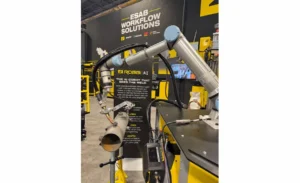
In response to these persistent labor challenges, aerospace manufacturers are increasingly turning to technology, particularly automation, to help offset the shortages and boost productivity. The investment in automation is broad-based, spanning various stages of the product lifecycle.
Nearly two-thirds of surveyed companies reported new automation investments in product development and prototyping over the past year. This includes advanced simulation tools, robotic prototyping, and automated testing systems designed to accelerate design cycles and reduce the reliance on manual processes in early development stages. Furthermore, 60 percent of companies expanded automation in full-rate production, integrating industrial robots for tasks such as precision welding, painting, assembly, and material handling. Half of the respondents also reported new automation investments in research and development, leveraging advanced robotics and AI-powered tools to explore new materials and manufacturing techniques.
Despite the growing adoption of automation, the report notes that generative artificial intelligence (AI) has yet to make a significant impact on factory operations. More than half of respondents indicated no use of generative AI in full-rate production. While the potential of generative AI in design optimization, predictive maintenance, and process automation is vast, the industry appears to be adopting a cautious, phased approach. The report authors advocate for a foundational strategy, arguing that manufacturers should prioritize improving and standardizing production workflows before attempting large-scale AI deployments. "Technology alone cannot resolve all challenges consistently," the authors wrote, recommending that manufacturers first redesign processes and standardize workflows to create a stable operational baseline, onto which automation and AI can then be effectively layered. This approach emphasizes that technology is a tool, not a panacea, and its effectiveness is maximized when applied to optimized, rather than chaotic, processes.
Broader Implications and the Path Forward
The implications of this pervasive labor shortage extend far beyond individual company balance sheets. For national security, delays in defense production can impact military readiness, the ability to support allies, and the timely deployment of advanced capabilities critical for deterrence and response. For the commercial sector, prolonged production bottlenecks can lead to further delays in aircraft deliveries, impacting airline fleet modernization plans, passenger capacity, and ultimately, economic growth in related industries like tourism and cargo.
The crisis underscores a systemic need for a concerted, multi-faceted approach involving industry, government, and educational institutions. Industry associations like the AIA are actively lobbying for increased investment in STEM education, vocational training programs, and apprenticeships that specifically target aerospace and defense skills. There is a recognized need to make manufacturing careers more attractive to younger generations, highlighting the high-tech nature, innovation, and national importance of the work. This could involve partnerships with community colleges and technical schools to develop tailored curricula and provide hands-on experience.
Moreover, government policy can play a crucial role through incentives for workforce development, funding for advanced manufacturing research, and streamlining immigration pathways for highly skilled workers in critical shortage areas. The long-term stability and competitiveness of the aerospace and defense sector, a cornerstone of advanced economies, hinges on successfully navigating this complex labor challenge. Without a robust pipeline of skilled talent, the industry’s capacity to innovate, grow, and meet the demands of a dynamic global landscape will remain severely constrained, risking both economic prosperity and strategic advantage. The current environment demands not just reactive hiring, but a proactive, visionary strategy for workforce development that secures the future of aerospace.