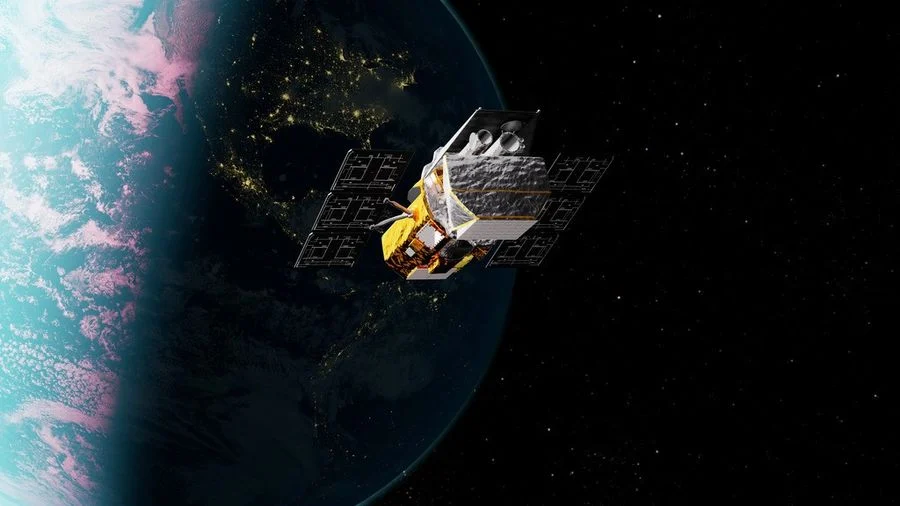
NASA and Katalyst Space announced Wednesday a significant adjustment to their ambitious mission to extend the scientific lifespan of the Neil Gehrels Swift Observatory. The commercial spacecraft, LINK, developed by Katalyst Space, will no longer attempt to capture and boost the Swift satellite to a higher orbit due to an ongoing attitude control issue affecting the LINK spacecraft. Despite this setback, the mission will proceed with a modified objective: conducting rendezvous and proximity operations with Swift. This crucial demonstration aims to validate key technologies and capabilities vital for the future of in-space servicing and exploration.
NASA Administrator Jared Isaacman emphasized the agency’s commitment to calculated risks and innovation, stating, "NASA should be willing to move quickly and take smart risks when the potential return is worth it, and that is exactly what we did with this mission." He acknowledged that the original objective was not met but underscored the inherent value of the endeavor. "This is not the outcome we were working toward, but it does not change why this mission was worth attempting. The team moved with extraordinary speed to give Swift a chance to carry out more science while advancing capabilities America will need for satellite servicing in the future. We are going to learn everything we can from LINK’s rendezvous attempt and put those lessons to work on the missions that follow."
The decision to pivot from a capture and boost operation to a demonstration of rendezvous and proximity operations was made after thorough evaluation by both NASA and Katalyst Space. The companies are collaborating closely to analyze the data gathered and determine the optimal path forward for maximizing the scientific and technological takeaways from the LINK mission.
A Mission Defined by High Risk and High Reward
Shawn Domagal-Goldman, director of NASA Headquarters’ Astrophysics Division in Washington, characterized the mission as inherently high-risk and high-reward from its inception. "We knew this was a high-risk, high-reward mission – a first-of-its-kind attempt, developed on an unprecedented timeline driven by the Sun’s activity," he explained. "We were all hoping for more science from Swift. But we knew the takeaways from this mission would be worthwhile either way, and we have gained so much through the series of accomplishments up to this point."
Swift, launched in 2004, has been a pioneering observatory in the study of gamma-ray bursts, the universe’s most powerful explosions, as well as other transient cosmic phenomena. Originally designed for a two-year prime mission, its operational longevity has far exceeded expectations, providing invaluable data for 21 years. However, its low Earth orbit has begun to decay rapidly, a consequence exacerbated by increased solar activity. Without intervention, Swift is projected to re-enter Earth’s atmosphere later this year.
Navigating the End-of-Life Challenge and the Dawn of In-Space Servicing
The accelerated decay of Swift’s orbit presented NASA with a unique opportunity to advance its capabilities in spacecraft servicing. Recognizing the potential to extend Swift’s scientific output and simultaneously develop critical technologies, NASA awarded a contract to Katalyst Space in September 2025 to develop and execute a robotic servicing mission. The ambitious timeline required the development and deployment of a servicing spacecraft in less than a year, a testament to the urgency driven by Swift’s orbital trajectory and the Sun’s increased activity.
The LINK spacecraft, a product of this rapid development, successfully launched on July 3 from Kwajalein Atoll in the South Pacific Ocean aboard a Northrop Grumman Pegasus XL rocket. Following a successful launch, teams established communication with LINK and conducted a series of in-orbit checkouts over the subsequent weeks. It was during this commissioning phase that the spacecraft encountered the attitude control issues that ultimately necessitated the modification of the mission’s primary objective.
Rendezvous and Proximity Operations: A Crucial Technological Stepping Stone
While the capture and orbital boost of Swift are no longer feasible, the planned rendezvous and proximity operations hold immense significance. These maneuvers involve the precise navigation of the LINK spacecraft to within a close distance of Swift, demonstrating the ability to approach, track, and maintain a stable relative position. This capability is foundational for a wide range of future in-space servicing applications, including:
- Satellite Refueling: Enabling spacecraft to receive propellants in orbit, extending their operational life.
- In-Orbit Assembly: Facilitating the construction of larger structures or spacecraft in space.
- Robotic Servicing and Repair: Allowing for the maintenance, upgrade, or repair of orbiting assets.
- Debris Removal: Providing the means to safely de-orbit or capture space debris.
- Propellant Transfer: Moving fuel between spacecraft for various purposes.
The data gathered during these proximity operations will provide invaluable insights into the performance of LINK’s guidance, navigation, and control systems in the challenging space environment. This information will be critical for refining designs and operational procedures for future servicing missions.
Broader Implications for America’s Space Industry
The LINK mission, even with its adjusted objective, represents a significant step forward for the U.S. commercial space industry. Domagal-Goldman highlighted the broader impact: "Building, testing, and operating this mission has already strengthened America’s space industry pipeline, advancing in-space servicing capabilities in completely new ways." He reiterated NASA’s commitment to fostering innovation within its commercial partnerships. "NASA is committed to supporting our commercial vendors as they take on difficult tasks with the agency, to push the boundaries of what’s possible. We’re so proud of this team for: getting to the launch pad in record time, in a record-setting year for NASA astrophysics launches; its innovative problem-solving up to this point; and the dedication to the exciting capabilities this mission will attempt to demonstrate next."
The rapid development of LINK and its integration with a NASA science mission showcases the agility and responsiveness of the commercial sector. The ability to conceptualize, build, and launch a spacecraft with such a tight deadline, driven by the specific needs of an aging but scientifically vital observatory, demonstrates a maturing ecosystem for in-space servicing.
Swift’s Enduring Legacy and NASA’s Continued Vigilance
The Neil Gehrels Swift Observatory has been instrumental in revolutionizing our understanding of high-energy astrophysics. Its discoveries have shed light on the most violent events in the universe, from the Big Bang’s afterglow to the cataclysmic explosions of supernovae and the enigmatic behavior of black holes. While the LINK mission will not be able to extend Swift’s operational life, NASA remains committed to maximizing its scientific return and to developing robust strategies for future cosmic event detection.
"As part of the agency’s previous planning for Swift’s end of life, NASA will continue to prioritize finding new options to react rapidly to cosmic events, using current missions to help fill the gap in the meantime," the agency stated. This underscores NASA’s proactive approach to mission management and its dedication to maintaining observational capabilities even as individual assets approach their end of service.
The successful launch and subsequent operations of LINK, despite the unforeseen challenge, underscore the rapid advancements in space technology and the growing capabilities of commercial partners. The lessons learned from LINK’s rendezvous attempt will undoubtedly inform and accelerate the development of future in-space servicing missions, paving the way for a more sustainable and capable future in space exploration.
For continued updates on the LINK mission and its rendezvous operations with Swift, the public is encouraged to follow NASA’s Swift blog.
For further information, please contact:
Alise Fisher
Headquarters, Washington
202-358-2546
[email protected]
Additional Resources:
- Learn more about Katalyst Space and the LINK mission: https://www.katalystspace.com/mission/link
- Monitor NASA’s Swift blog for updates: https://science.nasa.gov/blogs/swift