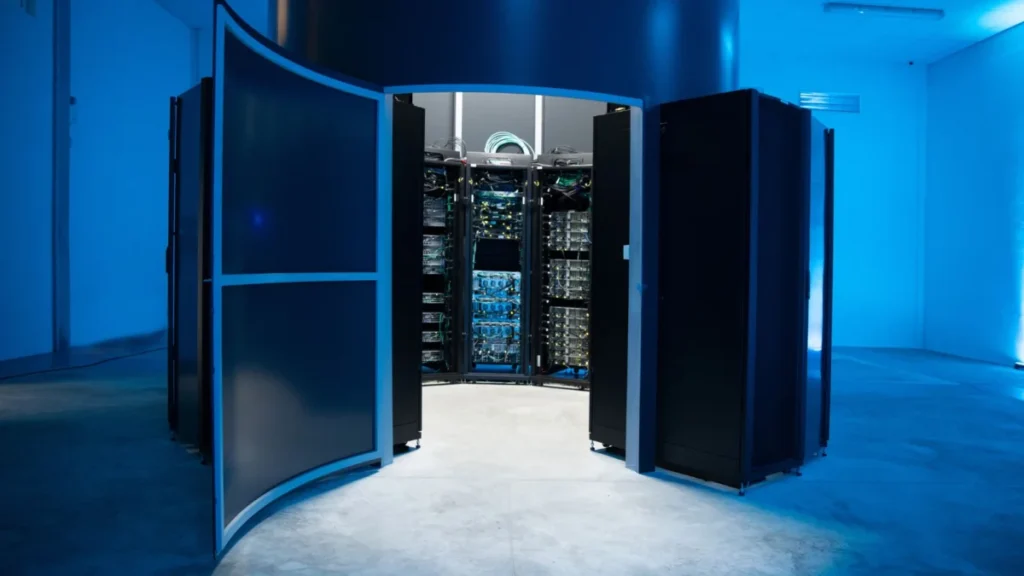
Los Alamos National Laboratory (LANL) has reached a significant milestone in its ambitious pursuit of advanced supercomputing capabilities, formally initiating the testing phase for its forthcoming flagship systems, Mission and Vision. The laboratory recently received the inaugural NVIDIA Vera CPU server, marking a pivotal moment in the early test deployment that grants researchers their initial hands-on opportunity to evaluate the cutting-edge hardware destined to power these monumental supercomputers. This delivery is more than just a logistical event; it represents a tangible step forward in an extensive, collaborative journey to redefine the boundaries of high-performance computing (HPC) and artificial intelligence (AI) for critical national security and scientific research endeavors.
A New Era in Supercomputing: The Vera Rubin Platform Arrives
The arrival of the NVIDIA Vera CPU server at Los Alamos heralds the commencement of a comprehensive testing and validation phase, a crucial precursor to the full operational deployment of the Mission and Vision supercomputers later this decade. Engineers and scientists at LANL are poised to leverage this advanced test platform to rigorously validate sophisticated software architectures, meticulously optimize complex scientific codes, and precisely measure performance metrics across a spectrum of real-world laboratory workloads. This meticulous preparation is indispensable to ensure seamless integration and maximal efficiency once the full-scale systems are brought online. The Mission and Vision systems are being meticulously constructed by Hewlett Packard Enterprise (HPE) and will integrate NVIDIA’s revolutionary Vera Rubin platform, a formidable combination of Vera CPUs and Rubin GPUs designed to tackle the most demanding HPC challenges while simultaneously accelerating emerging agentic AI applications. These advanced AI capabilities are envisioned to automate significant portions of scientific research and engineering analysis, thereby revolutionizing discovery workflows.
Los Alamos: A Legacy of Supercomputing Innovation
Los Alamos National Laboratory boasts a storied history at the vanguard of supercomputing. Its involvement dates back to the very origins of the digital age, playing a crucial role in the Manhattan Project and subsequently becoming a cornerstone of the Department of Energy’s (DOE) and National Nuclear Security Administration’s (NNSA) Advanced Simulation and Computing (ASC) program. This program is fundamental to the nation’s nuclear stockpile stewardship, ensuring the safety, security, and reliability of the nuclear deterrent without recourse to underground testing. Over the decades, LANL has consistently pushed the envelope of computational science, deploying groundbreaking systems like Roadrunner, the world’s first petascale supercomputer in 2008, and subsequent powerhouses such as Sierra and Crossroads. This continuous pursuit of computational excellence underscores the laboratory’s unwavering commitment to solving some of the world’s most complex scientific and engineering problems. The acquisition of the Vera Rubin platform is a natural progression of this legacy, designed to meet the escalating demands of modern scientific inquiry and national security imperatives.
The strategic importance of HPC for the DOE and NNSA cannot be overstated. Beyond stockpile stewardship, these supercomputers are indispensable tools for a vast array of critical research areas, including climate modeling, materials science, fusion energy research, astrophysics, and complex systems modeling. Each successive generation of supercomputers provides exponentially greater computational power, enabling simulations of unprecedented fidelity and scale, leading to deeper insights and accelerated discovery. The Vera Rubin platform is poised to extend this capability significantly, pushing beyond current exascale limitations and opening new frontiers for scientific exploration.
Unprecedented Performance and Efficiency Gains
The anticipated performance gains from the new architecture are substantial, promising a dramatic leap over existing systems at Los Alamos. According to Ben Santos, Director of the laboratory’s HPC Platforms program, the Mission and Vision supercomputers are projected to deliver more than three times the CPU performance of the current Crossroads supercomputer. This significant enhancement in raw processing power will enable researchers to execute larger, more complex simulations in shorter timeframes, facilitating faster iteration cycles in scientific discovery. Furthermore, each processor within the Vera Rubin platform is designed to offer more than four times the memory available per core compared to previous generations, a critical factor for memory-intensive scientific applications that often struggle with data transfer bottlenecks. This increase in memory bandwidth is coupled with a focus on consuming less power, addressing the growing concern over the energy footprint of supercomputing facilities.
The advancements extend even more dramatically into the realm of artificial intelligence. Santos highlighted that the NVIDIA Rubin GPUs are engineered to deliver more than 12 times the AI performance of the Hopper GPUs currently employed in the Venado supercomputer, which was installed in 2025. This exponential increase in AI processing capabilities is not merely an incremental upgrade; it represents a transformative shift that will profoundly impact how researchers approach national security and scientific problems. Such improvements are expected to significantly enhance the efficiency and accuracy of AI-driven models, allowing for faster analysis, more sophisticated pattern recognition, and ultimately, more effective solutions to pressing global challenges.
The Power of Codesign: Tailoring Hardware for Mission-Critical Workloads
Unlike the acquisition of off-the-shelf supercomputing solutions, the development of Mission and Vision has been characterized by an intensive and years-long process of joint engineering. This "codesign" philosophy has seen scientists and researchers from Los Alamos work hand-in-hand with hardware designers from NVIDIA and HPE. The objective has been to meticulously shape processor features and architectural components around the laboratory’s unique and demanding computing requirements, rather than the traditional approach of adapting software to pre-existing hardware. This collaborative methodology ensures that the final systems are intrinsically optimized for the specific scientific and national security workloads they are intended to support.
Dan Ernst, Senior Director of Supercomputing Products at NVIDIA, underscored the evolving landscape of scientific computing, emphasizing that modern research increasingly depends on the synergistic combination of simulation, AI, and agentic reasoning. He affirmed that the Vera Rubin platform is specifically engineered to provide the essential memory bandwidth, energy efficiency, and AI acceleration capabilities required to effectively manage these convergent workloads. The deep integration between Vera CPUs and Rubin GPUs, facilitated by advanced interconnect technologies like NVLink, allows for seamless data flow and cooperative processing, maximizing throughput and minimizing latency for complex computational tasks.
HPE, a long-standing partner of the Department of Energy laboratory, also emphasized the enduring nature of their collaboration. Trish Damkroger, Senior Vice President and General Manager of HPC & AI Infrastructure Solutions at HPE, highlighted the decades spent designing systems tailored to specific mission requirements. She expressed confidence that Mission and Vision represent a continuation and significant extension of this successful partnership, delivering systems that are not just powerful but precisely aligned with the strategic objectives of LANL.
Galen Shipman, a distinguished architect at Los Alamos, provided further insight into the technical priorities that guided the codesign process. He noted that engineers concentrated on dramatically improving memory bandwidth for each CPU core while simultaneously strengthening support for "irregular computing workloads." Irregular workloads, often characterized by unpredictable data access patterns and sparse computations (such as graph analytics, sparse matrix operations, and certain data analytics tasks), are notoriously challenging for traditional supercomputer architectures. These focused efforts have already yielded significant performance and efficiency gains for several of the laboratory’s most demanding applications, validating the efficacy of the codesign approach.
AI Drives the Next Phase of Scientific Discovery
Los Alamos National Laboratory has consistently demonstrated its leadership in advancing novel supercomputing architectures, notably playing a pivotal role in the adoption and maturation of Arm-based supercomputing. The laboratory was among the first major organizations to deploy NVIDIA’s Grace Hopper architecture through the Venado supercomputer, which became operational in 2025. This early adoption showcased LANL’s foresight and commitment to exploring new computational paradigms.
The Vera CPUs represent a substantial expansion of this strategic roadmap, specifically designed to bolster AI-driven modeling, simulation, and autonomous research workflows. Laboratory officials are particularly enthusiastic about the potential of "agentic AI" – AI systems capable of autonomous reasoning, planning, and execution – to dramatically accelerate scientific discovery. They believe that agentic AI can reduce analysis times for some scientific problems from months to mere minutes. This profound acceleration would free researchers from repetitive computational tasks, allowing them to redirect their intellectual energies towards formulating novel scientific questions, exploring new hypotheses, and interpreting complex results, thereby significantly boosting research productivity and innovation. Potential applications at LANL include autonomous materials discovery, accelerated drug design, complex fusion energy simulations, and predictive climate modeling, where AI agents could intelligently navigate vast parameter spaces and identify optimal solutions.
Architectural Blueprint and Deployment Timeline
The Mission and Vision supercomputers will be built upon HPE’s Cray Supercomputing GX5000 platform, a robust and scalable infrastructure renowned for its high-performance capabilities. Connectivity between the myriad components will be facilitated by NVIDIA Quantum-X800 InfiniBand networking, ensuring ultra-low latency and high-bandwidth data transfer – essential for the massive parallel processing required by these systems. In addition to Mission and Vision, a third system, Veritas, is also slated for arrival. Veritas will serve as a dedicated resource to support Laboratory Directed Research and Development (LDRD) projects, providing a flexible platform for innovative, high-risk, high-reward scientific investigations.
The deployment timeline for these next-generation systems is carefully phased. Los Alamos anticipates the arrival of the first purpose-built Mission architecture, codenamed "Starlight," in late 2026. Starlight will leverage the NVIDIA Vera Rubin NVL72 full-rack design, indicating a highly integrated system with NVIDIA’s highest level of GPU-CPU interconnect within a single rack, maximizing internal communication efficiency. The full deployments of the Mission and Vision supercomputers are strategically scheduled for 2027 and 2028, respectively. These milestones will mark another monumental upgrade for one of the United States’ premier supercomputing centers, solidifying its position at the forefront of global scientific and technological advancement.
Broader Implications and Future Outlook
The investment in the Vera Rubin platform for Mission and Vision carries profound implications beyond the confines of Los Alamos. For national security, these systems will enhance the NNSA’s ability to maintain a credible nuclear deterrent through advanced simulation capabilities, thereby reinforcing global stability. Scientifically, they promise to unlock breakthroughs across a spectrum of disciplines, from understanding the fundamental laws of the universe to designing next-generation energy solutions and combating climate change.
Technologically, the deployment positions the United States at the cutting edge of supercomputing and AI innovation, fostering a competitive edge in a rapidly evolving global landscape. The codesign approach exemplified by this collaboration is likely to influence future architectural designs across the HPC industry, demonstrating the benefits of deeply integrated partnerships between users and vendors. Furthermore, the emphasis on energy efficiency in the Vera Rubin platform sets a precedent for sustainable supercomputing, addressing critical environmental concerns associated with large-scale computational infrastructure. The integration of Arm-based CPUs also solidifies Arm’s growing prominence in the HPC sector, a testament to its evolving performance and ecosystem maturity. As these systems come online, they will not only serve as powerful computational engines but also as catalysts for an entirely new era of discovery, where the lines between simulation, data science, and artificial intelligence increasingly blur, accelerating humanity’s quest for knowledge and progress.