The quest for a material that can conduct electricity with zero resistance at room temperature has long been considered the "holy grail" of condensed matter physics. An international research team, led by the SuperC consortium, has recently demonstrated a transformative approach to this challenge by integrating machine learning algorithms with quantum mechanical modeling. This breakthrough has not only identified two new superconducting materials—YRu3B2 and LuRu3B2—but has also established a scalable blueprint for discovering thousands more. By leveraging the predictive power of artificial intelligence, scientists are now able to navigate an almost infinite landscape of chemical combinations, potentially shortening a discovery process that once took decades into a matter of months.
Superconductivity is a quantum mechanical phenomenon where a material allows electric current to flow without any energy loss. Under normal circumstances, as electrons move through a conductor like copper or aluminum, they collide with atoms, creating resistance and generating heat. In a superconductor, electrons form "Cooper pairs" that glide through the atomic lattice unimpeded. However, for over a century, this state has typically been achievable only at temperatures near absolute zero (-273.15 degrees Celsius) or under extreme pressures. The necessity for expensive and bulky liquid helium or liquid nitrogen cooling systems has limited the widespread application of superconductors to niche high-tech fields.
According to Professor Päivi Törmä of Aalto University, who spearheads the SuperC consortium, the introduction of machine learning into this field represents a paradigm shift. "Superconductive materials that can operate at room temperature would forever change the way we consume energy," Törmä explained. "If such a material could replace regular conductors in applications like computers and data centers, global energy consumption could be slashed and the heat footprint of the Information and Communication Technology (ICT) sector vastly reduced."
The Computational Needle in a Chemical Haystack
The fundamental challenge in material science is the sheer scale of possibility. There are 118 elements in the periodic table, and the number of ways they can be combined into binary, ternary, or quaternary compounds is virtually limitless. Traditionally, discovering a new superconductor was often a matter of serendipity or grueling trial and error. Since the first discovery of superconductivity by Heike Kamerlingh Onnes in 1911, researchers have identified approximately 7,000 superconducting materials. However, the vast majority of these were found through experimental accidents rather than theoretical prediction.
Professor Törmä points out the stark disparity between experimental discovery and theoretical understanding. "Over the decades, the process of identifying possible materials has been so computationally heavy that researchers have only been able to theoretically predict the viability of about 20 of the 7,000 known superconductors," she noted. The computational cost of simulating quantum interactions for every possible material is prohibitive, even for the world’s most powerful supercomputers.
The SuperC team addressed this bottleneck by implementing a two-stage discovery pipeline. First, a specialized machine learning algorithm acts as a high-speed filter, screening billions of elemental combinations to identify candidates that possess the geometric and electronic signatures of superconductivity. Once the AI narrows the field, the team applies rigorous quantum mechanical calculations—specifically focusing on quantum geometry—to verify the most promising candidates. This hybrid approach ensures that computational resources are focused only on materials with the highest probability of success.
Quantum Geometry and the Kagome Lattice
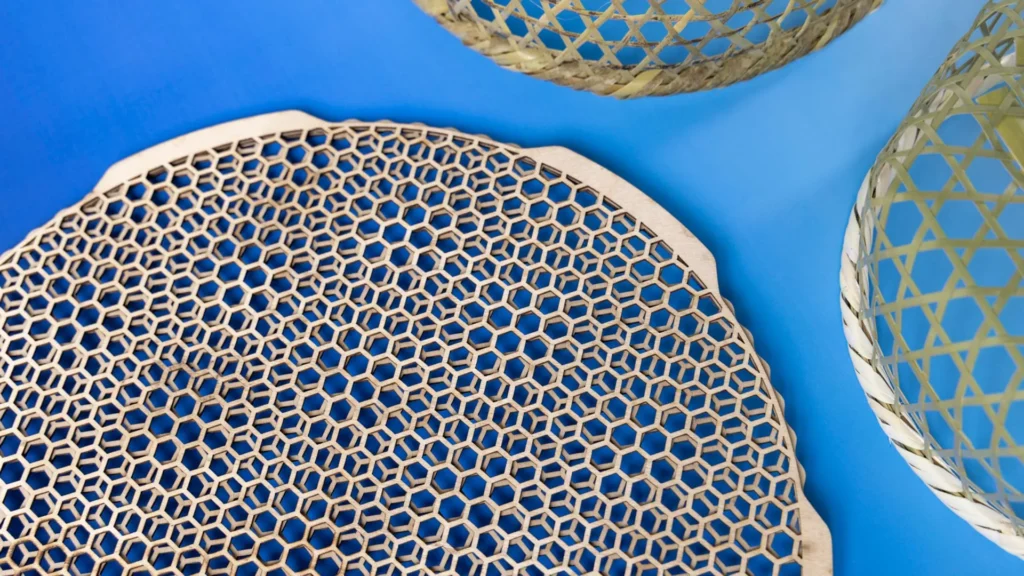
A central feature of the team’s recent success is the focus on "flat bands" within a kagome lattice. The kagome lattice is a geometric arrangement of atoms inspired by a traditional Japanese basket-weaving pattern, consisting of interlaced triangles. In the world of quantum physics, this specific geometry can cause electrons to become "frustrated" or trapped in a way that creates flat energy bands.
In a standard conductor, electrons have high kinetic energy and move rapidly. In a flat-band material, the kinetic energy of electrons is suppressed, allowing their mutual interactions to become the dominant force. This environment is highly conducive to the formation of Cooper pairs, even at higher temperatures. The newly identified superconductors, YRu3B2 (Yttrium-Ruthenium-Boride) and LuRu3B2 (Lutetium-Ruthenium-Boride), were specifically chosen by the AI because their atomic structures facilitate these flat bands.
The theoretical predictions were put to the test at Rice University in the United States. A team led by Professor Emilia Morosan synthesized the compounds, meticulously combining the constituent elements in a controlled laboratory environment. Through experimental verification, the Rice team confirmed that both materials exhibited superconducting properties, validating the AI’s predictive accuracy. While these specific materials still require cooling to function, their discovery serves as a vital proof of concept for the SuperC methodology.
The SuperC Consortium: A Roadmap to 2033
The SuperC consortium was established in 2023 with a bold and singular objective: to discover a practical room-temperature superconductor by the year 2033. This international collaboration brings together leading physicists, material scientists, and computer scientists from institutions across the globe. It is the first coordinated effort of its kind to align quantum physics research with the urgent global need for climate change solutions.
The timeline for SuperC is ambitious but structured. The initial phase (2023-2025) focused on building the machine learning infrastructure and validating the "flat band" theory through materials like YRu3B2. The next phase will involve expanding the search to more complex quaternary compounds—materials made of four different elements—where the AI’s ability to handle high-dimensional data will be even more critical.
The consortium’s work is not merely academic; it is driven by the potential for massive industrial decarbonization. Current electrical grids lose between 5% and 10% of their energy to resistance during transmission. On a global scale, this represents billions of dollars in lost revenue and millions of tons of unnecessary CO2 emissions. Room-temperature superconductors would enable the creation of lossless power lines, ultra-efficient electric motors, and compact fusion reactors.
Implications for the ICT Sector and Beyond
One of the most immediate beneficiaries of room-temperature superconductivity would be the ICT sector. Modern data centers are massive consumers of electricity, not only to power servers but also to run the cooling systems required to dissipate the heat generated by electrical resistance. As the demand for AI and cloud computing grows, the energy footprint of these facilities is projected to account for a significant portion of global energy demand.
By replacing traditional silicon-based components with superconducting circuits, the heat generation in computers could be virtually eliminated. This would lead to a radical increase in processing power and a corresponding decrease in environmental impact. Furthermore, the development of stable, high-temperature superconductors is essential for the advancement of quantum computing. Most current quantum processors must be kept at temperatures colder than outer space to maintain "coherence." A room-temperature alternative would make quantum technology more accessible and portable.
Beyond computing, the transportation sector stands to be revolutionized. Maglev (magnetic levitation) trains currently rely on low-temperature superconductors to create the powerful magnetic fields required to lift and propel the train. Room-temperature superconductors would eliminate the need for liquid helium cooling, making maglev technology significantly cheaper to build and maintain, potentially ushering in a new era of high-speed, carbon-neutral mass transit.
Challenges and Future Outlook
Despite the optimism surrounding the SuperC consortium’s results, significant hurdles remain. Discovering a material that is a superconductor on paper is only the first step. To be useful, a material must also be "formable"—meaning it can be drawn into wires or deposited as thin films—and it must be chemically stable in ambient conditions. Many promising candidates discovered in the past have been brittle, toxic, or prone to degradation when exposed to oxygen.
"Even when a material appears promising on paper, it may still prove impractical because it is too difficult to synthesize or impossible to produce at scale," Professor Törmä noted. The SuperC approach addresses this by incorporating "synthesizability" filters into their machine learning models, ensuring that the AI prioritizes materials that can actually be manufactured in a factory.
The work of the SuperC consortium will be a focal point of Aalto University’s "Designs for a Cooler Planet" exhibition, scheduled to run from September 1 to October 30, 2026, in Greater Helsinki, Finland. This exhibition will showcase how fundamental physics research can be translated into tangible solutions for the climate crisis.
The consortium’s research is supported by a diverse group of international donors and foundations, including The Kavli Foundation, Klaus Tschira Stiftung, and the Jane and Aatos Erkko Foundation, among others. This broad base of support reflects the high stakes of the project. As the world races to meet net-zero emission targets, the discovery of a room-temperature superconductor could provide the technological leap necessary to bridge the gap between current energy limitations and a sustainable future.
With the ability to process billions of material combinations through AI, the SuperC team believes they are no longer searching in the dark. The integration of machine learning, quantum geometry, and experimental synthesis has created a "high-speed engine for discovery" that brings the 2033 goal of a room-temperature superconductor within the realm of scientific possibility. As Professor Törmä concluded, "This takes us a critical step closer to a discovery that would forever change the way we live and power our world."