Stuttgart, Germany – August 4th, 2026 – Mercedes-Benz CEO Ola Källenius has signaled a potential recalibration of the luxury automaker’s aggressive strategy favoring expansive dashboard touchscreens, indicating that the company may need to re-evaluate its current approach in light of evolving customer feedback and technological realities. While Mercedes-Benz has been at the forefront of integrating large, visually striking interior displays, including the lauded MBUX Hyperscreen, the brand is now acknowledging that this technology-centric design philosophy may have inadvertently created usability challenges and, in some instances, alienated segments of its discerning customer base.
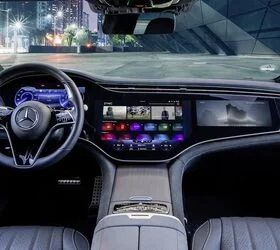
The MBUX Hyperscreen, a technological marvel comprising three screens seamlessly integrated into a single, dashboard-spanning presentation, has undoubtedly been a significant draw for many customers. Its initial wow factor is undeniable, with the sheer scale and technological sophistication often serving as a compelling selling point, potentially influencing purchase decisions at the dealership. For some buyers, these futuristic interfaces represent a key reason to opt for a Mercedes-Benz vehicle, aligning with a perceived notion of cutting-edge luxury and innovation.
However, this bold embrace of digital interiors has not been without its drawbacks. Reports and customer feedback have highlighted persistent issues such as susceptibility to smudging, distracting brightness levels at night if not meticulously adjusted, and, perhaps most critically, a tendency to divert driver attention from the road. The complexity of accessing and operating essential functions, such as climate control, through layered menus on a touchscreen has emerged as a significant concern, prompting a reassessment of the balance between aesthetic ambition and practical functionality.
Speaking in an interview with Autocar, Källenius acknowledged that Mercedes-Benz’s deeply integrated screen strategy has indeed "ruffled some feathers" and suggested that the company might need to implement strategic adjustments. This statement marks a notable shift, moving beyond previous pronouncements that often defended the technology while promising incremental improvements.
The Rationale Behind the Screen Push
The widespread adoption of touchscreens in automotive interiors, a trend embraced by Mercedes-Benz and many other manufacturers, was driven by a confluence of factors. Foremost among these was the desire to reduce production costs. By consolidating physical buttons and switches into fewer, more integrated digital interfaces, automakers could streamline manufacturing processes and reduce the number of individual components required. Simultaneously, the shift to software-controlled features offered greater flexibility for over-the-air updates and the introduction of new functionalities post-purchase.
Beyond cost considerations, a significant strategic impetus came from targeting specific global markets, particularly China. In these regions, large, conspicuous digital displays were increasingly viewed as symbols of futuristic technology and automotive advancement. The visual impact of a vast screen was seen as a powerful differentiator and a strong selling point, catering to consumer preferences for advanced in-car technology.
Evolving Perceptions of Luxury and Usability
Recent years have seen a broader discourse within the automotive industry regarding the efficacy and desirability of extensive touchscreen interfaces. While some drivers genuinely appreciate the sleek aesthetics and potential for advanced features offered by touch controls, a substantial segment of motorists express a strong preference for tactile, physical buttons and knobs. This sentiment appears to be particularly pronounced in Western markets, including North America, where a tradition of intuitive, driver-focused ergonomics has long been valued.
Mercedes-Benz, by pushing the boundaries of screen integration, arguably leaned into this trend more aggressively than many of its legacy competitors. This led to earlier public acknowledgments of customer criticisms. For instance, Gorden Wagener, Mercedes-Benz’s Chief Design Officer, previously stated that customers no longer universally perceive large screens as inherently luxurious, noting that the novelty had begun to fade and that innovation in software and user experience was paramount. CEO Källenius’s recent remarks echo this sentiment, suggesting a recognition that the company’s screen-centric approach may have reached a plateau in terms of positive customer reception.
CEO’s Defense and the "5-Year-Old" Benchmark
Despite the indications of a strategic shift, Källenius defended the company’s significant investment in user interface (UI) development. He highlighted the extensive hours dedicated to refining the software, stating in his Autocar interview, "We spend countless hours on UI. I spend hours every year discussing this with our engineers and we joke it needs to be so easy that either a 5-year-old kid or a Mercedes board member can use it. That is the hurdle, and once you familiarize yourself with it, it becomes second nature."
This benchmark, while intended to illustrate a goal of intuitive design, has been met with skepticism. Critics suggest that such a broad target risks oversimplifying the user experience for the average driver who requires immediate and uncomplicated access to essential controls while navigating complex driving conditions. The argument that any interface can become "second nature" with sufficient familiarity overlooks the fundamental principle of intuitive design, where frequently used functions should be readily accessible and require minimal cognitive load.
The assertion that a 5-year-old could easily operate the system, particularly given the complexities of modern vehicle functions, and that board members, who may have chauffeurs, are a primary user demographic for interface design, raises questions about the practicality of this design philosophy. True excellence in interior design, as many automotive experts and safety advocates contend, lies in harmonizing visual appeal with immediate ease of use. Basic and frequently accessed controls should be intuitive and readily available, a goal historically and consistently achieved more effectively through physical buttons and knobs, as supported by numerous studies on driver distraction.
It is plausible that Mercedes-Benz, like other automakers, is cognizant of this reality but is hesitant to openly admit to design missteps or to fully abandon a trend that facilitates profitable avenues such as in-vehicle subscriptions, targeted advertising, and the continued appeal of ostentatious digital displays.
The Road Ahead: Reintegrating Physical Controls
Källenius’s acknowledgement that the industry, and by extension Mercedes-Benz, may have "gone too far" with touch and voice-focused controls represents a significant concession. When questioned about reaching "peak screen," he expressed uncertainty but conceded that the industry is clearly at "low button," a phrase that encapsulates the current minimalist approach to physical controls.
This suggests a future where Mercedes-Benz aims to retain its prominent large screens while strategically reintroducing physical controls. "Sometimes you get a bit ahead of yourself and do technology for the sake of technology and maybe forget a little bit about the customer," Källenius stated. "So from now on, you will see us reintroduce the most sensible buttons."
The extent of this reintroduction remains a subject of debate. Volkswagen, a fellow German automaker, has made similar promises in the past, but the implementation has been gradual and varied. Some combustion engine models saw a return of physical HVAC controls and the replacement of haptic feedback buttons with genuine tactile ones. However, electric models, like the ID.3, have maintained a more minimalist cabin design, with additional buttons appearing on the steering wheel.
While any step towards restoring physical controls is an improvement, concerns linger about the pace and scope of these changes. The fear is that a gradual phasing out of physical controls may not fully restore the ease of use and inherent safety benefits associated with traditional interfaces, which have been demonstrably less distracting in older vehicle designs.
Balancing Innovation with Customer Needs
It is important to acknowledge that not all touch-focused interfaces are inherently problematic. Some digital systems, when intelligently designed, can achieve a high degree of intuitiveness by avoiding buried menus and presenting essential functions clearly. Nevertheless, for the majority of drivers, tactile buttons and knobs continue to represent the optimal solution for safety and ease of use, a finding supported by ongoing research into driver distraction and cognitive load.
A significant concern for consumers is the potential for automakers to monetize the return of physical controls. Given the industry’s increasing reliance on digital subscriptions for features that were once standard, there is a palpable anxiety that physical buttons and knobs could eventually become optional extras, further driving up vehicle costs.
Ultimately, this situation highlights a broader industry challenge: balancing the pursuit of advanced connectivity, telematics, and subscription-based revenue streams with the fundamental customer expectation for intuitive and safe vehicle controls. While automakers are keen to leverage the lucrative potential of screens and digital integration, customers are increasingly vocal about their desire for a more user-friendly and less distracting driving experience. Mercedes-Benz’s apparent pivot suggests a dawning realization that the path to automotive luxury must still be paved with practical usability, a lesson learned perhaps a bit too late for some, but a lesson nonetheless.
The strategic decisions made by Mercedes-Benz in the coming years regarding the integration of physical controls will be closely watched by the industry and consumers alike. The brand’s ability to successfully blend its signature technological advancements with timeless ergonomic principles will be crucial in maintaining its leadership position and ensuring customer satisfaction in an ever-evolving automotive landscape.
Images: Mercedes-Benz