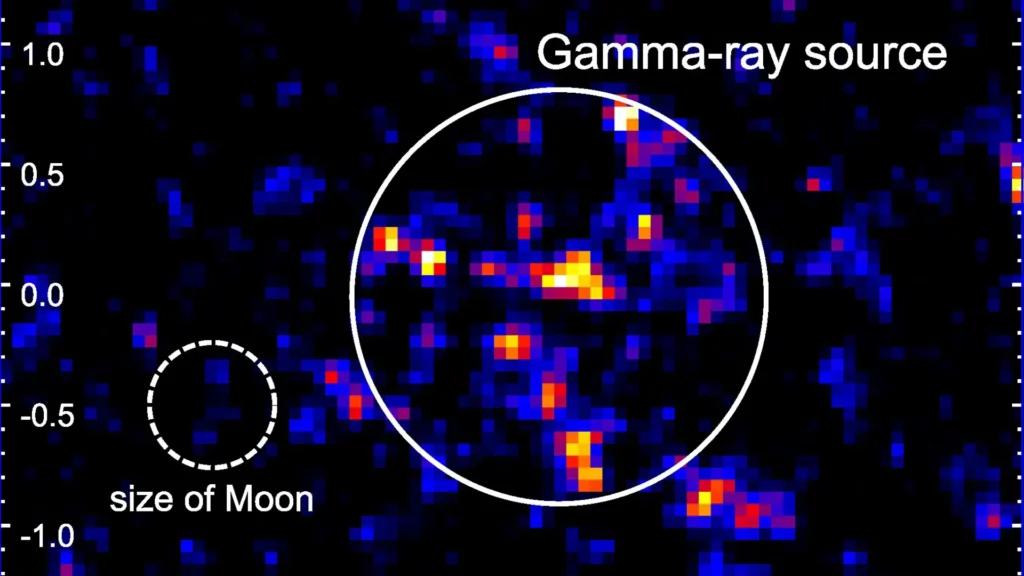
In a landmark achievement for high-energy astrophysics, an international coalition of researchers has conclusively identified a source within our own Milky Way galaxy capable of accelerating protons to the highest energy levels ever recorded in a galactic environment. This discovery, centered on the celestial object known as LHAASO J1912+1014u, marks a significant turning point in the century-long quest to understand the origins of cosmic rays—the ultra-fast particles that permeate the vacuum of space and influence the evolution of galaxies. By synthesizing data from multiple ground-based and space-borne observatories, the team, led by Hiroshima University, has provided the "smoking gun" evidence for a "proton PeVatron," a natural engine of such immense power that it dwarfs the capabilities of any human-engineered particle accelerator.
The findings, published in The Astrophysical Journal on July 16, 2026, represent the culmination of years of cross-disciplinary collaboration. The study’s lead and corresponding author, Tsunefumi Mizuno, an associate professor at Hiroshima University’s Hiroshima Astrophysical Science Center, emphasized that identifying these natural accelerators is essential for decoding the high-energy processes that govern the universe. For decades, scientists have theorized that certain objects in our galaxy act as PeVatrons—accelerators capable of pushing particles to energies of one quadrillion (10^15) electron volts, or one peta-electron volt (PeV). While several candidates had been proposed, distinguishing between accelerators that boost electrons and those that boost protons has remained one of the most persistent challenges in modern astronomy.
The Nature of Cosmic Rays and the PeVatron Challenge
To appreciate the scale of this discovery, one must look at the nature of cosmic rays themselves. These are not rays in the traditional sense of light, but rather subatomic particles—primarily protons—moving at nearly the speed of light. They represent a significant portion of the energy density of the interstellar medium, yet their origins have remained shrouded in mystery because their paths are bent by galactic magnetic fields, preventing astronomers from simply tracing them back to their source.
While the Large Hadron Collider (LHC) on the Franco-Swiss border can accelerate protons to roughly 13.6 tera-electron volts (TeV), the natural accelerators in the Milky Way reach energies nearly 100 times higher. "This immense energy makes cosmic rays important in astronomy and astrophysics," Mizuno explained. The search for a "proton PeVatron" is particularly vital because protons, being much heavier than electrons, carry the bulk of the cosmic ray energy budget.
The difficulty in identification lies in the "leptonic vs. hadronic" debate. Highly energetic electrons (leptons) can produce gamma rays through a process called inverse Compton scattering, where they collide with low-energy photons. Protons (hadrons), on the other hand, produce gamma rays by colliding with interstellar gas, creating neutral pions that then decay into high-energy light. Distinguishing between these two mechanisms requires observing a source across a massive range of the electromagnetic spectrum.
A Multi-Wavelength Chronology: The Road to LHAASO J1912+1014u
The identification of LHAASO J1912+1014u did not happen overnight. Its discovery is the result of a decades-long technological evolution in gamma-ray and radio astronomy.
The timeline began in earnest in 1990 with the establishment of the Tibet AS gamma experiment, a joint venture between Japan and China. This was followed by the more recent development of the Large High Altitude Air Shower Observatory (LHAASO) in China. These facilities were designed to detect the "air showers" created when ultra-high-energy gamma rays hit Earth’s atmosphere. In 2024, LHAASO detected several sources emitting radiation above 0.1 PeV (100 TeV). Among these was LHAASO J1912+1014u, located in the constellation Aquila, near the bright star Altair in the Summer Triangle.
Initial observations suggested the object might be a supernova remnant—the expanding shell of debris from a dead star—or a pulsar wind nebula. However, the resolution of LHAASO alone was insufficient to determine whether the gamma rays were being generated by electrons or protons. To solve the riddle, the Hiroshima-led team looked toward a "bundled" approach, utilizing a trio of additional high-precision instruments.
The Three Arrows of Evidence
Mizuno utilized a traditional Japanese proverb to describe the team’s methodology: "One arrow is easy to break, but three arrows bundled together are not." In this context, the "three arrows" were three distinct datasets that, when combined, created an undeniable profile of a proton accelerator.
The First Arrow: Fermi-LAT GeV Observations
The Fermi Large Area Telescope (Fermi-LAT), a NASA mission with significant contributions from Hiroshima University, provided data on gamma rays at the giga-electron-volt (GeV) level. By looking at lower-energy gamma rays, the researchers could see the full "spectrum" of the source. They found that the signal from LHAASO J1912+1014u extended smoothly from 400 million electron volts (MeV) all the way up to over 100 TeV. This broad, continuous spectrum is a hallmark of proton acceleration; if electrons were the primary drivers, the spectrum would typically show a "cutoff" or a different shape due to the rapid energy loss electrons experience through synchrotron radiation.
The Second Arrow: FUGIN Radio Mapping
The second piece of evidence came from the FOREST Unbiased Galactic plane Imaging survey with the Nobeyama 45-m telescope (FUGIN) in Japan. This radio survey mapped the distribution of interstellar molecular gas in the vicinity of the source. The researchers discovered a striking correlation: the intensity of the GeV gamma rays detected by Fermi-LAT matched the density of the gas mapped by FUGIN. This is the "hadronic signature"—gamma rays being produced specifically where high-energy protons are slamming into dense clouds of gas.
The Third Arrow: Chandra X-ray Data
The final piece of the puzzle was provided by NASA’s Chandra X-ray Observatory. If LHAASO J1912+1014u were an electron-dominated accelerator, it would be expected to emit strong, diffuse X-rays as those electrons spiraled through magnetic fields. However, Chandra’s observations revealed only very faint X-ray emissions. This lack of a strong X-ray signal effectively ruled out the leptonic (electron) model, leaving the proton PeVatron as the only viable explanation.
Scientific Analysis and Implications
The confirmation of LHAASO J1912+1014u as a proton PeVatron has profound implications for our understanding of the "Galactic Knee"—a specific point in the cosmic ray energy spectrum where the flux of particles drops off, long thought to represent the maximum energy limit of accelerators within our own galaxy.
By identifying a source that can reach PeV levels, scientists have confirmed that the Milky Way possesses the "engines" necessary to account for the highest-energy cosmic rays observed on Earth. Furthermore, the detailed multi-wavelength modeling allowed the researchers to probe the physical conditions of the accelerator. They found that the protons are likely being accelerated at the shock front where a supernova remnant expands into the surrounding interstellar medium. This supports the "SNR (Supernova Remnant) Hypothesis," which has been a leading theory for the origin of cosmic rays for nearly a century but has lacked definitive proof until now.
Reaction from the broader scientific community has been one of cautious optimism and excitement. "This is the most robust case for a galactic proton PeVatron we have seen to date," says one independent astrophysicist not involved in the study. "The combination of high-energy gamma-ray data with gas-density mapping and the absence of X-rays provides a template for how we must evaluate all future candidates."
The Future of Galactic Archaeology
The success of the Hiroshima University study has laid the groundwork for a systematic survey of the Milky Way. Mizuno noted that there are dozens of other potential PeVatron candidates identified by LHAASO and the Tibet AS gamma experiment that have yet to be confirmed.
"This research is achieved by team effort," Mizuno reiterated, acknowledging the contributions of co-authors from Gifu University, Miyazaki University, and Julius-Maximilians-Universität Würzburg. The team now plans to apply their "three arrows" methodology to other high-energy sources. This future work will help determine whether LHAASO J1912+1014u is a rare outlier or if the Milky Way is teeming with these ultra-powerful natural machines.
As new observatories like the Cherenkov Telescope Array (CTA) come online in the next few years, the resolution of these high-energy images will only improve. Astronomers are entering an era of "Galactic Archaeology," where they can map the history of star deaths and particle acceleration with unprecedented precision. By understanding where and how these protons are accelerated, we gain insight not just into the distant stars, but into the very radiation environment that affects planetary atmospheres and the potential for life across the galaxy.
The identification of the PeVatron in Aquila is more than just a data point; it is a confirmation that the universe is a far more energetic and dynamic laboratory than even our most advanced technology can replicate. For now, the "three arrows" have hit their mark, providing a clearer view of the invisible, high-energy rivers of particles that flow through our cosmic neighborhood.