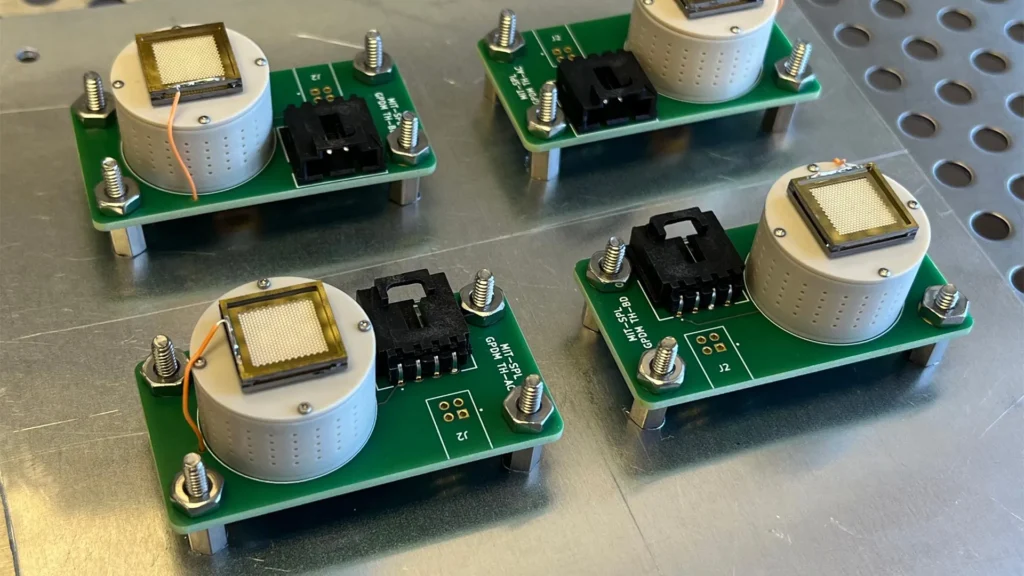
A groundbreaking advancement from engineers at the Massachusetts Institute of Technology (MIT) is poised to redefine the capabilities of small satellites, particularly CubeSats. Researchers have developed and successfully demonstrated a novel spacecraft propulsion system that seamlessly integrates the rapid thrust of traditional chemical rockets with the precise, fuel-efficient maneuvers of electric thrusters. This innovation hinges on a specialized "green monopropellant" that can power both systems from a single fuel source, a significant departure from the conventional requirement for separate propellants and hardware. The technology promises to bestow unprecedented flexibility and extended operational lifespans upon compact spacecraft, opening new frontiers for scientific exploration and commercial applications.
The Evolving Landscape of Space Propulsion
For decades, space propulsion has largely been characterized by a dichotomy: chemical rockets for high-thrust, rapid maneuvers like orbit insertion or large trajectory changes, and electric (or ion) thrusters for low-thrust, high-efficiency, long-duration operations such as station-keeping or interplanetary cruises. Chemical propulsion, typically relying on the combustion of propellants, offers substantial force but consumes fuel rapidly, limiting a spacecraft’s total change in velocity (delta-v). Conversely, electric propulsion systems, which accelerate charged particles to generate thrust, boast extremely high specific impulse (fuel efficiency) but deliver very low thrust, requiring extended periods to achieve significant velocity changes. The need for separate systems, each with its own fuel tanks, valves, and control mechanisms, has historically added considerable mass, complexity, and cost to spacecraft design, particularly for smaller platforms where every gram and cubic centimeter is critical.
This inherent trade-off has presented a persistent challenge for mission planners. A satellite requiring both swift evasive maneuvers and long-term precise positioning would typically need to incorporate two distinct propulsion architectures, thereby inflating its size, weight, and operational complexity. The MIT team’s breakthrough addresses this fundamental limitation by enabling a single propulsion system to perform both functions, drawing from a shared propellant supply.
The Rise of Small Satellites and CubeSats
The past two decades have witnessed an explosion in the development and deployment of small satellites, with CubeSats leading this revolution. These miniature satellites, often no larger than a shoebox and weighing just a few kilograms, have democratized access to space for universities, startups, and even individual researchers. Their compact size and standardized design translate into significantly lower launch costs, often piggybacking on larger missions. As a result, the global small satellite market, valued at approximately $4.3 billion in 2023, is projected to grow substantially, driven by applications in remote sensing, global communication, Earth observation, climate monitoring, and in-orbit technology demonstration.
However, the very advantages of small satellites—their diminutive size and low mass—also impose stringent constraints on their capabilities. Limited payload volume and power budgets mean that traditional, bulky propulsion systems are often impractical. Many early CubeSats lacked robust propulsion altogether, relying on passive methods or minimal cold-gas thrusters for basic attitude control. The ability to perform complex orbital maneuvers, respond to space debris, or undertake ambitious deep-space journeys has largely remained the exclusive domain of larger, more expensive spacecraft. The MIT innovation directly targets these limitations, promising to unlock a new era of agility and ambition for the burgeoning small satellite sector.
ASCENT: A New Era of Green Propellants
At the heart of the MIT dual-mode system is the Advanced SpaceCraft Energetic Non-Toxic (ASCENT) propellant. Originally developed by the U.S. Air Force Research Laboratory (AFRL) as a safer, high-performance alternative to hydrazine, ASCENT represents a significant leap forward in green propulsion technology. Hydrazine (N2H4) has been the workhorse chemical propellant for spacecraft for over 60 years, prized for its high energy density and reliability. However, it is also highly toxic, carcinogenic, and volatile, requiring extensive safety protocols, specialized handling equipment, and significant ground infrastructure. These factors contribute to higher launch preparation costs and pose environmental and health risks.
The development of ASCENT was motivated by the imperative to replace hydrazine with a propellant that offers comparable performance while being significantly safer to handle and store. ASCENT is an ionic liquid mixture, primarily composed of hydroxylammonium nitrate (HAN) and an oxidizer. Its non-toxic nature vastly simplifies ground operations, reduces launch processing times, and lowers overall mission costs by mitigating the need for specialized hazardous material handling. Critically, ASCENT boasts a higher density and specific impulse than hydrazine in some applications, offering performance benefits alongside its safety advantages. While initially conceived and optimized for chemical propulsion systems, its unique chemical composition as an ionic liquid proved to be the key to its unexpected versatility.
Electrospray Thrusters: Precision Miniaturized
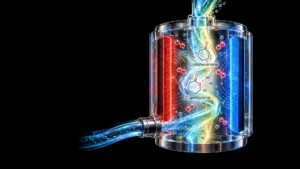
Electrospray thrusters are a form of electric propulsion distinguished by their minute size and exceptional precision. Roughly the size of a dime, these tiny rocket engines operate by using powerful electric fields to extract and accelerate charged particles (ions) from a liquid propellant, ejecting them at high velocities to generate thrust. Unlike traditional chemical rockets that rely on combustion and exhaust gases, electrospray thrusters produce a continuous, gentle stream of ions, resulting in extremely low thrust levels—typically in the micro- to milli-Newton range. However, this low thrust is delivered with unparalleled fuel efficiency, often yielding specific impulses hundreds or even thousands of times greater than chemical systems.
Professor Paulo Lozano, the Miguel Alemán Velasco Professor of Aeronautics and Astronautics at MIT, whose laboratory specializes in developing and testing electrospray propulsion systems, highlights their suitability for gradual, precise maneuvers. "These thrusters are extremely fuel-efficient and are well suited for gradual, precise maneuvers," he explains. "For example, they can slowly push a spacecraft through long interplanetary journeys while consuming very little fuel." Their applications range from fine-tuning satellite constellations and precise attitude control to executing long-duration, fuel-sensitive deep-space trajectories. The challenge, however, has always been the requirement for specific ionic liquid propellants tailored to electric fields, distinct from the propellants used in chemical systems.
The MIT Innovation: Bridging the Propulsion Divide
The breakthrough came when MIT researchers, including Amelia Bruno, a former postdoc in MIT’s Department of Aeronautics and Astronautics (AeroAstro) and lead author of the study, recognized the potential for ASCENT to bridge this propulsion divide. Given that ASCENT is an ionic liquid mixture, the team hypothesized that it might also be compatible with electrospray thrusters, despite its original development for chemical propulsion. "ASCENT happens to be an ionic liquid mixture," Bruno explains. "And we said, hey, that’s the stuff we typically use. Theoretically, this should work. Let’s go figure out how." This intuitive leap formed the basis of their pioneering research.
To validate their hypothesis, Bruno, Lozano, and former MIT graduate student Matthew Corrado embarked on a series of rigorous experiments. They outfitted electrospray thrusters with small, cube-shaped reservoirs, each containing one gram of ASCENT, a liquid whose viscosity is comparable to baby oil. These thrusters were then mounted on a briefcase-sized CubeSat model positioned on a custom magnetic levitation test platform (MagLev) within a large vacuum chamber designed to replicate the harsh conditions of space.
During testing, the researchers remotely varied the voltage supplied to the thrusters, carefully measuring the resulting thrust. The electrospray generated by ASCENT proved sufficient to spin the CubeSat model, demonstrating its propulsive capability. Crucially, the team operated the thrusters continuously for periods of up to 100 hours, assessing the fuel’s long-term performance and efficiency. The results, published in the Journal of Propulsion and Power, confirmed that ASCENT successfully powered the electrospray thrusters, performing on par with conventional ionic liquid propellants specifically designed for electric propulsion systems. "Compared to our normal electrospray propellants, ASCENT can provide similar performance in terms of thrust," Bruno stated, underscoring the significance of their findings. "Now that we know our thrusters work with ASCENT, we can start thinking of all the ways we can make them even better."
NASA’s Green Propulsion Dual Mode Mission: A Crucial Test
The theoretical and experimental validation conducted at MIT has paved the way for a critical real-world demonstration: NASA’s Green Propulsion Dual Mode mission. Scheduled for launch in November, this mission will mark the first attempt to test a fully integrated dual-mode propulsion system on a small spacecraft in orbit. The briefcase-sized CubeSat will be equipped with one chemical thruster and four electrospray thrusters, all drawing fuel from a single, shared tank of ASCENT propellant.
This orbital test is paramount for proving the concept’s viability beyond laboratory conditions. It will assess the complex interplay between the two propulsion types, the efficiency of propellant management from a single reservoir, and the overall performance and reliability of the system in the space environment. The success of this mission will validate the integration of hardware, thermal management, and fluid dynamics necessary for such a sophisticated system on a compact platform. As Professor Lozano notes, "This will be the first time that a satellite will have a shared propellant tank." The data gathered from this mission will be instrumental in refining the technology and preparing it for broader adoption across the space industry.
Transforming Deep Space Exploration for Small Satellites
The implications of this dual-mode propulsion system, especially for deep space exploration using small satellites, are profound. Traditionally, interplanetary missions have been the exclusive domain of large, expensive spacecraft capable of carrying massive amounts of fuel for both initial thrust and subsequent trajectory corrections. Small satellites, constrained by their size and propulsion limitations, have largely been confined to Earth orbit.
With the ability to combine rapid chemical burns for escape velocity or significant delta-v changes with highly efficient electrospray for long-duration interplanetary cruises, CubeSats could venture far beyond Earth. "We could send CubeSats to Mars, or the asteroid belt, where they could make the journey slowly, using electrospray thrusters," says Professor Lozano. This capability fundamentally alters the cost-benefit analysis of deep space missions, making them accessible to a wider range of researchers and organizations. Once at their destination, the chemical thrusters could be activated for quick, localized movements, allowing the CubeSat to rapidly maneuver to observe interesting features or conduct close-up surveys. "You could then use your chemical thrusters to quickly move to look at interesting features. You could have a lot more flexibility to do a lot more things," Lozano adds. This vision opens doors for distributed scientific missions, where a constellation of small, agile satellites could collectively explore a celestial body or region, providing unprecedented spatial and temporal coverage.
Revolutionizing Earth-Orbit Operations and Beyond
Beyond deep space, the dual-mode propulsion system holds significant promise for enhancing missions closer to Earth. Earth-orbiting satellites perform a myriad of functions, from communication and navigation to Earth observation and climate monitoring. Many of these missions require dynamic maneuverability to optimize data collection, avoid collisions, or respond to evolving situations.
Professor Lozano points to weather and climate monitoring as a prime application. "Say there’s a storm coming, and you’d want to deploy your constellation of small satellites to observe over one location," he explains. "You could choose to send them quickly or slowly depending on the nature of the observation. And the only way to do that is if you have two propulsion systems, which is now possible." This means a satellite could use its chemical thruster for rapid orbit changes to position itself optimally for observing a sudden weather event, then switch to electrospray for precise, long-term station-keeping to maintain its observational window with minimal fuel consumption. For commercial satellite constellations, this flexibility could translate into more efficient constellation deployment, faster anomaly response, and enhanced operational resilience, ultimately extending the useful life of individual satellites and entire networks.
Economic and Environmental Advantages
The economic benefits of this integrated propulsion system are substantial. By eliminating the need for separate fuel systems, the technology significantly reduces the overall mass and complexity of spacecraft. This translates directly into lower manufacturing costs, reduced launch mass (and thus lower launch costs), and simpler integration procedures. For CubeSats, where every gram of mass and watt of power is precious, such efficiencies are transformative.
Furthermore, the adoption of ASCENT as the propellant carries significant environmental and safety advantages. Moving away from highly toxic hydrazine drastically reduces the risks associated with propellant handling, storage, and ground operations. This not only improves safety for personnel but also streamlines the logistical chain for satellite preparation and launch. As the space industry continues to grow, the demand for safer, greener technologies will only intensify, making solutions like the MIT dual-mode system increasingly attractive.
The Path Forward: Sustained Innovation
The successful demonstration of ASCENT in electrospray thrusters and the upcoming NASA Green Propulsion Dual Mode mission represent critical milestones in the evolution of space propulsion. This research, supported in part by NASA, underscores the power of interdisciplinary collaboration and innovative thinking in addressing long-standing challenges in space exploration.
The MIT team is now focused on optimizing the thrusters and exploring ways to further enhance their performance with ASCENT. Future research will likely involve scaling the technology for different satellite sizes, investigating propellant management techniques for shared tanks in microgravity, and potentially exploring other green propellants with similar dual-use characteristics. As small satellites continue to play an increasingly vital role in scientific discovery, commercial enterprise, and national security, integrated propulsion systems like the one pioneered by MIT will be essential in pushing the boundaries of what these compact spacecraft can achieve, heralding a new era of agile, efficient, and versatile space missions.