In a significant leap forward for materials science and additive manufacturing, a team of engineers at the Massachusetts Institute of Technology (MIT) has developed a novel aluminum alloy engineered for 3D printing that exhibits unprecedented strength and remarkable heat tolerance. This breakthrough material, detailed in the latest issue of the journal Advanced Materials, shatters previous benchmarks for aluminum alloys, demonstrating strength levels five times greater than those achievable with conventional manufacturing techniques. The implications of this discovery are far-reaching, promising to revolutionize industries from aerospace and automotive to advanced computing and beyond, by enabling the creation of lighter, stronger, and more durable components.
A Revolution in Material Design: The Power of Machine Learning
The development of this advanced aluminum alloy is a testament to the power of integrating cutting-edge computational tools with rigorous experimental validation. The researchers embarked on a sophisticated design process that blended advanced computer simulations with machine learning algorithms. This synergistic approach dramatically accelerated the identification of the optimal elemental composition for the alloy. Traditionally, discovering such a precise material recipe would involve an exhaustive, and often impractical, evaluation of over one million potential combinations of elements and their varying concentrations. However, the sophisticated machine learning model employed by the MIT team efficiently narrowed this vast search space to a mere 40 highly promising candidates, ultimately pinpointing the precise formula for the high-performance alloy.
"The sheer number of possible material compositions is astronomical," explained Mohadeseh Taheri-Mousavi, the lead researcher on the project during her postdoctoral tenure at MIT, who is now an assistant professor at Carnegie Mellon University. "Without advanced computational tools like machine learning, it would be virtually impossible to explore such a broad design space in a reasonable timeframe. This technology allows us to intelligently navigate complexity and uncover optimal solutions that would otherwise remain hidden."
The efficacy of this computational approach was dramatically underscored when the researchers proceeded to 3D print the newly formulated alloy and subject it to stringent mechanical testing. The empirical results not only met but, in some aspects, exceeded the predictions made by the machine learning model. The printed material demonstrated a level of performance that is on par with, and in many cases surpasses, the most robust aluminum alloys currently manufactured through traditional casting methods, a process that has been the bedrock of metal component production for decades.
Unlocking Lighter, Stronger Components: Industrial Applications Abound
The potential industrial applications of this new printable aluminum alloy are vast and transformative. The team envisions its use in the creation of components that are not only significantly stronger but also considerably lighter and more resistant to extreme temperatures. A prime example is the potential to replace the titanium fan blades currently used in jet engines. Titanium, while strong, is more than 50% heavier than aluminum and can be prohibitively expensive, with costs potentially exceeding aluminum by tenfold. Advanced composite materials, another common alternative, also come with their own set of manufacturing challenges and cost considerations.
"The ability to utilize a lighter, high-strength material like this new aluminum alloy could lead to substantial energy savings across the transportation sector," stated Taheri-Mousavi. "In aviation, reducing the weight of components translates directly into lower fuel consumption, which has significant economic and environmental benefits. Imagine the cumulative impact of widespread adoption."
The advantages, however, extend far beyond the realm of aviation. John Hart, the Class of 1922 Professor and head of MIT’s Department of Mechanical Engineering, highlighted the broader industrial impact. "The inherent capabilities of 3D printing – its ability to create complex geometries, minimize material waste, and enable entirely novel designs – are perfectly complemented by this new alloy," Professor Hart remarked. "We foresee its application in a wide array of high-performance systems, including advanced vacuum pumps crucial for scientific research and industrial processes, high-end automobiles where weight reduction is paramount for performance and efficiency, and sophisticated cooling devices essential for the rapidly growing data center industry."
The meticulous research behind this breakthrough has been thoroughly documented and is now publicly available, offering a roadmap for future advancements in materials engineering.
From Classroom Curiosity to a Paradigm Shift in Alloy Design
The genesis of this groundbreaking research can be traced back to an innovative course Taheri-Mousavi took at MIT in 2020. Taught by Professor Greg Olson, a distinguished figure in the Department of Materials Science and Engineering, the class focused on the application of computational simulations for the design of high-performance alloys. Alloys, by definition, are metallic substances composed of two or more elements, where their specific proportions dictate critical properties such as strength, ductility, and heat resistance.
Professor Olson presented students with a formidable challenge: to conceptualize and design a 3D-printable aluminum alloy that would surpass the strength of any existing material. The intrinsic strength of aluminum is heavily influenced by its microstructure – the intricate arrangement of its internal features, particularly the size and density of microscopic crystalline structures known as "precipitates." Generally, a higher density of smaller, more closely spaced precipitates results in a stronger metal.
During the course, students employed sophisticated simulations to explore various elemental combinations and concentrations, aiming to predict which mixtures would yield the strongest possible alloy. Despite extensive computational modeling, this initial academic endeavor did not ultimately produce an alloy that outperformed existing state-of-the-art printable aluminum designs. This outcome, rather than signaling a dead end, served as a crucial catalyst for Taheri-Mousavi, prompting her to consider a more advanced and unconventional approach for her subsequent research.
"At a certain point, the complexity of how multiple factors nonlinearly influence a material’s properties can become overwhelming, leaving one feeling lost in the data," Taheri-Mousavi elaborated on the limitations of traditional simulation methods. "Machine learning tools, however, possess the remarkable ability to guide our focus. They can identify key relationships, such as which two elements are exerting the most significant influence on a particular microstructural feature. This allows for a much more efficient and targeted exploration of the vast design space available to us."
Harnessing Machine Learning to Engineer Aluminum’s Future
Building upon the insights gained from the classroom project, Taheri-Mousavi spearheaded the new study, specifically applying machine learning methodologies to the quest for a stronger aluminum alloy. These intelligent algorithms excel at sifting through extensive datasets pertaining to the fundamental properties of various elements. By analyzing these datasets, the machine learning system can uncover subtle patterns, complex interdependencies, and emergent relationships that are frequently overlooked or difficult to discern through traditional simulation techniques alone.
The power of this approach was evident in the significantly reduced scope of experimental investigation required. By analyzing only 40 carefully selected candidate compositions, the machine learning system was able to identify an alloy design that possessed a substantially higher proportion of fine precipitates compared to previous attempts. This optimized microstructure, directly predicted by the AI, translated into a significant enhancement in material strength, far surpassing the results that would have been obtained from over a million simulations conducted without the aid of machine learning.
The Additive Manufacturing Advantage: Precision and Speed
Crucially, the researchers opted to utilize additive manufacturing, commonly known as 3D printing, for the creation of the alloy, rather than relying on conventional casting methods. Traditional casting involves melting the metal and pouring it into a mold, where it cools and solidifies over an extended period. This slower cooling process can lead to the growth of larger precipitates, which, as previously mentioned, diminishes the material’s overall strength.
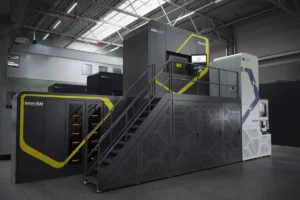
In contrast, additive manufacturing processes, such as laser bed powder fusion (LBPF) which the team focused on, enable rapid cooling. LBPF involves precisely melting layers of metal powder with a laser, allowing them to solidify almost instantaneously before the next layer is added. This extremely rapid solidification process effectively "freezes" the fine precipitate structure that was meticulously predicted by the machine learning model, thereby preserving the desired high-strength characteristics.
"It’s often necessary to consider how a material’s composition can be optimized to be compatible with the nuances of 3D printing," Professor Hart observed. "In this instance, 3D printing itself has become an enabler, opening up new possibilities precisely because of the unique attributes of the process, most notably its exceptionally fast cooling rates. This very rapid freezing of the alloy after laser-induced melting is what allows for the development of this special suite of properties."
Rigorous Testing Confirms Unprecedented Strength and Stability
To definitively validate their innovative design, the research team procured a batch of printable metal powder precisely formulated according to their new alloy recipe. This powder, a sophisticated blend of aluminum and five additional elements, was then sent to collaborating laboratories at Paderborn University in Germany. There, using state-of-the-art LPBF equipment, small test samples of the alloy were meticulously printed.
Following their production, these critical test samples were transported back to MIT for comprehensive mechanical testing and detailed microscopic analysis. The results from these rigorous evaluations provided conclusive evidence that the machine learning predictions were not only accurate but also represented a substantial advancement in material performance. The printed alloy exhibited a strength that was five times greater than a conventionally cast version of the same material. Furthermore, it demonstrated a 50% improvement in strength compared to aluminum alloys that had been designed using only conventional simulation methods.
Microscopic imaging provided crucial insights into the underlying microstructural reasons for this remarkable strength. The images revealed an exceptionally dense population of small precipitates, confirming the successful realization of the alloy’s optimized microstructure. Beyond its exceptional strength, the alloy also demonstrated impressive thermal stability, remaining robust and maintaining its structural integrity at temperatures as high as 400 degrees Celsius (approximately 750 degrees Fahrenheit). This high-temperature resistance is a notable achievement for aluminum-based materials, which typically have much lower operational temperature limits.
The success of this project has spurred the research team to further refine their methodology. They are currently applying the same machine learning techniques to explore enhancements in other critical properties of the alloy, such as fatigue resistance, corrosion resistance, and ductility, aiming to unlock its full potential for a wider range of demanding applications.
"Our integrated approach, combining machine learning with additive manufacturing, opens up entirely new avenues for anyone involved in the design of alloys for 3D printing," Taheri-Mousavi concluded with optimism. "My ultimate aspiration is that one day, passengers looking out of an airplane window will see fan blades on the jet engines that are crafted from our advanced aluminum alloys. This signifies a future where innovation in materials science directly contributes to safer, more efficient, and more sustainable transportation."