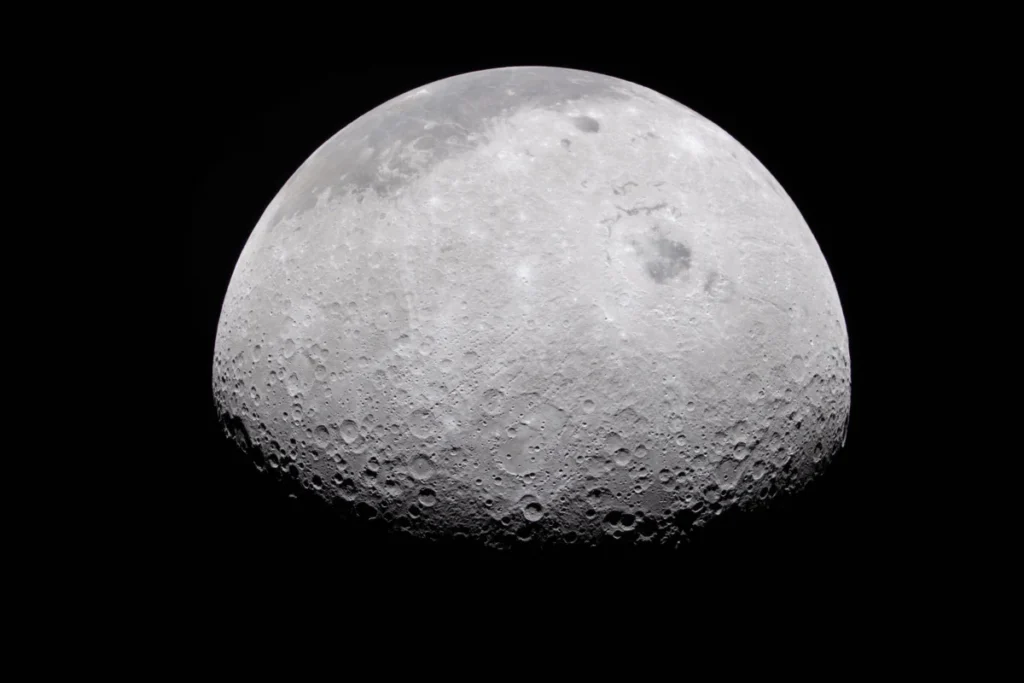
A piece of space hardware, the upper stage of a SpaceX Falcon 9 rocket, is on an inexorable collision course with the Moon, with its impact expected on Wednesday, August 5. The celestial event, while occurring on Earth’s natural satellite, is being meticulously tracked by a joint effort involving NASA and SpaceX, utilizing both ground-based telescopes and sophisticated space-based assets. The impending impact, slated to occur near the Moon’s historically significant Einstein and Bell craters, poses no threat to Earth. Instead, it presents a unique scientific opportunity for NASA researchers to gather crucial data about lunar impacts and to enhance techniques for tracking objects in Earth’s increasingly crowded orbital environment.
The Falcon 9 upper stage in question was part of a commercial mission launched on January 15, 2025. Its primary objective was to deliver Firefly Aerospace’s Blue Ghost 1 lunar lander to the Moon, a key component of NASA’s Commercial Lunar Payload Services (CLPS) initiative. This program aims to facilitate the delivery of scientific instruments and technology demonstrations to the lunar surface by commercial partners, thereby fostering a robust lunar economy and advancing scientific understanding. The unplanned trajectory of the Falcon 9 upper stage back towards the Moon is attributed to a combination of solar activity and gravitational forces that altered its orbital path, leading to its eventual destiny as a lunar projectile. Throughout this process, NASA and SpaceX have maintained close communication, monitoring the rocket stage and its predicted flight path.
The initial identification of the Falcon 9 upper stage’s trajectory was made by independent astronomers who analyzed publicly available orbital data. Their findings were subsequently confirmed by NASA’s Center for Near Earth Object Studies (CNEOS) at the Jet Propulsion Laboratory in Southern California. CNEOS is renowned for its work in tracking natural celestial objects, such as asteroids and comets, that could potentially pose a hazard to Earth. In this instance, CNEOS has definitively determined that the rocket stage has a 100% probability of impacting the Moon. This ongoing tracking effort by NASA is being integrated into its regular training operations for monitoring space debris and celestial bodies.
The Lunar Environment: A Constant Barrage
The Moon, unlike Earth, lacks a substantial atmosphere. This crucial difference means that celestial bodies encountering its surface are not slowed down by atmospheric drag. Consequently, the lunar surface is subjected to a continuous bombardment of meteoroids on a daily basis. While human-made object impacts are considerably less frequent, they do occur, and this Falcon 9 upper stage represents a notable instance of such an event.
Estimates suggest that the impact of the Falcon 9 upper stage will create a crater approximately 60 feet in diameter and about 12 feet deep. The force of the impact will eject a significant amount of lunar dust and rock, known as ejecta, into the surrounding area. To provide a scale for this event, a meteoroid possessing comparable energy to the upper stage strikes the Moon roughly every six days. This highlights that the lunar surface is in a perpetual state of absorbing impacts of similar magnitude, a testament to its dynamic geological history. Despite the disturbance caused by such impacts, observing them offers scientists invaluable insights. The behavior of the ejecta plumes, for example, can reveal critical information about the Moon’s subsurface composition and structure, thereby aiding in the refinement of geological models and guiding future lunar exploration and scientific missions.
Observing the Impact: A Multi-faceted Approach
While the impact will not be visible to the naked eye from Earth, NASA is mounting an ambitious effort to observe the event in real-time. The agency’s Meteoroid Environments Office, situated at the Marshall Space Flight Center in Huntsville, Alabama, will deploy ground-based telescopes to capture images of the impact. However, the success of these observations will be contingent upon favorable weather conditions and optimal lighting on the lunar surface, which can present significant challenges.
In parallel with ground-based efforts, NASA’s Lunar Reconnaissance Orbiter (LRO) will be instrumental in documenting the event. LRO, a veteran of lunar exploration, is equipped with advanced imaging capabilities. Additionally, the ShadowCam instrument aboard South Korea’s Korea Pathfinder Lunar Orbiter is expected to play a vital role. Both orbiters will actively seek opportunities to image the impact site both before and after the event. The availability of these crucial pre- and post-impact images will depend on a complex interplay of factors, including the angle of sunlight, the orbital paths of the spacecraft, and their precise positions relative to the impact zone. It is anticipated that it may take several days to receive and process any imagery captured. Nevertheless, any data collected from these orbital platforms will significantly contribute to scientists’ understanding of artificial impacts on the Moon and their broader implications for future space exploration endeavors.
Responsible Spacecraft Disposal: A Growing Necessity
The scenario of a rocket upper stage impacting the lunar surface, while unplanned in this specific instance, is a technically accepted and safe method of spacecraft disposal. In certain mission architectures, particularly for spacecraft operating in low lunar orbit, this can even be the only practical and feasible option for managing the end-of-life of orbital hardware. Many mission operators opt for controlled impacts on the Moon because they offer predictable and trackable outcomes for their spacecraft, mitigating the risks associated with long-term orbital debris in Earth’s vicinity.
NASA has a steadfast commitment to debris mitigation and the promotion of responsible disposal practices. These principles are fundamental to safeguarding Earth, its orbital environment, and other celestial bodies within our solar system. By adhering to these guidelines, the agency aims to enable scientific discoveries that deepen humanity’s understanding of the cosmos and yield tangible benefits for society. The tracking and study of this Falcon 9 upper stage’s lunar impact underscore this commitment, demonstrating how even seemingly routine end-of-life events can contribute to valuable scientific knowledge and operational advancements.
Background and Chronology of the Event:
- January 15, 2025: SpaceX successfully launches a Falcon 9 rocket, deploying Firefly Aerospace’s Blue Ghost 1 lunar lander. The upper stage of the Falcon 9 rocket begins its journey.
- Post-Launch: Unforeseen solar activity and gravitational forces begin to alter the trajectory of the Falcon 9 upper stage.
- Early Tracking: Independent astronomers, utilizing publicly available orbital data, identify the unusual trajectory of the upper stage, predicting an eventual lunar impact.
- Confirmation by NASA CNEOS: NASA’s Center for Near Earth Object Studies confirms the trajectory and the 100% probability of impact on the Moon.
- Ongoing Monitoring: NASA and SpaceX maintain communication, continuously tracking the upper stage and refining its predicted flight path.
- August 5 (Expected): The Falcon 9 upper stage is projected to impact the lunar surface near the Einstein and Bell craters.
- Observation Campaign: NASA’s Meteoroid Environments Office, the Lunar Reconnaissance Orbiter, and South Korea’s Korea Pathfinder Lunar Orbiter prepare to observe and document the impact.
Supporting Data and Scientific Context:
- Impact Crater Size: Estimated to be approximately 60 feet wide and 12 feet deep.
- Ejecta: Significant quantities of lunar dust and rock are expected to be thrown outward.
- Frequency of Natural Impacts: The Moon experiences impacts of similar energy levels from meteoroids approximately every six days.
- Atmospheric Absence: The Moon’s lack of atmosphere means no natural braking effect for incoming objects.
- CLPS Initiative: A NASA program to foster commercial lunar delivery services, promoting scientific research and economic development on the Moon.
- Space Debris Concerns: The increasing amount of orbital debris in Earth’s vicinity necessitates responsible disposal strategies for spacecraft.
Implications for Future Lunar Exploration and Science:
The study of artificial impacts on the Moon, such as this Falcon 9 upper stage event, offers several significant implications for future endeavors:
- Geological Understanding: Analyzing the ejecta plumes and crater formation provides direct insights into the composition and layering of the lunar regolith. This data is crucial for understanding the Moon’s geological history and for selecting optimal landing sites for future missions, especially those involving resource utilization.
- Refining Impact Models: Observing the actual impact allows scientists to validate and refine their computational models that predict the effects of impacts. This is essential for assessing potential hazards from both natural and artificial objects and for designing robust spacecraft and infrastructure that can withstand lunar conditions.
- Space Situational Awareness: The process of tracking and predicting the trajectory of this upper stage, and the subsequent observations, contributes to the ongoing development and refinement of space situational awareness capabilities. These are critical for managing the growing number of objects in cis-lunar space and for ensuring the safety of future missions.
- Testing Observation Techniques: The multi-faceted observation campaign, involving ground-based telescopes and orbital assets, serves as a valuable testbed for new techniques and technologies for monitoring lunar events. This includes assessing the effectiveness of different instruments and strategies for capturing and analyzing impact data.
- Demonstrating Responsible Practices: While unplanned, the eventual impact of the upper stage on the Moon highlights a common and accepted method for disposing of spent rocket stages. This event, and its scientific study, contributes to the broader conversation and practice of responsible space exploration and the management of celestial bodies.
The scientific community eagerly awaits the data that will be gleaned from this unique celestial encounter. The deliberate study of an artificial impact on another world, even one as familiar as the Moon, underscores humanity’s growing presence in space and its commitment to expanding our knowledge of the cosmos through both planned and, at times, serendipitous events.