Global circularity has alarmingly slipped to 6.9%, a stark indicator that industries worldwide are consuming resources at a rate significantly faster than they can be recuperated or regenerated. This critical decline highlights an urgent need for systemic change, where efficient industrial technologies, particularly advanced motor drives, emerge as pivotal tools in bridging this widening resource gap. As emphasized by Anne Franzas, Global Product Manager for Circularity at ABB, the integration of such technologies is not merely an operational upgrade but a fundamental re-evaluation of industrial sustainability.
The sobering data from the most recent Circularity Gap Report for 2025 casts a long shadow over both today’s pressing environmental challenges and the inherent structural obstacles faced by companies striving for long-term viability. For industries, sustained competitiveness in the coming decades hinges on an unprecedented ability to design, manufacture, and operate industrial assets that are intrinsically less resource-intensive. This necessitates equipment that consumes significantly less energy, boasts extended operational lifetimes, and crucially, preserves critical raw materials (CRMs) – the indispensable building blocks upon which modern technologies and economies are increasingly reliant.
The Global Circularity Imperative: A Deepening Resource Crisis
The concept of circularity, moving away from the traditional linear "take-make-dispose" economic model, has gained significant traction, yet the latest figures reveal a disheartening reality: the world is becoming less circular. The 6.9% global circularity rate means that only a fraction of the materials consumed are cycled back into the economy, leading to accelerating depletion of finite natural resources, heightened environmental pollution, and increased geopolitical risks associated with CRM supply chains. This decline is not merely an environmental concern; it presents a formidable economic challenge, driving up material costs, exposing businesses to supply chain volatility, and intensifying regulatory pressure for sustainable practices. The underlying causes are complex, encompassing exponential population growth, rapid industrialization, and a persistent global reliance on virgin materials, often fueled by a short-sighted focus on initial purchase price over total lifecycle cost.
The Unseen Cost of Linear Industrial Models: A Problem Statement

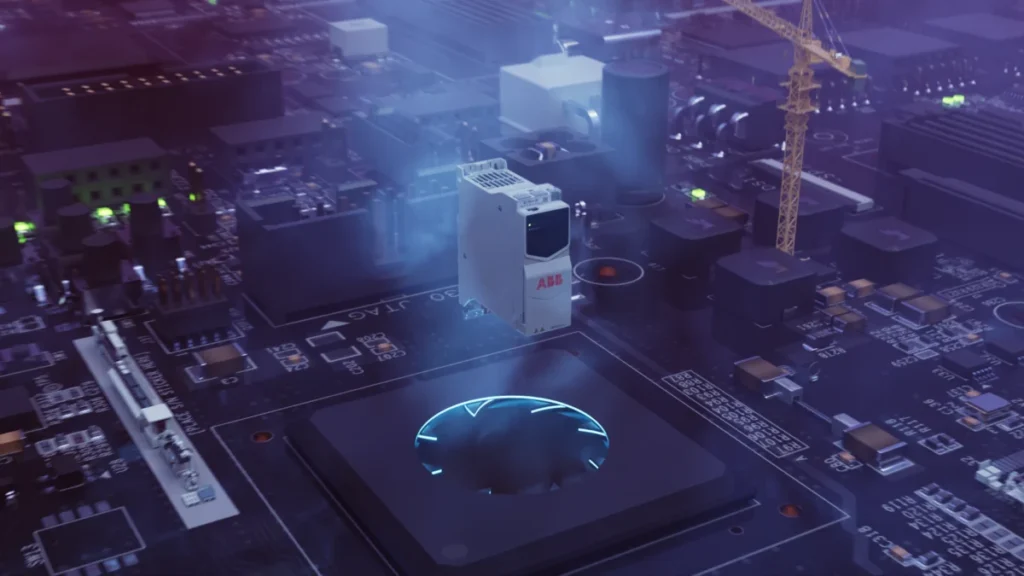
Historically, the industrial sector, a prodigious consumer of energy and materials, has operated largely within a linear framework. Equipment was designed for a single use cycle, often with little consideration for end-of-life recovery or resource efficiency beyond basic operational performance. For manufacturers and operators engaged in supplying or operating motor-driven automation systems, Variable Frequency Drives (VFDs) represent a class of long-life infrastructure assets. Their design, material composition, service life, and inherent material efficiency directly dictate not only energy consumption and operational uptime but also the volume of waste generated over decades of continuous use. A conventional approach to industrial drives often prioritizes immediate cost and basic functionality, overlooking the profound long-term implications for resource depletion, energy waste, and the generation of electronic waste. This myopic view contributes significantly to the global circularity deficit, locking industries into unsustainable patterns of resource extraction and consumption.
Variable Frequency Drives: A Foundation for Efficiency and Circularity
In this evolving landscape, the definition of "premium" within the context of industrial VFDs must undergo a profound transformation. It can no longer be confined to superficial metrics like initial purchase price or basic energy efficiency ratings alone. Instead, a truly premium VFD must encompass a holistic set of attributes: robust durability, unwavering reliability, material-efficient design, and crucially, the inherent ability to retain its value and utility across multiple life cycles. This expanded definition aligns with the principles of a circular economy, where value is preserved, waste is minimized, and resources are kept in use for as long as possible.
Beyond Price: The Evolving Definition of ‘Premium’
The misconception that circularity is solely an end-of-life consideration for industrial equipment is pervasive but misguided. For industrial drives, the journey towards circularity commences at the foundational stages of design, material selection, and projected operating life. The preservation and efficient utilization of critical raw materials (CRMs) have ascended to a central strategic priority for manufacturers globally. This paradigm shift mandates that industrial equipment, including VFDs, must be engineered with reduced dependencies on scarce materials, designed for significantly longer lifetimes, possess higher recoverability of components, and offer clearer traceability of their material composition throughout their entire lifecycle. For pioneering drive manufacturers, this translates into a multifaceted approach to product development:
-
Longevity as a Core Value: Durability and Reliability: A cornerstone of circular design is extending product lifespan. Reliability is not merely an engineering target for operational stability; it is a fundamental resource-conservation strategy. By ensuring VFDs perform reliably for longer periods, the need for premature replacements is drastically reduced, thereby lessening the demand for new raw materials and the energy associated with manufacturing new units. This involves rigorous testing and design for extreme conditions, understanding degradation mechanisms at a microscopic level, and selecting components for maximum resilience. For instance, ABB’s quality and reliability testing, including sophisticated analyses at its Helsinki laboratory, meticulously investigates component degradation mechanisms. Through advanced techniques such as electron microscopy, accelerated aging protocols, and extensive vibration and corrosion exposure, crucial insights are gathered. These insights directly inform design work, ensuring that VFDs are engineered to last as long as technically feasible, thus actively contributing to the preservation of CRMs and delaying the consumption of new resources.

-
Resource Prudence: Material Efficiency and Critical Raw Materials: Part of the circular design approach involves a deliberate and strategic reduction in the use of materials. Every kilogram of material avoided in manufacturing and every kilowatt-hour saved over a drive’s operating life directly contributes to the preservation of non-renewable materials and accelerates progress towards global climate goals. Recent redesigns by leading suppliers exemplify how principles of modularity and lightweight construction can significantly reduce overall material demand while simultaneously boosting installation flexibility and ease of maintenance. This commitment to material efficiency also extends to the careful selection of CRMs. Manufacturers are increasingly designing products with fewer, or more easily separable, CRMs, facilitating their recovery and reuse. This proactive approach mitigates supply chain risks, reduces environmental impact, and enhances the economic viability of recycling and remanufacturing programs. The drive to minimize CRM consumption is not just environmentally responsible; it is strategically indispensable in a world characterized by constrained material resources and escalating energy costs.
-
The Power of Efficiency: Decarbonization and Energy Savings: The most profound circularity impact derived from VFDs stems from their unparalleled energy efficiency capabilities. Globally, a substantial proportion of industrial motors continue to operate direct-on-line (DOL), running at full speed irrespective of actual load conditions, with output often throttled mechanically. This widespread inefficiency represents one of the largest untapped opportunities for industrial decarbonization. The implementation of speed control through VFDs can dramatically reduce a motor’s energy consumption, often by 25% to 70%, depending on the application. Beyond energy savings, VFDs boost process yield, minimize wear and tear on mechanical systems, and prevent unnecessary electricity usage, leading to significant operational cost reductions and extended equipment life. Increasing the adoption rates of VFDs is, therefore, one of the most impactful strategies available for reducing the total lifecycle material and energy consumption across diverse industrial sectors. This makes them a critical technology for meeting ambitious climate targets and fostering a more energy-secure future.
-
Future-Proofing Assets: Modularity and Upgradeability: In a rapidly evolving technological landscape, a truly premium VFD must also possess the inherent ability to remain relevant and valuable even as customer requirements shift, digital ecosystems advance, and regulatory expectations evolve. This is achieved through modular, forward- and backward-compatible architectures. Such designs significantly reduce the necessity for complete unit replacements, ensuring that CRM-intensive components can remain in productive use for extended periods. The ability to upgrade electronics, cooling modules, or implement firmware-based performance enhancements effectively extends the useful life of a drive without demanding the consumption of new materials for an entirely new unit. This modularity not only offers economic benefits by delaying capital expenditure but also embodies the circular principle of maintaining maximum utility from existing assets.
-
Closing the Loop: End-of-Life Recoverability: The final, yet equally critical, aspect of circularity for industrial drives is robust end-of-life management. When a VFD finally reaches the end of its operational life, its embedded materials and components must not be lost to waste streams. Instead, they should be systematically reclaimed and reintroduced into the manufacturing cycle through comprehensive take-back and remanufacturing programs. This ensures that their inherent technical and material value is preserved. Effective take-back programs, facilitated by clear material traceability and design for disassembly, are crucial for recovering valuable CRMs and reducing the environmental impact associated with disposal. Remanufacturing, where components are restored to "as-new" condition, further extends the life of high-value parts, drastically reducing the demand for new production and minimizing waste.
Industry’s Strategic Shift: Insights from Leaders
The shift towards this holistic definition of premium is not merely an aspirational goal but a strategic imperative being embraced by industry leaders like ABB. Anne Franzas’s insights underscore the critical understanding that efficiency ratings, while important, only tell a fraction of the story. A truly premium drive delivers reliable performance over the long term, thereby delaying replacement cycles and minimizing costly downtime. This, in turn, directly alleviates pressure on global critical raw material supply chains, embodying the very essence of circular design. The proactive engagement of companies in designing products for multiple lifecycles, reducing material consumption, and facilitating end-of-life recovery signals a maturing understanding of corporate responsibility and long-term business resilience.

Economic and Environmental Imperatives: The Broader Implications
The implications of this redefined "premium" extend far beyond individual product specifications. Economically, businesses that adopt circular VFDs stand to benefit from reduced operational costs due to lower energy consumption, extended asset lifespans, and minimized maintenance requirements. Furthermore, a reduced reliance on virgin CRMs can insulate companies from volatile commodity markets and geopolitical supply chain disruptions, enhancing strategic resilience. Environmentally, the widespread adoption of such drives contributes significantly to global decarbonization efforts, resource conservation, and waste reduction. Socially, it fosters more responsible consumption patterns and supports the development of greener industries. This comprehensive approach transforms sustainability from a compliance burden into a competitive advantage.
The Path Forward: Driving a Leaner, Cleaner Industry
The decade ahead demands a fundamental rethinking of what constitutes "premium" in industrial technologies. Industrial drives and motors collectively convert over 40% of global electricity into motion, granting them an enormous, unparalleled capacity to accelerate the green transition. However, this transformative potential can only be fully realized if adoption rates dramatically increase in the currently under-automated Direct-On-Line (DOL) applications, and crucially, if the drives themselves are meticulously engineered for circular material flows. This strategic alignment – combining enhanced energy efficiency with robust material circularity – offers end-users a powerful dual advantage: boosting performance and profitability while simultaneously forging a leaner, cleaner, and more resilient industrial ecosystem. The transition to a truly circular industrial economy, powered by intelligently designed VFDs, is not just an option; it is an indispensable pathway to a sustainable future.
ABB | abb.com/global/en/areas/motion