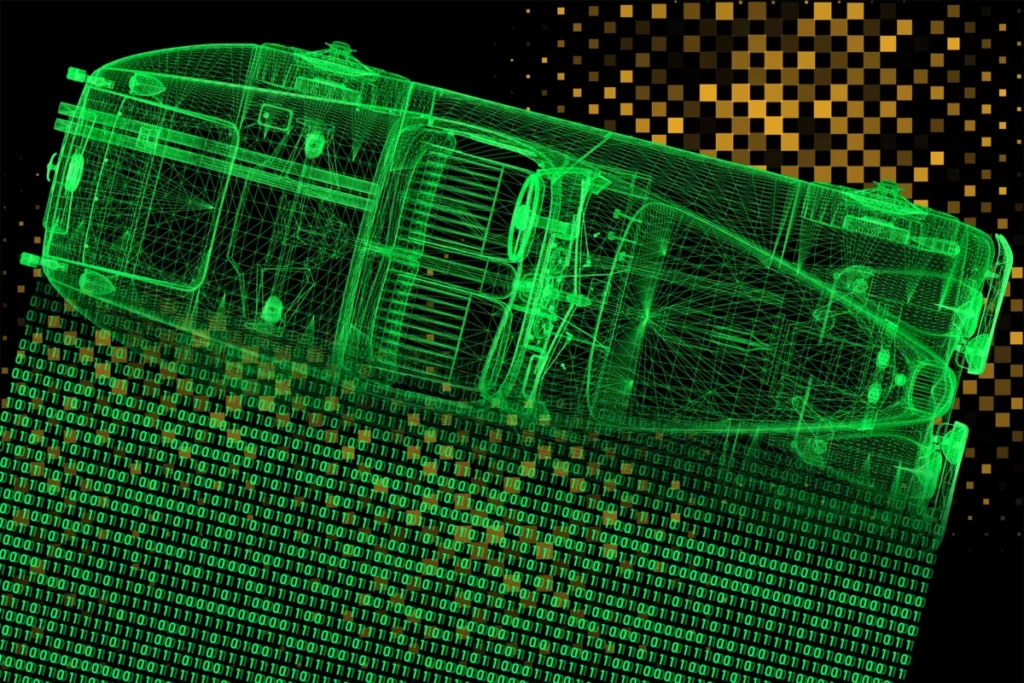
Engineers routinely leverage sophisticated vision-language models (VLMs) to conceptualize and generate novel designs, ranging from intricate airplane components to streamlined automobile parts. To rigorously assess the real-world performance of these designs, they rely on established computer-aided design (CAD) software, which translates preliminary concepts into detailed 3D models. These digital models are then subjected to a battery of virtual tests, including crash simulations and durability analyses, crucial steps in ensuring product safety and longevity. However, the process of manually converting 2D design sketches or concepts into functional 3D CAD programs has historically been a labor-intensive and error-prone bottleneck in the design workflow, often requiring significant human expertise and iterative refinement.
Addressing this critical challenge, a collaborative team of researchers from the Massachusetts Institute of Technology (MIT) and other institutions has engineered a pioneering system capable of autonomously teaching a vision-language model to convert 2D designs into CAD programs. This novel approach significantly surpasses existing methods in both accuracy and functionality, all while demanding a mere fraction of the computational resources typically required. The development, recently presented at the prestigious International Conference on Machine Learning, marks a substantial leap forward in the integration of artificial intelligence into engineering design, promising to fundamentally streamline the rapid prototyping process, curtail development costs, and potentially unlock design solutions that might otherwise remain undiscovered by human engineers.
The Evolving Landscape of Engineering Design and the AI Imperative
The journey of any physical product, from the most mundane household appliance to the most complex aerospace vehicle, invariably commences with a CAD model. For decades, CAD software has been the indispensable backbone of product development, enabling engineers to create, modify, analyze, and optimize designs with unparalleled precision. Traditional CAD workflows, while powerful, often involve a sequential process: initial conceptualization (frequently in 2D sketches or digital drawings), followed by manual translation into a 3D digital model using specialized CAD tools, and subsequent analysis and refinement. This manual translation step, especially for complex geometries or novel designs, can be a significant time and resource sink.
The advent of artificial intelligence, particularly in areas like computer vision and natural language processing, has spurred intense interest in automating various stages of the design process. Vision-language models, trained on vast datasets of images and corresponding textual descriptions, have shown promise in understanding visual information and generating relevant code or descriptions. In the context of CAD, the ambition has been to develop VLMs that can interpret a 2D image of a design and automatically generate the corresponding 3D CAD model, ideally in a programmatic format (e.g., Python code) that can be executed within standard CAD software. Such an advancement would effectively bridge the gap between initial conceptualization and digital prototyping, accelerating the entire design cycle.
However, existing VLMs have encountered significant hurdles in achieving the accuracy and robustness required for practical engineering applications. A primary bottleneck identified by the researchers is the scarcity of diverse, high-quality CAD datasets suitable for training these sophisticated models. Unlike general image recognition tasks, CAD generation demands extreme precision, an understanding of geometric constraints, and the ability to produce functional, executable code. Models trained on insufficient or imbalanced datasets often produce simplistic shapes, fail to adhere to critical design specifications, or generate non-executable code, rendering them inadequate for real-world industrial practice. This limitation has historically necessitated extensive human intervention to correct AI-generated designs, mitigating much of the potential efficiency gains.
Introducing GIFT: A Self-Improving Framework for CAD Generation
To overcome these inherent limitations, the MIT-led team devised a novel data augmentation system named GIFT, an acronym for Geometric Inference Feedback Tuning. Unlike conventional data augmentation techniques, which typically involve generic modifications to existing data (such as altering color, size, or orientation of objects in images) to increase sample variety, GIFT adopts a "model-aware" approach. This means that GIFT’s data generation strategy is intrinsically informed by the specific strengths and weaknesses of the vision-language model it aims to improve.
The core ingenuity of GIFT lies in its iterative feedback loop, which enables the VLM to learn from its own mistakes in a highly targeted manner. The system operates by first tasking the VLM with converting a 2D image into a CAD program. As the model attempts to generate the Python code for the 3D model, GIFT meticulously monitors its performance. When the VLM produces an incorrect or nearly correct solution – a "near-miss" – GIFT does not simply discard it. Instead, it intelligently analyzes these failures, identifies the specific errors, and then rectifies them to transform the flawed output into a perfectly correct and executable CAD program. These refined "near-misses," alongside the model’s initial successful solutions, are then incorporated into a continually expanding, high-quality dataset.
This enriched dataset serves as a personalized training ground for the VLM. By exposing the model to its own corrected errors and the successful pathways derived from them, GIFT teaches the VLM how to diagnose and resolve specific types of mistakes and how to tackle complex geometric or programmatic challenges that it initially struggled with. As Giorgio Giannone, a research affiliate in MIT’s Design Computation and Digital Engineering (DeCoDE) Lab and a principal research scientist on the AI Innovation Team at Red Hat, articulated, "We want engineers to be able to point our framework at an underperforming CAD model, set a compute budget, and let the system take over – turning the model’s own mistakes into better training data." This self-correcting mechanism significantly reduces the reliance on costly, time-consuming human curation of training data, a major advantage in developing robust AI design tools.
Precision, Efficiency, and the Power of Inference-Time Scaling
A critical aspect of GIFT’s efficiency is its utilization of inference-time scaling. This innovative process allows a pre-trained VLM to generate superior outputs without the necessity of expensive and computationally intensive full model retraining. Instead, users can specify a "compute budget," and GIFT intelligently allocates resources during the inference phase (when the model is generating predictions) to refine and optimize the output. This user-defined flexibility allows engineers and researchers to balance computational cost with desired accuracy, making the system highly adaptable to various project requirements and resource constraints.
The practical implications of this efficiency are profound. The research demonstrated that VLMs employing GIFT were able to generate CAD programs with significantly higher accuracy, while requiring only approximately 20 percent of the computational resources compared to other state-of-the-art techniques. This substantial reduction in computational overhead translates directly into faster design iterations, lower operating costs for AI infrastructure, and broader accessibility for organizations with varying computational capacities. The CAD models generated by VLMs using the GIFT framework also exhibited superior alignment with "ground-truth models," indicating a higher degree of geometric fidelity and functional correctness—a paramount consideration in engineering applications where precision is non-negotiable.
Voices from the Forefront: Expert Perspectives
The significance of this research resonates deeply within the engineering and AI communities. Faez Ahmed, an associate professor of mechanical engineering at MIT, leader of the DeCoDE Lab, and a principal investigator at the MIT-IBM Computing Research Lab, emphasized the broad industrial appetite for such advancements. "Nearly every physical product around us, from airplanes to appliances, begins its life as a CAD model. Industry teams are eager for AI that can help speed-up the creation of these designs, but today’s models often produce simple shapes inadequate for practice," Ahmed noted. He further highlighted the transformative potential of GIFT, stating, "What excites me about this work is that it gives many image-to-CAD-code models a way to improve themselves, learning from their own errors rather than waiting for more human-made data – and that brings trustworthy AI design tools much closer to everyday engineering."
The collaborative nature of the research, involving institutions like MIT, IBM, and Red Hat, underscores the interdisciplinary effort required for such breakthroughs. Akash Srivastava, director of Core AI at IBM and a principal investigator at the MIT-IBM Computing Research Lab, along with Kai Xu of Red Hat, are also co-senior authors on the paper, signifying the strategic importance of this work for their respective organizations. IBM, a global leader in enterprise AI, and Red Hat, a prominent provider of open-source solutions, are keenly invested in developing robust, industrially applicable AI tools. Their involvement suggests a strong interest in translating this academic innovation into practical, scalable solutions for their clients across various sectors. The funding provided by the MIT-IBM Computing Research Lab further highlights the strategic alignment and shared vision in advancing the frontiers of AI for critical scientific and engineering challenges.
A New Era for Rapid Prototyping and Innovation
The implications of GIFT extend far beyond mere computational efficiency; they promise to usher in a new era for rapid prototyping and design innovation across a multitude of industries.
- Accelerated Product Development: By significantly shortening the design-to-simulation cycle, GIFT can drastically reduce the time required to bring new products to market. Engineers can iterate through a greater number of design variations in a fraction of the time, leading to faster innovation and improved responsiveness to market demands.
- Cost Reduction: The automation of 2D-to-3D conversion, coupled with reduced computational costs, translates directly into lower development expenses. This economic benefit can be particularly impactful for small and medium-sized enterprises (SMEs) that may lack the extensive resources of larger corporations.
- Enhanced Design Exploration: AI-driven CAD generation can help engineers explore vast and complex design spaces more thoroughly. By rapidly generating and evaluating numerous permutations, the system can identify novel and beneficial design choices that human engineers might overlook due to cognitive biases or time constraints. This capability is crucial for optimizing performance, manufacturability, and sustainability.
- Democratization of Design: While advanced CAD software remains complex, an AI system that can intuitively convert 2D sketches into functional 3D models could potentially lower the barrier to entry for complex product design. This could empower a wider range of innovators, from startups to individual creators, to bring their ideas to fruition more easily.
- Industry-Specific Applications: The benefits are particularly salient in sectors like aerospace, automotive, and consumer electronics, where design complexity, safety, and performance are paramount. For instance, in automotive design, rapid generation of car body panels or internal components could accelerate crash test simulations and aerodynamic optimization. In aerospace, complex wing structures or engine components could be prototyped and analyzed faster, leading to safer and more efficient aircraft.
- Towards Trustworthy AI in Engineering: The ability of GIFT to learn from its own errors and refine its outputs contributes significantly to the development of "trustworthy AI." In critical engineering applications, where safety and reliability are paramount, an AI system that demonstrates self-correction and high accuracy instills greater confidence in its generated designs.
The Future Trajectory: Beyond Geometry
While the initial focus of GIFT has been on geometric accuracy, the research team envisions an expansion of its capabilities. As Giannone pointed out, "With GIFT, we started with geometry because with engineering problems, if the geometry of a 3D shape is not correct, nothing else will be correct, but there are many other aspects to consider."
In the future, the researchers aim to evolve GIFT into a comprehensive framework that can teach models to generate CAD programs not only for perfect geometry but also for improved performance and manufacturability of 3D models. This would involve incorporating feedback related to structural integrity, material properties, assembly considerations, and production processes. Such an advancement would transform GIFT from a geometric translator into a holistic design optimizer, capable of producing models that are not just visually accurate but also structurally sound, cost-effective to produce, and optimized for their intended function. The team also plans to apply the system to larger, more complex models and to a broader array of diverse CAD generation tasks, further pushing the boundaries of AI in engineering design.
The research, funded in part by the MIT-IBM Computing Research Lab, represents a pivotal moment in the ongoing convergence of artificial intelligence and advanced engineering. By enabling AI models to learn autonomously from their own design iterations, GIFT sets a new standard for intelligent design tools, promising to fundamentally reshape the future of product development and innovation worldwide.