Cambridge, MA – Researchers at the Massachusetts Institute of Technology (MIT) have engineered a groundbreaking new technique, dubbed HardFlow, designed to empower generative artificial intelligence (AI) models to reliably find solutions for high-stakes problems where adherence to stringent rules is paramount. This innovation addresses a critical limitation in current generative AI applications, particularly in sectors where a plausible or "nearly correct" answer simply isn’t sufficient; instead, outputs must unfailingly satisfy non-negotiable safety, physical, or task-specific requirements, commonly referred to as hard constraints.
The Pressing Need for Constraint-Aware AI in Critical Applications
The proliferation of sophisticated generative AI models, such as diffusion models like Stable Diffusion and flow-matching models like FLUX, has revolutionized content creation, design, and data synthesis. These powerful algorithms learn to produce novel data by iteratively transforming random noise, offering immense potential across a vast array of applications. However, as AI transitions from creative tools to decision-making engines in safety-critical environments, the stakes dramatically increase. In fields ranging from autonomous vehicles and medical diagnostics to industrial automation and financial modeling, the consequences of even minor errors can be catastrophic.
Historically, a significant challenge for generative AI in these high-stakes settings has been the consistent enforcement of "hard constraints." These are non-negotiable boundaries dictated by physical laws (e.g., an object cannot occupy two spaces simultaneously), engineering specifications (e.g., a robotic arm’s joint limits), safety protocols (e.g., maintaining a minimum safe distance from humans), or regulatory requirements (e.g., financial transaction rules). While existing generative models excel at producing outputs that closely approximate desired outcomes, their inherent probabilistic nature often means they cannot guarantee absolute compliance with these strict conditions. A robot’s path planning on a crowded factory floor, for instance, might yield a "nearly correct" trajectory that, in reality, still results in a collision with a human co-worker or another machine. Similarly, in drug discovery, a generated molecule must adhere to specific chemical valency rules, or in aerospace, a flight path must respect airspace regulations and aircraft performance limits. The absence of guaranteed constraint satisfaction has significantly hampered the widespread deployment of generative AI in such critical domains, creating a chasm between the technology’s potential and its practical utility.
HardFlow: A Novel Approach to Constraint Enforcement
The core innovation behind HardFlow lies in its unique strategy for enforcing these hard constraints. Unlike conventional methods, which often impose strict requirements at every intermediate step of the generation process, HardFlow grants the generative model greater freedom during its exploratory phase. It then rigorously enforces the hard constraints only on the final output. This subtle but profound shift allows the model to explore a richer, more expansive solution space, ultimately leading to higher-quality outputs that are also guaranteed to be feasible and compliant.
Navid Azizan, the Alfred H. and Jean M. Hayes Career Development Associate Professor in the Department of Mechanical Engineering and the Institute for Data, Systems, and Society (IDSS) at MIT, and a principal investigator of the Laboratory for Information and Decision Systems (LIDS), underscores this principle. "The promise of generative AI is its ability to explore a rich space of possibilities, but the real world places boundaries on which possibilities are acceptable. Our approach lets us preserve that generative power while enforcing the nonnegotiable requirements of high-stakes or safety-critical applications," Azizan states, highlighting the dual benefit of innovation without compromise on safety.
The technique is remarkably adaptable and designed as a "plug-and-play" solution. This means HardFlow can be applied at deployment time to existing pretrained generative models without the need for extensive retraining. This feature significantly lowers the barrier to entry for incorporating robust constraint satisfaction into current AI systems, accelerating its potential adoption across industries already utilizing generative AI.
Addressing Limitations of Traditional Constraint Methods
Prior attempts to instill constraint awareness in generative AI, such as projection-based sampling, typically involve repeatedly forcing partial solutions (intermediate samples) to satisfy strict requirements throughout the generation process. While this ensures compliance, it often comes at a significant cost: it can unduly restrict the model’s exploration capabilities, preventing it from discovering genuinely optimal or high-quality final solutions. Imagine navigating a complex maze where every single step must adhere to a strict rule; this might lead to a safe but incredibly inefficient path.
Zeyang Li, a graduate student in mechanical engineering and LIDS and the lead author of the paper, elaborates on this drawback: "For constraint satisfaction, what ultimately matters is the model’s final output, since the internal process is discarded. By not requiring every intermediate step to satisfy the constraints, we give the model more freedom to find high-quality solutions that are still feasible in the end." This insight forms the foundational premise of HardFlow, allowing for a more nuanced and effective approach. Furthermore, these older methods frequently focus solely on satisfying the constraints, often overlooking opportunities to simultaneously enhance other critical qualities of the solution, such as efficiency, speed, or cost-effectiveness. For instance, a collision-free robot path might be found, but it could be excessively long or slow. HardFlow addresses this by explicitly integrating quality optimization into its framework.
The Technical Underpinnings: Optimal Control and Trajectory Optimization
The ingenuity of HardFlow lies in its sophisticated mathematical formulation. The researchers reformulated the problem of hard-constrained sampling as a trajectory-optimization problem, leveraging powerful tools from the field of optimal control. Optimal control theory provides a robust framework for determining the best possible way to control a dynamic system over time, often to achieve a specific objective while satisfying certain constraints. In the context of generative AI, this translates to steering the model’s sampling trajectory towards a desired goal, making subtle, informed corrections along the way, all while guaranteeing that the final output satisfies the user-defined hard constraints.
"Control theory gives us a powerful framework for formalizing the optimal way of making these corrections," Azizan explains. However, applying trajectory optimization to the vast and intricate landscape of a neural network, which can comprise hundreds of interconnected layers processing data, presents a formidable computational challenge.
To render this problem tractable, the MIT team strategically leveraged the inherent structure of flow-matching models. This allowed them to decompose the complex, overarching problem into a sequence of smaller, more manageable single-step subproblems. Subsequently, through systematic transformations and approximations, they derived an efficient and scalable algorithm capable of finding a feasible solution in real-time at deployment. "Essentially, we transformed the trajectory-optimization problem into something that preserves the key properties of the original problem but can be solved very efficiently at deployment time," Azizan adds, underscoring the practical applicability of their theoretical breakthrough.
Beyond Mere Compliance: Optimizing for Quality and Efficiency
One of HardFlow’s most significant advantages is its ability to go beyond mere constraint satisfaction. By reformulating the task as an optimization problem, HardFlow can seamlessly incorporate additional objectives that enhance the overall quality of the final answer. This means that instead of just finding a solution that meets the constraints, it can find the best solution that meets them. For example, in robot path planning, HardFlow can identify a collision-free path that is also the shortest possible distance to its goal, or the quickest in terms of travel time.
Li highlights this synergistic capability: "Our framework can jointly handle both aspects, which helps it perform much better than existing methods." This holistic approach ensures that AI systems can not only operate safely and within defined boundaries but also do so with peak efficiency and performance, unlocking new levels of utility in complex applications.
Rigorous Experimental Validation and Promising Results
The efficacy of HardFlow was rigorously tested across a diverse suite of experiments spanning critical domains. These included robotic manipulation, maze navigation, and text-guided image editing, each presenting unique sets of hard constraints and quality objectives.
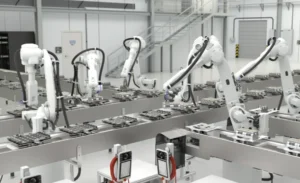
In experiments involving robotic manipulation, HardFlow enabled a robotic arm to precisely avoid collisions with obstacles in its workspace while simultaneously identifying the quickest path to a target object. Traditional methods, in contrast, frequently either resulted in collisions or produced paths that were significantly longer and less efficient. For maze navigation, HardFlow consistently found paths that adhered to maze boundaries and rules while optimizing for the shortest route. In text-guided image editing, the technique ensured that modifications to images respected structural or semantic constraints while still producing high-quality, aesthetically pleasing results aligned with textual prompts.
Across all these varied scenarios, HardFlow consistently achieved perfect constraint satisfaction, a crucial benchmark for safety-critical systems. Furthermore, it consistently outperformed baseline methods on measures of solution quality, demonstrating its dual capacity for both reliability and excellence. Remarkably, HardFlow’s computational time was found to be comparable to or even lower than that of most competing methods, underscoring its efficiency and practical viability.
The research detailing this innovative technique, co-authored by Navid Azizan, lead author Zeyang Li, and Kaveh Alim (a graduate student in IDSS and LIDS), was published this week in the prestigious IEEE Transactions on Pattern Analysis and Machine Intelligence, a testament to its scientific rigor and significance.
Broader Implications and the Future of Trustworthy AI
The development of HardFlow represents a significant leap forward in the quest to build more reliable, trustworthy, and deployable artificial intelligence systems. Its implications reverberate across numerous industries:
- Autonomous Systems: For self-driving cars, drones, and industrial robots, HardFlow offers the potential for guaranteed adherence to safety protocols, traffic laws, and physical limits, significantly reducing the risk of accidents and fostering public trust. This could accelerate the deployment of Level 4 and Level 5 autonomous vehicles.
- Healthcare and Medicine: In drug discovery, HardFlow could ensure generated molecular structures adhere to chemical principles. For medical diagnostics and treatment planning, AI could propose solutions that respect physiological constraints, patient-specific allergies, or drug interaction rules, leading to safer and more effective interventions.
- Aerospace and Defense: Flight path optimization, drone swarm coordination, and complex system diagnostics could benefit from AI models that guarantee compliance with flight regulations, performance envelopes, and operational safety standards.
- Industrial Process Control: In manufacturing and energy sectors, HardFlow could optimize complex processes (e.g., chemical reactions, power grid management) while ensuring strict adherence to safety thresholds, operational limits, and environmental regulations, leading to increased efficiency and reduced risk of failure.
- Ethical AI Development: This research contributes to the broader global effort to develop AI systems that are not only powerful but also responsible and aligned with human values and safety requirements. As regulatory bodies worldwide, such as the European Union with its AI Act, increasingly focus on AI safety and reliability, tools like HardFlow become indispensable.
The "plug-and-play" nature of HardFlow is particularly impactful, as it means industries do not need to retrain their existing, often resource-intensive, generative models from scratch to integrate this safety layer. This ease of adoption could significantly accelerate the transition of generative AI from experimental applications to high-integrity, mission-critical operations.
Looking ahead, the MIT researchers envision extending the HardFlow framework. Future work could explore settings where the AI model itself can be adaptively updated, allowing for continuous improvement in both constraint satisfaction and sample quality. This adaptive learning could further refine the system’s ability to navigate complex, dynamic environments while maintaining unwavering adherence to critical constraints. The advent of HardFlow marks a pivotal moment, signaling a future where generative AI can be trusted not just to imagine possibilities, but to deliver solutions that are both innovative and impeccably safe.