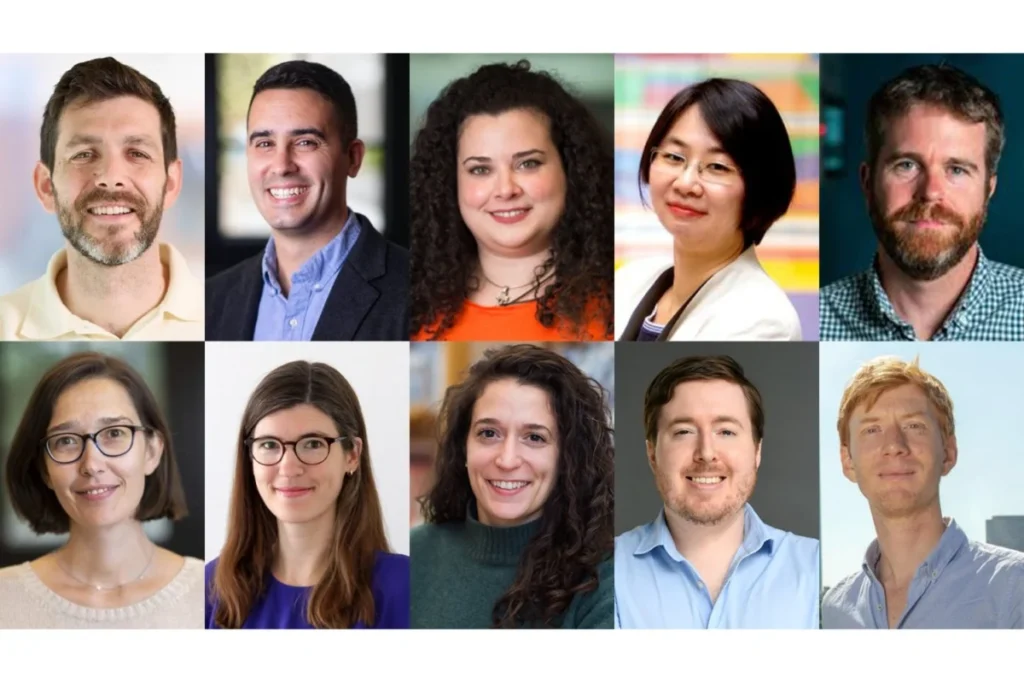
The Massachusetts Institute of Technology’s School of Engineering announced in 2026 the conferral of tenure upon 10 distinguished faculty members, a pivotal career milestone that recognizes their profound impact and exceptional contributions to research, education, and mentorship. This cohort of newly tenured engineers represents a diverse array of groundbreaking expertise, holding appointments across several critical departments including Aeronautics and Astronautics, Civil and Environmental Engineering, Electrical Engineering and Computer Science (EECS) – which reports jointly to the School of Engineering and MIT Schwarzman College of Computing – and Mechanical Engineering, as well as within the interdisciplinary Institute for Medical Engineering and Sciences (IMES).
"I’m delighted to congratulate the 10 newest tenured faculty members in the School of Engineering. This major career milestone reflects not only their impact and excellence in research, but their deep commitment to education and mentoring the next generation of engineers. I am so excited to see what new developments, innovations, and technologies will come next from this incredibly accomplished group," stated Paula T. Hammond ’84, PhD ’93, dean of engineering, Institute Professor, and professor of chemical engineering. Her remarks underscore the dual importance of both pioneering research and dedicated pedagogy in MIT’s mission, highlighting the Institute’s confidence in these scholars to shape the future of their respective fields and inspire future generations.
The Rigorous Path to Tenure at MIT
Tenure at an institution like MIT is not merely a job promotion; it is the ultimate affirmation of a scholar’s sustained excellence, intellectual leadership, and future promise. It grants academic freedom and security, enabling faculty to pursue ambitious, long-term research agendas without undue external pressures. The tenure process at MIT is famously rigorous, often spanning seven to ten years from a faculty member’s initial appointment. It involves multiple stages of intense scrutiny, beginning with departmental reviews that assess teaching effectiveness, research output, funding acquisition, and service contributions. Candidates are evaluated by their peers, both internally and externally, with comprehensive dossiers compiled to document their scholarly impact.
This multi-faceted assessment typically includes detailed evaluations of published works in top-tier journals, presentations at leading conferences, the securing of competitive grants from agencies like the National Science Foundation (NSF), National Institutes of Health (NIH), and Department of Defense (DoD), and the successful mentorship of graduate students and postdoctoral researchers. The departmental recommendation then proceeds through the School’s Tenure Committee, composed of senior faculty from across disciplines, before reaching the Institute’s Academic Council for final approval by the President and Provost. This meticulous, multi-layered review ensures that only those who have demonstrated extraordinary intellectual vitality and who are poised to make enduring contributions to their fields and to MIT are granted this prestigious academic distinction. The 2026 cohort’s successful navigation of this process is a testament to their exceptional caliber and unwavering dedication.
Meet the New Tenured Engineering Faculty
The newly tenured faculty members are at the forefront of innovation, tackling some of the most pressing challenges and exploring the most exciting frontiers in engineering and science. Their work spans artificial intelligence, sustainable energy, advanced materials, aerospace innovation, neuroscience, and personalized medicine, reflecting MIT’s broad commitment to interdisciplinary excellence.
Jacob Andreas: Pioneering Natural Language Processing
Jacob Andreas, an associate professor in EECS and affiliated with the Computer Science and Artificial Intelligence Laboratory (CSAIL), has been granted tenure for his foundational contributions to natural language processing (NLP) and broader artificial intelligence. Andreas’s research delves into the computational foundations of language learning, seeking to unravel how intelligent systems can acquire and understand human language. His work aims to build sophisticated AI systems capable of learning effectively from human guidance, moving beyond mere pattern recognition to deeper comprehension and interactive learning. In an era where large language models are transforming industries, Andreas’s focus on transparency, interpretability, and robust learning mechanisms is crucial for developing AI that is not only powerful but also trustworthy and aligned with human values. His research contributes significantly to making AI more accessible and useful in everyday applications, from intelligent assistants to complex data analysis.
Zachary Cordero: Advancing Materials for Frontier Aviation
Zachary Cordero, the Esther and Harold E. Edgerton Associate Professor in the Department of Aeronautics and Astronautics and associate director of the MIT Gas Turbine Laboratory, earned tenure for his groundbreaking work in advanced materials. His research is dedicated to enabling frontier aviation and space platforms through novel materials, manufacturing techniques, and structural designs, with a particular emphasis on high-temperature systems. Cordero’s laboratory addresses critical challenges in aerospace engineering, such as the need for materials that can withstand extreme temperatures and stresses in hypersonic flight, advanced jet engines, and re-entry vehicles. His innovations in areas like ceramic matrix composites and additive manufacturing are vital for increasing the performance, efficiency, and safety of next-generation aircraft and spacecraft, pushing the boundaries of what is possible in aeronautical and astronautical exploration.
Christina Delimitrou: Optimizing Cloud Systems with Machine Learning
Christina Delimitrou, the KDD Career Development Professor in Communications and Technology and an associate professor in EECS, also affiliated with CSAIL, received tenure for her pioneering work at the intersection of computer architecture and computer systems. Delimitrou is recognized as one of the first systems researchers to effectively apply machine learning techniques to design and management problems in the cloud. Her research addresses the growing complexity and energy demands of large-scale cloud data centers, developing intelligent systems that can optimize resource allocation, predict failures, and enhance performance and efficiency. As cloud computing forms the backbone of modern digital infrastructure, Delimitrou’s contributions are instrumental in ensuring the scalability, reliability, and sustainability of these critical systems, with direct implications for everything from online services to scientific computing.
Sili Deng: Engineering Sustainable Energy and Climate Solutions
Sili Deng, the Doherty Career Development Professor in Ocean Utilization and an associate professor in the Department of Mechanical Engineering, achieved tenure for her significant contributions to understanding and engineering chemically reacting systems. Her group develops scientific machine learning and experimental approaches to address global challenges in sustainable energy, advanced materials manufacturing, and climate-resilient technologies. Deng’s work is critical in the global push for decarbonization, focusing on areas like efficient combustion, carbon capture, and the development of new materials for renewable energy applications. By integrating sophisticated computational models with experimental validation, she is paving the way for more efficient, cleaner, and sustainable industrial processes and energy systems, directly impacting efforts to mitigate climate change and foster a greener future.
David Des Marais: Unlocking Plant Resilience for a Changing Climate
David Des Marais, the Amgen Career Development Professor in the Department of Civil and Environmental Engineering, was granted tenure for his insightful research into plant-environment interactions. As the leader of the Des Marais Lab, his primary focus is on understanding the mechanisms by which plants respond to environmental cues, utilizing tools from molecular, quantitative, and population genetics to identify the physiological basis of these responses. In an era of escalating climate change and increasing food security concerns, Des Marais’s work is profoundly important. By unraveling how plants adapt to stresses like drought, heat, and nutrient deficiencies, his research provides critical insights that can lead to the development of more resilient crop varieties, ensuring sustainable agricultural practices and food supplies for a growing global population.
Carmen Guerra-Garcia: Innovating Aerospace Safety and Emissions Reduction
Carmen Guerra-Garcia, the Esther and Harold E. Edgerton Associate Professor in the Department of Aeronautics and Astronautics and director of the Aerospace Plasma Group, achieved tenure for her innovative work at the intersection of aerospace engineering, low-temperature plasma technologies, and gas discharge physics. Her research directly addresses two major aviation challenges: reducing emissions and ensuring the safety of next-generation aircraft. Guerra-Garcia’s work involves three interconnected thrusts: advancing the fundamental science of electrical discharges in flowing gases and non-uniform media, applying that science to plasma-assisted combustion and chemical conversion, and developing physics-based approaches to lightning protection. Her contributions are vital for developing cleaner, more efficient propulsion systems and enhancing the resilience of aircraft against environmental hazards, charting a course towards a more sustainable and safer future for air travel.
Laura Lewis: Decoding Brain Function Through Advanced Neuroimaging
Laura Lewis, the Athinoula A. Martinos Associate Professor in EECS and IMES, received tenure for her groundbreaking research in neuroimaging. Her work focuses on developing novel methods to analyze and interpret multi-modal neuroimaging data, aiming to measure previously undetectable aspects of brain function. Lewis has a particular interest in fast fMRI, EEG, and PET, applying these advanced techniques to study complex brain states, especially sleep. Her research holds immense promise for advancing our understanding of neurological disorders, mental health conditions, and fundamental brain processes. By pushing the capabilities of neuroimaging, Lewis is enabling new diagnostic tools and therapeutic targets, ultimately improving human health and our comprehension of the most complex organ.
Tami Lieberman: Mapping the Human Microbiome for Health Insights
Tami Lieberman, the Hermann L. F. von Helmholtz Career Development Professor in the Department of Civil and Environmental Engineering and IMES, was granted tenure for her pioneering work in the human microbiome. As the leader of the Lieberman Lab, she seeks to understand how ecology and evolution shape the personalized communities of microorganisms residing within the human body, and the crucial role of this personalization on human health. Lieberman’s research has profound implications for personalized medicine, antibiotic resistance, and understanding chronic diseases. By elucidating the dynamics of microbial communities and their interaction with the host, her work is opening new avenues for developing microbial therapeutics, dietary interventions, and diagnostic tools that leverage the power of the microbiome to promote well-being and combat disease.
Kevin O’Brien: Pushing the Frontiers of Quantum Computing
Kevin O’Brien, an associate professor in EECS and a member of the Research Laboratory of Electronics, earned tenure for his significant contributions to quantum coherent electronics. As the leader of the Quantum Coherent Electronics Group, his research focuses on developing tools, techniques, and devices to enhance the measurement of quantum systems, most notably superconducting quantum computers. O’Brien’s work is critical to overcoming the formidable challenges in building stable and scalable quantum computing platforms. By improving the fidelity and control of quantum bits (qubits), his research is accelerating the development of quantum computers, which promise to revolutionize fields ranging from drug discovery and materials science to cryptography and complex optimization problems, heralding a new era of computational power.
Wim van Rees: Simulating Complex Fluid Dynamics for Engineering Applications
Wim van Rees, an associate professor in the Department of Mechanical Engineering and the Leonardo Career Development Professor in Engineering, achieved tenure for his advanced research in computational fluid dynamics. His work focuses on developing high-order, high-fidelity numerical methods for efficiently simulating complex interactions between fluid flows and moving or deforming bodies. Van Rees’s methodologies span a wide range of applications, from understanding wake vortex dynamics in aircraft to exploring bio-inspired propulsion systems and morphing structures. His research provides critical insights for designing more efficient and agile vehicles, optimizing energy systems, and even understanding biological locomotion. By pushing the boundaries of computational modeling, van Rees is enabling engineers to tackle complex fluid mechanics problems with unprecedented accuracy and detail, leading to innovative designs across numerous industries.
MIT’s Strategic Investment in Academic Excellence
The conferral of tenure to these 10 faculty members underscores MIT’s strategic and continuous investment in academic excellence and its commitment to fostering an environment where groundbreaking research and transformative education can flourish. MIT, consistently ranked among the top engineering schools globally, recognizes that its preeminence hinges on its ability to attract, retain, and empower the brightest minds. This year’s tenure decisions reflect a deliberate effort to strengthen key areas of research that are vital for addressing global challenges and driving future innovation.
The interdisciplinary nature of many of these appointments, such as those within EECS (jointly with the Schwarzman College of Computing) and IMES (jointly with CEE and EECS), highlights MIT’s emphasis on collaborative research that transcends traditional departmental boundaries. This approach is crucial for tackling complex, multi-faceted problems like climate change, personalized medicine, and the development of intelligent systems. By investing in these researchers, MIT is not just securing individual careers but is also reinforcing its institutional capacity to lead in emergent fields and to maintain its competitive edge on the global stage. The Institute’s vast research infrastructure, state-of-the-art laboratories, and extensive network of corporate and governmental partnerships provide an unparalleled ecosystem for these tenured faculty members to expand their research portfolios and translate their discoveries into real-world impact.
Leadership Perspectives and Future Outlook
Dean Paula T. Hammond’s enthusiastic commendation reflects the collective pride and anticipation within the School of Engineering. "These faculty members embody the spirit of MIT: a relentless pursuit of knowledge, a passion for innovation, and an unwavering commitment to making a positive impact on the world," Dean Hammond might further elaborate, emphasizing the human element of scientific discovery. Department heads would likely echo this sentiment, expressing immense satisfaction in seeing their colleagues achieve this significant milestone. "Dr. Andreas’s contributions to NLP are already shaping the future of AI, and we eagerly anticipate the profound advancements he will continue to bring to the field and to our students," an EECS department chair could be quoted as saying, highlighting the direct benefits to academic programs and student learning.
The broader academic community views MIT’s tenure announcements as a bellwether for emerging research trends and a reaffirmation of the Institute’s role as a global intellectual beacon. Competitors and collaborators alike will observe these appointments, understanding that they signal MIT’s strategic focus and the caliber of talent it attracts. For current and prospective students, particularly graduate students, the presence of these newly tenured faculty members means unparalleled opportunities for mentorship, involvement in cutting-edge research projects, and access to the latest scientific and engineering methodologies. Learning from leaders who are actively shaping their fields provides an invaluable educational experience, preparing students to become the next generation of innovators.
Conclusion: A Legacy of Innovation Continues
The tenure grants to these 10 exceptional faculty members in 2026 are more than individual achievements; they are a powerful testament to MIT’s enduring legacy of fostering intellectual leadership and driving transformative innovation. Their work, spanning fundamental science to applied engineering, is poised to yield significant breakthroughs in areas critical to societal progress, from sustainable energy and climate resilience to advanced computing and human health. By recognizing and supporting these brilliant minds, MIT ensures that it will continue to be a fertile ground for discovery, a vibrant hub for education, and a crucial engine for shaping a better future for humanity. The Institute’s commitment to academic freedom, rigorous inquiry, and interdisciplinary collaboration remains steadfast, as exemplified by this remarkable cohort of tenured engineers.