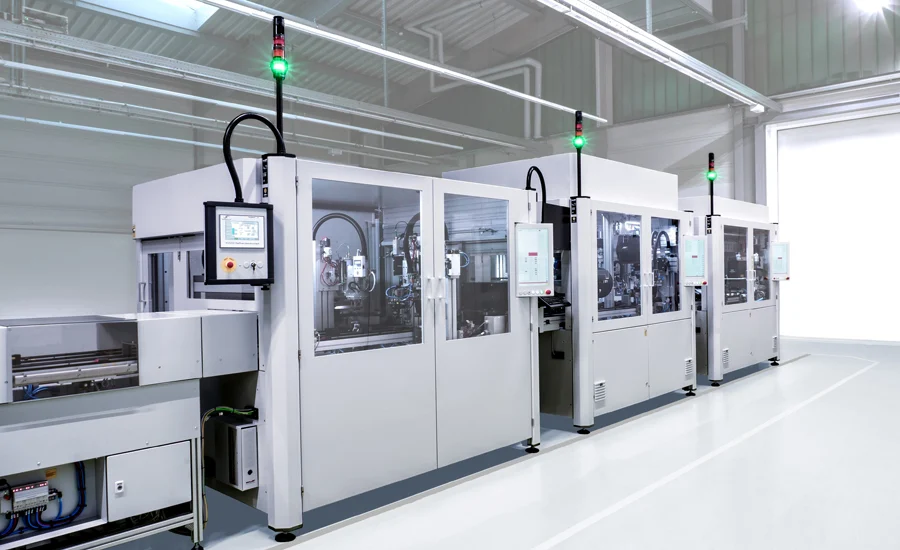
Wolf Production Systems, a German pioneer in automated assembly, has introduced its SkyLine platform, a highly adaptable modular workcell designed to revolutionize precision manufacturing. This innovative system stands out for its capacity to seamlessly integrate diverse laser processing methods—including marking, soldering, and welding—within a standardized yet flexible framework. The SkyLine platform addresses the critical industry demand for versatile, scalable, and high-quality assembly solutions, particularly for high-volume production of intricate electronic modules.
The Evolving Landscape of Laser Technology in Modern Manufacturing
Laser technology has undergone a profound transformation, moving from specialized, niche applications to becoming an indispensable tool across numerous industrial sectors. Its inherent advantages—such as unparalleled precision, high processing speeds, non-contact operation, minimal heat-affected zones, and exceptional repeatability—make it ideally suited for modern manufacturing challenges. The global industrial laser market, valued at approximately $6.2 billion in 2022, is projected to reach over $9 billion by 2028, underscoring the accelerating adoption and continuous innovation in this field. This growth is driven by increasing demand for automation, miniaturization of components, and stringent quality requirements in industries ranging from automotive and medical devices to consumer electronics and aerospace.
Historically, industrial lasers were often cumbersome and required significant floor space, limiting their integration into flexible production lines. However, advancements in laser source technology (fiber lasers, diode lasers, ultrashort pulse lasers), beam delivery systems, and control software have led to more compact, energy-efficient, and powerful solutions. This evolution has paved the way for modular systems like the SkyLine, which can bring advanced laser capabilities directly to the assembly line, either as standalone units or fully integrated into complex automated environments.
Precision Applications: Welding, Soldering, and Marking

The versatility of lasers allows them to perform a wide array of tasks crucial for high-quality product assembly.
-
Laser Welding: This process utilizes a concentrated laser beam to melt and fuse materials, creating strong, clean, and highly precise welds. Unlike traditional welding methods, laser welding offers minimal distortion, fast processing times, and the ability to join dissimilar materials or very fine components. It is particularly effective for hermetic sealing, joining thin-walled parts in electronics, medical implants, and automotive sensors, where leak-tightness and structural integrity are paramount. Both metal and plastic parts can be welded, with specific laser wavelengths and power levels optimized for different material properties. For instance, in electronics, micro-welding of contacts or shielding components is a common application, ensuring robust electrical and mechanical connections.
-
Laser Soldering: In the realm of electronics assembly, laser soldering offers a significant advantage over conventional reflow or wave soldering, especially for delicate components or specific areas on a circuit board. Its localized heat input prevents thermal damage to surrounding components and substrates, making it ideal for fine-pitch components, heat-sensitive materials, and rework applications. The precise energy delivery ensures consistent solder joint quality, reducing defects and improving the long-term reliability of electronic assemblies. This method is increasingly critical for complex modules found in consumer electronics, where miniaturization and performance are key drivers.
-
Laser Marking: Traceability and identification are non-negotiable in modern manufacturing, and laser marking provides an efficient and permanent solution. Lasers can etch identification codes, serial numbers, logos, and other information onto a wide variety of materials without contact, ensuring no mechanical stress or contamination. Different laser marking techniques exist, including:
- Annealing: Changes the color of the material surface without removing material, creating smooth, corrosion-resistant marks, often used on metals.
- Engraving/Ablation: Removes material to create a recess, producing high-contrast, durable marks.
- Foaming: Creates a raised, tactile mark by inducing gas bubbles within plastics, resulting in a light-colored mark on a dark background.
- Color Change/Carbonization: Causes a chemical change in the material, often used for plastics and organic materials.
These capabilities are essential for compliance with regulatory standards, inventory management, anti-counterfeiting measures, and brand identity, ensuring every component can be tracked throughout its lifecycle.
Wolf Production Systems: A Legacy of German Engineering Excellence
Founded in 1988 in Freudenstadt, Germany, Wolf Production Systems has established itself as a reputable provider of high-quality automated assembly systems. With over three decades of experience, the company has built a strong reputation for engineering precision and innovative solutions tailored to the specific needs of its clients. Their commitment to developing both standalone semiautomatic systems and fully integrated automated lines reflects a deep understanding of diverse production requirements, from initial prototypes to full-scale mass production.

Wolf’s philosophy centers on combining robust mechanical engineering with advanced control systems and processing technologies. This approach allows them to deliver solutions that are not only efficient and reliable but also adaptable to future technological advancements and changing production demands. The company’s longevity and success in a highly competitive market underscore its ability to consistently deliver value and performance to its global customer base. Their specialization in laser integration is a direct response to the increasing sophistication of manufacturing processes and the need for higher precision and quality in component assembly.
The SkyLine Platform: Modularity Redefined
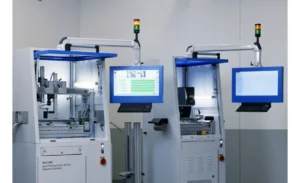
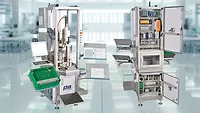
The SkyLine platform represents the culmination of Wolf Production Systems’ expertise, embodying a forward-thinking approach to automated assembly. At its core, SkyLine is a standardized workcell designed with inherent flexibility, allowing manufacturers to deploy it as a standalone unit for specific tasks or integrate multiple cells to form a comprehensive, multistation automated assembly system. This modular design philosophy is a significant advantage in today’s dynamic manufacturing environment, where production requirements can shift rapidly.
-
Unmatched Configurability: A key feature of the SkyLine is its ability to house multiple processing stations within a single cell. Crucially, these stations are designed to be "swapped out as needs change," offering unparalleled adaptability. This means a manufacturer can initially configure a cell for laser marking, and later reconfigure it for laser soldering or welding without needing to invest in an entirely new piece of equipment. This "future-proofing" capability extends the lifespan of the investment and enables manufacturers to quickly pivot to new product lines or processes with minimal downtime and capital expenditure. This aligns perfectly with lean manufacturing principles, promoting agility and reducing waste.
-
Scalable Dimensions: The SkyLine platform is available in a range of sizes to accommodate various part dimensions and processing requirements. Widths range from 800 to 2,200 millimeters, and depths from 1,000 to 2,200 millimeters. This spectrum ensures that whether a customer needs a compact solution for a single process or a larger cell for multiple integrated operations, SkyLine can provide a suitable footprint. The AM 100 cell, measuring 1,000 millimeters wide and 1,000 millimeters deep, is highlighted as a particularly versatile option, capable of accommodating "most laser processing methods," making it a popular choice for a broad range of applications.
-
Targeted Production Profile: Products assembled on the SkyLine platform typically share specific characteristics: they fit inside a shoebox-sized envelope, must meet exceptionally high quality requirements, and are produced in quantities of 200,000 or more annually. This profile points to demanding industries such as:
- Automotive: Sensors, control units, small electronic modules, safety components.
- Medical Devices: Implants, diagnostic cartridges, drug delivery systems, surgical instruments.
- Consumer Electronics: Smartphone components, wearable device modules, IoT sensors, camera modules.
- Aerospace: Small avionics components, sensor assemblies, precision connectors.
For these sectors, the combination of high precision, consistent quality, and efficient high-volume production is paramount, making the SkyLine platform an ideal solution.
Seamless Integration and Levels of Automation
Recognizing the diverse automation strategies of different manufacturers, Wolf Production Systems has engineered the SkyLine platform to support multiple levels of material handling and integration. This ensures that customers can select the most appropriate automation level for their specific production volume, complexity, and budget.
-
Manual Loading (Semiautomatic): The simplest mode of operation involves an operator manually loading and unloading parts through safety doors. This approach is beneficial for lower-volume production, initial prototyping, or processes that require human dexterity for delicate handling. It offers a cost-effective entry point into automated laser processing while maintaining essential safety protocols. The operator remains an integral part of the process, overseeing quality and managing material flow.
-
Enhanced Semiautomatic Loading: For improved throughput and ergonomic efficiency, the SkyLine cell can be equipped with a pair of motor-driven linear slides. This configuration allows an operator to load and unload a set of parts on one slide while another set of parts is being processed simultaneously on the second slide. This parallel processing significantly reduces idle time and increases the overall efficiency of the workcell, bridging the gap between purely manual and fully automated systems. It optimizes human-machine interaction, reducing operator fatigue while boosting productivity.
-
Fully Automated Production: For manufacturers aiming for maximum efficiency, consistency, and lights-out operation, the SkyLine cell seamlessly integrates into fully automated production lines. Two primary methods are offered:
- Rotary Indexing Table: This mechanism presents parts to the processing station in a cyclical manner, making it ideal for high-speed, sequential operations where multiple processes occur at different stations around a central axis. Rotary tables are known for their precision and rapid indexing, crucial for high-volume assembly lines requiring fast cycle times.
- Dual-Belt Pallet-Transfer Conveyor: This system uses standardized pallets to transport parts between multiple processing stations, offering greater flexibility for complex, multi-stage assembly processes. Pallet transfer conveyors are excellent for applications requiring buffer zones, parallel processing, or varying cycle times between stations. They also facilitate integration with other automated equipment like robots, vision inspection systems, and subsequent assembly steps, forming a comprehensive flexible manufacturing system (FMS).
Furthermore, the design of these automated interfaces inherently supports the principles of Industry 4.0. By integrating with broader manufacturing execution systems (MES) and enterprise resource planning (ERP) platforms, the SkyLine cells can collect real-time data on process parameters, throughput, and quality metrics. This data enables sophisticated process control, predictive maintenance, and optimized resource allocation, contributing to smarter, more efficient factory operations.
Quality Assurance and Integrated Testing
The demand for high-quality products, particularly in critical sectors like medical and automotive, necessitates robust quality assurance measures. The precision of laser processes inherently contributes to higher quality, but Wolf Production Systems goes further by designing systems that can integrate various inspection and testing protocols. The provided image caption explicitly mentions "leak testing," indicating the capability to incorporate critical functional tests directly within the assembly line. Beyond leak testing, vision systems can be integrated for dimensional verification, defect detection, and ensuring proper component placement. Metrology systems can provide precise measurements, while electrical tests can confirm circuit integrity. This integrated approach minimizes post-process handling and ensures that quality checks are performed at critical stages, reducing the likelihood of defective products reaching the next stage of assembly or the end-user.
Connecting with Innovation at The Assembly Show
Wolf Production Systems will showcase its SkyLine platform and its extensive laser technology capabilities at The Assembly Show, scheduled for October 27-29 at the Donald E. Stephens Convention Center in Rosemont, IL. This event serves as a pivotal gathering for the assembly and manufacturing industry, attracting professionals seeking the latest advancements, networking opportunities, and solutions to their production challenges.
The Assembly Show is renowned for its comprehensive exhibition floor, featuring over 200 suppliers covering a vast spectrum of assembly-related technologies. Attendees can explore innovations in automation, including robotics, collaborative robots, and automated guided vehicles (AGVs); fastening tools and systems; advanced software for simulation and control; presses; ergonomic workstations; a wide array of adhesives, dispensing, and curing technologies; sophisticated test and inspection systems; and plastics joining equipment. This diverse offering makes the show an invaluable resource for manufacturers looking to upgrade their facilities, improve efficiency, and stay competitive in a rapidly evolving global market.
Wolf Production Systems’ presence at the show provides a unique opportunity for attendees to engage directly with their experts, witness demonstrations of the SkyLine platform, and discuss how laser technology can address specific manufacturing needs. Such direct interaction is crucial for understanding the nuances of advanced systems and making informed investment decisions. The show also serves as a barometer for industry trends, allowing companies to gauge market demand and observe the competitive landscape.
Future Outlook and Strategic Implications
The ongoing trend toward automation is undeniable, driven by factors such as labor shortages, the increasing complexity of products, the demand for higher quality and customization, and shorter product lifecycles. Laser technology, with its precision, speed, and versatility, is positioned at the forefront of this revolution. Innovations in laser sources, optics, and control systems continue to expand the range of applications and improve efficiency.
The modular approach championed by Wolf Production Systems with its SkyLine platform represents a strategic response to these market dynamics. By offering flexible, scalable, and reconfigurable solutions, manufacturers can adapt more readily to changing market demands, introduce new products faster, and optimize their production assets. This agility is vital for maintaining competitiveness in an era of rapid technological change and global competition. Furthermore, the efficiency and precision of laser processes contribute to more sustainable manufacturing practices by reducing material waste, lowering energy consumption, and minimizing the need for consumables.
In conclusion, the SkyLine modular workcell by Wolf Production Systems exemplifies the cutting edge of automated assembly. By harnessing the power of laser technology for marking, soldering, and welding within a highly adaptable framework, it provides manufacturers with a robust, scalable, and future-proof solution for producing high-quality electronic modules at significant volumes. Its presence at key industry events like The Assembly Show underscores its importance as a critical enabler for the next generation of smart manufacturing.
Looking for a reprint of this article?
From high-res PDFs to custom plaques, order your copy today!
John has been with ASSEMBLY magazine since February 1997. John was formerly with a national medical news magazine, and has written for Pathology Today and the Green Bay Press-Gazette. John holds a B.A. in journalism from Northwestern University, Medill School of Journalism.