NASA’s upgraded Cold Atom Lab (CAL) is officially back in full operation aboard the International Space Station (ISS), marking a significant milestone in humanity’s quest to understand the fundamental nature of matter. This advanced facility, benefiting from the station’s unique microgravity environment, provides researchers with an unparalleled platform to conduct experiments that are simply not feasible on Earth. Its return to service, following the arrival of a sophisticated new science module via a Commercial Resupply Services mission on April 11, 2024, empowers scientists to push the boundaries of quantum mechanics and accelerate the development of next-generation quantum technologies. The ability to perform these delicate quantum experiments in the near-weightless conditions of low Earth orbit allows for observation periods significantly longer than those achievable in terrestrial laboratories. This extended observation time is critical for studying the elusive behaviors of atoms cooled to temperatures just fractions of a degree above absolute zero, where matter exhibits properties far removed from our everyday experience. The upgraded CAL is not merely a tool for observation; it is a vital testbed for instruments that could revolutionize fields from Earth science to deep-space navigation.
Unveiling the Quantum Realm: From Atoms to Bose-Einstein Condensates
At its core, quantum science delves into the perplexing behavior of matter and energy at the most minuscule scales—the realm of atoms, electrons, and photons. While our classical intuition often pictures atoms as miniature, solid spheres in constant collision, the quantum universe operates under a vastly different set of rules. Here, particles can behave simultaneously as both waves and particles, occupy multiple locations at once, and even ‘tunnel’ through seemingly impenetrable barriers under specific conditions. This counterintuitive reality forms the bedrock of modern physics and underpins technologies ranging from lasers to semiconductors, fundamentally shaping the world we inhabit. Understanding these foundational principles is crucial for advancing scientific knowledge and unlocking new technological capabilities.
One of the most extraordinary manifestations of quantum mechanics occurs when atoms are cooled to extreme temperatures, just above absolute zero (minus 459.67 degrees Fahrenheit or minus 273.15 degrees Celsius). At these ultracold temperatures, individual atoms lose their distinct identities and merge into a collective quantum state known as a Bose-Einstein condensate (BEC). First theorized by Albert Einstein and Satyendra Nath Bose in the 1920s and experimentally realized in 1995 by Eric Cornell and Carl Wieman, a BEC is often referred to as the ‘fifth state of matter,’ joining solids, liquids, gases, and plasma. Unlike the chaotic, independent motion of atoms in a gas, a BEC behaves as a single, macroscopic matter wave, where all the constituent atoms occupy the same quantum state. This unique characteristic allows scientists to observe quantum phenomena on a much larger, more manageable scale, making BECs invaluable for fundamental research into quantum gravity, dark energy, and other cosmic mysteries.
The significance of BECs lies in their ability to magnify quantum effects. Even though a BEC can be millions of times larger than a single atom, it still adheres strictly to the laws of quantum mechanics. In the microgravity environment of the ISS, the limitations imposed by Earth’s gravitational pull are largely absent. This allows the matter waves forming the BEC to expand to significantly larger sizes and persist for much longer durations without collapsing or interacting with the experimental chamber walls due to gravity. This extended lifetime and increased size provide researchers with unprecedented opportunities to study their properties with exceptional precision, probing deeper into the very fabric of existence and potentially revealing new physics beyond the current Standard Model.
The Cold Atom Lab: A Miniature Refrigerator for Extreme Science
Approximately the size of a mini-refrigerator, the Cold Atom Lab represents a triumph of engineering miniaturization. Despite its compact dimensions, it houses a sophisticated array of instruments capable of cooling atoms to temperatures mere nanokelvins above absolute zero—an environment colder than the vacuum of deep space itself. Operated entirely remotely from Earth by scientists and engineers at NASA’s Jet Propulsion Laboratory (JPL) in Southern California, which also designed and built the facility, CAL is a marvel of automated precision. Its ability to function autonomously for extended periods, far from direct human intervention, is a testament to the robust design and meticulous planning involved in its creation.
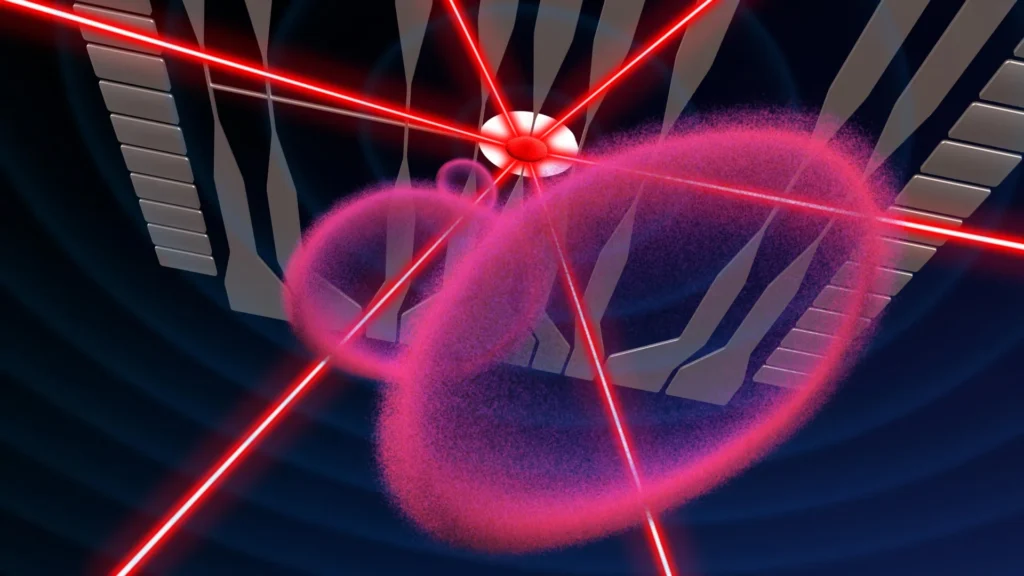
The process of creating these ultracold quantum gases within CAL is a multi-stage, meticulously controlled operation. It begins with heating thin strips of rubidium or potassium metal to temperatures as high as 750 degrees Fahrenheit (400 degrees Celsius). This generates a gas of atoms within a high-vacuum chamber, carefully isolated from the ambient environment of the space station. Subsequently, precisely tuned lasers are employed to bombard these atoms, a process known as ‘laser cooling.’ The lasers are configured to emit photons at specific frequencies that the atoms can absorb. When an atom absorbs a photon, its momentum changes, and it slows down. By strategically directing lasers from multiple directions and tuning their frequencies slightly below the atomic resonance, the atoms are repeatedly hit by photons, causing them to decelerate dramatically and cool down by several orders of magnitude, reaching temperatures in the microkelvin range.
Following the initial laser cooling stage, magnetic fields are utilized to create a ‘magnetic trap,’ which confines the cooled atoms and prevents them from dispersing. This magnetic confinement is crucial for the subsequent cooling steps, as it allows for further manipulation without physical contact. Further sophisticated cooling techniques, such as evaporative cooling, are then applied. In evaporative cooling, the most energetic atoms are allowed to escape the magnetic trap, thereby reducing the average energy (and thus temperature) of the remaining atoms. This process continues until the atomic cloud reaches temperatures so extraordinarily low that the atoms effectively come to a near-complete standstill, forming a BEC. This extreme reduction in atomic motion is vital for maximizing the amount of time these fragile quantum states can be studied in the microgravity environment, enabling observations for up to 10 seconds or more—a duration significantly longer than the few milliseconds typically achieved on Earth due to gravity’s pervasive pull.
A Chronology of Innovation: CAL’s Journey and Continuous Upgrades
The journey of the Cold Atom Lab began long before its operational debut. Conceptualized as early as 2007, the project aimed to bring the groundbreaking science of ultracold atoms to the unique environment of space. After years of meticulous design, construction, and rigorous testing, CAL was successfully launched to the International Space Station aboard a Cygnus cargo spacecraft (specifically, Orbital ATK CRS-9) in May 2018. Following its installation and initial commissioning, it made history later that year by producing the first Bose-Einstein condensates in orbit, a monumental achievement that validated the potential of space-based quantum research and opened an entirely new frontier for scientific exploration.
Since its initial installation in 2018, CAL has not remained static. It has been a continuously evolving platform, receiving several enhancements to expand its capabilities and address the evolving needs of the scientific community. The recent upgrade, delivered to the ISS on April 11, 2024, via a Commercial Resupply Services mission (likely a SpaceX Dragon capsule), marks the fourth major enhancement to the facility. This latest iteration introduces a significantly redesigned science module, which is the heart of the experimental setup. This new module is equipped with advanced components that dramatically expand the range and complexity of experiments scientists can perform, allowing for greater control and precision.
Among the most critical improvements is a completely redesigned magnetic trap. This new trap offers unprecedented control over the shape, density, and dynamics of the quantum gas clouds, providing researchers with novel opportunities to investigate the intricate properties and behaviors of ultracold atoms in ways previously impossible. Furthermore, the upgrade includes redesigned metal atom sources. These sources are responsible for generating the initial gas clouds of rubidium or potassium atoms, and their enhancement ensures greater stability, efficiency, and longevity for future experiments, reducing the need for frequent replenishment and extending the operational lifespan of the lab. These continuous improvements underscore NASA’s commitment to maintaining a cutting-edge quantum research facility in space, adapting to the evolving needs of the scientific community and consistently pushing the boundaries of what’s achievable in fundamental physics.
The Scientific Imperative: Why Space is Crucial for Quantum Physics
While terrestrial laboratories have made immense strides in ultracold atom research, the microgravity environment of the International Space Station offers distinct and crucial advantages that fundamentally enhance scientific investigations. On Earth, gravity constantly pulls the ultracold atomic clouds downwards, causing them to sag, disperse, or collide with the experimental chamber walls. This gravitational interference severely limits the duration for which these fragile quantum states can be observed—typically to mere milliseconds—and complicates efforts to achieve even lower temperatures or larger, purer condensates, as the atoms are constantly subject to disruptive forces.
In the near-weightless conditions of orbit, these gravitational limitations are virtually eliminated. This allows quantum gases to be observed for significantly longer periods, often for seconds rather than milliseconds. This extended observation time is paramount for making precise measurements, studying subtle interactions, and allowing the matter waves of a BEC to expand without the distorting influence of gravity. Longer observation times also facilitate deeper cooling, as the atoms can remain isolated and undisturbed for the necessary durations to extract more energy from them. The absence of gravity also means that larger quantum waves can form and interact with fundamental forces, such as gravity itself, for prolonged periods. This opens doors to experiments that could test the foundational principles of general relativity at the quantum level, search for new physics beyond the Standard Model, or precisely measure fundamental constants with unprecedented accuracy.
The engineering feat required to compress what would typically be a room-sized atomic physics laboratory, complete with intricate laser systems, vacuum pumps, and optical equipment, into a compact system that fits inside an ISS experiment rack cannot be overstated. This miniaturization, coupled with the need for extreme stability, precision, and remote operability, represents a significant technological triumph. The ability to reliably operate such a complex quantum instrument in the harsh environment of space demonstrates a crucial step towards developing robust quantum technologies for future space missions, proving that delicate quantum experiments can withstand the rigors of spaceflight and extended operation in orbit.
Expert Perspectives and Strategic Vision
The scientific community eagerly anticipates the new discoveries that the upgraded Cold Atom Lab will enable. Jason Williams, project scientist for Cold Atom Lab at NASA’s Jet Propulsion Laboratory, eloquently describes the profound nature of this research. "At the coldest temperatures, matter behaves drastically different from anything we have experienced," Williams stated. "The wavelike nature of matter dominates, and ultracold matter can behave in ways that are not only unexpected, but that also enable extremely precise measurements of time, gravity, and motion. The lab has lots of tools — especially with this latest upgrade — to let us probe the nature of the universe." His remarks underscore the transformative potential of probing matter at its most fundamental, coldest states.
Ethan Elliott, deputy project scientist for Cold Atom Lab at JPL, emphasized the pioneering aspect of CAL’s mission and its historical context. "As the first project to create Bose-Einstein condensates in orbit, we’re demonstrating that we can make quantum technology work reliably in space," Elliott remarked. He drew a parallel to past scientific revolutions, stating, "In the previous century, there was a quantum revolution that led to lasers, cellphones, and MRIs for medical imaging. We’re performing quantum 2.0 — direct manipulation of large quantum states — and we hope for similar gains in quantum tech by advancing this science in orbit." This perspective highlights the ambition to not just understand, but to actively harness quantum phenomena for practical applications, signaling a new era of technological advancement.
Kamal Oudrhiri, project manager of Cold Atom Lab at JPL, underscored the significance of the extreme temperatures achieved and the strategic importance of the continuous upgrades. "It’s the closest thing we have to controlling the boundary of the quantum world," Oudrhiri noted, referring to the ultracold conditions. He added, "This new upgrade pushes that boundary even further," emphasizing the continuous pursuit of more extreme conditions and greater experimental control. Oudrhiri also highlighted the strategic importance of the project: "This new hardware demonstrates NASA’s ability to maintain U.S. leadership in space-based quantum technologies while maturing future quantum instruments, such as matter-wave interferometers for fundamental physics missions, positioning, navigation, timing, and gravity sensing of Earth, the Moon, and beyond." This statement clearly articulates the dual purpose of CAL: fundamental discovery and critical technological advancement for future space endeavors.
NASA officials and collaborating international scientists consistently commend the dedication of the engineering teams at JPL and Caltech, whose ingenuity made such a complex, remotely operated facility possible. The success of CAL stands as a testament to the power of international collaboration, with five international research teams currently utilizing the facility for their cutting-edge studies, fostering a global effort in quantum discovery and accelerating the pace of scientific breakthroughs.
Broader Implications and the Future of Quantum Technologies
The implications of the research conducted aboard the Cold Atom Lab extend far beyond theoretical physics. The ability to precisely manipulate and observe quantum states in space is laying the groundwork for a suite of revolutionary quantum technologies. One of the most promising areas is the development of ultra-precise quantum sensors. Matter-wave interferometers, for instance, which rely on the wave-like properties of ultracold atoms, could lead to navigation systems far more accurate than current Global Positioning System (GPS) technology, particularly critical for deep-space missions where GPS signals are unavailable. These sensors could also enable unprecedented measurements of Earth’s gravity field, aiding in climate science studies, monitoring ice sheet mass changes, and understanding geological processes with greater detail and predictive capability.
Beyond Earth, quantum technologies could transform space exploration. Enhanced gravity sensors could map the subsurface of the Moon and Mars with higher resolution, identifying potential resources like water ice or ideal landing sites for future human missions. Ultra-stable atomic clocks, another product of quantum mechanics, are essential for deep-space communication, enabling more efficient and reliable data transmission over vast distances, and for fundamental physics experiments that test the fabric of spacetime, such as searches for gravitational waves or variations in fundamental constants. The pursuit of quantum computing, while still in its nascent stages, could also benefit from insights gained from CAL’s experiments, particularly in understanding entanglement and coherence in macroscopic quantum systems, pushing us closer to building powerful quantum computers capable of solving problems currently intractable for even the fastest supercomputers.
The Cold Atom Lab is managed by Caltech in Pasadena, while NASA’s Jet Propulsion Laboratory is responsible for its design, construction, and ongoing operations. This collaborative effort brings together world-class expertise in both scientific research and engineering. The project receives sponsorship from the Biological and Physical Sciences division within NASA’s Science Mission Directorate in Washington. This division plays a crucial role in advancing scientific discovery by leveraging the unique conditions of space to conduct experiments impossible to replicate on Earth. By delving into biological and physical processes in extreme environments, researchers not only expand our fundamental understanding of the universe but also gain critical knowledge that directly supports human endeavors to travel farther and remain in space longer. Moreover, the technological spin-offs from such cutting-edge research invariably produce tangible benefits for life on Earth, from medical imaging and advanced materials to improved timing systems and navigation, cementing CAL’s role as a cornerstone of future innovation and a beacon of scientific progress.






