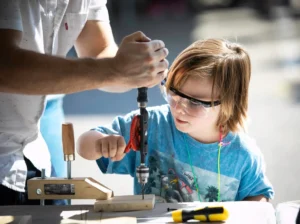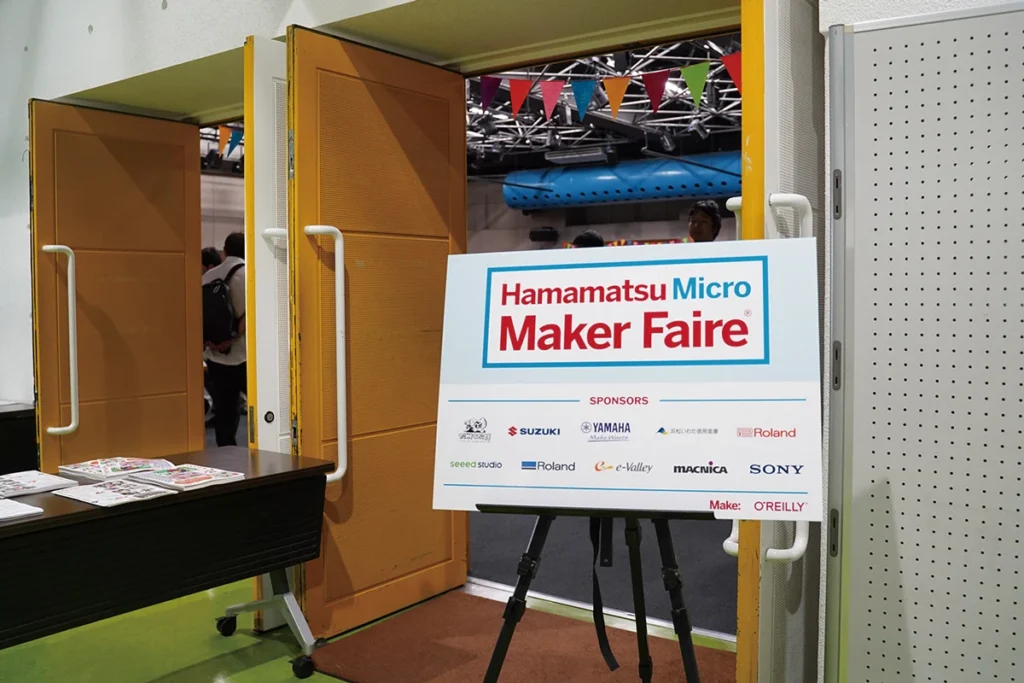
The Hamamatsu Science Museum, known locally as Mirai-ra, served as the epicenter for grassroots technological innovation on July 4, 2026, as it hosted the Micro Maker Faire Hamamatsu. While the "Micro" designation suggests a smaller scale compared to the flagship events in Tokyo or San Mateo, the depth of engineering and the cultural significance of the projects on display reinforced Hamamatsu’s standing as a global hub for craftsmanship and musical heritage. This year’s event drew a diverse crowd of engineers, hobbyists, and educators, all converging to witness how the city’s historical manufacturing prowess is being adapted for the digital age.
Hamamatsu occupies a unique position in Japan’s industrial landscape. Situated in Shizuoka Prefecture, roughly halfway between the metropolitan giants of Tokyo and Osaka, the city has long been the cradle of Japanese precision engineering. It is the birthplace of global titans such as Yamaha, Honda, and Suzuki—companies that began as small workshops driven by the same "maker" spirit celebrated at the faire. The local philosophy of "yaramaika," a dialect term meaning "Let’s give it a try," remains the driving force behind the region’s innovation. This cultural predisposition toward experimentation was evident in every booth at the 2026 event, where traditional craftsmanship met cutting-edge electronics.

The Historical Foundations of Hamamatsu Innovation
To understand the significance of the 2026 Micro Maker Faire, one must look back to 1887, the year Torakusu Yamaha successfully repaired a broken reed organ. This single act of "making" laid the foundation for Hamamatsu to become Japan’s "City of Music." Over the subsequent century, the city evolved into a world-leading center for musical instrument production and automotive engineering. This dual heritage creates a specific aesthetic in the local maker community: a fascination with the intersection of acoustics and mechanics.
The Hamamatsu Museum of Musical Instruments, which houses over 1,500 instruments from across the globe, serves as a permanent testament to this legacy. Many makers at the faire cited the museum’s hands-on approach as a primary inspiration for their work. Unlike traditional museums where artifacts are kept behind glass, the Hamamatsu facility encourages interaction, a principle that was mirrored at the Micro Maker Faire where attendees were invited to touch, play, and dismantle various exhibits to understand their inner workings.
Notable Exhibitions and Technical Achievements
The 2026 exhibition featured a range of projects that spanned the spectrum from high-energy physics to mechanical automata. One of the most scientifically ambitious projects was the Super-Kamiokande 3D Monitor developed by ATP Lab. This device serves as a bridge between complex particle physics and interior design. By accessing real-time, two-dimensional cosmic ray detection data streamed from the Super-Kamiokande neutrino observatory website, the monitor utilizes a Raspberry Pi controller to project a cylindrical 3D image. The result is a visual representation of subatomic activity, allowing users to "experience" the invisible flux of cosmic rays passing through the earth in a tangible, localized format.

In the realm of digital music, an exhibitor known as Feng presented the "Super Octet!" MIDI sound module. This device is a General MIDI (GM) compliant hardware unit featuring a built-in software FM sound source with up to eight operators. FM synthesis, a staple of 1980s music technology popularized by Yamaha’s DX7, was given a modern update here. The "Super Octet!" supports up to 42 polyphonic notes and features a modular design; users can stack multiple units via USB-C to increase polyphony. Feng also showcased "SPRITE!", a MIDI module that repurposes soundboards from retired karaoke machines and integrates eVOCALOID technology, demonstrating a commitment to sustainable engineering through the upcycling of electronic waste.
Mechanical complexity was a highlight of the exhibit by Denha, whose "Amazing Marble Machines & Automata" drew significant attention. Denha’s work focuses on the tactile and visual appeal of kinetic energy. His display featured rows of wooden marble machines alongside "LED badges"—circuit boards where LEDs are scattered in seemingly chaotic but aesthetically pleasing patterns. Furthermore, Denha showcased a "wind synth mobile system," which combined the MWiC wind instrument MIDI controller with a custom-built oscillator named EWIVCO, further blurring the lines between traditional woodwind performance and modern synthesis.
Innovation in Gaming and Percussion
Kirakudo & Company brought a playful yet technically sophisticated element to the faire with "Loopian," a series of modified gaming devices. Their primary exhibit was a roulette wheel that had been engineered to land on any specific number chosen by the operator. Using a wireless controller, the operator sets a target; when the wheel is spun by hand, a concealed internal motor subtly adjusts the friction and rotation speed to ensure it stops on the predetermined number. A secondary project applied similar logic to a dart-style roulette, allowing for precise control over the outcome from the moment the dart is launched. While these projects carry a whimsical tone, the underlying precision in motor control and wireless synchronization represents high-level mechatronic integration.

Perhaps the most quintessential "Hamamatsu" project was "Pokorinta," created by Pokorinta Laboratory. This is an automatic playing cajon—a box-shaped percussion instrument—that has been augmented with an internal ensemble of cymbals and tambourines. The device is housed in a transparent casing, revealing a complex network of over 30 solenoids. A custom-designed circuit board drives these solenoids to strike the various internal components in perfect rhythm, accompanied by synchronized LED displays. The Pokorinta exemplifies the city’s "City of Music" identity, combining traditional percussion with advanced electronic actuation to create a self-contained robotic band.
Chronology of the Maker Movement in Shizuoka
The evolution of the Hamamatsu Micro Maker Faire reflects a broader trend in Japan’s regional development.
- 1887: Torakusu Yamaha repairs the first reed organ, sparking the musical instrument industry.
- Post-WWII: The rise of Honda and Suzuki establishes Hamamatsu as a center for automotive and mechanical engineering.
- 2010s: The global Maker Movement gains traction in Japan, with Tokyo hosting the primary national event.
- 2020s: A shift toward "Micro" faires allows regional cities like Hamamatsu to showcase localized expertise.
- July 4, 2026: The Micro Maker Faire Hamamatsu reaches a new peak of participation, emphasizing the "yaramaika" spirit in the post-digital era.
This timeline suggests that while the tools of creation have changed—moving from hand-carved organ reeds to 3D-printed solenoid housings—the fundamental drive to build and innovate remains a constant in the Shizuoka prefecture.

Socio-Economic and Educational Impact
The Micro Maker Faire is not merely a hobbyist exhibition; it serves as a critical component of the local economic and educational ecosystem. By providing a platform for independent makers, the event fosters a culture of "lifelong learning" and STEM (Science, Technology, Engineering, and Mathematics) engagement. For a city like Hamamatsu, which relies heavily on its manufacturing sector, encouraging the next generation to engage with hardware and software is an economic necessity.
Industry analysts suggest that events like these act as a "soft" R&D department for the region. The techniques used in projects like the Super-Kamiokande 3D monitor or the Pokorinta often find their way into professional applications, from medical imaging to industrial automation. Furthermore, the collaboration between Impress Corporation and local partners ensures that the faire remains integrated with the city’s industrial goals.
Community and Official Responses
While formal statements from municipal leaders emphasized the city’s pride in its "City of Music" status, the reactions from the maker community were more focused on the spirit of collaboration. Participants noted that the smaller size of the "Micro" faire allows for deeper technical discussions compared to larger, more commercialized events. "In Hamamatsu, you don’t just see a project; you discuss the code and the solder points with the person who made it," noted one attendee.

The "yaramaika" attitude was palpable throughout the venue. This cultural trait—encouraging people to try something new without the fear of failure—is seen by sociologists as a key factor in Japan’s historical resilience and technological leadership. By hosting the faire at the Science Museum, organizers successfully linked the city’s scientific future with its artisanal past.
Broader Implications for the Global Maker Movement
The success of the 2026 Hamamatsu event highlights the increasing importance of "hyper-local" innovation. As global supply chains become more complex, the ability for local communities to design, prototype, and manufacture their own solutions—whether for art, music, or science—becomes a vital skill set. Hamamatsu’s model of blending deep industrial roots with modern maker culture provides a blueprint for other manufacturing-heavy cities worldwide.
As the Maker Faire Hamamatsu 2026 concluded, the impact was clear: the city remains a vibrant laboratory where the "City of Music" and the "City of Makers" are not two separate identities, but a single, unified force. The projects displayed on July 4th were more than just quirky inventions; they were the latest entries in a century-long dialogue between the people of Hamamatsu and the machines they build. Through the continued embrace of the "yaramaika" spirit, the city ensures that its legacy of craftsmanship will continue to resonate in the age of automation and beyond.