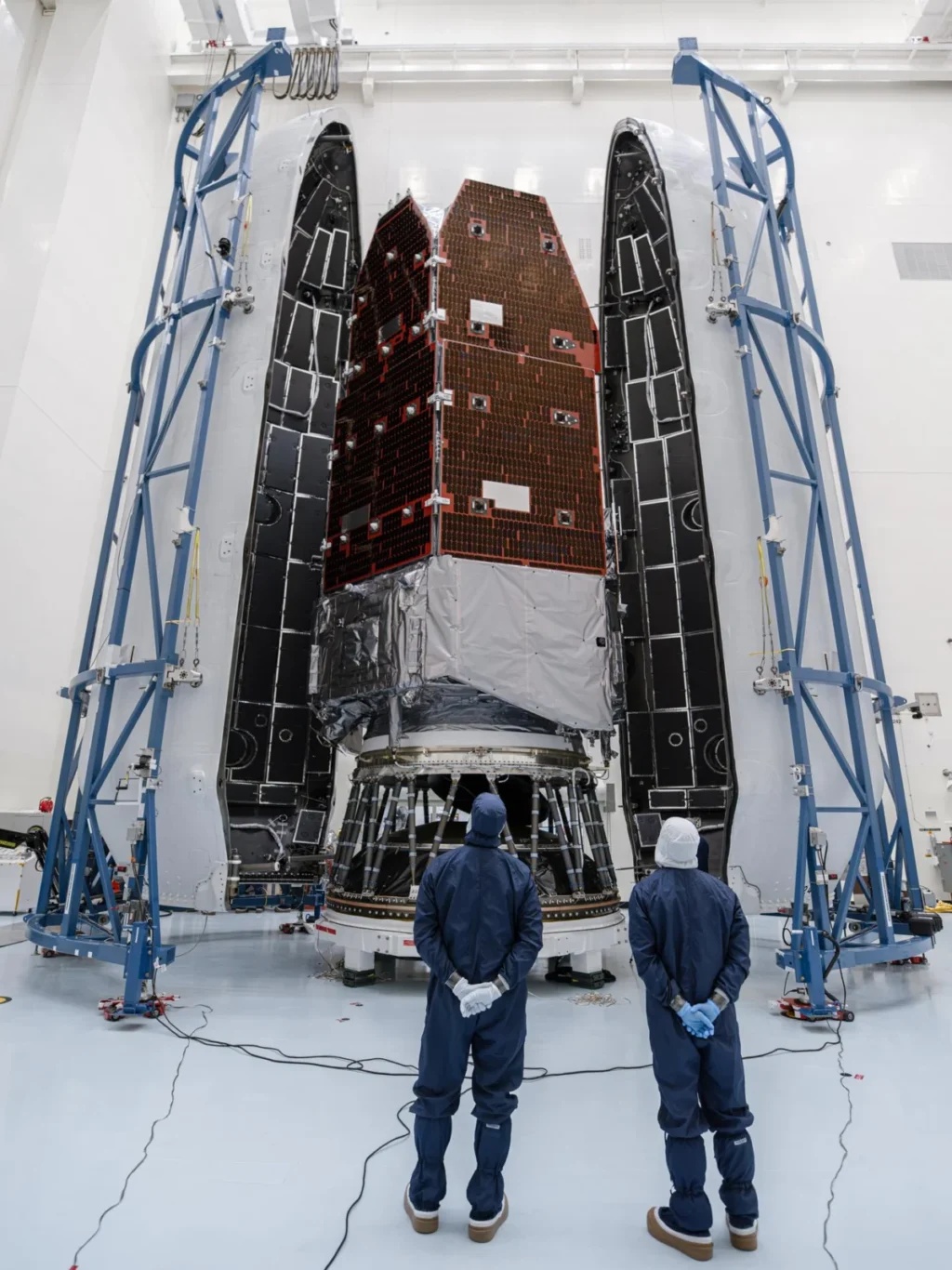
NASA and SpaceX are meticulously finalizing preparations for the groundbreaking launch of the Nancy Grace Roman Space Telescope, a state-of-the-art observatory poised to revolutionize our understanding of the universe. The ambitious mission, targeting liftoff for no earlier than 7:26 a.m. EDT on Sunday, August 30, 2026, aboard a powerful SpaceX Falcon Heavy rocket from Launch Complex 39A at the agency’s Kennedy Space Center in Florida, represents a monumental leap forward in space-based astronomy. The comprehensive coverage of these pivotal prelaunch and launch activities will commence at 6:20 a.m. EDT, offering the public a front-row seat to this historic endeavor.
The Nancy Grace Roman Space Telescope, named in honor of NASA’s pioneering first chief astronomer, is engineered to tackle some of the most profound mysteries of the cosmos, with a particular focus on the enigmatic nature of dark energy and dark matter. Its advanced capabilities will enable scientists to conduct sweeping surveys with infrared vision that is significantly sharper than that of the iconic Hubble Space Telescope, boasting a field of view at least 100 times larger. This unparalleled observational power will allow astronomers to map billions of galaxies, characterize exoplanets with unprecedented detail, investigate the behavior of black holes, and explore celestial objects ranging from within our own solar system to the farthest reaches of the observable universe.
A Detailed Countdown: Prelaunch Briefings and Events
The days leading up to the launch will be a flurry of critical briefings and informational sessions designed to keep the public and media fully informed. NASA’s coverage schedule, subject to real-time operational adjustments, is as follows:
Saturday, August 29, 2026
-
9:00 a.m. EDT: NASA’s Roman Space Telescope Mission Science Briefing
This crucial session will be held in the NASA Kennedy Press Site auditorium, featuring key scientists and mission planners who will delve into the scientific objectives and anticipated discoveries of the Roman Space Telescope. This briefing aims to provide a comprehensive overview of the mission’s scientific rationale and the groundbreaking research it is expected to facilitate. Media will have the opportunity to ask questions in person or via teleconference. Those seeking to participate remotely are advised to contact the NASA Kennedy newsroom at [email protected] at least one hour prior to the briefing for dial-in details and passcodes. -
10:30 a.m. EDT: NASA’s Roman Space Telescope Prelaunch News Conference
Following the science briefing, a prelaunch news conference will convene in the same venue. This event will focus on the operational aspects of the mission, including the readiness of the telescope, the launch vehicle, and the overall launch sequence. Mission leadership and representatives from SpaceX will be present to address any last-minute questions from the media. Similar to the science briefing, in-person and telephonic participation options will be available, with media requiring dial-in information to contact the NASA Kennedy newsroom in advance. -
11:45 a.m. EDT: Administrator’s Jet Flyby
In a unique and visually striking demonstration of the mission’s proximity and the dynamic nature of space operations, NASA Administrator Jared Isaacman is scheduled to perform a jet flyby of the Nancy Grace Roman Space Telescope and the Falcon Heavy rocket on the launchpad. This maneuver, weather and operational conditions permitting, will be broadcast live, offering a rare perspective of the colossal rocket against the backdrop of the Florida coast. -
12:00 p.m. EDT: In-Person Interviews
The NASA Kennedy Press News Center will host in-person interviews with select mission personnel. This provides a valuable opportunity for accredited media to engage directly with the individuals driving this ambitious project. Previously credentialed media interested in scheduling an interview are encouraged to reach out to the NASA Kennedy newsroom at [email protected].
Launch Day: The Climax of Years of Preparation
The culmination of years of planning, development, and testing will unfold on launch day, marked by an extended period of live coverage.
Sunday, August 30, 2026
-
6:20 a.m. EDT: Launch Coverage Begins
NASA’s extensive broadcast will commence, guiding viewers through the final hours of the countdown, highlighting key milestones, and providing expert commentary. -
7:26 a.m. EDT: Liftoff
The Falcon Heavy rocket is scheduled to ascend from Launch Complex 39A, carrying the Nancy Grace Roman Space Telescope into orbit. This moment signifies the beginning of Roman’s extraordinary journey to unravel cosmic secrets.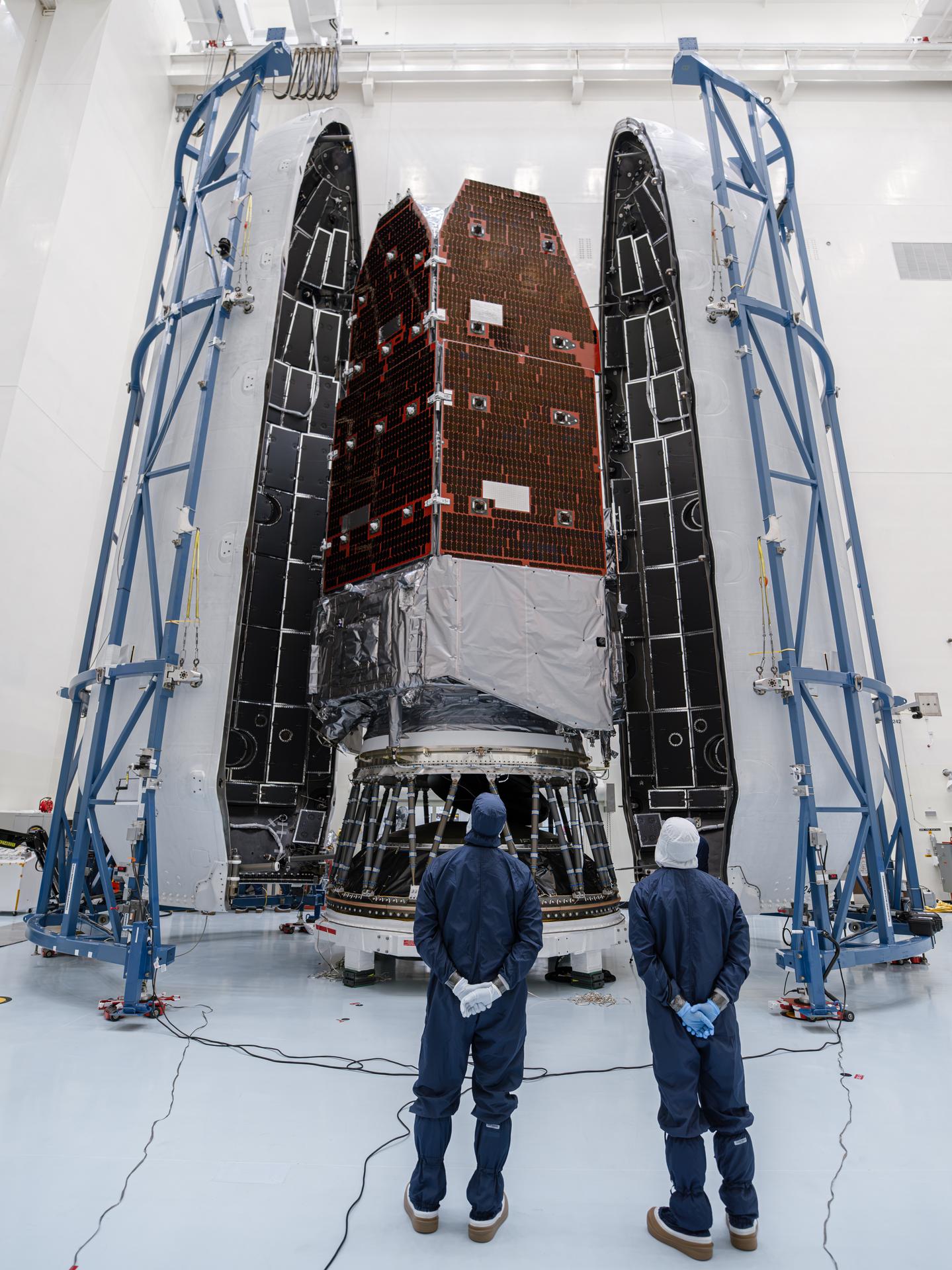
-
9:30 a.m. EDT: Postlaunch News Conference
Following a successful launch and initial spacecraft separation, a postlaunch news conference will be held. Mission managers and key personnel will provide an update on the launch performance, the status of the telescope, and the next steps in its journey. Media will have the opportunity to participate in person or via teleconference, with advance contact required for dial-in details.
A Glimpse into the Future: The Roman Space Telescope’s Scientific Potential
The Nancy Grace Roman Space Telescope represents a paradigm shift in observational astronomy. Its primary mission lifetime is projected to be five years, with an ambitious goal of operating for a decade, gathering invaluable data that will be made publicly accessible after processing. This commitment to open data ensures that the discoveries made by Roman will benefit the global scientific community for generations to come.
Upon its successful deployment, Roman will embark on a journey to the second Sun-Earth Lagrange point (L2), a gravitationally stable location approximately one million miles from Earth. This vantage point offers a stable thermal environment and an unobstructed view of the cosmos, crucial for the telescope’s precise measurements.
The scientific objectives of the Roman Space Telescope are vast and transformative:
- Investigating Dark Energy: One of Roman’s primary goals is to shed light on dark energy, the mysterious force believed to be responsible for the accelerating expansion of the universe. By mapping the distribution of galaxies and supernovae across cosmic time, Roman will provide critical data to constrain models of dark energy and potentially reveal its true nature.
- Mapping Dark Matter: Similar to dark energy, dark matter remains one of the universe’s most elusive components. Roman’s ability to detect subtle distortions in the light from distant galaxies caused by the gravitational lensing effect of dark matter will allow scientists to create detailed maps of its distribution.
- Exoplanet Discovery and Characterization: Roman will employ microlensing techniques, a method particularly adept at detecting exoplanets that are difficult to find with other telescopes. This will enable the discovery of a vast population of exoplanets, including potentially habitable worlds, and provide data on their atmospheric composition.
- Galactic Surveys: The telescope’s wide field of view will facilitate the mapping of billions of galaxies, providing unprecedented statistical power for studying galaxy formation and evolution across the history of the universe.
- Black Hole Studies: Roman will contribute to our understanding of black holes by observing the accretion disks around them and studying their influence on their galactic environments.
- Solar System Exploration: The observatory’s capabilities will also extend to studying objects within our own solar system, offering new insights into the formation and evolution of our planetary neighborhood.
Accessible Viewing and Engagement Opportunities
NASA is committed to making this monumental event accessible to a global audience. Live coverage of the prelaunch events and the launch itself will be streamed across multiple platforms, including NASA’s official website at https://www.nasa.gov/live.
Audio-Only Coverage: For those who prefer audio, live streams will be available on NASA’s "V" circuits by dialing 321-867-1220 or 321-867-1240. On launch day, mission audio countdown activities, without NASA broadcast commentary, will be accessible on 321-867-7135. Additional audio feeds will be broadcast on Launch Information Service and Amateur Television System’s VHF radio frequency 146.940 MHz and KSC Amateur Radio Club’s UHF radio frequency 444.925 MHz, FM mode, within Brevard County.
NASA Website and Social Media: The NASA website will host a comprehensive livestream, along with blog updates chronicling the countdown milestones. On-demand video and launch photos will be available shortly after liftoff. For real-time updates and mission highlights, follow the Roman launch blog at https://science.nasa.gov/blogs/roman/. The public is encouraged to engage on social media platforms such as X, Facebook, and Instagram, by following and tagging official NASA accounts.
Virtual Attendance: Members of the public can register to attend the Roman launch virtually through NASA’s Virtual Guest Program. This program offers curated launch resources, notifications about related opportunities, and a virtual stamp for their NASA virtual guest passport. Registration details can be found at https://www.eventbrite.com/e/nasas-nancy-grace-roman-space-telescope-launch-tickets-1983457247019?aff=oddtdtcreator.
A Collaborative Cosmic Endeavor
The realization of the Nancy Grace Roman Space Telescope is a testament to extensive international and inter-agency collaboration. NASA Goddard Space Flight Center is managing the mission, with significant contributions from NASA’s Jet Propulsion Laboratory in Southern California, Caltech/IPAC in Pasadena, California, and the Space Telescope Science Institute in Baltimore. A broad scientific team from various research institutions is also involved. Key industrial partners include BAE Systems Inc., L3Harris Technologies, and Teledyne Scientific & Imaging.
Furthermore, the mission benefits from contributions from the European Space Agency (ESA), the Japan Aerospace Exploration Agency (JAXA), the French space agency CNES, and the Max Planck Institute for Astronomy in Germany. NASA’s Launch Services Program, based at Kennedy, is responsible for managing the launch service for this vital mission.
The successful launch of the Nancy Grace Roman Space Telescope will undoubtedly mark a new era in our exploration of the cosmos, pushing the boundaries of human knowledge and inspiring future generations of scientists and explorers. For more detailed information about the Roman telescope, visit https://www.nasa.gov/roman.
Contact Information:
- Alise Fisher, NASA Headquarters, Washington: 202-385-1287, [email protected]
- Leejay Lockhart, Kennedy Space Center, Fla.: 321-747-8310, [email protected]
- Claire Andreoli, Goddard Space Flight Center, Greenbelt, Md.: 301-286-1940, [email protected]