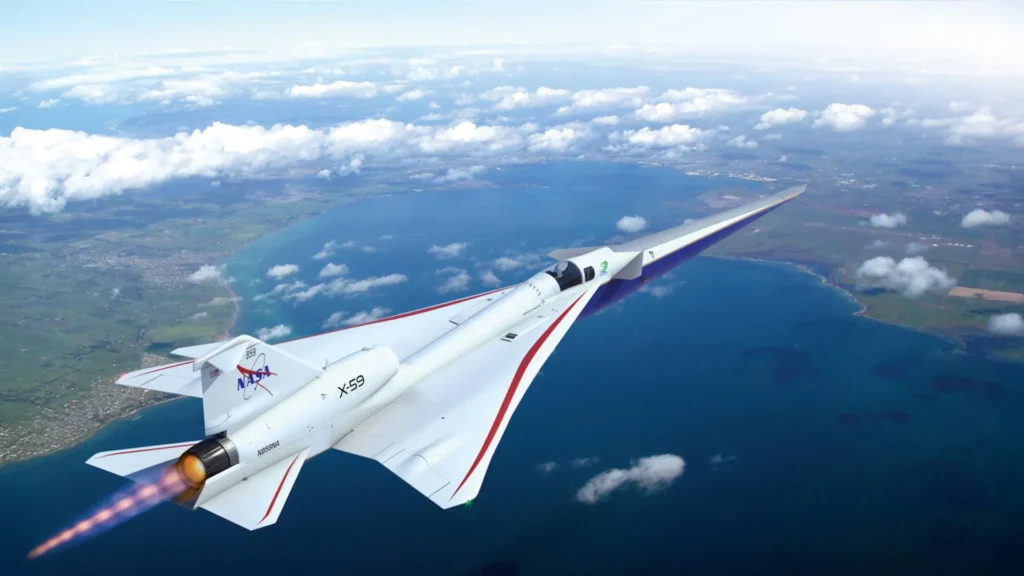
NASA’s X-59 quiet supersonic research aircraft is approaching one of the most important stages of its development, poised to redefine the future of commercial air travel. This experimental X-plane is set to begin a new series of test flights that will include its inaugural trip beyond the speed of sound, alongside several other key objectives vital to the success of its groundbreaking mission. This critical phase marks a significant leap forward in NASA’s Quesst (Quiet Supersonic Technology) mission, which aims to collect data on public perception of quieter sonic booms, potentially paving the way for the repeal of current overland supersonic flight bans.
The upcoming flights represent the culmination of years of design, construction, and rigorous subsonic testing. "What comes next is the first time this one-of-a-kind aircraft will fly supersonic," stated Cathy Bahm, project manager for NASA’s Low Boom Flight Demonstrator, underscoring the gravity of the moment. "We are starting toward the mission conditions test point that X-59 was designed for." This declaration highlights the transition from proving the aircraft’s basic airworthiness and performance to validating its core design principles under its intended operational envelope. Following months of extensive flight testing, the X-59 team meticulously reviewed its progress in late May and is now preparing for this new, more challenging phase that will push the aircraft to unprecedented altitudes and higher speeds for the program. These flights are specifically intended to demonstrate how the aircraft performs under the precise operating conditions required for the Quesst mission, which ultimately seeks to gather crucial public response data on the aircraft’s unique, minimized sonic signature.
The Historical Quest for Supersonic Silence
The journey towards quiet supersonic flight is deeply rooted in the history of aviation. Supersonic travel captured the world’s imagination in the mid-20th century, with military aircraft routinely breaking the sound barrier and, famously, the Anglo-French Concorde offering transatlantic supersonic passenger service from 1976 to 2003. However, the widespread adoption of supersonic commercial flight was severely hampered by the disruptive phenomenon known as the "sonic boom." This intense shockwave, generated when an aircraft exceeds the speed of sound, produces a loud, thunder-like noise that can startle communities, damage property, and significantly impact environmental tranquility. Concerns over these disturbances led the U.S. Federal Aviation Administration (FAA) to ban overland commercial supersonic flight in 1973, a restriction that remains largely in effect today.
For decades, aerospace engineers have sought ways to mitigate the sonic boom. NASA, in particular, has been at the forefront of this research, exploring various aerodynamic designs and technologies. The X-59 represents the pinnacle of this research, designed not to eliminate the sonic boom entirely, but to transform it into a much quieter, less intrusive "thump" or "whisper." This fundamental shift in approach—from avoiding the boom to shaping it—is the innovative core of the Quesst mission. If successful, the X-59 could provide the data needed to convince regulators globally that future supersonic commercial aircraft can fly over land without causing public nuisance, thereby opening up vast new routes and dramatically reducing travel times.
Engineering Innovation: The X-59 QueSST’s Unique Design
Central to the X-59’s promise is its radical design, a testament to cutting-edge aerodynamic engineering. Built by Lockheed Martin’s renowned Skunk Works division, the X-59, formally known as the Low Boom Flight Demonstrator (LBFD), boasts an exceptionally long, slender fuselage measuring approximately 99.7 feet (30.4 meters) with a relatively short wingspan of 29.5 feet (9 meters). This distinctive "needle-like" profile is specifically engineered to spread out the shockwaves typically generated by supersonic flight, preventing them from coalescing into a sharp, loud sonic boom. Instead, the design aims to produce multiple smaller, weaker shockwaves that reach the ground as a series of softer pressure changes, perceived as a gentle thud rather than an explosive crack.
Another innovative feature is the aircraft’s distinctive "eXternal Vision System" (XVS). Due to the X-59’s elongated nose, which is crucial for its low-boom design, a traditional forward-facing windshield for the pilot is physically impossible. The XVS, developed by NASA, addresses this challenge by providing the pilot with a live, augmented reality display that combines external camera feeds with synthetic terrain and flight data. This sophisticated camera-based system offers an unobstructed forward view, ensuring pilot safety and operational efficiency during all phases of flight, including takeoff, landing, and high-speed maneuvers. Powering the X-59 is a single General Electric F414 engine, a robust and proven turbofan engine typically found in military fighter jets, adapted for the unique requirements of the X-59 mission. This combination of innovative airframe design and reliable propulsion system makes the X-59 a truly unique experimental platform.
A Detailed Chronology of Flight Testing and Upcoming Milestones
The X-59’s journey to this critical juncture has been methodical and deliberate, structured in phases to ensure safety and gather comprehensive data.
-
Phase 1: Performance and Airworthiness (Current and Upcoming): This initial stage of the Quesst mission focuses on proving the aircraft’s performance capabilities and ensuring its airworthiness across its operational envelope.
- Pre-Maiden Flight (Rollout to October 2025): Following its rollout in January 2022, the X-59 underwent extensive ground testing, including structural integrity checks, engine runs, and systems integration tests, culminating in its readiness for flight.
- Maiden Flight (October 2025): The aircraft successfully completed its maiden flight, marking a monumental achievement for NASA and Lockheed Martin. This initial flight focused on basic airworthiness checks, validating fundamental control systems, stability, and handling characteristics at subsonic speeds.
- Post-Maintenance and Return to Flight (March 2026 onwards): After a planned maintenance period following its maiden flight, the X-59 returned to flight testing in March 2026. Since then, the aircraft has completed 14 additional flights, steadily expanding its subsonic flight envelope and achieving several notable milestones. These flights allowed engineers to rigorously evaluate key systems, including fuel delivery, hydraulic systems, environmental controls, and the critical eXternal Vision System, ensuring their reliable operation. Teams also meticulously monitored the X-59’s performance during takeoffs, landings, and various flight operations, utilizing strain gauges installed throughout the airframe to measure structural loads and record how the aircraft responded to diverse forces encountered during testing. The successful completion of these initial flights has provided invaluable data, deepening engineers’ confidence in the aircraft’s design and operational integrity.
- First Supersonic Flights (Expected Early June): NASA expects the X-59 to exceed the speed of sound for the first time during test flights scheduled for early June. This will be a significant engineering milestone, pushing the aircraft to speeds of more than 630 mph (approximately Mach 1.0) at an altitude of about 43,000 feet. This initial supersonic break is a crucial step in expanding the flight envelope.
- "Mission Conditions" Flight (Upcoming): Following the initial supersonic tests, the aircraft will attempt a critical "mission conditions" flight, aiming to reach Mach 1.4 (approximately 925 mph) at an altitude of about 55,000 feet. These performance targets are exceptionally important because they precisely match the conditions NASA plans to use when flying the X-59 over U.S. communities during the later phases of the Quesst mission. During those future flights, researchers will gather public feedback about the aircraft’s quieter sonic "thump" and evaluate how people respond to it.
- Maximum Performance Targets (Upcoming): During this testing phase, the X-59 is also expected to achieve its top planned performance targets, including a maximum speed of Mach 1.6 (approximately 1,218 mph) and a maximum altitude of 60,000 feet. It is important to note that not every flight will take place at supersonic speed; engineers will continue conducting a mix of subsonic and lower-altitude flights to monitor the aircraft’s behavior under a variety of conditions, ensuring a comprehensive understanding of its performance across its operational range.
-
Initial Supersonic Testing with Chase Aircraft: Crucially, during these initial supersonic flights in early summer, the primary objective is to validate the aircraft’s supersonic performance and gather aerodynamic data, not yet to demonstrate its quiet boom capability to the public. A conventional supersonic chase aircraft will accompany the X-59 during these tests. The louder sonic booms produced by the chase plane will intentionally mask any quieter sound generated by the experimental jet, preventing premature or misleading public perception. Furthermore, during these supersonic tests, the chase aircraft will carry a specialized shock-sensing probe, designed to collect the first direct measurements of the X-59’s unique shock wave signature. This data is vital for validating the aerodynamic models and ensuring the aircraft is performing as designed before public overflights commence. Some flights will also involve the early use of specialized equipment, including a probe mounted on one of NASA’s F-15 research aircraft, further enhancing the data collection capabilities.
Official Voices and Strategic Objectives
The sentiment within NASA is one of profound excitement and focused determination. Cathy Bahm reiterated the significance of the upcoming phase: "Flying at supersonic speeds is a major milestone for the X-59 team. Every step of envelope expansion brings us closer to demonstrating the quiet supersonic capability that is at the heart of the Quesst mission. Completing the first mission-conditions flight is especially meaningful — it’s the moment where we begin validating the aircraft in the environment it was designed for."
Beyond the immediate technical achievements, NASA leadership views the Quesst mission as a cornerstone of the agency’s broader aeronautics research agenda. Associate Administrator for NASA’s Aeronautics Research Mission Directorate, Bob Pearce, has previously emphasized the mission’s potential to unlock a new era of commercial air travel, highlighting NASA’s role in pushing the boundaries of aviation for societal benefit. The X-59 represents a strategic investment in future air mobility, aiming to address a critical regulatory barrier that has long stifled innovation in supersonic transport.
Preparing for Phase 2: Public Acceptance and Regulatory Change
All flights completed so far, along with the upcoming test campaign, are part of Phase 1 of NASA’s Quesst mission. This stage is laser-focused on proving the aircraft’s performance, stability, and overall airworthiness. The information collected during these early measurement flights, particularly from the shock-sensing probes, will be instrumental in helping engineers prepare for Quesst Phase 2, which is scheduled to begin later this year.
During Phase 2, the mission will transition to its ultimate objective: directly measuring the aircraft’s supersonic flight signature to confirm that it is indeed producing the quiet supersonic thump it was designed to generate. This will involve flying the X-59 over several U.S. communities. Researchers will deploy an array of ground-based sensors to accurately measure the sound levels on the ground. More importantly, NASA will conduct extensive community surveys and gather public feedback, assessing how residents perceive the X-59’s quiet sonic "thump" compared to a traditional sonic boom. This qualitative and quantitative data will be meticulously analyzed to understand public acceptance levels.
The data gathered in Phase 2 will be delivered to the FAA and the International Civil Aviation Organization (ICAO). These regulatory bodies require robust evidence of acceptable noise levels before they can consider lifting the overland supersonic flight ban. The success of the X-59 in demonstrating a publicly acceptable sonic signature is therefore paramount to the future of supersonic commercial aviation.
Broader Implications: Reshaping Commercial Air Travel
The successful outcome of the Quesst mission holds profound implications for the global aviation industry. Lifting the overland supersonic flight ban would fundamentally reshape air travel, enabling new generations of commercial aircraft to fly at speeds significantly faster than current airliners, drastically reducing journey times across continents.
- Economic Impact: The ability to fly supersonic over land could unlock new market opportunities for aircraft manufacturers, airlines, and related service industries. Reduced travel times would appeal to business travelers and high-value tourism, potentially stimulating economic growth in various sectors.
- New Aircraft Development: A favorable regulatory environment would incentivize aerospace companies to invest heavily in developing new commercial supersonic aircraft designs. Unlike the Concorde, which was limited by its noisy boom and high operating costs, future supersonic jets could be designed from the outset with low-boom technology, improved fuel efficiency, and greater passenger comfort, making them more commercially viable. Companies like Boom Supersonic, with its Overture project, are already anticipating this future, designing aircraft with the intent of operating quietly over land.
- Environmental Considerations: While faster travel is appealing, future supersonic aircraft would also need to address environmental concerns beyond noise, including fuel consumption and emissions. Ongoing research in sustainable aviation fuels and advanced propulsion systems will be critical to ensure that a new era of supersonic flight is environmentally responsible.
- Global Connectivity: Imagine flying from New York to Los Angeles in just over two hours, or from London to Sydney in half the current time. The X-59’s success could make such travel a reality, fostering greater global connectivity and facilitating faster international commerce and cultural exchange.
Reflecting on the monumental task, Bahm quoted aviation pioneer Otto Lilienthal: "’To design a flying machine is nothing. To build one is something. But to fly is everything.’ The 15 X-59 flights we’ve accomplished since March have been everything to this team and the mission," Bahm said, encapsulating the profound dedication of the engineers and pilots. "Every flight has pushed the boundaries of what’s possible, steadily expanding the envelope and strengthening our confidence in the aircraft."
However, Bahm emphasized that the team remains acutely focused on the work ahead. "As we look ahead to the upcoming flights, we’re poised to open the envelope even further — moving boldly toward the mission test point this aircraft was built to achieve," Bahm concluded. "Flying supersonic and reaching these milestones isn’t just progress; it’s the realization of years of perseverance, innovation, and teamwork. Each step brings us closer to Phase 2, and to the future of commercial supersonic flight." The X-59 stands as a beacon of innovation, holding the potential to rewrite the rules of air travel and usher in a new, quieter era of supersonic aviation.