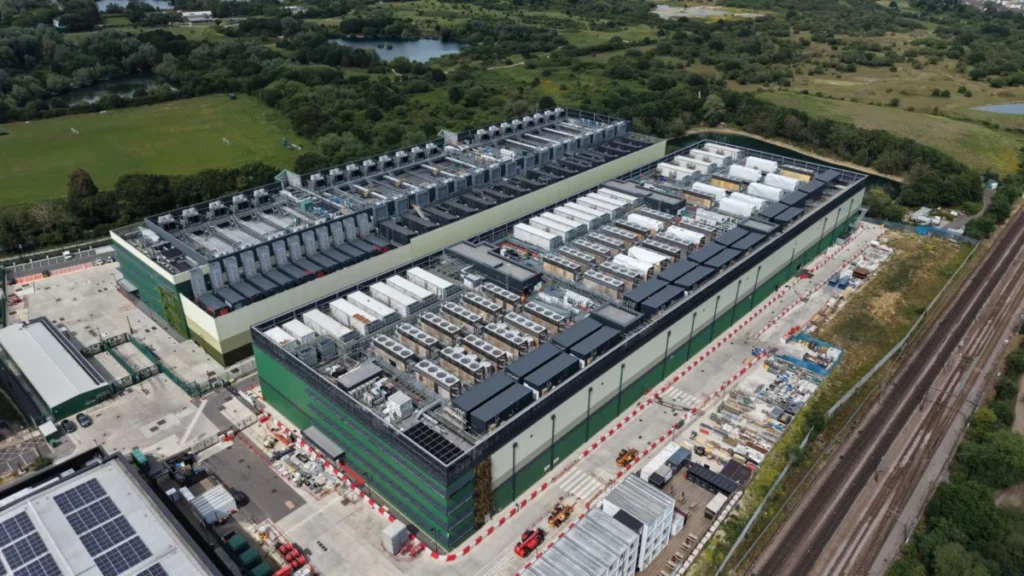
Pike County, Ohio – A monumental 20-year initiative, poised to redefine the landscape of artificial intelligence infrastructure, has been jointly announced by OpenAI, SoftBank’s SB Energy, and Nvidia. The ambitious project will establish a sprawling data center campus in central Ohio, featuring an unprecedented 8 IT gigawatts (GW) of computing capacity powered by an accompanying 10 GW of energy. Slated to commence initial operations in 2028, this mega-campus represents a significant leap in the global race to scale AI capabilities and is expected to generate a substantial economic impact, including 35,000 construction jobs and 2,500 permanent positions.
Unprecedented Scale and Strategic Location
The chosen site for this colossal undertaking holds historical significance, situated partly on federal property in Pike County that was once dedicated to enriching uranium. This repurposing of a former industrial complex underscores a broader federal strategy to transform legacy Cold War-era sites into modern technological hubs. The sheer scale of the project, with 8 IT gigawatts of computing power, dwarfs most existing data centers globally, signaling a new era of infrastructure development tailored to the burgeoning demands of advanced AI models. To put this into perspective, a single gigawatt can power hundreds of thousands of homes, highlighting the immense energy appetite of next-generation AI. The 10 GW energy commitment ensures a robust and dedicated power supply, a critical factor for facilities of this magnitude.
The decision to locate in central Ohio is strategic, leveraging the region’s available land, access to a robust energy grid, and potential for economic incentives. Ohio has been actively courting tech investments, offering a conducive environment for large-scale industrial development. The partnership emphasizes not only the technological advancement but also a commitment to regional revitalization, aiming to inject significant economic vitality into Pike County and the surrounding areas. The projected 35,000 construction jobs will provide a substantial boost to the local labor market over the development period, followed by 2,500 highly skilled permanent roles that will foster long-term growth and technical expertise in the region.
The Intricate "Financial Web" Driving Innovation
At the heart of this groundbreaking venture lies a complex and innovative financial architecture designed to de-risk the massive investment and align the interests of the key players. Nvidia, the undisputed leader in AI chip manufacturing, has agreed to guarantee up to $105 billion in conditional lease and power payment obligations. This extraordinary commitment positions Nvidia as a crucial financial backstop, stepping in should OpenAI default on its payments. In return for this substantial financial guarantee, Nvidia secures exclusive rights to supply the cutting-edge chips that will power the entire data center, ensuring a captive market for its high-demand hardware for the project’s two-decade lifespan. Furthermore, Nvidia is making a direct $1.5 billion equity investment in SB Energy, SoftBank’s renewable energy arm, solidifying its commitment and partnership with the energy provider.
This arrangement is highly strategic for all parties involved. For OpenAI, it ensures access to a guaranteed, long-term supply of the most advanced computing infrastructure necessary to train and deploy increasingly sophisticated AI models. Given the intense competition for AI chips and compute capacity, this deal provides OpenAI with a critical strategic advantage. For Nvidia, the guarantee and exclusive supply agreement secure a massive, predictable revenue stream and a showcase for its technology, cementing its foundational role in the AI revolution. The equity investment in SB Energy further integrates Nvidia into the project’s energy backbone, reinforcing its control over a crucial aspect of AI infrastructure. SoftBank, through SB Energy, gains a powerful partner and significant capital for developing the extensive energy infrastructure required, while also securing a major, long-term client for its energy solutions.
Industry Reactions and Financial Scrutiny
The innovative financial structure, particularly Nvidia’s substantial guarantee, immediately drew scrutiny from industry observers and financial analysts. Critics flagged the arrangement, warning it bore resemblances to "circular financing," a practice where suppliers, buyers, and investors appear to mutually prop up one another’s balance sheets, potentially obscuring underlying risks. Such concerns often arise in rapidly expanding, capital-intensive sectors where new business models are emerging.
Jensen Huang, founder and CEO of NVIDIA, swiftly and firmly pushed back against these concerns. "Is this circular financing? No," Huang declared, emphasizing that OpenAI remains directly responsible for its rent payments. He clarified that Nvidia’s guarantee is not an open-ended subsidy but a strategic measure using the company’s significant scale and long-term market visibility to secure durable physical locations for AI compute. Huang articulated that this strategy allows Nvidia to deploy its most productive AI factories at the site, which can be repeatedly upgraded with each new generation of chips, delivering enhanced intelligence and better economic efficiencies over time. This approach, he argued, is about securing essential infrastructure for the next industrial revolution, where AI is becoming the fundamental layer for intelligence across every industry.
The Energy Nexus and Environmental Considerations
The facility’s massive 10 gigawatt energy requirement underscores the escalating energy demands of AI. Data centers are notoriously power-hungry, and the scale of this Ohio project pushes those requirements to unprecedented levels. SB Energy, SoftBank’s renewable energy platform, plays a critical role in developing the local energy infrastructure, which will see an investment exceeding $4 billion. While the broader federal effort to repurpose Cold War nuclear sites has sometimes involved natural gas-backed AI hubs, the involvement of SB Energy, known for its focus on large-scale renewable energy projects, suggests a strong emphasis on sustainable and clean energy solutions for the Ohio campus.
The project developers have proactively addressed widespread public concerns regarding the heavy electricity and water consumption typically associated with data centers. OpenAI and SB Energy have explicitly pledged that local residents will not bear any energy or infrastructure costs for their new facility. This commitment is crucial for securing community acceptance and mitigating potential public pushback often seen with large industrial developments. Details on how this will be achieved, such as through direct investment in local grid upgrades or dedicated energy generation facilities, will be critical. The initial launch capacity of 4.25 gigawatts, with an option to expand by an additional 3.75 gigawatts, indicates a phased development approach, allowing for demand-driven scaling and potentially incorporating evolving energy technologies.
Pike County’s Transformation: From Nuclear Legacy to AI Frontier
The selection of Pike County’s federal property, specifically a portion of the former Portsmouth Gaseous Diffusion Plant (Piketon site), is emblematic of a broader national strategy. This site, operational from 1954 to 2001, was a key facility in the U.S. nuclear weapons program and later for commercial uranium enrichment. Its legacy includes significant environmental remediation efforts managed by the U.S. Department of Energy. Repurposing such a site for cutting-edge AI infrastructure not only offers a new economic future for a region historically tied to industrial production but also demonstrates a commitment to sustainable land use.
This initiative aligns with a reported federal effort to convert decommissioned Cold War nuclear sites into modern energy and technology hubs. In July, NextEra Energy and Brookfield revealed preliminary plans with the U.S. Department of Energy to redevelop Kentucky’s decommissioned Paducah uranium enrichment complex for similar purposes. These projects aim to leverage existing infrastructure, large land parcels, and often robust grid connections, while simultaneously addressing environmental legacies. For Pike County, this transition represents a profound shift, offering high-tech jobs and a pathway to becoming a center for future technological innovation, a stark contrast to its previous industrial identity. The economic ripple effects are expected to extend beyond direct employment, stimulating local businesses, housing, and support services.
The AI Infrastructure Arms Race
The Ohio deal is not an isolated event but a significant maneuver in an intensifying "AI infrastructure arms race" among global tech giants. The demand for massive computing power to develop, train, and deploy increasingly complex AI models like large language models (LLMs) has led to unprecedented investments in data center infrastructure. The race is characterized by companies vying to secure vast amounts of compute, land, and energy, recognizing that access to these resources is a bottleneck for future AI advancement.
This project builds upon last year’s monumental $500 billion "Stargate" announcement, a multi-year initiative led by OpenAI, Nvidia, SoftBank, and Oracle, targeting 10 gigawatts of computing capacity across multiple sites. The Ohio campus, by itself, significantly contributes to this overarching ambition. The scale of these investments far surpasses previous tech infrastructure projects. For instance, Meta is planning a 5-gigawatt facility in Louisiana, and SpaceX is developing its 1-gigawatt "Colossus" data center network across Tennessee and Mississippi. The Ohio project, with its 8 IT GW computing capacity, stands out as one of the largest single-site deployments ever conceived, underscoring the critical need for dedicated, scalable AI compute. This competitive landscape highlights the strategic imperative for leading AI companies to secure not just advanced chips, but the physical infrastructure and energy to run them, thereby ensuring their position at the forefront of AI development.
Future Outlook and Broader Implications
The Ohio AI data center campus symbolizes a pivotal moment in the evolution of artificial intelligence. Sam Altman, CEO of OpenAI, articulated the profound potential, stating, “This is going to be a huge site, with enough computing power to help millions of people use AI to do things we can only start to imagine today, from finding new medicines to starting businesses and solving hard problems.” This vision underscores the transformative power of AI across various sectors, from scientific discovery and healthcare to economic empowerment and complex problem-solving.
The implications of such a massive undertaking extend beyond the immediate technological advancements. It signifies a fundamental shift in national infrastructure priorities, recognizing AI compute as a critical utility akin to electricity or telecommunications. The strategic partnership between a leading AI developer (OpenAI), a dominant chip manufacturer (Nvidia), and a major energy investor (SoftBank/SB Energy) creates a powerful synergy capable of accelerating AI progress on an unprecedented scale. Challenges will undoubtedly arise, including managing the vast construction effort, integrating cutting-edge technologies, ensuring robust cybersecurity, and continuously addressing environmental concerns. However, the comprehensive planning and financial backing indicate a long-term commitment to overcoming these hurdles. The Ohio project will serve as a global benchmark for future AI infrastructure, demonstrating how strategic alliances, innovative financing, and repurposing of historical sites can converge to power the next generation of artificial intelligence and drive economic revitalization.