The Raspberry Pi Foundation has announced the release of two new pedagogical resources designed to transform how computing concepts are taught in classrooms worldwide. These resources, categorized as "Pedagogy Quick Reads," focus on the application of Richard Mayer’s Principles of Multimedia Learning, a research-based framework intended to minimize cognitive overload and maximize student retention. As computer science education becomes increasingly complex, moving from basic digital literacy to advanced programming and networking, the need for instructional methods aligned with human cognitive architecture has never been more critical. These new guides, titled "Designing Multimedia for Clarity" and "Designing Multimedia for Understanding," provide educators with actionable strategies to refine their instructional materials, ensuring that the presentation of information does not become a barrier to the learning process itself.
The foundation of these new resources lies in the intersection of educational psychology and instructional design. Learning, particularly in technical fields like computing, requires significant mental effort. Students must simultaneously process new syntax, logic, and abstract concepts while filtering out irrelevant stimuli. When an instructor presents a lesson with excessive text, distracting graphics, or poorly timed explanations, they risk exceeding the learner’s "cognitive load"—the total amount of mental effort being used in the working memory. By integrating Mayer’s Principles, the Raspberry Pi Foundation aims to provide teachers with a roadmap to navigate these challenges, offering a bridge between complex academic research and the daily realities of the classroom.
The Evolution of Cognitive Load Theory and Multimedia Learning
To understand the significance of these new resources, it is necessary to examine the history of the research they are built upon. The concept of Cognitive Load Theory (CLT) was first developed in the late 1980s by John Sweller. Sweller argued that because the human working memory is limited, instructional design should be used to reduce "extraneous" cognitive load—the mental work that does not contribute to learning—while focusing "germane" load on the actual construction of knowledge.
Building on Sweller’s work, Richard Mayer, a professor of psychology at the University of California, Santa Barbara, developed the Cognitive Theory of Multimedia Learning (CTML). Mayer’s research is based on three fundamental assumptions: the dual-channel assumption (the brain processes visual and auditory information separately), the limited-capacity assumption (each channel can only process a small amount of information at once), and the active-processing assumption (meaningful learning occurs when students engage in the active process of selecting, organizing, and integrating information).
Over the last three decades, Mayer’s work has evolved from laboratory experiments to a comprehensive set of 12 principles that dictate how words and pictures should be combined. The Raspberry Pi Foundation’s latest initiative represents a specialized application of these principles, tailored specifically for the nuances of computer science, where the split-attention effect—trying to look at code while listening to an explanation—is a common hurdle for students.
Designing for Clarity: Reducing Extraneous Processing
The first of the two new Quick Reads focuses on the concept of clarity. In a computing context, clarity is often undermined by "noisy" instructional materials. Educators frequently use slides filled with decorative icons, complex background images, or blocks of text that they read aloud verbatim. According to Mayer’s research, these practices create interference.
One of the primary principles highlighted in the clarity guide is the Signaling Principle. This suggests that people learn better when cues are added that highlight the organization of the essential material. In a programming lesson, this might involve using a digital pointer or color-coding specific functions in a Python script to draw the eye to the most important elements. This prevents students from wasting mental energy searching for the part of the code the teacher is currently discussing.
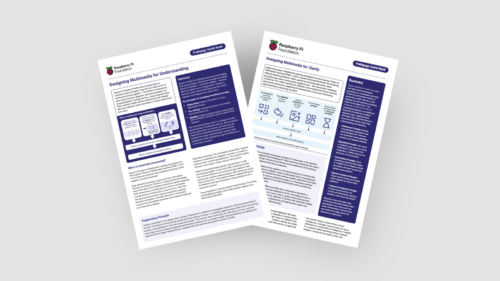
Another critical component is the Spatial Contiguity Principle. This dictates that people learn better when corresponding words and pictures are presented near rather than far from each other on the page or screen. In computing, this is often violated when a diagram of a computer network is on one slide and the labels or explanations are on another. The new resources encourage teachers to place annotations directly next to the relevant components of a diagram or lines of code, reducing the "split-attention" effect that occurs when a student’s eyes must bounce back and forth between different areas of a screen.
Furthermore, the Redundancy Principle is addressed as a common pitfall. Many teachers believe that providing information in multiple formats simultaneously—such as showing text on a slide while reading it aloud—reinforces learning. However, Mayer’s research indicates the opposite: the brain must work harder to reconcile the two identical streams of information, which can actually impede understanding. The Raspberry Pi Foundation advises that if a teacher is speaking, they should use minimal text on their slides, focusing instead on visuals that complement their narration.
Designing for Understanding: Managing Essential Processing
The second Quick Read shifts the focus from clarity to the deeper structure of a lesson, addressing how information is sequenced to foster understanding. This is particularly vital in computing, where concepts are often hierarchical; a student cannot understand a complex algorithm without first grasping variables and loops.
A key strategy discussed is the Segmenting Principle. This principle posits that people learn better when a multimedia message is presented in user-paced segments rather than as a continuous unit. In a classroom setting, this means breaking down a 20-minute lecture on data structures into five-minute "micro-lessons," followed by a brief activity or check for understanding. By allowing the brain to "digest" smaller chunks of information, the teacher prevents the working memory from becoming overwhelmed by the sheer volume of new data.
The Pre-training Principle is also highlighted as a vital tool for computing educators. This involves ensuring that students know the names and characteristics of the main concepts before the full lesson begins. For example, before explaining the mechanics of how a Local Area Network (LAN) operates, a teacher might spend the first few minutes of the lesson defining key terms like "bandwidth," "router," and "packet." When the complex explanation follows, students already have the "mental hooks" necessary to hang the new information on, significantly reducing the cognitive effort required to follow the lesson.
Practical Applications in the Computing Classroom
The Raspberry Pi Foundation’s resources go beyond theory, providing concrete examples of how these principles apply to standard teaching scenarios. For instance, during "live coding" sessions—a staple of computer science education—the foundation recommends a strict adherence to the Temporal Contiguity Principle. This principle states that students learn better when corresponding words and pictures are presented simultaneously rather than successively. As a teacher types a line of code, they should explain its function in real-time, rather than typing a block of code and then explaining it five minutes later.
In the context of networking and hardware, the Coherence Principle is emphasized. Teachers are urged to strip away any "seductive details"—interesting but irrelevant facts or graphics—that do not contribute to the learning objective. While a flashy animation of a data packet traveling through space might be visually appealing, it may distract the student from the actual logic of the TCP/IP protocol. The goal is to create a "clean" mental model that prioritizes functional understanding over aesthetic flair.
Implications for Multilingual and Diverse Learners
A significant portion of the new research focus is dedicated to the impact of these principles on multilingual learners (often referred to as English as an Additional Language or EAL students). For these students, the cognitive load is inherently higher because they must translate the language of instruction while simultaneously learning the technical content.

By utilizing the Signaling and Spatial Contiguity principles, teachers can provide visual scaffolds that bypass language barriers. When a diagram is clearly labeled and the teacher uses visual cues to point to specific elements, the reliance on complex verbal explanation is reduced. This "universal design" approach ensures that high-quality computing education is accessible to a broader demographic, regardless of their primary language or prior exposure to technical jargon.
Data and Outcomes: The Impact of Multimedia Optimization
The push toward research-backed pedagogy is supported by a growing body of data. Meta-analyses of Mayer’s principles have consistently shown large "effect sizes," a statistical measure of the strength of a phenomenon. In many studies, students who were taught using multimedia materials designed according to these principles outperformed their peers—taught with traditional materials—by as much as two letter grades on transfer tests (tests that require students to apply what they learned to a new problem).
In the field of computer science specifically, early data from pilot programs using the Raspberry Pi Foundation’s "Quick Reads" suggests that students report lower levels of frustration and higher levels of "self-efficacy"—the belief in their own ability to succeed. For teachers, the benefit is equally clear: by reducing the need for constant clarification of poorly presented materials, they can spend more time on one-on-one support and higher-order problem-solving activities.
Broader Impact and the Future of Instructional Design
The release of these resources comes at a time when the global demand for computer science skills is at an all-time high. However, the "leaky pipeline" in STEM education remains a concern, with many students opting out of technical subjects because they find them "too difficult" or "confusing." The Raspberry Pi Foundation’s initiative suggests that the difficulty may not lie in the subject matter itself, but in the way it is presented.
By professionalizing the approach to instructional design, the foundation is setting a new standard for teacher training. The implications extend beyond the classroom; as corporate training and online "bootcamps" continue to proliferate, the application of Mayer’s Principles could lead to more efficient workforce development in the tech sector.
As the Raspberry Pi Foundation continues to expand its library of pedagogy resources, the focus remains on bridging the gap between the science of how we learn and the art of how we teach. By empowering educators with the tools to manage cognitive load, the foundation is not just helping students learn to code—it is helping them learn how to think, process, and thrive in an increasingly digital world. These new Quick Reads represent a significant step forward in making computing education more effective, inclusive, and scientifically grounded for the next generation of learners.