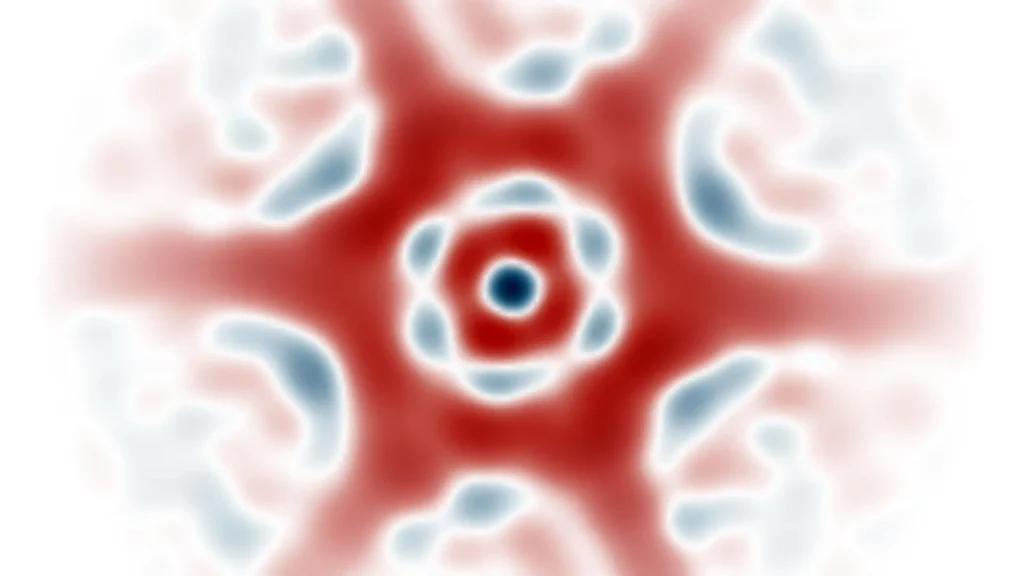
The breakthrough, detailed by the Oxford team, marks a significant leap in our ability to engineer and control the fundamental building blocks of quantum information. It moves beyond the familiar concept of a quantum bit (qubit) to harness the richer capabilities of quantum harmonic oscillators, constructing superpositions from components that inherently defy classical description.
Understanding Quantum Superposition: From Thought Experiment to Laboratory Reality
One of the most profound and counterintuitive features of quantum mechanics is the principle of superposition, which posits that a quantum system can exist in multiple states simultaneously until it is measured or observed. This concept is most famously encapsulated by Erwin Schrödinger’s 1935 thought experiment involving a hypothetical cat sealed in a box with a device that has a 50% chance of releasing a lethal poison. According to quantum mechanics, until the box is opened, the cat is considered to be both alive and dead at the same time—a superposition of states. While a fictional scenario designed to highlight the bizarre implications of quantum theory when scaled to macroscopic objects, the underlying principle is a cornerstone of quantum reality.
In laboratory settings, scientists routinely create and manipulate real quantum superpositions. Atoms, photons, and even the vibrational motion of ions or mechanical resonators can be placed into multiple quantum states concurrently. The ability to precisely generate, control, and measure these superposed states is not merely an academic exercise; it is fundamental to the development of transformative technologies, including quantum computers, ultra-precise atomic clocks, and advanced quantum sensors. For instance, a quantum bit, the basic unit of quantum information, leverages superposition by existing as a combination of ‘0’ and ‘1’ simultaneously, dramatically expanding computational possibilities compared to classical bits that can only be ‘0’ or ‘1’ at any given moment.
Beyond Qubits: The Power of Quantum Harmonic Oscillators
While qubits offer a powerful two-state paradigm, quantum systems are capable of far greater complexity. Quantum harmonic oscillators (QHOs) represent a class of systems that can occupy a vast, potentially infinite, number of energy levels. This inherent multi-state capability offers a significantly richer landscape for quantum information processing and fundamental physics research than simple two-level qubits. QHOs describe a wide array of physical phenomena, including light (photons in a cavity), atomic vibrations in a crystal lattice, and the quantized motion of trapped particles.
Scientists have long utilized QHOs to create various forms of quantum superpositions. A well-known example is the "cat state," named in homage to Schrödinger’s thought experiment. In the context of an oscillator, a cat state typically refers to a superposition of two distinct "coherent states." Coherent states are special quantum states that most closely approximate classical motion; they are often visualized as wave packets moving in opposite directions in phase space. For example, in optics, a cat state might involve a superposition of a light field with a certain amplitude and phase, and another light field with the same amplitude but opposite phase. These cat states, while groundbreaking, are typically constructed from components that, individually, exhibit a relatively high degree of classicality for quantum states.
A New Frontier: Building Superpositions from Nonclassical Components
The recent work from the University of Oxford team, however, pushes the boundaries of this field by demonstrating an entirely new family of quantum superpositions. Unlike previous endeavors that primarily constructed cat-like states from coherent-state wave packets, the Oxford researchers developed a sophisticated technique that combines a broad range of quantum components that are already highly nonclassical in nature.
This distinction is crucial. Nonclassical states possess properties that cannot be explained by classical physics. A prime example mentioned in the research is "squeezed states." In quantum mechanics, the Heisenberg Uncertainty Principle dictates that there is a fundamental limit to how precisely one can know certain pairs of physical properties, such as a particle’s position and momentum, or a light wave’s amplitude and phase. Squeezed states are engineered to reduce the quantum uncertainty in one of these properties below the standard quantum limit, at the expense of increased uncertainty in its conjugate property. For instance, a squeezed state of light might have very low noise in its amplitude but higher noise in its phase. By building superpositions from such inherently nonclassical components, the Oxford team has created states with even more exotic and robust quantum properties, potentially offering enhanced performance for future quantum technologies.
The Trapped Ion Advantage: A Versatile Quantum Platform
The experimental realization of these novel quantum states relied on the exquisite control offered by a single trapped ion system. Trapped ions are one of the leading platforms for quantum information processing and fundamental quantum physics research, renowned for their long coherence times and high-fidelity gate operations. A trapped ion, typically an atom that has lost or gained an electron and is thus electrically charged, combines two distinct quantum systems within a single platform:
- Internal Electronic State: The ion’s internal electronic energy levels behave like a qubit. Researchers can manipulate these levels using precisely tuned laser pulses or microwave fields, encoding quantum information in the ‘spin-up’ and ‘spin-down’ (or similar) states.
- Motional State: The ion’s collective motion within the electromagnetic trap acts as a quantum harmonic oscillator. This motion, which can be precisely cooled to its ground state, can then be excited into various quantized vibrational energy levels.
This unique combination makes trapped ions exceptionally versatile for creating complex quantum states that extend beyond conventional two-level qubits. The ability to couple the internal (qubit) state with the external (motional) state allows for sophisticated quantum operations that can entangle these different degrees of freedom, paving the way for the generation of intricate superpositions of motional states, as demonstrated in this research.
Precision Engineering: The Experimental Methodology
To generate the new family of quantum superpositions, the Oxford researchers implemented a multi-step experimental protocol involving precise control of the trapped ion:
- Ground State Cooling: Initially, the ion’s motion was cooled to its lowest possible energy state, known as the motional ground state, typically achieved through laser cooling techniques. This minimizes thermal noise and ensures a well-defined starting point for quantum operations.
- Entanglement Engineering: The team then engineered specific interactions that entangled the ion’s internal electronic state (its qubit) with different possible motional states of the harmonic oscillator. This was achieved using carefully designed sequences of laser pulses that selectively couple the internal states to particular vibrational modes, creating a correlated state where the internal state of the ion is linked to its motional pattern.
- Mid-Circuit Quantum Measurement: A critical step involved performing a mid-circuit quantum measurement on the ion’s internal state. Unlike classical measurements, a quantum measurement can cause the system to "collapse" into one of the possible states. In this experiment, by measuring the internal state, the ion’s motion was projected or "collapsed" into the desired superposition of nonclassical components. This technique essentially "sculpts" the quantum state into a predefined shape in phase space.
Dr. Sebastian Saner, the lead author from the Department of Physics at the University of Oxford, elucidated the power of this method, stating, "This approach gave us a tool to sculpt the quantum superposition into almost any shape." This capability highlights a significant advancement in the precision control and engineering of complex quantum states.
Verifying the Unseen: Characterizing Exotic Quantum States
The new method provided the Oxford team with an unprecedented degree of control over the quantum states they produced. By precisely adjusting various experimental parameters—such as the duration, intensity, and phase of the laser pulses—they could modify the relative size, orientation, and separation of the constituent components within the superposition. This remarkable flexibility allowed them to create a wide variety of unusual and highly nonclassical motional quantum states using the same trapped-ion system, demonstrating the platform’s versatility.
Crucially, after generating these exotic states, the researchers meticulously reconstructed and characterized them directly. This involved performing a series of measurements to map out the quantum state in phase space. Their measurements revealed two key signatures that unequivocally confirmed the success of the experiment:
- Interference Patterns: The presence of distinct interference patterns is a hallmark of quantum superposition. These patterns arise from the wave-like nature of quantum particles, where different parts of the superposed state interfere with each other, much like light waves.
- Wigner Negativity: Perhaps the most compelling evidence for the nonclassical nature of the states was the observation of regions of Wigner negativity. The Wigner function is a quasi-probability distribution used in quantum mechanics to represent a quantum state in phase space. For any classical system, the Wigner function is always positive or zero. However, for genuinely nonclassical quantum states, the Wigner function can take on negative values in certain regions of phase space. The detection of Wigner negativity is a definitive indicator that the states could not be described as ordinary classical mixtures, thereby confirming that the experiment had successfully produced genuine quantum superpositions composed of truly nonclassical motional states.
The team is now actively collaborating with theoretical physicists to delve deeper into understanding the exact degree and nature of "quantumness" exhibited by these newly created states, pushing the boundaries of what is considered fundamentally quantum.
Voices from Oxford: Insights from the Research Team
The internal excitement surrounding the achievement is palpable within the Oxford physics department. Dr. Raghavendra Srinivas, who supervised the groundbreaking work, shared insights into the team’s motivation and future aspirations. "We were really encouraged by our colleagues’ reaction when we showed them what we had made," Dr. Srinivas remarked, underscoring the significance perceived by the wider scientific community. He continued, expressing a forward-looking perspective, "We believe we’re still scratching the surface of what’s possible, both for practical applications and for understanding these states at a more fundamental level." This sentiment reflects the dual ambition of the research: to pave the way for tangible technological advancements while simultaneously deepening our comprehension of the universe’s most perplexing principles. The engagement with theoretical physicists, as noted, is a testament to the complex and profound questions these new states raise about the very nature of quantum reality.
Pioneering New Horizons: Implications for Quantum Computing and Fundamental Physics
The development of these highly nonclassical quantum superpositions carries profound implications across several domains of science and technology, pointing toward a future where quantum technologies transcend the limitations of current paradigms.
Quantum Computing: One of the most promising applications lies in quantum computing. While current efforts largely focus on qubit-based systems, these new types of states, built from quantum harmonic oscillators, could usher in a new era of "continuous variable" quantum computing. Such systems may offer distinct advantages:
- Error Resistance: It is theorized that certain types of nonclassical states, particularly those with Wigner negativity, can be more inherently resistant to specific forms of quantum noise and errors, which are major hurdles in scaling quantum computers. This could lead to more robust quantum processors.
- Enhanced Error Correction: The unique properties of these multi-level states might enable simpler and more effective quantum error-correction strategies. Instead of requiring many physical qubits to encode one logical qubit, these richer states could potentially encode more information and be more amenable to error detection and correction with fewer resources. This could significantly reduce the overhead typically associated with fault-tolerant quantum computing.
- New Computational Paradigms: Beyond conventional binary logic, these states open up possibilities for entirely new computational paradigms, potentially enabling algorithms that are more efficient for specific problems or that are impossible to implement on qubit-only architectures.
Quantum Sensing and Metrology: The heightened nonclassicality of these engineered states could also translate into ultra-precise measurement capabilities. Quantum sensors leverage quantum phenomena to achieve sensitivities far beyond classical limits. By utilizing superpositions of highly squeezed states, for instance, researchers could develop sensors for magnetic fields, gravity, or time that are orders of magnitude more accurate, with applications ranging from medical diagnostics to fundamental physics experiments testing theories of gravity.
Foundational Physics: Beyond technological applications, this research provides a new experimental platform for investigating one of physics’ biggest and most enduring questions: where the boundary lies between the classical world we experience and the underlying quantum reality that governs it. The ability to precisely sculpt and control states with varying degrees of nonclassicality allows physicists to probe the decoherence process—the mechanism by which quantum superpositions degrade into classical mixtures due to interaction with the environment. This offers invaluable insights into the measurement problem in quantum mechanics and the transition from quantum strangeness to classical familiarity.
The Road Ahead: Future Research and Development
The Oxford team’s work is not an endpoint but a significant milestone on a much longer journey. Their immediate next steps involve detailed theoretical analysis of the created states, aiming to fully quantify their quantum properties and explore their theoretical limits. This collaboration between experimentalists and theorists is crucial for guiding future research directions.
Looking further ahead, the focus will undoubtedly shift towards demonstrating the practical utility of these states in prototype quantum devices. This includes exploring their integration into quantum computing architectures, developing new quantum algorithms tailored to these states, and demonstrating their enhanced performance in quantum sensing applications. The journey to unlock the full potential of these exotic quantum superpositions has only just begun, promising a future where our command over the quantum world leads to unprecedented scientific discoveries and technological innovations.






