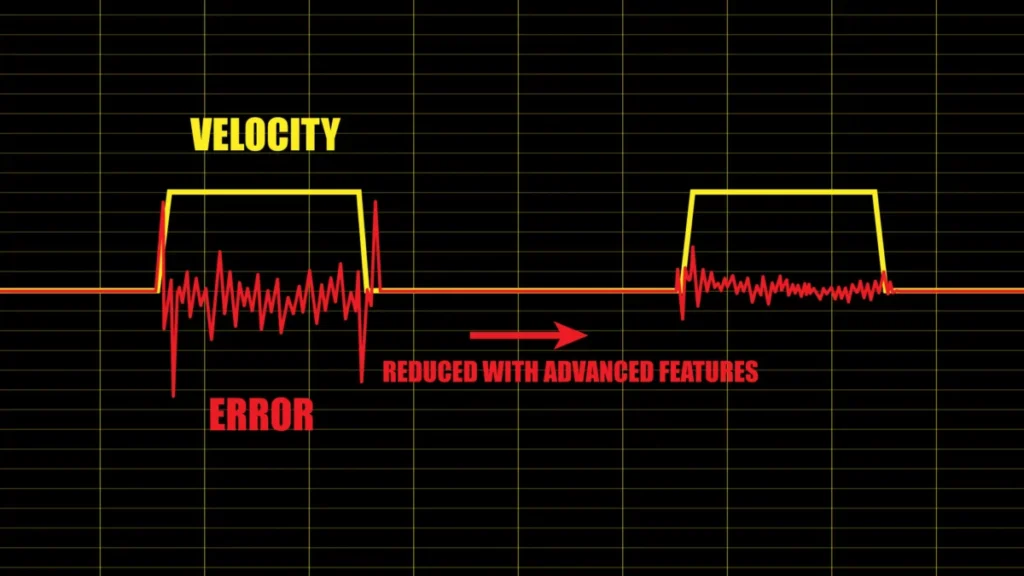
Achieving unparalleled precision in modern industrial and scientific applications necessitates a comprehensive understanding of every component within a motion control system. While the mechanical and motor layers are foundational, the true orchestrators of high-accuracy movement are the drives and controls. These electronic components, often underestimated in their complexity and impact, are pivotal in translating abstract performance goals into tangible, repeatable actions. This installment, the third in a series exploring the intricate layers of motion control performance, delves into how the design and features of drives and controls are paramount in unlocking true system capability, particularly as applications push the boundaries of micron-level accuracy and beyond.
The discourse surrounding high-precision motion control frequently commences and concludes with the mechanical specifications of actuators—repeatability, accuracy, and load capacity. While these metrics are undeniably crucial for many applications, a deeper engineering perspective reveals that such a narrow focus often overlooks critical factors. The initial article in this series meticulously examined the mechanical layer, highlighting often-neglected elements such as bearing deflection, body stiffness, and structural smoothness. Following this, the second article shifted its attention to the motors, scrutinizing their diverse designs, construction methodologies, and inherent quality that influence overall system performance. This third and crucial segment now illuminates the sophisticated world of drives and controls, positioning them as the intelligent core that dictates the finesse and reliability of any motion system. It underscores that beyond data sheet figures, numerous subtle yet critical details can either elevate a system to meet ambitious performance expectations or severely hinder its potential, making nuanced engineering decisions indispensable.
The Evolution of Motion Control Intelligence
The journey of motion control intelligence has progressed from rudimentary power delivery to sophisticated, adaptive algorithms. Historically, the most basic electric motor applications operated without any integrated intelligence, relying solely on direct power application to induce rotation. This approach, while simple, offered minimal control over critical parameters like acceleration, velocity, or precise positioning. The advent of drives marked a significant leap forward, introducing electronics designed to supply power to motors more smoothly and efficiently. These early drives enabled rudimentary speed control and torque regulation, laying the groundwork for more sophisticated systems.
Controllers subsequently added a layer of intelligence, transforming simple motor operation into a programmable sequence of actions. These units provided explicit control over acceleration profiles, velocity curves, and precise positioning, moving beyond mere power modulation. This evolution has been closely tied to advancements in microprocessors, digital signal processing (DSP), and power electronics, which collectively enabled faster processing speeds, more complex algorithms, and higher fidelity current and voltage control. Today, as industries embrace Industry 4.0 paradigms, motion control systems are increasingly integrated, networked, and intelligent, demanding drives and controls that can not only execute precise movements but also adapt to changing conditions, communicate seamlessly, and contribute to overall system optimization.
Drives and Controls: The Brains Behind the Motion
Corey Foster, Director of Automation Sales & Application Engineering at Valin Corporation, emphasizes that focusing on drives and controls is fundamental to achieving true precision. In the context of motion control, three general tiers of performance can be identified for drives and controls, mirroring those discussed for mechanics and motors: basic, specification-level, and pushing-beyond-the-specifications.
Basic Performance Tier: For the most fundamental motor applications, the requirements for drives and controls are relatively simple. The primary concern is compatibility—ensuring the electronics can adequately power the motor to operate. In these scenarios, the built-in intelligence, if any, often goes unused, and default tuning settings are typically sufficient. Applications might include simple conveyor belts or basic pumps where precise acceleration or exact positional accuracy is not critical. The emphasis here is on cost-effectiveness and straightforward functionality.
Specification-Level Performance Tier: As application demands increase, requiring tighter control over motion parameters, the features of drives and controllers become increasingly important. This tier necessitates the availability of tuning features, which, when properly configured, allow engineers to achieve desired performance characteristics such as specific acceleration rates, controlled deceleration, and repeatable stopping positions. Common issues at this level often stem from incorrect setup or missing settings, which are usually rectifiable. A more prevalent challenge is improper tuning, frequently occurring when systems are adjusted by personnel without adequate training. This can lead to undesirable motion profiles—either sluggish and unresponsive, or overly aggressive and unstable, potentially causing mechanical wear or process inconsistencies. It is at this stage that the mismatch between a high-performance motor and lower-performance electronics begins to manifest, though often without catastrophic failure in typical industrial settings.
Pushing-Beyond-the-Specifications Performance Tier: This is where the true sophistication of drives and controls is unleashed, enabling applications that demand ultra-high precision, dynamic adaptability, and robust performance in challenging environments. Here, the limitations of basic or even specification-level electronics become glaringly apparent. Trying to pair high-end motors with low-end electronics invariably leads to compromised performance, making it difficult, if not impossible, to meet stringent application requirements.
High-performance applications, such as those found in semiconductor manufacturing, advanced robotics, medical imaging, and precision optics, demand a suite of advanced features from their drives and controls:
- Advanced Tuning Features with Dynamic and Adaptable Gains: Static tuning parameters are insufficient for systems encountering varying loads, friction, or environmental conditions. High-performance controllers offer dynamic tuning, allowing gains to adjust in real-time based on the system’s state, load changes, or external disturbances. This ensures optimal response and stability across a range of operating conditions.
- Multi-Axis Synchronization: For complex mechanical configurations like gantries, Cartesian robots, or parallel kinematics, precise coordination across multiple axes is paramount. Advanced controllers provide sophisticated algorithms for multi-axis synchronization, ensuring movements are perfectly coordinated, preventing undesirable stresses, and achieving complex trajectories with high accuracy.
- Fast Update Rates for Tight Current and Voltage Control: The speed at which a controller samples feedback, calculates errors, and updates current or voltage commands directly impacts the system’s responsiveness and precision. High-performance systems demand extremely fast servo sampling and update rates (often in the kilohertz range) to maintain tight control loops, minimize tracking errors, and dampen vibrations effectively.
- Fast Processors: Lag in command processing can introduce delays and inaccuracies, especially in dynamic applications. High-performance drives and controls integrate powerful processors capable of executing complex algorithms and processing command queues rapidly, ensuring real-time responsiveness and deterministic behavior.
- Environmental Adaptability: Real-world environments are often electrically and mechanically noisy. An OEM’s tool might function flawlessly in an isolated lab but falter when exposed to the harsh realities of a factory floor, complete with arc-welders, heavy machinery, and human activity. Advanced controllers are equipped with tools like notch filters to suppress specific resonant frequencies, and dynamic tuning parameters that can adapt to varying levels of electrical interference or mechanical vibrations, thereby maintaining performance integrity.
- "Auto-tuning" as a Starting Point, Not a Panacea: While auto-tuning features are valuable for initial setup and providing a baseline, they are rarely a "silver bullet" for optimizing high-performance systems. Manual fine-tuning by experienced engineers remains critical to extract the absolute best performance, especially when dealing with complex load characteristics or stringent dynamic requirements.
- Encoder Resolution Matching: The resolution of the encoder must be meticulously matched not only to the application’s positional accuracy goal but also to the capabilities of the electronics. A high-resolution encoder paired with a controller unable to process its feedback at sufficient speed or precision will yield sub-optimal results. Conversely, a low-resolution encoder limits the inherent precision regardless of the controller’s capabilities.
- Fieldbus Communication Protocols: In multi-axis systems or integrated manufacturing environments, the speed and determinism of communication protocols (e.g., EtherCAT, PROFINET, SERCOS III) are critical. High-performance applications demand fieldbus protocols capable of transmitting data rapidly and synchronously across multiple devices, ensuring coordinated motion and timely responses to commands and feedback.
An illustrative example of such high-performance capability is the ECM series control platform from ACS Motion Control. These integrated drive/controller units are engineered on a cost-optimized architecture specifically for precision motion systems. Their superior performance is a direct result of unique and powerful servo control algorithms, exceptionally fast servo sampling and update rates, and advanced power electronics techniques. Features such as advanced motion profile generation, flexible real-time multi-threaded programming, integrated motion optimization tools, and motion-to-process event synchronization are designed to minimize errors and maximize throughput in the most demanding applications. Such capabilities are essential for tasks like precise wafer alignment in semiconductor fabrication or microscopic positioning in bio-medical research.

The Broader Impact and Implications
The distinction between adequate and superior drives and controls extends far beyond mere technical specifications; it directly influences operational efficiency, product quality, and competitive advantage.
Economic Implications: Inadequate drives and controls lead to hidden costs. Poor tuning or insufficient processing power can result in increased scrap rates due to inaccurate positioning, longer cycle times reducing throughput, and higher energy consumption from inefficient motor control. For instance, in the global semiconductor industry, where a single defective chip can represent thousands of dollars in losses, the investment in high-precision motion control systems, driven by advanced electronics, yields significant returns by minimizing defects and maximizing yield. Industry reports project the global motion control market to reach over $20 billion by 2027, with precision applications driving a significant portion of this growth, underscoring the economic imperative of robust control systems.
Operational Efficiency and Throughput: For manufacturers striving for lean operations and maximum throughput, the speed and accuracy of motion control are paramount. Advanced drives and controls facilitate faster and smoother acceleration/deceleration profiles, reducing overall cycle times without compromising precision. Features like feedforward control, trajectory pre-processing, and advanced disturbance rejection allow systems to maintain speed and accuracy even under varying loads or external forces, directly impacting production capacity.
Product Quality and Innovation: The ability to execute movements with extreme precision enables the creation of products that would otherwise be impossible. This ranges from miniaturized medical devices requiring micron-level assembly to advanced optical components demanding nanometer-scale polishing. Superior motion control allows for tighter tolerances, higher surface finishes, and more intricate designs, fostering innovation and differentiating products in competitive markets.
System Reliability and Maintenance: While often overlooked, the quality of drives and controls significantly impacts system longevity and maintenance requirements. Well-tuned systems with robust control loops experience less mechanical wear and tear, reducing the frequency of maintenance and extending the lifespan of mechanical components. Furthermore, advanced diagnostic capabilities embedded within modern controllers can provide predictive insights into potential issues, enabling proactive maintenance and minimizing costly unplanned downtime.
Safety Considerations: In applications involving human-robot collaboration or high-speed machinery, the responsiveness and reliability of control systems are critical for safety. Features like safe torque off (STO) and safe limited speed (SLS), integrated directly into drives and controllers, ensure that machines can respond instantaneously to safety critical events, protecting personnel and preventing damage.
Challenges and Future Outlook
Despite the advancements, integrating and optimizing high-performance motion control systems present several challenges. The complexity of modern drives and controls requires specialized expertise, making trained engineers and technicians a valuable commodity. Furthermore, the initial investment in advanced electronics can be substantial, necessitating a careful cost-benefit analysis. As motion systems become increasingly connected, cybersecurity for industrial control systems emerges as a critical concern, demanding robust protocols and secure architectures.
Looking ahead, the trajectory for drives and controls in motion control points towards even greater intelligence, autonomy, and integration. The increasing adoption of artificial intelligence and machine learning algorithms promises more adaptive and self-optimizing control loops, capable of learning from operational data and predicting optimal performance parameters. Miniaturization will continue, leading to more compact and integrated drive/controller solutions. The emphasis on human-robot collaboration will drive the development of inherently safer and more intuitive control interfaces. Ultimately, the future of motion control will be defined by software-defined control architectures, offering unprecedented flexibility, scalability, and performance customization, solidifying the role of drives and controls as the indispensable brain of precision automation.
In conclusion, while the mechanics provide the structure and the motors deliver the force, it is the sophisticated interplay of drives and controls that imbues a motion system with intelligence, precision, and adaptability. As industries continue to demand ever-higher levels of accuracy and efficiency, understanding and optimizing these electronic layers will be paramount. Precision motion is not merely about moving a motor well; it is the intricate art of coordinating information from the target, the environment, and the physical components to achieve the specified goal, a symphony conducted by the unrivaled capabilities of advanced drives and controls.
This article is part of a comprehensive series exploring the multifaceted aspects of motion control performance.






