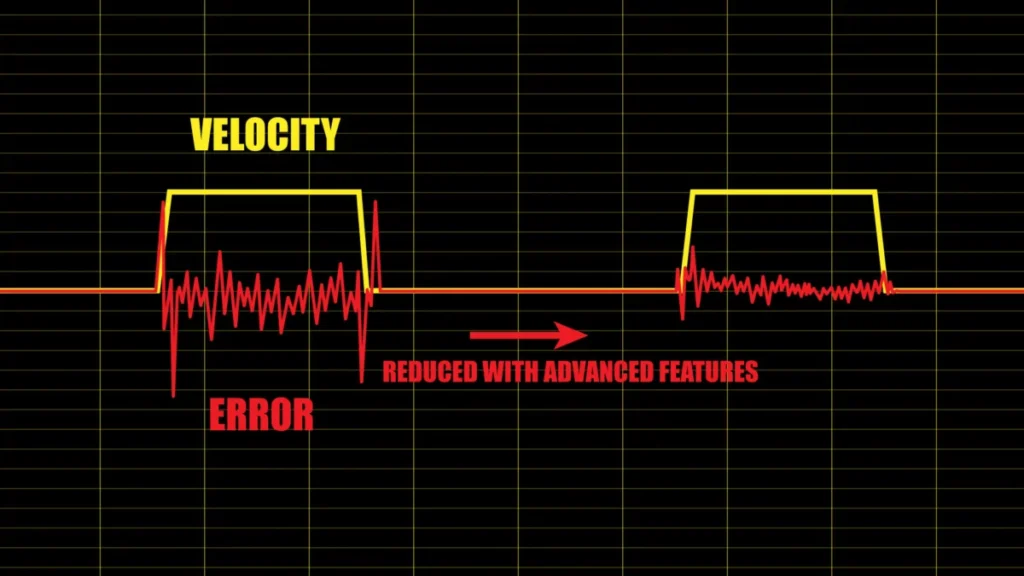
In the intricate world of high-precision manufacturing, robotics, and scientific instrumentation, the pursuit of flawless motion control is paramount. While initial assessments of system performance often fixate on the mechanical specifications of actuators—such as repeatability, accuracy, and load capability—a truly nuanced understanding reveals that achieving ultimate precision demands a far deeper dive into the entire motion control ecosystem. This holistic perspective encompasses not only the mechanics and motors but critically, the sophisticated interplay of drives and controls that serve as the system’s intelligent core. This article, the third in a series dedicated to dissecting the various technological layers influencing overall system performance, shifts its focus to the indispensable role of drives and controls, exploring their designs, features, and the often-overlooked details that can determine the success or failure of high-performance applications.
The Evolving Landscape of Precision Motion Control
Historically, the engineering community often began its pursuit of motion precision by scrutinizing the physical attributes of mechanical components. Actuators, guideways, and structural elements were rigorously evaluated based on their inherent stiffness, smoothness, and bearing characteristics. As highlighted in the first installment of this series, factors such as bearing deflection, body stiffness, and structural smoothness are foundational, providing the bedrock upon which any high-performance system must be built. This initial focus, while essential, represented only a fraction of the total equation.
Subsequently, the spotlight broadened to encompass the motors themselves. The second article in this series delved into the critical aspects of motor design, construction quality, and their intrinsic characteristics that directly impact performance. From brushless DC to stepper motors, and from linear to rotary configurations, the choice and quality of the motor significantly influence the system’s ability to generate precise force, torque, and velocity. However, even the most exquisitely engineered mechanics and motors remain inert without intelligent direction. This is where drives and controls ascend to their pivotal role, acting as the nervous system and brain that orchestrate every movement with exacting detail.
As industries push the boundaries of accuracy, demanding performance beyond micron-level thresholds into the nanometer range, traditional specifications often lose their conventional meaning and relevance. This necessitates a shift towards a more integrated engineering approach where every component choice, particularly within the electronics, carries profound implications. Engineers, designers, and system integrators are increasingly tasked with recognizing the symbiotic relationship between hardware and software, understanding that the collective intelligence of the drives and controls is what ultimately transforms potential into demonstrable precision.
Drives and Controls: The Unsung Architects of Motion
At their most fundamental level, electric motors operate by converting electrical energy into mechanical motion. However, this conversion needs to be managed and refined to achieve any meaningful control. This is the primary function of drives and controllers.
Defining the Components:
- Drives: Often referred to as amplifiers or inverters, drives are the electronic devices that supply and regulate electrical power to the motors. They convert the raw electrical input (e.g., AC mains) into a controlled current and voltage output that can precisely energize the motor windings. Their primary role is to manage torque, speed, and position based on commands received from a controller. Modern drives incorporate sophisticated power electronics, such as insulated-gate bipolar transistors (IGBTs) or MOSFETs, to achieve efficient and precise power delivery.
- Controllers: These are the "brains" of the motion control system. They interpret high-level commands (e.g., "move to position X at velocity Y"), generate motion profiles, close control loops (position, velocity, current), and issue precise current or voltage commands to the drives. Controllers range from simple programmable logic controllers (PLCs) with basic motion functions to highly specialized multi-axis motion controllers capable of executing complex interpolated movements and coordinating multiple axes simultaneously.
Tiers of Performance in Motion Control Electronics
Just as with mechanics and motors, the performance requirements for drives and controls can be categorized into distinct tiers, each demanding a progressively higher level of sophistication and feature set.
1. Basic Applications: Simplicity and Compatibility
For the most rudimentary electric motor applications, the concept of "built-in intelligence" is minimal. In some cases, power is applied directly to the motor, resulting in simple rotation without much control over speed or direction beyond on/off. When drives are introduced, they primarily serve to smooth this process, making the motor run more efficiently and perhaps allowing for basic speed adjustment. Controllers, at this tier, might offer rudimentary functions such as acceleration, deceleration, and basic positioning. In these scenarios, the main criterion is often simply compatibility—ensuring the electronics can adequately power and communicate with the motor. Default settings for tuning parameters are typically sufficient, and extensive configuration is rarely required. The cost-effectiveness and ease of integration are often the paramount considerations, with minimal emphasis on advanced performance metrics.
2. Specification-Level Applications: Precision through Configuration
As application demands grow, requiring tighter control over motion parameters, the features of drives and controllers become increasingly important. This tier represents the vast majority of industrial automation tasks, where repeatable, accurate, and reasonably fast motion is critical. Here, the availability of tuning features is no longer a luxury but a necessity. Engineers must actively adjust parameters such as proportional-integral-derivative (PID) gains, feedforward terms, and filters to achieve the desired dynamic response.

Common challenges at this level often stem from improper setup or configuration. Missing settings, incorrect parameter values, or poorly programmed motion profiles can lead to suboptimal performance. Tuning problems are particularly prevalent, frequently occurring when personnel without adequate training attempt to optimize the system. The consequences can range from motion that is sluggish and unresponsive to oscillations that are overly aggressive and unstable, potentially damaging equipment or compromising product quality. While using a high-performance motor with lower-performance electronics might not always cause catastrophic failure in these applications, it inevitably limits the motor’s true potential, leading to a system that struggles to meet its full specifications.
3. Pushing Beyond Specifications: The Realm of High-Performance
The true litmus test for drives and controls emerges in applications that demand exceptional precision, speed, and dynamic adaptability—those pushing beyond conventional specifications. This includes sectors like semiconductor manufacturing, advanced robotics, medical device production, optical inspection, and ultra-high-speed material handling. In these environments, the limitations of mid-tier electronics become glaringly apparent. A high-end motor, despite its intrinsic capabilities, will fail to meet its requirements if paired with inadequate control electronics, leading to persistent tuning difficulties and, in severe cases, an outright inability to achieve the application’s goals.
High-performance applications necessitate a suite of advanced features and capabilities within the drives and controllers:
- Advanced Tuning Algorithms with Dynamic and Adaptable Gains: Static PID tuning is often insufficient for systems encountering varying loads, speeds, or environmental conditions. High-performance controllers employ advanced algorithms that can dynamically adjust control gains in real-time, often leveraging adaptive control, model-predictive control (MPC), or even artificial intelligence/machine learning techniques to maintain optimal performance across a wide operational envelope. This ensures stability and precision even as system dynamics change.
- Multi-Axis Synchronization: For complex multi-axis mechanics such as gantry systems, Cartesian robots, or synchronized conveyor belts, precise coordination across all axes is paramount. High-performance controllers offer robust multi-axis synchronization capabilities, often with sub-microsecond timing precision. This allows for complex interpolated paths, electronic gearing, and camming functions that are critical for applications like laser cutting, 3D printing, or pick-and-place operations.
- Fast Update Rates: The speed at which control loops are executed is crucial for tight current, velocity, and position control. High-performance drives and controllers feature extremely fast servo sampling and update rates, often in the kilohertz range (e.g., 20 kHz or higher). This rapid feedback and correction capability minimizes lag, reduces tracking errors, and enhances overall system responsiveness, particularly important for systems with high dynamic loads or rapid changes in commanded motion.
- High-Speed Processors and Latency Management: To process complex commands, execute sophisticated algorithms, and manage multiple real-time tasks without introducing lag, high-performance controllers require powerful, dedicated processors. The computational overhead for trajectory generation, real-time kinematics, and complex control loop calculations demands significant processing power. Any latency in processing commands can translate directly into positional errors or reduced throughput, making processor speed a critical determinant of system performance.
- Environmental Adaptability and Robustness: Real-world industrial environments are rarely pristine. Electrical noise from arc welders, mechanical vibrations from forklifts or heavy machinery, and temperature fluctuations can all degrade motion control performance. High-performance drives and controllers are equipped with advanced tools to mitigate these disturbances.
- Notch Filters: These are crucial for suppressing specific resonant frequencies that can arise from mechanical structures or external vibrations, preventing system instability.
- Dynamic Tuning Parameters: The ability to automatically or adaptively adjust tuning parameters in response to environmental changes or varying operational conditions ensures consistent performance.
- Enhanced Noise Immunity: Robust electrical design, proper shielding, and advanced signal processing techniques are integrated to minimize the impact of electromagnetic interference (EMI) and radio frequency interference (RFI).
A notable example involved an OEM whose tool performed flawlessly in its isolated laboratory environment. However, once deployed to a factory floor replete with arc-welders, heavy machinery, and human activity, the controls, lacking features like adaptive notch filters and dynamic tuning, failed to cope with the electrically and mechanically noisy surroundings. The system’s performance plummeted, necessitating an expensive and time-consuming upgrade to more capable electronics. This underscores that a system’s true performance is not merely what it achieves in ideal conditions, but its resilience and adaptability in its intended operational environment.
Beyond the Core: Other Critical Factors
Several other factors, often overlooked or underestimated, significantly impact the success of high-precision motion control applications:
- "Auto-tuning" as a Starting Point, Not a Panacea: While auto-tuning features offered by many drives and controllers are valuable for quickly establishing initial control parameters, they are rarely a "silver bullet" for high-performance applications. Auto-tuning algorithms typically optimize for a generalized response, and fine-tuning by an experienced engineer is almost always required to extract the absolute best performance, especially when dealing with complex load characteristics, unusual mechanical resonances, or specific dynamic response requirements.
- Encoder Resolution and Electronics Compatibility: The precision of a motion system is fundamentally limited by the resolution of its feedback device. High-resolution encoders (optical, magnetic, capacitive) provide the granular position information necessary for tight control. However, this high-resolution data is only useful if the drive and controller electronics are capable of reading, processing, and utilizing it effectively at sufficiently fast rates. Mismatched encoder resolution with the electronics’ processing capabilities can lead to wasted investment in high-end sensors or, conversely, a bottleneck in precision if the electronics cannot interpret the fine details.
- Fieldbus Communication Protocols: In multi-axis systems, the speed, determinism, and synchronization capabilities of the communication protocol are critical. Standard industrial Ethernet protocols like EtherCAT, PROFINET, or SERCOS III are designed for real-time data exchange, enabling precise coordination between multiple drives, controllers, and other networked devices. Latency or jitter in the communication network can directly compromise synchronized motion, leading to errors and reduced throughput. Choosing a protocol that can handle the demanding speed and coordination requirements of the application is therefore paramount.
Industry Perspectives and Best Practices
Industry experts consistently emphasize that achieving high-precision motion is not merely about selecting the best individual components but about designing an integrated system where each layer complements and enhances the others. Engineers widely acknowledge that the "best hardware can’t overcome a dumb control loop." This adage highlights the fact that even the most mechanically robust actuators and powerful motors will underperform if the drives and controllers lack the intelligence, speed, and adaptability to orchestrate their movements precisely.
The consensus among system integrators is to adopt a holistic design approach from the outset. This involves:
- Early Integration of Control Considerations: Motion control requirements should influence mechanical and motor selection, not merely be an afterthought.
- Thorough System Characterization: Understanding the dynamics of the mechanical system (resonances, friction, inertia) is crucial for effective controller tuning.
- Realistic Environmental Assessment: Accounting for real-world operational conditions, including noise, temperature, and load variations, is essential for selecting robust electronics.
- Skilled Tuning and Programming: Investing in trained personnel who can properly configure, tune, and program advanced motion controllers is critical for unlocking their full potential.
Broader Impact and Implications
The implications of expertly designed and implemented motion control systems, particularly concerning drives and controls, resonate across numerous high-tech industries. In semiconductor manufacturing, sub-nanometer precision in wafer positioning and inspection directly translates to higher yields and smaller chip geometries, driving technological advancement. In medical robotics, the ability to execute highly precise, repeatable movements is fundamental to minimally invasive surgery and advanced diagnostic equipment, enhancing patient safety and outcomes. In advanced manufacturing, such as additive manufacturing or micro-assembly, the precision offered by sophisticated motion controls enables the creation of increasingly complex and miniaturized products.
As industries continue their relentless pursuit of higher throughput, greater accuracy, and enhanced flexibility, the sophistication of drives and controls will only continue to grow. Future trends point towards even more integrated systems, leveraging artificial intelligence for predictive maintenance, adaptive control, and self-optimization. The continued convergence of software intelligence with high-performance electronics will be crucial for unlocking the next generation of industrial automation and scientific discovery.
In conclusion, while the foundational elements of mechanics and motors are indispensable, it is the intelligence, speed, and adaptability of drives and controls that ultimately define the limits of precision in modern motion control systems. Recognizing the intricate layers of performance and specifications within these electronic components is not just a technical detail; it is a strategic imperative for engineers and designers aiming to build systems that meet and exceed the demanding requirements of tomorrow’s most advanced applications.






