A groundbreaking advancement in material science is poised to redefine the capabilities of synthetic materials. A research team at Penn State, spearheaded by Assistant Professor Hongtao Sun of Industrial and Manufacturing Engineering (IME), has unveiled a novel fabrication technique capable of producing highly adaptable, multifunctional "smart synthetic skin." This innovative material moves beyond the limitations of conventional single-purpose synthetics, offering the potential to perform a diverse array of tasks, from dynamically concealing and revealing information to enabling sophisticated adaptive camouflage and providing essential support for advanced soft robotic systems. The implications of this research are far-reaching, promising to influence fields ranging from national security and entertainment to medicine and industrial manufacturing.
The core of this breakthrough lies in the creation of a programmable smart skin engineered from hydrogel, a soft and water-rich material. Unlike traditional synthetic materials whose behaviors are fixed and immutable, this new smart skin exhibits remarkable tunability. Its visual appearance, mechanical properties, surface texture, and even its ability to undergo shape transformations can be precisely adjusted when exposed to various external triggers, including changes in temperature, exposure to solvents, or the application of physical stress. This level of dynamic control over material characteristics represents a significant leap forward in the development of intelligent and responsive materials. The findings of this pioneering research were recently published in the esteemed scientific journal Nature Communications, where the study was further recognized with inclusion in the journal’s prestigious Editors’ Highlights, underscoring its exceptional scientific merit and potential impact.
Nature’s Blueprint: The Octopus as Inspiration
The conceptual genesis of this advanced synthetic skin can be traced back to the remarkable biological systems found in cephalopods, such as octopuses. These marine invertebrates are renowned for their astonishing ability to instantaneously alter the visual appearance and textural complexity of their skin. This biological mastery serves crucial evolutionary purposes, enabling them to seamlessly blend into their diverse aquatic environments for camouflage or to communicate complex signals to other members of their species.
Professor Sun, who serves as the principal investigator for this ambitious project, elaborated on this natural inspiration. "Cephalopods employ an incredibly sophisticated interplay of muscles and nerves to achieve dynamic control over their skin’s appearance and texture," he explained. "Drawing profound inspiration from these exceptionally soft and adaptable organisms, we engineered a 4D-printing system that effectively translates this concept into a synthetic, soft material." Sun’s extensive academic affiliations, which span biomedical engineering, materials science and engineering, and the Materials Research Institute at Penn State, have undoubtedly contributed to the interdisciplinary nature of this research. He further clarified the term "4D printing" in this context, emphasizing that the printed objects are not static entities. Instead, they possess an inherent capacity to actively and intelligently respond to their surrounding environmental conditions, thereby demonstrating a temporal dimension to their printed structure.
Printing Digital Intelligence Directly into Materials
The key to achieving this unprecedented level of adaptability and responsiveness lies in a sophisticated fabrication method known as halftone-encoded printing. This technique ingeniously translates digital image or texture data into binary code – sequences of ones and zeros. This binary information is then directly embedded within the hydrogel material during the printing process. The underlying principle is conceptually similar to the way dot patterns are utilized in conventional newspapers and photographs to construct intricate visual images.
By meticulously encoding these digital patterns within the hydrogel matrix, the researchers gain the ability to program how specific regions of the smart skin will react to different external stimuli. The precisely designed printed patterns dictate the differential responses of various areas of the material. For instance, some regions might be programmed to swell or shrink to a greater extent than others when exposed to thermal fluctuations, specific liquids, or mechanical forces. Through the careful and deliberate design of these halftone patterns, the research team can exert fine-grained control over the material’s overall macroscopic behavior, effectively orchestrating its multifaceted responses.
"In essence, we are printing instructions directly into the material itself," Professor Sun further elaborated on the process. "These embedded instructions serve as a directive, guiding the skin on how to react and adapt when its environment undergoes changes." This direct encoding of functional instructions represents a paradigm shift in material design, moving from passive materials to actively programmed ones.
Dynamic Revelation: Hiding and Revealing Information on Demand
One of the most compelling and visually striking demonstrations of the smart skin’s capabilities is its remarkable ability to conceal and subsequently reveal visual information. Haoqing Yang, a doctoral candidate in IME and the lead author of the published research paper, highlighted the profound potential of this feature. "This capability truly underscores the versatility and practical applications of our smart skin," Yang stated.
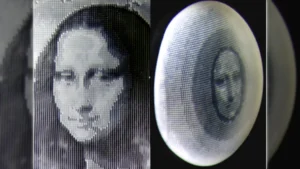
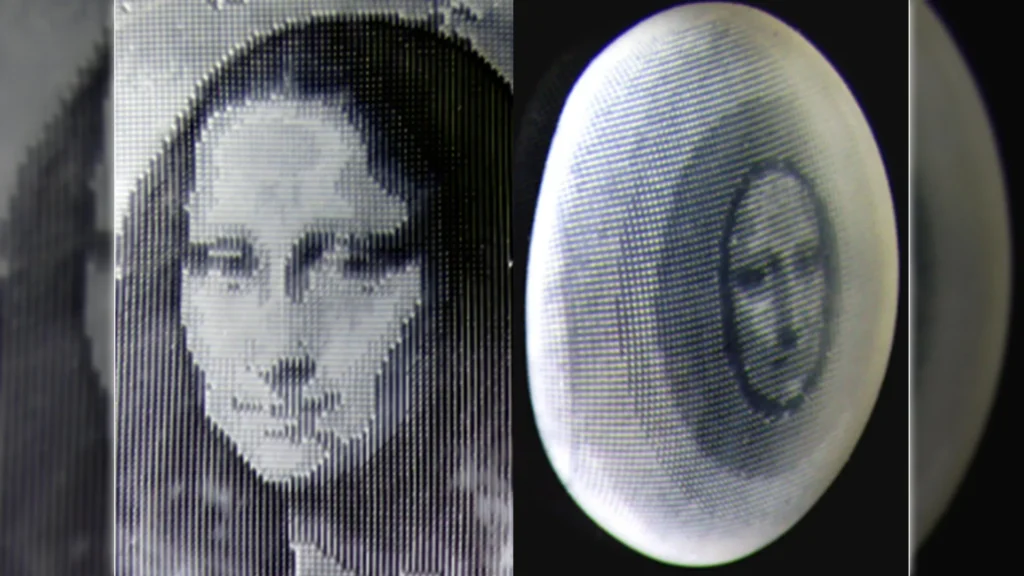
To vividly illustrate this functionality, the research team encoded a detailed image of the iconic Mona Lisa into a thin film of the hydrogel. Initially, the image was imperceptible. However, upon washing the material with ethanol, it transitioned to a transparent state, rendering the hidden image completely invisible. The concealed artwork then reappeared in its full clarity only after the film was subsequently submerged in ice water or gradually warmed. This precise control over visual appearance opens up a host of potential applications.
Yang emphasized that the choice of the Mona Lisa was purely illustrative. The underlying printing technique is remarkably flexible, allowing for the encoding of virtually any image or pattern into the hydrogel. "This dynamic behavior has significant implications for applications such as camouflage, where a surface could seamlessly blend into its surroundings by altering its visual properties, or for advanced information encryption, where sensitive messages remain hidden until specific conditions are met for their revelation," Yang explained.
Further expanding the scope of information concealment, the researchers demonstrated that even when visually undetectable, concealed patterns could be discerningly revealed through a different modality: mechanical interaction. By gently stretching the material and employing digital image correlation analysis to meticulously analyze its deformation patterns, the team was able to detect the hidden information. This innovative approach signifies that information can be retrieved not only through visual means but also through subtle mechanical cues, adding an additional layer of security and complexity to the system.
Seamless Shape Shifting: A Unified Material Approach
Beyond its visual adaptability, the smart synthetic skin exhibits extraordinary flexibility and transformative capabilities. Professor Sun noted that the material can effortlessly transition from a simple, flat sheet into intricate, bio-inspired three-dimensional shapes, complete with detailed surface textures. A significant advantage of this approach is that this complex shape-shifting transformation does not necessitate the use of multiple layers of different materials or the assembly of disparate components.
Instead, the control over both the change in shape and the refinement of texture is entirely governed by the digitally printed halftone patterns within a single, monolithic sheet of hydrogel. This unified approach allows the material to replicate sophisticated effects that are eerily similar to the dynamic skin transformations observed in cephalopods.
Building upon this remarkable ability, the team showcased the power of integrating multiple functionalities within a single material. By carefully designing the halftone patterns, they were able to encode the Mona Lisa image into flat films that subsequently transformed into three-dimensional structures. As these flexible sheets curved and morphed into dome-like shapes, the previously hidden image gradually became visible. This simultaneous coordination of shape transformation and visual appearance within a single, homogenous material is a testament to the sophistication of the developed fabrication technique.
"Much like how cephalopods seamlessly coordinate their body shape with their skin patterning, our synthetic smart skin can concurrently control what it looks like and how it deforms, all within the confines of a single, soft material," Professor Sun remarked, highlighting the biomimetic success of their research.
Advancing the Frontiers of 4D-Printed Hydrogels
This latest research builds directly upon prior work conducted by Professor Sun’s team concerning 4D-printed smart hydrogels. Their previous study, also published in Nature Communications, focused on the integration of mechanical properties with programmable transitions from flat to three-dimensional forms. In the current research, the team has significantly expanded this foundational approach by employing halftone-encoded 4D printing. This advancement allows for the incorporation of an even greater multiplicity of functions into a single, cohesive hydrogel film, moving beyond simple shape change to dynamic visual and mechanical responses.
Looking towards the future, the researchers are actively focused on developing a scalable and highly versatile platform. Their objective is to create a system that enables the precise digital encoding of multiple, complex functions within a single adaptive material. This would pave the way for the widespread adoption and application of these intelligent materials across various industries.
"This interdisciplinary research, situated at the nexus of advanced manufacturing, intelligent materials, and mechanics, unlocks a wealth of new opportunities with profound implications for a wide range of systems," Professor Sun stated. "These include stimulus-responsive systems, biomimetic engineering, advanced encryption technologies, sophisticated biomedical devices, and numerous other emerging fields."
The collaborative effort involved several key individuals from Penn State, including doctoral candidates Haotian Li and Juchen Zhang from IME, and Tengxiao Liu, a lecturer in biomedical engineering. Additionally, Professor H. Jerry Qi from the Georgia Institute of Technology’s mechanical engineering department made significant contributions to this groundbreaking project. The synergy of expertise from these institutions and researchers has been instrumental in driving this innovative research forward.
The implications of this development are vast. In the realm of defense and security, the ability to create adaptive camouflage that can change color, texture, and even display patterns on demand could revolutionize military applications, enhancing soldier and equipment concealment. For commercial applications, imagine packaging that can reveal if it has been tampered with, or clothing that can change its appearance based on user preference or environmental conditions. In the medical field, smart synthetic skin could be integrated into prosthetics to provide more realistic tactile feedback or used in smart bandages that can change properties to promote healing. The potential for advanced encryption is also significant, offering a novel way to secure sensitive information through physical material properties rather than purely digital means.
The timeline for bringing these applications to widespread commercial use remains a subject of ongoing research and development. However, the fundamental scientific principles have been firmly established. The Penn State team has demonstrated the feasibility of their halftone-encoded 4D printing technique and the remarkable adaptability of the resulting smart synthetic skin. Further research will likely focus on refining the printing process for mass production, exploring a wider range of hydrogel formulations to achieve different material properties, and developing more sophisticated control systems for programming complex behaviors.
The scientific community’s reaction to this breakthrough has been overwhelmingly positive. Dr. Anya Sharma, a leading materials scientist not involved in the study, commented, "This work by Professor Sun’s team represents a significant paradigm shift in how we conceive of and engineer synthetic materials. The ability to embed dynamic, programmable functionalities directly into a soft material at such a granular level is truly revolutionary. It opens up a pathway to materials that are not just functional, but truly intelligent." This sentiment is echoed by many in the field, who see this research as a crucial step towards realizing the long-held vision of truly responsive and adaptable synthetic materials that can mimic the complexity and versatility of biological systems. The future of smart materials, it seems, has just become significantly more dynamic and exciting.