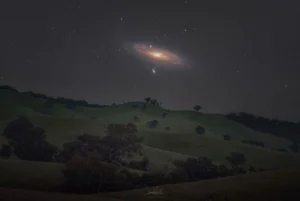
The full moon of July, traditionally known as the Buck Moon, presented a breathtaking spectacle over the Adriatic Sea, captured in a stunning image taken from Krk Island along the coast of Croatia on July 28, 2026. This celestial event, while a beautiful astronomical display in its own right, also serves as a poignant prelude to an even more significant astronomical event on the horizon: the total solar eclipse of August 12, 2026.
The photograph, credited to Branko Nadj, showcases the luminous Buck Moon as it ascends above a distant mountain range, silhouetted against a twilight sky painted with the subtle hues of atmospheric phenomena. The composition is a masterclass in astronomical photography, highlighting not only the moon’s grandeur but also the intricate interplay of light and shadow in Earth’s atmosphere.
The Majesty of the Buck Moon
The Buck Moon derives its name from the time of year when male deer, or bucks, begin to grow their new antlers. This naming convention, rooted in folklore and the observation of natural cycles, connects the lunar phases to the rhythms of the Earth’s ecosystems. The full moon in July typically occurs when the sun is at its highest point in the northern hemisphere’s sky, making it a prominent feature of the summer night.
The image captures the moon just as it breaches the horizon, a moment often referred to as moonrise. For observers on Earth, the full moon appears to rise around sunset, mirroring the sun’s descent below the opposite horizon. This synchronized rise and set is a consequence of the moon’s orbital position relative to the Earth and the sun. When the moon is full, it is positioned on the opposite side of Earth from the sun, meaning that as the sun sets in the west, the full moon simultaneously rises in the east.
Atmospheric Illusions: Earth’s Shadow and the Belt of Venus
The photograph masterfully illustrates several fascinating atmospheric optical phenomena. As the full moon rises in the east, Earth’s shadow, a diffuse gray band, begins to ascend above the mountainous southeastern horizon. This phenomenon, often referred to as the "Earth’s shadow," is a visual manifestation of the planet’s curvature blocking sunlight. It is most visible during twilight, when the atmosphere is illuminated by sunlight scattered from below the horizon.
Above Earth’s shadow band, a delicate, pinkish arch is discernible. This is known as the Belt of Venus, or antitwilight arch. It is formed by sunlight scattering off atmospheric particles at a high angle, creating a subtle band of reddish light that appears opposite the setting sun. The Belt of Venus is more prominent during dawn and dusk, and its visibility depends on atmospheric conditions, including the presence of dust or aerosols. In Nadj’s photograph, the Belt of Venus appears to embrace the rising moon, creating a visually striking and scientifically significant tableau. The convergence of these atmospheric layers—Earth’s shadow and the Belt of Venus—with the luminous Buck Moon provides a dynamic and layered perspective on our planet’s relationship with its celestial neighbors.
A Global Phenomenon and Its Significance
The Buck Moon, like all full moons, is a global event, visible to anyone on the side of Earth facing the moon at the time. However, the specific visual spectacle captured in this photograph is unique to its location. The Adriatic coastline, with its dramatic mountainscapes and clear skies, provides an ideal backdrop for astronomical observation.
The detailed explanation accompanying the image highlights the scientific accuracy of the observation, referencing resources like EarthSky.org for moon phase information and NASA’s Jet Propulsion Laboratory for details on Earth’s shadow. This reinforces the educational mission of the Astronomy Picture of the Day (APOD) program, which aims to bring the wonders of the cosmos to the public through stunning imagery and expert explanations.
The Astronomical Context: A Countdown to an Eclipse
The mention of the "New Moon of August 12 will cast its own shadow on planet Earth in a much anticipated total solar eclipse" is a critical piece of context that elevates the significance of this Buck Moon photograph. The full moon represents a specific phase in the lunar cycle, a cycle that culminates in the New Moon phase, which is a prerequisite for a solar eclipse.

A solar eclipse occurs when the Moon passes between the Sun and Earth, and the Moon fully or partially blocks ("occults") the Sun. This alignment is only possible during the New Moon phase, when the Moon is not illuminated by the Sun as seen from Earth. The upcoming total solar eclipse on August 12, 2026, is a major astronomical event that has generated considerable excitement among scientists and the public alike.
The August 12, 2026 Total Solar Eclipse: An Anticipated Event
The total solar eclipse of August 12, 2026, will be a significant celestial event for observers in parts of North America, Europe, and Africa. The path of totality, where the Sun will be completely obscured by the Moon, will sweep across regions including Greenland, Iceland, Spain, and Portugal. Cities such as Valladolid, Spain, are expected to be prime viewing locations.
This eclipse is particularly noteworthy for several reasons. For many in Spain, it will be the first total solar eclipse visible from the Iberian Peninsula since the historically significant eclipse of August 30, 1914. The event presents a unique opportunity for scientific research, including studies of the Sun’s corona, the outermost layer of its atmosphere, which is only visible during totality.
- Timeline of the Eclipse (August 12, 2026, approximate times for Spain):
- Partial Eclipse Begins: Mid-afternoon local time.
- Totality Begins: Late afternoon/early evening, depending on location.
- Maximum Totality: The Sun is completely obscured.
- Totality Ends: The first sliver of the Sun reappears.
- Partial Eclipse Ends: Late evening.
Scientists are particularly interested in observing the Sun’s corona, which is a dynamic and often turbulent region. During a total solar eclipse, the brilliant disk of the Sun is hidden, allowing the faint corona to become visible. This provides an unparalleled opportunity to study phenomena such as solar flares and coronal mass ejections. Data collected during these events can contribute to our understanding of space weather, which can impact satellite operations, communication systems, and even power grids on Earth.
Scientific Preparations and Public Engagement
NASA and other space agencies have already begun preparations for this significant astronomical event. Scientific expeditions are being planned, and educational initiatives are underway to inform the public about safe viewing practices. The importance of using certified solar eclipse glasses or viewers to protect eyesight during the partial phases of the eclipse cannot be overstated. Direct viewing of the Sun, even when partially obscured, can cause permanent eye damage.
The "much anticipated" nature of this eclipse, as stated in the APOD explanation, reflects a growing public interest in astronomy and space science. Events like these serve as powerful catalysts for engaging diverse audiences with scientific concepts and fostering a sense of wonder about the universe. Educational institutions, astronomy clubs, and science museums are expected to play a crucial role in disseminating information and organizing viewing events.
The Broader Implications: Connecting Earthly Cycles to Cosmic Events
The image of the Buck Moon, with its accompanying explanation, serves as a beautiful metaphor for the interconnectedness of celestial phenomena. The moon, a constant companion in Earth’s sky, undergoes its monthly cycle, influencing tides and marking the passage of time. Its phases, from the dark New Moon to the radiant Full Moon, are a direct result of its orbital dance with Earth and the Sun.
The July full moon, the Buck Moon, by rising in a specific atmospheric context and occurring a mere two weeks before a total solar eclipse, underscores this intricate cosmic choreography. It’s a reminder that the seemingly static night sky is in constant motion, governed by predictable laws that can lead to spectacular displays.
The transition from a full moon to a new moon, which sets the stage for the eclipse, can be seen as a symbolic shift. The full moon, a beacon of light and a symbol of culmination, gives way to the new moon, a period of darkness that allows for a different kind of illumination – the sun’s corona. This cyclical progression is not just a matter of astronomical mechanics but also a source of inspiration and scientific inquiry.
The APOD program, by selecting this image and providing its detailed context, effectively bridges the gap between everyday observation and profound scientific understanding. It invites viewers to not only appreciate the beauty of the night sky but also to contemplate the underlying physical processes and the vastness of the cosmos. The Buck Moon over the Adriatic is more than just a pretty picture; it’s a celestial signpost, pointing towards an even grander event and reminding us of our place within a dynamic and awe-inspiring universe. The ongoing study of lunar cycles, solar activity, and eclipses continues to expand our knowledge and deepen our appreciation for the intricate workings of our solar system.