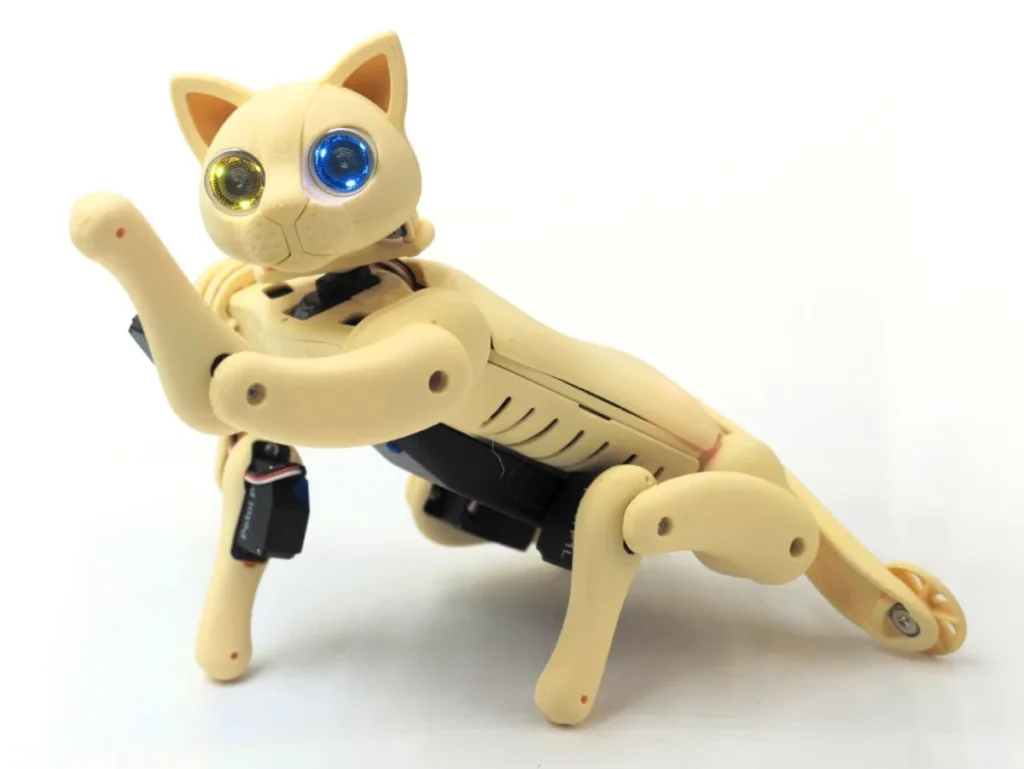
Petoi, a prominent name in the realm of open-source robotics, has released its latest iterations of programmable robot pets, the Nybble Q and Bittle X V2, solidifying its position at the forefront of accessible, advanced robotics education. These sophisticated quadruped robots, priced at $435 for the Nybble Q and $469 for the Bittle X V2 with an arm, transcend the definition of mere toys, serving as powerful platforms for learning and innovation in computational thinking, engineering, and artificial intelligence. Their blend of immediate interactive fun with deep programmability via multiple coding languages makes them ideal tools for hobbyists, educators, and students looking to explore the complex world of robotics without prohibitive entry barriers.
A New Era of Interactive Learning: Introducing Petoi’s Vision
Petoi’s journey into creating these robotic companions is rooted in a philosophy of democratizing robotics education. While consumer-grade robot pets like Sony’s AIBO captured imaginations decades ago, their closed ecosystems and high price points limited their educational reach. Petoi, by contrast, embraces an open-source, modular design approach, allowing users to not only program their robots but also understand and modify their hardware. This ethos aligns with the broader maker movement, which emphasizes hands-on learning and community collaboration. The introduction of the Nybble Q and Bittle X V2 represents a significant step in this direction, offering enhanced capabilities and a more refined user experience compared to their predecessors. These models are not just about mimicking animal movements; they are about providing a tangible interface for abstract computational concepts, fostering a generation proficient in STEM fields.
Nybble Q: The Agile Feline Companion
The Petoi Nybble Q, an advanced robotic cat, stands out as a testament to intelligent design and engineering. Retailing at $435, it has quickly become a favored demonstration piece for its intuitive voice command capabilities right out of the box. Its palm-sized form factor belies the complexity within, packed with numerous servos that allow for fluid, lifelike movements. The initial user experience is remarkably engaging, with the robot responding to a variety of voice commands, providing immediate gratification and sparking curiosity. This ease of interaction proved compelling enough to convince an educator to integrate it into their classroom, highlighting its potential as an educational tool.

Beyond its immediate appeal, the Nybble Q is a robust programmable platform. Users can delve into its functionalities using mobile and desktop applications, leveraging popular coding environments such as Arduino, Python, and Mind+ block coding. This multi-tiered programming accessibility ensures that learners of varying skill levels—from beginners using visual block coding to advanced users writing complex Python scripts—can engage with the robot. The accompanying lessons are meticulously designed to guide users through fundamental robotics concepts, bridging the gap between theoretical knowledge and practical application.
The Nybble Q incorporates several key hardware advancements. It features an extra servo dedicated to tail wagging, adding to its lifelike demeanor, and is equipped with distance sensors and color-changing eyes that provide visual feedback, indicating different states or interactions. These features represent a significant upgrade from the original wooden Nybble, which was already considered a premium model. The "Q" variant boasts a sleek, durable 3D-printed body, an upgraded control board (BiBoard V1.0), and enhanced servos that offer improved precision and feedback control. The servo feedback control, in particular, allows users to manually manipulate the robot’s limbs and record these movements to design custom actions, opening up vast possibilities for personalized choreography and experimental robotics. Furthermore, the Nybble Q is designed for expandability, capable of integrating a Raspberry Pi for additional computational power. This shared cognitive load between the BiBoard and a Raspberry Pi enables more complex tasks, including advanced AI applications, real-time data processing, and sophisticated navigation algorithms.
Despite arriving preassembled, the reviewer noted minor initial adjustments, such as repositioning a servo plug for the tail, which was easily resolved. The accuracy of the voice recognition system was particularly praised, handling most commands effectively, albeit with a few humorous misunderstandings. A crucial safety and functional feature is the onboard Inertial Measurement Unit (IMU), which allows the Nybble Q to detect when it has fallen and attempt to self-right. This capability, while taking a few seconds on smooth surfaces, demonstrates a sophisticated level of autonomous behavior critical for robust robot design. The vibrant online community also serves as an invaluable resource, providing solutions and support for hardware and software documentation queries, underscoring the collaborative spirit of the open-source hardware ecosystem.
Bittle X V2: The Versatile Canine Platform
The Petoi Bittle X V2, the canine counterpart, offers a different set of strengths and enhancements, building upon the foundational Bittle model. Priced at $469 when equipped with the optional robot arm, the Bittle X V2 is characterized by its upgraded ESP32-based board, which provides built-in Wi-Fi and Bluetooth connectivity, enhancing its communication capabilities and enabling more complex remote control and data logging. Like the Nybble Q, it features integrated voice control, making interaction intuitive from the outset.
While the Bittle X V2 does not inherently come with the Nybble’s ultrasonic eyes, its design prioritizes modularity and expandability. The robot’s mouth cavity is ingeniously designed to accommodate a variety of Grove sensors, allowing users to add light, motion, or gesture detection capabilities. This flexibility enables the Bittle X V2 to be customized for diverse applications, from navigating complex environments to interacting with its surroundings in novel ways. The option to integrate an AI camera module further elevates its potential, facilitating advanced computer vision tasks such as object recognition, tracking, and even facial detection, transforming it into a powerful platform for applied artificial intelligence.

The most distinctive variant of the Bittle X V2 is the one equipped with a robot arm in place of its head. This configuration unlocks a new dimension of interaction, allowing the robot to perform manipulation tasks. Pre-programmed macros enable it to pick up and toss small objects, a feature that surprised the reviewer with its strength and precision. This variant pushes the boundaries of what a small quadruped robot can achieve, demonstrating capabilities traditionally associated with larger, more expensive industrial or research robots. However, the reviewer also noted a preference for the "nimbleness and expandability" of the Bittle with a traditional head, suggesting a trade-off between manipulation capabilities and overall versatility in sensor integration and dynamic movement.
The Power of Programmability and Customization
Both the Nybble Q and Bittle X V2 are distinguished by their deep programmability. This is not merely about executing pre-defined commands but about empowering users to design and implement entirely new behaviors. The support for Arduino, Python, and Mind+ block coding caters to a broad spectrum of users. Mind+ offers a drag-and-drop interface, ideal for beginners to grasp programming logic without grappling with syntax. Arduino C++ provides a more direct interface with the hardware, suitable for embedded systems programming. Python, with its extensive libraries and readability, is excellent for implementing complex algorithms, including those related to AI and machine learning, especially when augmented with a Raspberry Pi.
The modular nature of these robots extends beyond software to hardware. While the kits often arrive preassembled, Petoi intentionally leaves the internal components accessible. The reviewer’s experience of easily adjusting a servo connector on the Nybble Q, though exposing a delicate ribbon cable, highlights this design choice. It implies that these robots are not "black box" consumer gadgets but rather "intermediate projects" where the core development is done, leaving the exciting customization and experimentation to the user. This approach fosters a deeper understanding of robotics, encouraging users to disassemble, modify, and integrate additional sensors or modules. The availability of a Bittle X V2 kit without the arm further emphasizes this build-your-own philosophy, allowing users to tailor their robot to specific educational or hobbyist needs.
Educational Framework and Community Engagement
Petoi’s commitment to education is evident in the inclusion of structured curriculum materials. These lessons guide users through various aspects of robotics, from basic movement commands to advanced sensor integration and programming logic. Such resources are crucial for transforming a sophisticated piece of hardware into an effective learning tool. The active online community surrounding Petoi robots is another cornerstone of their educational value. Forums, shared projects, and collaborative troubleshooting platforms provide an invaluable support network. When hardware documentation might be complex, or a programming challenge arises, the community often has solutions, shared experiences, and innovative approaches, creating a vibrant ecosystem of learning and mutual support. This community-driven aspect significantly lowers the barrier to entry for complex projects, ensuring that users are never truly alone in their robotic endeavors.

Technical Underpinnings: BiBoard and Beyond
At the heart of these robots lies the BiBoard V1.0, Petoi’s custom control board, and for the Bittle X V2, an upgraded ESP32-based board. The BiBoard, designed specifically for these quadruped robots, efficiently manages servo control, sensor input, and communication. Its robust design is crucial for the precise movements and responsive behaviors exhibited by the Nybble Q and Bittle X V2. The ESP32, a powerful microcontroller with integrated Wi-Fi and Bluetooth, offers significant advantages in terms of connectivity and processing power, enabling wireless programming, remote control, and interaction with IoT devices.
The option to integrate a Raspberry Pi further enhances the robots’ capabilities. A Raspberry Pi, a full-fledged single-board computer, can offload complex computations from the BiBoard/ESP32, allowing for advanced AI tasks such as real-time image processing from an AI camera module, complex pathfinding, and machine learning inference. This dual-processor architecture exemplifies a modern approach to embedded systems, where specialized microcontrollers handle real-time tasks while a more powerful general-purpose computer manages higher-level intelligence.
Market Context and the Rise of DIY Robotics
The market for educational robotics and STEM kits has seen substantial growth in recent years. Driven by a global push for STEM education and the increasing accessibility of advanced components, platforms like Petoi are filling a critical niche. According to market research reports, the global educational robotics market is projected to reach several billion dollars by the mid-2020s, indicating a strong demand for tools that make learning about robotics engaging and effective. Petoi robots sit at the higher end of this market, offering a more sophisticated experience than entry-level kits, but still significantly more accessible than professional research robots. They compete in a segment that values open-ended exploration, customizability, and a strong community.
The design philosophy of Petoi aligns with the broader maker movement, which has gained significant traction globally. This movement, characterized by DIY culture, open-source hardware, and collaborative communities, has fostered an environment where individuals can build, innovate, and share their creations. Petoi robots serve as excellent examples of products born from and contributing to this movement, providing robust platforms that encourage users to become creators rather than just consumers of technology.

Broader Implications for STEM and Future Innovation
The Petoi Nybble Q and Bittle X V2 are more than just advanced educational tools; they are catalysts for future innovation. By providing hands-on experience with real-world robotics challenges—such as locomotion, sensor integration, voice recognition, and AI implementation—they prepare students for careers in engineering, computer science, and related fields. These robots foster critical thinking, problem-solving skills, and an understanding of interdisciplinary concepts that are vital in the modern technological landscape.
The accessibility of complex robotics through platforms like Petoi democratizes learning, enabling individuals from diverse backgrounds to engage with cutting-edge technology. This inclusive approach is crucial for building a diverse talent pool that can tackle the grand challenges of tomorrow. Furthermore, the modular and open-source nature of these robots encourages iterative design and experimentation, skills that are invaluable in any innovative endeavor. As robotics continues to integrate into various aspects of daily life, from healthcare to logistics, understanding and interacting with these systems will become an increasingly important skill set. Petoi’s programmable pets are effectively building blocks for this future, equipping the next generation with the knowledge and practical experience to not only adapt to but also shape a world increasingly co-inhabited by intelligent machines.
In conclusion, the Petoi Nybble Q and Bittle X V2 represent a significant evolution in educational robotics. Their combination of sophisticated hardware, multi-language programmability, extensive expandability, and a supportive community positions them as premier tools for anyone interested in delving into the fascinating world of robotics. They are not foolproof consumer products but rather robust, intermediate projects that offer a rich, rewarding, and highly educational experience, paving the way for the next generation of roboticists and innovators.