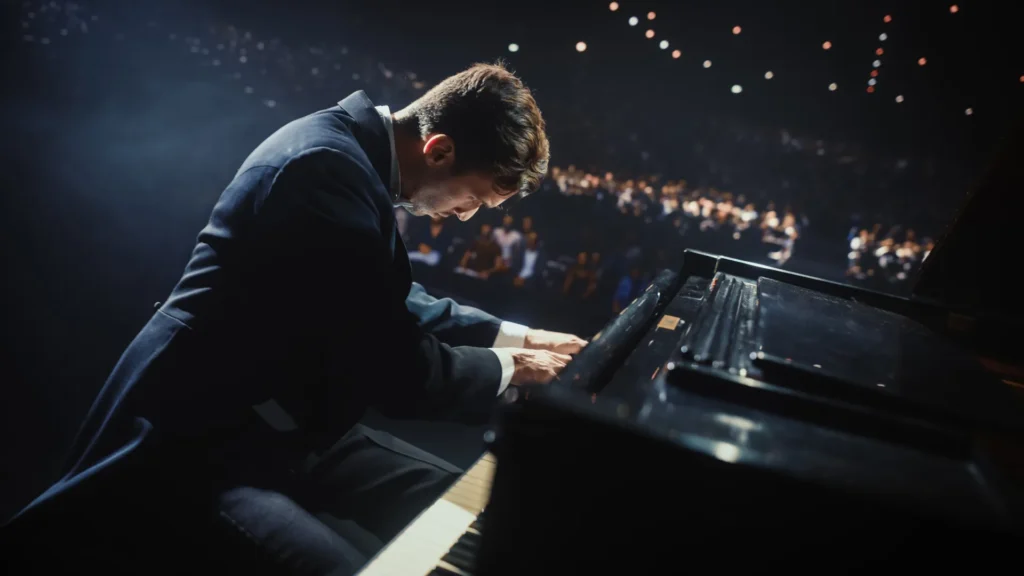
For generations, the nuanced artistry of pianists has been steeped in the belief that a performer’s touch holds the profound power to alter the very character of a piano’s sound. This long-held conviction among musicians and music teachers, however, frequently clashed with the skepticism of the scientific community. Many scientists argued that once a piano hammer strikes a string, the resultant tone, or timbre, is determined almost entirely by the instrument’s inherent physics and design, with any perceived differences largely attributable to variations in volume, timing, or purely psychological interpretation. Now, a groundbreaking scientific study, leveraging cutting-edge sensing technology, has provided the clearest and most compelling evidence to date that pianists indeed possess the extraordinary ability to sculpt a piano’s timbre through the subtlety of their touch alone, validating a century-old artistic intuition.
The pivotal research, spearheaded by Dr. Shinichi Furuya, a distinguished scientist affiliated with the NeuroPiano Institute and Sony Computer Science Laboratories, Inc., delved into the hidden, microscopic movements that underpin expressive piano playing. Utilizing revolutionary ultra high-speed sensing technology, Dr. Furuya and his team meticulously unraveled the intricate interplay between a pianist’s physical actions and the resulting sonic perception. Their remarkable findings, which have been peer-reviewed and published in the prestigious journal Proceedings of the National Academy of Sciences (PNAS), illuminate how the most minute and seemingly imperceptible motions of a pianist’s fingers, hands, and arms profoundly influence how listeners perceive fundamental qualities such as brightness, heaviness, clarity, and warmth in individual musical notes and phrases. This scientific validation marks a significant milestone, bridging the longstanding chasm between artistic expression and empirical understanding.
A Century of Contention: The Great Piano Timbre Debate
The question of whether a pianist’s touch could truly alter timbre – often described as the "color" or "texture" of a sound, distinct from its pitch or loudness – has been a subject of fervent debate for over a hundred years. This intellectual skirmish began in earnest in the early 20th century, reaching a fever pitch with the rise of modern acoustics and psychoacoustics. Musicians, steeped in the traditions passed down through generations, routinely employed descriptive terms like "warm," "dark," "bright," "heavy," or "singing" to characterize different tonal qualities achieved through specific techniques. Legendary pedagogues, such as Theodor Leschetizky and Josef Hofmann, emphasized the importance of "tone production" and the "art of touch," instructing students on how to elicit a vast palette of sounds from the instrument. They believed that the way a finger engaged with the key, the speed of the strike, the angle of approach, and even the preceding movements, all contributed to the final sonic outcome.
However, many scientists, applying the rigorous principles of physics, found it challenging to explain these phenomena. They posited that a piano hammer’s interaction with the string is a ballistic event; once the hammer is set in motion and leaves the control of the finger, its trajectory and impact velocity are the primary determinants of the string’s vibration. From this perspective, the "touch" itself was seen as merely controlling the hammer’s velocity, which directly correlated with loudness. Any perceived timbral differences, they argued, were either psychological illusions, influenced by the overall musical context (tempo, articulation, dynamics), or subtle changes in attack transients and decay characteristics that were secondary to the main hammer-string interaction. Pioneering acousticians like Hermann von Helmholtz, whose 19th-century work laid much of the groundwork for understanding musical sound, focused heavily on the overtone series and resonant properties of instruments, providing a framework that often seemed to sideline the individual performer’s direct influence on timbre beyond dynamic control. For decades, scientific consensus leaned towards the idea that the piano, once activated, largely dictated its own timbral identity.
Revolutionizing Measurement: The HackKey System and Expert Performance
The new research by Dr. Furuya’s team fundamentally challenges this long-standing assumption, overturning the scientific skepticism with irrefutable empirical evidence. To achieve this, the researchers developed and deployed a custom-built, noncontact sensing system dubbed "HackKey." This innovative technology represents a significant leap forward in motion capture and acoustic analysis. Unlike previous systems that might interfere with a pianist’s natural movement or capture data at insufficient resolution, HackKey was engineered to record the movements of all 88 piano keys simultaneously and non-invasively. Its unprecedented capabilities allowed for data acquisition at an astonishing speed of 1,000 frames per second, coupled with microscopic spatial precision. This level of detail was crucial for capturing the incredibly subtle, fleeting gestures that define advanced piano technique.
The experimental design was equally robust. The study recruited twenty internationally acclaimed pianists, chosen for their exceptional skill, extensive training, and profound understanding of expressive performance. These virtuosos were tasked with playing individual notes and short musical phrases while intentionally striving to produce contrasting tonal qualities. Specifically, they were asked to articulate sounds that were distinctly "bright" versus "dark," and "light" versus "heavy." This direct instruction compelled the pianists to draw upon their internalized motor skills and artistic sensibilities to manipulate their touch in ways they intuitively understood would yield the desired timbral outcomes.
Following the performance phase, the recorded sounds were then presented to a diverse group of listeners. Critically, these listening tests revealed that participants consistently recognized and differentiated the intended timbres. This recognition held true even for individuals with no formal musical training, indicating that the timbral distinctions were perceptually salient and not merely subjective interpretations by trained ears. Unsurprisingly, professional pianists participating in the listening tests demonstrated an even higher sensitivity to these subtle differences, underscoring their refined auditory perception honed through years of practice and performance. This dual validation – from both the performers’ intentionality and the listeners’ perception – provided compelling evidence that the pianists were indeed altering timbre through their actions.
Unveiling the Hidden Mechanics of Musical Expression
The true breakthrough of the study, however, lay in the subsequent analysis of the colossal dataset generated by the HackKey system. The researchers meticulously correlated the recorded physical movements with the perceived timbral qualities. What they discovered was not a complex web of countless variables, but rather that a select "handful of extremely precise movement features" were strongly and consistently connected to changes in perceived timbre. These critical features included tiny, almost imperceptible variations in key acceleration during the initial strike, precise temporal coordination between different fingers and hands, and subtle shifts in the synchronization of multiple key presses.
One particularly significant finding highlighted the causal relationship between touch and timbre: the researchers demonstrated that altering even a single one of these identified movement features could reliably change how listeners described the sound. This provided direct, unambiguous evidence that touch itself plays a causal, rather than merely correlational, role in shaping timbre. It refuted the long-held scientific belief that timbral variations were simply byproducts of changes in loudness or tempo; instead, it confirmed that specific micro-movements of the pianist directly contribute to the perceived tonal color, independent of other musical parameters.
The study eloquently described these subtle gestures not as arbitrary actions, but as integral components of a "shared motor skill" – a sophisticated physiological language developed and refined through years, often decades, of advanced piano training. This implies that the profound artistry behind a pianist’s tone is not an abstract, metaphorical, or purely subjective concept, but is firmly grounded in quantifiable, measurable physical actions. As Dr. Furuya articulated, this work represents a monumental step in "bringing a long-standing artistic intuition into the realm of science." He further elaborated that the findings not only support what countless pianists and pedagogues have instinctively believed for decades but also offer an unprecedented, clearer understanding of precisely how highly skilled movement translates into the rich tapestry of emotional and aesthetic experiences that define music.
Beyond the Concert Hall: Far-Reaching Implications
The ramifications of this pioneering research extend far beyond the hallowed halls of concert venues and conservatories, promising transformative impacts across a diverse array of scientific and technological disciplines.
Transforming Music Education and Pedagogy: One of the most immediate and profound implications is for music education. The current pedagogical approach often relies on abstract, metaphorical instructions such as "play warmer," "use a lighter touch," or "make the phrase sing." While these metaphors resonate with experienced musicians, they can be frustratingly vague for students struggling to translate them into concrete physical actions. The findings of Dr. Furuya’s study suggest a revolutionary shift: future music training systems could leverage this data to provide students with precise, visualizable feedback on the exact physical movements associated with specific tonal qualities. Imagine an augmented reality piano lesson where a student can see their hand movements in real-time, overlaid with ideal gestures for achieving a "bright" or "dark" timbre, or receiving haptic feedback guiding their fingers to the correct acceleration profile. This could democratize access to advanced expressive techniques, making them easier to teach, learn, and master, potentially accelerating the development of musical artistry.
Advancements in Rehabilitation Science and Neuroscience: The study’s insights into the intricate relationship between fine motor control and sensory perception hold immense promise for rehabilitation science. Understanding how specific, minute movements of the hands and fingers create distinct perceptual outcomes could inform the development of novel therapeutic interventions. For individuals recovering from neurological conditions like stroke or Parkinson’s disease, or those with motor skill impairments, targeted exercises involving piano playing or similar musical movements could be designed to improve dexterity, coordination, and fine motor control, leveraging the brain’s plasticity and the inherent reward mechanisms of musical expression. From a neuroscience perspective, the research offers critical clues about how the brain integrates complex motor commands with sensory feedback, ultimately shaping our perception of the world. It deepens our understanding of the neural pathways and cognitive processes involved in skilled human action and aesthetic appreciation.
Revolutionizing Robotics and Human-Computer Interaction: The implications also resonate strongly within the fields of robotics, artificial intelligence (AI), and human-computer interaction (HCI). Researchers are already exploring technologies inspired by the nuances of expressive musical performance. Recent advancements in AI and music technology have focused on sophisticated modeling of timbre, generating hyper-realistic piano motion for virtual instruments, and building intelligent systems capable of reproducing subtle expressive nuances in synthesized or robotically performed music. The detailed data on human piano touch provided by this study can serve as a gold standard for training AI models and robotic systems to perform with greater sensitivity and artistic expression. This could lead to the creation of more expressive digital instruments, smarter AI-powered music composition tools, and even advanced robotic systems capable of performing complex, delicate tasks with human-like precision and artistry, not just in music but in areas requiring high dexterity.
The Science of Creativity: Unlocking Artistic Expression: Finally, this study contributes significantly to a burgeoning scientific effort aimed at understanding the very essence of creativity itself. For decades, scientific research into music perception primarily focused on easily quantifiable elements such as pitch, loudness, and rhythm. Timbre, however, has proven far more elusive and challenging to study rigorously, largely because it involves higher-level sensory interpretation, complex cognitive processing, and deeply embedded emotional responses. By meticulously identifying the specific physical actions directly linked to timbre perception, Dr. Furuya and his team have effectively opened a crucial door to studying how artistic expression emerges from the dynamic interaction between the human body, the brain, and the resulting sound.
This work is a cornerstone of a broader, emerging scientific discipline sometimes referred to as "dynaformics," which aims to comprehensively understand music performance as a complex, dynamic system. Proponents of dynaformics believe that such research will not only enhance our fundamental understanding of musical artistry but also offer practical benefits for musicians. This includes developing more efficient training methodologies, helping performers avoid debilitating injuries often associated with years of intense practice, and providing strategies to overcome physical limitations that might otherwise hinder their artistic potential.
The palpable excitement surrounding these groundbreaking findings transcends the mere resolution of an old musical mystery. It profoundly reveals that some of the most potent emotional power and aesthetic depth in music originates from movements so infinitesimally small they are almost invisible to the naked eye. Yet, these gestures are executed with such astounding precision and control that human listeners can instinctively feel, perceive, and respond to the profound differences they create, proving that the magic of musical touch is very much a measurable, scientific reality.