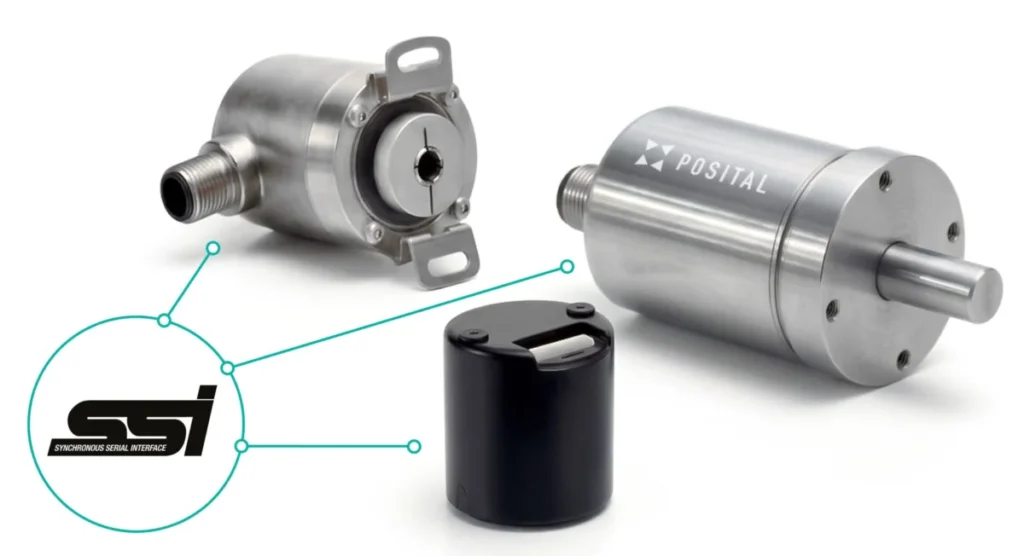
POSITAL, a leading global manufacturer of high-precision industrial sensors, has significantly broadened the scope of its IXARC absolute rotary encoders by integrating Synchronous Serial Interface (SSI) communication across an extensive range of its product lines. This strategic expansion encompasses both the highly adaptable kit (modular) encoders and the robust industrial encoders, now available with SSI functionality. A notable highlight of this development is the availability of these SSI-equipped encoders in POSITAL’s innovative new 20 mm miniature form factor, catering to applications demanding compact and precise sensing solutions. This move underscores POSITAL’s commitment to providing flexible, reliable, and technologically advanced sensing solutions that meet the evolving demands of industrial automation and control systems worldwide.
POSITAL’s Strategic Vision and the IXARC Legacy
Founded with a vision to deliver innovative and robust position and motion sensing solutions, POSITAL has established itself as a cornerstone in the industrial automation landscape. The company’s IXARC series of absolute rotary encoders has long been celebrated for its versatility, durability, and broad configurability, making it a preferred choice for a multitude of industrial applications ranging from robotics and material handling to machine tools and renewable energy systems. Absolute encoders, unlike their incremental counterparts, provide a unique position value immediately upon power-up, eliminating the need for a homing cycle and thus enhancing system efficiency and safety. The continuous evolution of the IXARC platform reflects POSITAL’s agile response to market needs, consistently integrating new technologies and communication protocols to offer enhanced functionality and broader applicability. This latest expansion into comprehensive SSI support is a testament to that ongoing commitment, reinforcing the IXARC line’s position as a flexible and high-performance solution for position feedback.
Understanding Synchronous Serial Interface (SSI)
Synchronous Serial Interface (SSI) stands as a foundational and widely adopted communication protocol within the realm of industrial sensing and control. Its enduring popularity stems from its inherent simplicity, robustness, and effectiveness in point-to-point data transmission. Unlike more complex fieldbus or industrial Ethernet networks that offer multi-device connectivity and extensive diagnostic capabilities, SSI is designed for direct, dedicated communication between a sensor (typically an encoder) and a controller, such as a Programmable Logic Controller (PLC) or microcontroller.
At its core, SSI operates on a master-slave principle using two differential signal pairs: a clock line and a data line, both conforming to the RS-422 standard. The master (PLC or controller) initiates communication by sending a clock signal to the slave (encoder). In response, the encoder transmits its position data serially, bit by bit, synchronized with the master’s clock pulses. This synchronous nature ensures precise data transfer and minimizes timing errors. The RS-422 electrical standard, employing differential signaling, provides excellent noise immunity and allows for reliable data transmission over significant distances, up to 1,200 meters, a critical advantage in large industrial facilities.
The appeal of SSI lies in its straightforward implementation, requiring minimal hardware and software overhead compared to more sophisticated industrial communication protocols. This makes it particularly well-suited for smaller, cost-sensitive systems or applications where the primary requirement is direct, high-speed position data without the added complexity or functionality of network-based solutions. Major PLC manufacturers globally have long integrated SSI support into their platforms, ensuring broad compatibility and ease of integration for system designers. While newer, faster protocols exist, SSI’s proven track record of reliability and simplicity ensures its continued relevance in numerous industrial sectors, including packaging machinery, woodworking equipment, medical devices, and factory automation.
Broadening the Encoder Spectrum with SSI
The integration of SSI across the IXARC product range significantly enhances its appeal to a wider array of industrial applications. For larger format encoders, POSITAL offers SSI interfaces in several distinct mechanical configurations, each tailored to specific operational demands and environmental conditions.
The 36 mm compact models provide a balance of robustness and space efficiency, making them ideal for general industrial machinery where installation footprint is a consideration. Moving up in size, the 58 mm rugged versions are engineered for demanding industrial environments, featuring enhanced mechanical protection against shock, vibration, and contaminants. These encoders are typically found in heavy machinery, outdoor applications, and production lines subjected to harsh operating conditions. At the pinnacle of environmental resilience are the 78 mm explosion-proof models, which come with ATEX certification. This certification is crucial for operations in potentially explosive atmospheres, such as those found in the oil and gas industry, chemical processing plants, and grain silos. ATEX compliance signifies that the devices are designed and tested to prevent ignition hazards, ensuring personnel safety and operational integrity in hazardous locations.
Crucially, within these larger sizes, customers retain the flexibility to choose between two fundamental measurement technologies: magnetic and optical. Magnetic encoders, leveraging the principles of magnetism, are highly robust and resistant to contamination from dust, dirt, and moisture, making them excellent for dirty or harsh industrial settings. They typically offer good resolution and accuracy for most industrial tasks. Optical encoders, on the other hand, rely on light transmission through a coded disc to determine position. They are generally known for their higher precision and resolution, making them suitable for applications requiring extremely accurate positioning, such as precision machine tools, robotics, and scientific instruments. The ability to select between these two core technologies, combined with the various mechanical configurations and the newly expanded SSI interface, empowers system integrators and machine builders to specify the optimal encoder for their precise application requirements.
Technological Prowess: TMR Sensors and Wiegand Energy Harvesting
POSITAL’s commitment to advanced technology is prominently showcased in its IXARC magnetic encoders, which predominantly utilize Tunneling Magnetoresistance (TMR) sensors for angular position measurement. TMR technology represents a significant leap forward compared to older Hall-effect sensors. The advantages of TMR are multi-faceted:
- Greater Stability: TMR sensors exhibit superior signal stability over time and across varying operational conditions, contributing to more consistent and reliable position data.
- Lower Temperature Sensitivity: Their performance is less susceptible to fluctuations in temperature, ensuring accurate readings across a broader operating temperature range, which is critical in industrial environments that can experience significant thermal variations.
- Better Response to Small Changes in Magnetic Fields: This enhanced sensitivity translates into higher resolution and accuracy, allowing the encoder to detect even minute changes in angular position with greater precision.
- Improved Energy Efficiency: TMR sensors consume less power, leading to reduced energy consumption for the overall system and potentially extending the lifespan of the encoder itself.
These inherent benefits of TMR technology directly translate into higher performance, greater reliability, and enhanced durability for IXARC magnetic encoders, making them a robust choice for demanding industrial applications.

Further distinguishing POSITAL’s innovation, particularly in multiturn versions of its encoders, is the integration of a Wiegand energy-harvesting sensor. This groundbreaking technology addresses a long-standing challenge in absolute multiturn encoders: maintaining an accurate rotation count even during power outages. The Wiegand sensor operates on a unique physical principle where a ferromagnetic wire, when subjected to an external magnetic field, generates distinct voltage pulses without requiring any external power source. Each shaft rotation induces a change in the magnetic field around the Wiegand wire, triggering these pulses. These pulses are then used to increment or decrement a counter that records each shaft rotation in non-volatile memory.
The critical advantage of the Wiegand system is its self-sufficiency. It generates its own energy from the shaft’s rotation, eliminating the need for backup batteries. Traditional multiturn encoders often rely on internal batteries to maintain the rotation count when system power is lost. These batteries have a finite lifespan, require periodic replacement, and can be a point of failure, especially in harsh environments or applications with strict maintenance schedules. The Wiegand solution provides a truly maintenance-free and perpetually accurate multiturn count, ensuring that the absolute position is always known, regardless of power availability. This feature significantly enhances the reliability and operational efficiency of machinery, particularly in applications where power interruptions are a concern or where continuous, accurate absolute positioning is paramount.
The Versatility of Hybrid Interfaces and Programmability
POSITAL further extends the utility of its IXARC encoders through the offering of hybrid communication interfaces that support both absolute (SSI) and incremental measurements within a single device. This dual-functionality provides unprecedented flexibility for control system designers. Absolute measurement, as provided by SSI, is inherently suited for tasks requiring precise, unambiguous positioning, such as robotic arm control, valve positioning, or automated assembly. The encoder provides an exact position value at all times, without the need for a reference run.
Incremental encoders, conversely, are primarily used for monitoring rotational speed and direction. They generate a series of pulses as the shaft rotates, and the controller counts these pulses to determine displacement and frequency to determine speed. Their dynamic response makes them excellent for speed control loops and basic motion detection. However, they lose their position reference upon power loss and require a homing sequence to re-establish an absolute position.
Combining both functions in one device offers significant advantages. Designers can leverage the robust absolute positioning capabilities of SSI for critical position feedback, while simultaneously utilizing the incremental output for real-time speed monitoring or simple movement detection. This integration simplifies system architecture, reduces component count, and offers a degree of future-proofing. For instance, a system initially designed with incremental monitoring for speed control could seamlessly transition to absolute position measurement for enhanced precision or safety requirements later on, without needing to replace the encoder hardware. This flexibility is invaluable in an industrial landscape that is constantly evolving and demanding more adaptive and scalable solutions.
Beyond the hybrid interface, the programmability of POSITAL encoders with SSI interfaces further enhances their adaptability. Many operating parameters can be precisely configured through software updates using POSITAL’s proprietary UBIFAST programming tool. This programmability allows customers to fine-tune various settings, such as resolution, counting direction, and output code (e.g., binary or Gray code), to precisely match the specific requirements of their application. This capability significantly reduces inventory complexity for OEMs and distributors, as a single encoder model can be configured for multiple applications. Furthermore, it enables field updates and adjustments, allowing for optimization or adaptation of the encoder’s performance without physical replacement, thereby minimizing downtime and maintenance costs.
Market Impact and Industry Implications
POSITAL’s comprehensive integration of SSI across its IXARC encoder portfolio represents a significant strategic move that solidifies its position as a leader in industrial sensing technology. In a competitive market characterized by rapid technological advancements and increasing demands for precision and reliability, this expansion provides a robust and versatile solution for a wide range of applications.
The availability of SSI in miniature form factors addresses the growing trend towards compact automation solutions, especially in robotics, medical technology, and highly integrated machinery where space is at a premium. The continued support for SSI in rugged and explosion-proof models ensures that critical industries operating in harsh or hazardous environments can benefit from POSITAL’s advanced sensing technology with the assurance of a proven and reliable communication interface.
From a broader industry perspective, this development aligns with the principles of Industry 4.0 and smart manufacturing, where reliable data acquisition from the shop floor is paramount. While industrial Ethernet and fieldbus networks are gaining traction for complex, networked systems, SSI continues to serve a vital role in point-to-point applications where simplicity, directness, and speed are prioritized. By offering a full spectrum of options, from the simplest SSI to more complex fieldbus and Ethernet interfaces (which POSITAL also provides), the company empowers customers to select the most appropriate and cost-effective solution for their specific needs, without compromising on performance or reliability.
As industries continue to automate and optimize their processes, the demand for precise and dependable motion control components will only intensify. POSITAL’s latest enhancement of its IXARC line with expanded SSI options, coupled with its innovative TMR and Wiegand technologies, positions the company strongly to meet these evolving demands. This commitment to continuous improvement and technological leadership ensures that POSITAL remains at the forefront of providing the fundamental building blocks for the factories of tomorrow.
"Our mission at POSITAL has always been to empower our customers with the most reliable and versatile sensing solutions," stated a representative from POSITAL’s product management team (inferred statement). "The expanded SSI integration across our IXARC absolute rotary encoders, from miniature models to explosion-proof variants, is a direct response to the diverse needs of the industrial automation market. By combining the proven reliability of SSI with our cutting-edge TMR and Wiegand technologies, and offering programmable hybrid interfaces, we are providing engineers with unparalleled flexibility and performance. This ensures that regardless of the application’s complexity or environmental challenges, POSITAL can deliver a precise, robust, and future-ready position feedback solution."
This strategic enhancement by POSITAL not only reinforces the capabilities of its IXARC encoders but also underscores the enduring relevance of SSI in modern industrial control systems, promising greater efficiency, reliability, and adaptability for a wide spectrum of applications.