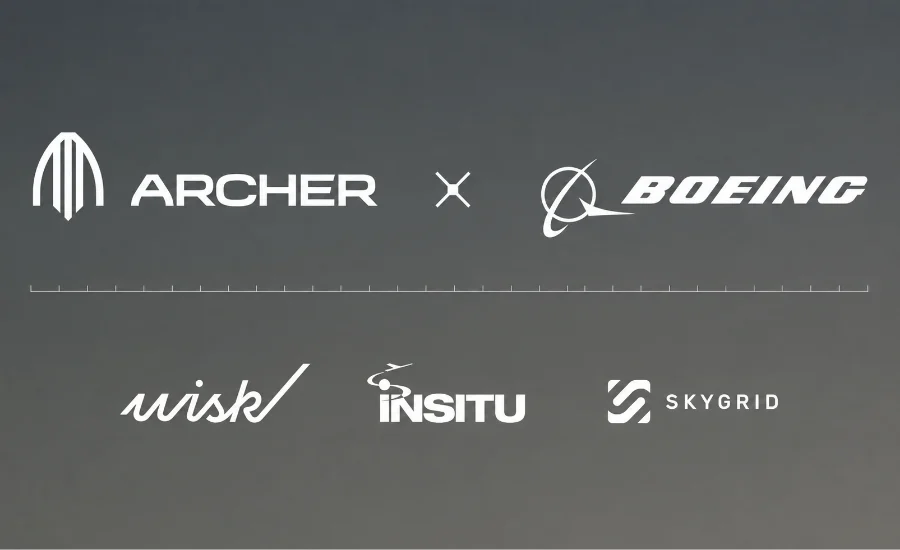
ARLINGTON, Va. — Archer Aviation, a leading innovator in electric vertical takeoff and landing (eVTOL) aircraft, has announced a transformative move to significantly bolster its capabilities in "physical AI" through the planned acquisition of three key Boeing subsidiaries: Wisk Aero, Insitu, and SkyGrid. This strategic maneuver is poised to integrate advanced autonomous flight technologies, established unmanned aircraft systems (UAS) operations, and sophisticated air traffic management software with Archer’s proprietary ZEE artificial intelligence platform, creating a comprehensive end-to-end ecosystem for the aerospace and defense sectors.
The monumental acquisition, subject to regulatory review and other closing conditions, is anticipated to finalize by the end of 2026. This deal underscores Archer’s ambition to transcend its current focus on eVTOL development, positioning itself as a diversified platform at the forefront of autonomous aviation. The combined technological prowess and operational experience of these entities are expected to accelerate the realization of autonomous air mobility and provide a substantial, immediate revenue stream for Archer.
Archer’s Vision for Physical AI in Aerospace
Archer Aviation has been a prominent player in the nascent urban air mobility (UAM) market, primarily known for its efforts in developing eVTOL aircraft designed for passenger transport. The concept of "physical AI," as articulated by Archer, refers to artificial intelligence systems that directly control and interact with physical assets in the real world, such as aircraft. This is distinct from AI primarily focused on data processing or virtual environments. For Archer, physical AI is the bedrock upon which truly autonomous, safe, and scalable air transportation will be built.
Adam Goldstein, founder and CEO of Archer, emphasized the profound significance of this acquisition. "This is a watershed moment for Archer and the future of physical AI in aerospace and defense," Goldstein stated. "This is the next big step forward in becoming a diversified platform, rapidly growing our revenue base and bringing scale to our business." His remarks highlight a clear strategic pivot for Archer, moving beyond merely manufacturing eVTOL aircraft to developing the foundational intelligence and operational infrastructure necessary for their widespread deployment and for a broader range of autonomous applications. The integration of Wisk, Insitu, and SkyGrid is designed to provide Archer with the critical components – from autonomous flight controls and sensor arrays to drone manufacturing and air traffic coordination – that will power its ZEE AI foundation model, creating a holistic solution from aircraft design to airspace management.
The Pillars of Autonomy: Wisk Aero, Insitu, and SkyGrid
Each of the acquired Boeing subsidiaries brings a unique and highly complementary set of capabilities to Archer’s burgeoning portfolio:
-
Wisk Aero: A pioneer in autonomous electric vertical takeoff and landing (eVTOL) technology, Wisk has dedicated 16 years to advancing self-flying aircraft. Initially a joint venture between Boeing and Kitty Hawk Corporation, Wisk has been at the forefront of developing a fully autonomous, all-electric, four-passenger air taxi. The company boasts an impressive track record, having designed, built, and flown six generations of eVTOL aircraft and completed over 1,700 flight tests. Wisk’s deep expertise spans autonomous flight-control systems, advanced sensor fusion, and radar technologies, all crucial for safe and reliable pilotless operations. Their long-term commitment to a "no pilot onboard" strategy has positioned them as a leader in truly autonomous flight, a key differentiator in the competitive eVTOL landscape. This acquisition grants Archer immediate access to a mature and extensively tested autonomous flight system, significantly accelerating its own development timeline and potentially reducing the substantial R&D costs typically associated with such complex systems.
-
Insitu: This subsidiary is a global leader in the design, manufacturing, and fielding of unmanned aircraft systems (UAS) primarily for intelligence, surveillance, and reconnaissance (ISR) applications. With a robust operational footprint in 35 countries and more than 3,500 unmanned aircraft systems manufactured and deployed, Insitu has accumulated invaluable real-world flight hours and operational experience. Its portfolio includes both fixed-wing and vertical takeoff and landing (VTOL)-capable UAS, complemented by AI-enabled software for mission planning and data analysis. Insitu’s proven track record and established market presence translate into a significant, immediate financial benefit for Archer, adding a profitable defense business generating more than $200 million in annual revenue. This instantly diversifies Archer’s revenue streams, which were previously heavily reliant on future eVTOL sales, providing a stable foundation as it continues to develop its commercial air taxi service.
-
SkyGrid: Specializing in aircraft-agnostic air traffic management software, SkyGrid is crucial for enabling the safe and efficient integration of increasingly automated aircraft into national and global airspace. As the skies become more crowded with drones, eVTOLs, and eventually autonomous air taxis, sophisticated air traffic management (ATM) solutions become indispensable. SkyGrid’s technology is designed to support the complex coordination required for diverse aerial vehicles, ensuring safety, compliance, and optimal routing. Its software provides a critical layer of infrastructure, allowing Archer to manage its future fleet of eVTOLs and integrate Insitu’s UAS operations seamlessly, thereby offering a comprehensive solution for autonomous air mobility from the ground up.

Collectively, these three companies have amassed nearly 2 million combined flight hours, a testament to their operational maturity and the robustness of their technologies. This vast experience base, spanning different segments of autonomous aviation, provides Archer with an unparalleled foundation upon which to build its physical AI platform.
Strategic Rationale: Diversification and Accelerated Growth for Archer
For Archer Aviation, this acquisition represents a calculated leap forward, addressing several strategic imperatives:
- Technological Acceleration: By acquiring established autonomous flight systems (Wisk), proven UAS platforms (Insitu), and advanced ATM software (SkyGrid), Archer can bypass years of in-house research and development. This allows for a rapid integration of mature technologies into its ZEE AI platform, accelerating its path to market for both commercial and defense applications.
- Revenue Diversification and Financial Stability: The addition of Insitu’s profitable defense business, generating over $200 million annually, provides Archer with a critical revenue stream. This is particularly significant for an eVTOL company that is largely pre-revenue for its core air taxi service. This financial stability can help fund continued development, scale operations, and mitigate the inherent risks associated with bringing a new transportation modality to market.
- End-to-End Solution Provider: The combination positions Archer as a holistic provider of autonomous aviation solutions, not just an aircraft manufacturer. From the aircraft itself to the underlying AI, flight controls, and airspace management, Archer will possess capabilities across the entire value chain, offering a distinct competitive advantage.
- Enhanced Competitive Edge: In the fiercely competitive eVTOL and advanced air mobility (AAM) market, this acquisition significantly strengthens Archer’s position against rivals such as Joby Aviation, Lilium, and Vertical Aerospace. The depth of autonomy and operational experience gained is likely to set Archer apart, especially in attracting further investment and partnerships.
Boeing’s Strategic Realignment and Continued Collaboration
For Boeing, the divestiture of Wisk, Insitu, and SkyGrid reflects a strategic realignment of its portfolio. While these subsidiaries represent significant technological achievements, Boeing’s decision likely stems from a desire to optimize its investment strategy, focus on core aerospace and defense businesses, and potentially de-risk its advanced air mobility ventures.
Brian Yutko, Boeing Vice President of Commercial Airplanes Product Development, articulated the mutually beneficial nature of the transaction. "This transaction is a win-win for Boeing and Archer," Yutko stated. "It allows Wisk, SkyGrid and Insitu to accelerate capability development and time to market while ensuring Boeing capitalizes on its investments in these technologies over the past two decades through continued development in our core businesses."
Crucially, Boeing will take a stake in Archer as part of the deal and enter into a collaboration and technology-sharing arrangement. This ensures that Boeing retains access to Wisk’s core autonomous flight technology, allowing it to leverage these innovations in its current and future commercial and defense aircraft programs without bearing the full operational and investment burden of these subsidiaries. This arrangement underscores Boeing’s continued interest in autonomous flight and its recognition of the value created by these companies, even as it transitions them to a new owner. The partnership signifies a strategic pathway for Boeing to benefit from the accelerated development under Archer while focusing its resources on its massive traditional aircraft manufacturing and defense contracts.
Industry Implications and the Future of Autonomous Aviation
This acquisition sends a powerful signal across the aerospace industry, highlighting the accelerating convergence of artificial intelligence, autonomous systems, and advanced air mobility.
- Consolidation and Specialization: The deal suggests a potential trend towards consolidation in the AAM sector, where companies like Archer are seeking to acquire specialized capabilities to build more comprehensive platforms. It also indicates a growing specialization, where certain companies focus on integrating these diverse technologies.
- Defense Market Integration: The immediate revenue from Insitu’s defense business demonstrates the clear and present value of autonomous systems in military applications, providing a stable foundation for further development that can also cross-pollinate into civilian uses. This blending of defense and commercial innovation is a hallmark of many emerging technologies.
- Regulatory Evolution: The push towards fully autonomous flight, as championed by Wisk and now Archer, will undoubtedly intensify pressure on aviation regulatory bodies worldwide, such as the FAA in the United States and EASA in Europe, to develop robust certification pathways and operational frameworks for pilotless aircraft. The accumulation of nearly 2 million flight hours across the acquired entities provides a substantial data set for informing these regulatory developments.
- Ecosystem Development: The emphasis on an "end-to-end physical AI platform" points to the recognition that successful autonomous air mobility requires more than just an aircraft. It necessitates a fully integrated ecosystem encompassing aircraft, sophisticated flight controls, robust air traffic management, and intelligent operational software. Archer’s move aims to create such an ecosystem, potentially setting a new standard for the industry.
The transaction, while transformative, remains subject to customary regulatory approvals. The anticipated closing by the end of 2026 allows for ample time for these complex processes to unfold. However, the intent is clear: Archer Aviation is charting an ambitious course to lead the charge into a future where physical AI powers a new era of autonomous flight, redefining air travel and defense capabilities.