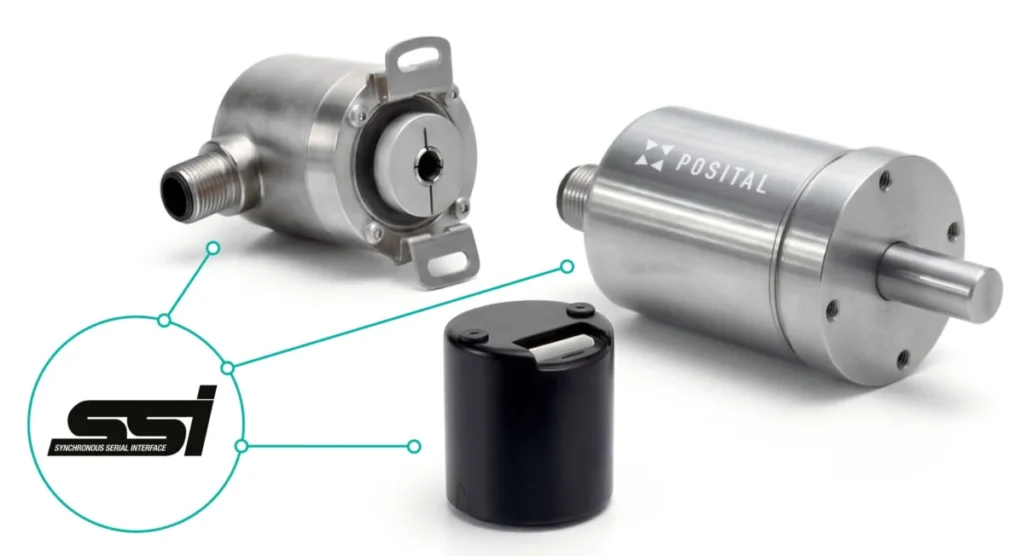
POSITAL, a leading global manufacturer of industrial position sensors, has announced a significant expansion of Synchronous Serial Interface (SSI) communication capabilities across its extensive range of IXARC absolute rotary encoders. This strategic enhancement makes SSI functionality available for both kit (modular) encoders and traditional industrial encoders, including the company’s innovative new 20 mm miniature form factor. This move underscores POSITAL’s commitment to providing versatile and reliable position feedback solutions tailored to the evolving demands of industrial automation, where robust and straightforward communication protocols remain crucial for a myriad of applications.
The integration of SSI across such a broad spectrum of IXARC encoders addresses a long-standing need for a dependable, high-speed, and point-to-point communication interface in diverse industrial environments. By extending SSI support to their compact 20 mm miniature models, POSITAL empowers designers to implement high-precision absolute position feedback even in space-constrained applications, without compromising on performance or reliability. This development is poised to offer greater flexibility for engineers in sectors ranging from robotics and medical equipment to factory automation and logistics systems, where the physical footprint of components is a critical design consideration.
The Strategic Expansion of SSI Capabilities
The core of this announcement lies in the comprehensive rollout of SSI support across POSITAL’s flagship IXARC series. This includes a variety of mechanical configurations designed to meet different application requirements. For larger form factors, SSI interfaces are now available in robust 36 mm compact models, ideal for applications requiring a balance between size and durability. The offering extends to 58 mm rugged versions, engineered for demanding industrial environments where resistance to shock, vibration, and contaminants is paramount. Furthermore, specialized 78 mm explosion-proof models, certified with ATEX, now also feature SSI, making them suitable for hazardous locations where safety standards are exceptionally stringent. This breadth of options ensures that customers across various industries can select an SSI-enabled encoder that perfectly matches their specific operational and environmental needs.
Crucially, in these larger encoder sizes, POSITAL continues to offer customers the choice between two fundamental measurement technologies: magnetic and optical. Magnetic encoders, known for their resilience in harsh conditions due to their resistance to dust, moisture, and vibration, are often preferred in heavy industry. Optical encoders, on the other hand, are typically chosen for applications requiring extremely high precision and resolution, such as in metrology or high-accuracy motion control systems. This dual-technology approach, combined with the expanded SSI interface, allows system designers to optimize their choices based on the critical parameters of their specific applications, whether it’s extreme environmental robustness or ultimate positional accuracy.
Understanding Synchronous Serial Interface (SSI): A Foundation for Precision
Synchronous Serial Interface (SSI) stands as a venerable and widely adopted communication interface in the realm of industrial sensing. Developed in the 1980s by the German company Max Stegmann GmbH (now part of SICK AG), SSI quickly gained traction due to its simplicity, reliability, and effectiveness for transmitting absolute position data from sensors to control systems. It is particularly well-suited for smaller, distributed systems that do not necessitate the complex overhead and networking capabilities of more advanced industrial Ethernet or fieldbus networks, yet still demand precise and timely data acquisition.
At its heart, SSI is a serial communication method that facilitates a direct, point-to-point connection between a sensor (the master) and a digital controller, such as a Programmable Logic Controller (PLC) or a microcontroller (the slave). The protocol is based on the RS-422 standard, which specifies electrical signaling characteristics for balanced differential data transmission. This standard provides excellent noise immunity and allows for reliable data transmission over significant distances, supporting connection lengths of up to 1,200 meters. Data transmission rates for SSI are also impressively high, typically ranging from 100 kHz to 2 MHz, ensuring rapid and efficient communication of positional information.
The operation of SSI is straightforward: the master (PLC/microcontroller) initiates communication by sending a clock signal to the encoder. In response, the encoder transmits its absolute position data serially, synchronized with the clock pulses from the master. This synchronous nature ensures precise timing and reliable data transfer. Data is typically transmitted in a binary or Gray code format, with a specified number of bits representing the encoder’s absolute position. The simplicity of the protocol, requiring only a few wires for data and clock signals, minimizes wiring complexity and reduces potential points of failure, contributing to the overall robustness of the control system.
The widespread adoption of SSI is further solidified by its broad support across most major PLC manufacturers. This ubiquitous compatibility means that engineers can easily integrate POSITAL’s SSI-enabled IXARC encoders into existing or new control architectures without significant compatibility hurdles or the need for proprietary interface modules. This ease of integration translates into reduced development time, lower implementation costs, and enhanced system reliability, making SSI a preferred choice for many critical industrial applications.
Innovations in Measurement Technology: TMR Sensors and Wiegand Energy Harvesting
The performance of any absolute encoder hinges on its underlying measurement technology. Most POSITAL IXARC magnetic encoders leverage Tunneling Magnetoresistance (TMR) sensors for angular position measurement. TMR technology represents a significant leap forward compared to earlier Hall-effect sensors, which were once a standard in magnetic sensing. TMR sensors operate based on the quantum mechanical phenomenon of tunneling magnetoresistance, where the electrical resistance of a device changes significantly in the presence of a magnetic field due to electron tunneling between ferromagnetic layers separated by a thin insulating barrier.
This advanced technology confers several distinct advantages. TMR sensors offer substantially greater stability over a wide range of operating conditions, ensuring consistent and accurate measurements even with fluctuations in temperature or other environmental factors. Their lower temperature sensitivity means that the encoder’s performance is less susceptible to thermal drift, a critical factor in applications where temperature variations are common. Furthermore, TMR sensors exhibit a better response to small changes in magnetic fields, translating into higher resolution and greater sensitivity in positional detection. This enhanced sensitivity allows for more precise angular measurements, which is crucial for demanding motion control tasks. Finally, TMR sensors boast improved energy efficiency, contributing to lower power consumption for the encoder, an important consideration for overall system energy management.
Beyond single-turn absolute position, many industrial applications require multiturn capability, meaning the encoder must track the total number of shaft rotations, even if power is lost. POSITAL addresses this challenge in its multiturn versions through an ingenious Wiegand energy-harvesting sensor. The Wiegand effect, discovered by John Wiegand, describes the phenomenon where a specially processed ferromagnetic wire, when subjected to a changing magnetic field, rapidly reverses its magnetization, generating a sharp voltage pulse.
In POSITAL’s IXARC encoders, this Wiegand sensor system records each shaft rotation independently. Crucially, the energy generated by the Wiegand wire during each rotation is self-sufficient, meaning it powers the rotation counting system without external power. This energy is then used to write the updated rotation count into non-volatile memory. This innovative approach ensures that the total number of rotations is accurately recorded and retained, even when the main system power is unavailable or interrupted. The most significant benefit of this technology is the elimination of the need for a backup battery, which typically has a limited lifespan, requires periodic replacement, and can be a point of failure. By removing the battery, POSITAL significantly enhances the reliability, longevity, and maintenance-free operation of its multiturn encoders, providing a truly robust solution for continuous absolute position tracking.
The Versatility of Hybrid Communication Interfaces

Recognizing the diverse and evolving needs of industrial control systems, POSITAL also offers IXARC encoders with a hybrid communication interface. This sophisticated design supports both absolute (SSI) and incremental measurements from a single device. This dual functionality provides a powerful toolkit for control system designers, offering unparalleled flexibility and efficiency.
Absolute measurement, as provided by SSI, is inherently well-suited to many positioning tasks. It provides a unique position value immediately upon power-up, eliminating the need for homing cycles and ensuring that the system always knows its precise location. This is critical for applications requiring immediate and accurate position knowledge, such as robotic arm control, valve positioning, or precise material handling.
Incremental encoders, conversely, are primarily used for monitoring rotational speed and direction. They generate a series of pulses as the shaft rotates, with the frequency of pulses indicating speed and the phase relationship between two channels indicating direction. Their dynamic response makes them ideal for motor speed control, flow measurement, and other applications where relative movement and velocity are key.
The ability to combine both functions in one device offers substantial advantages. For instance, a system designer might initially require only incremental feedback for speed control, but anticipate a future upgrade to absolute position measurement for enhanced automation or safety features. With a hybrid encoder, this transition can be achieved simply through software configuration or by utilizing both output types, without replacing hardware. This future-proofing capability saves costs, reduces design complexity, and provides a scalable solution for evolving system requirements. It is particularly valuable in modular machine designs or systems that undergo progressive automation upgrades, offering a seamless path from basic motion monitoring to advanced, absolute position control.
Software Configurability and the UBIFAST Programming Tool
In an era of increasing customization and demand for agile manufacturing, the ability to configure hardware through software has become a significant advantage. POSITAL IXARC encoders with SSI interfaces are fully programmable, allowing users to customize a wide array of operating parameters. This configurability is facilitated through software updates using POSITAL’s proprietary UBIFAST programming tool.
UBIFAST (Universal BInary FAmily STandard) is a user-friendly software and hardware interface that allows technicians and engineers to adjust various encoder settings directly. Parameters such as resolution (number of steps per revolution), measurement range (for multiturn encoders), output format (e.g., binary or Gray code), and even counting direction can be modified. This capability offers several profound benefits.
Firstly, it significantly reduces the need for maintaining a large inventory of different encoder models, each with specific factory-set parameters. Instead, distributors and end-users can stock a smaller number of standard encoders and configure them on demand to meet specific application requirements. This streamlines logistics, reduces inventory costs, and improves responsiveness to customer needs.
Secondly, it provides unparalleled flexibility during system commissioning and maintenance. If an application’s requirements change, or if an encoder needs to be replaced with slightly different specifications, the UBIFAST tool allows for quick re-configuration without requiring a completely new part. This minimizes downtime and simplifies field service operations. The ability to fine-tune an encoder’s performance post-installation can also optimize system efficiency and accuracy, ensuring that the sensor perfectly matches the control system’s needs. This level of programmability aligns with the broader trend in industrial automation towards intelligent, adaptable components that can be customized and updated throughout their lifecycle.
Market Context and Industry Implications
The expansion of SSI options for IXARC encoders comes at a time of accelerating growth in industrial automation and the broader Internet of Things (IoT). Industries worldwide are investing heavily in technologies that enhance productivity, efficiency, and safety. Central to these advancements are sophisticated sensors that provide precise and reliable feedback on motion, position, and other critical parameters. Absolute rotary encoders, in particular, play a foundational role in a vast array of machinery, from robotics and CNC machines to cranes, wind turbines, and packaging equipment.
POSITAL’s move to broadly support SSI across its product line reinforces its position as a forward-thinking supplier in the global encoder market. While industrial Ethernet and fieldbus protocols (like EtherCAT, PROFINET, DeviceNet, CANopen) offer high bandwidth and complex networking capabilities for large, integrated systems, SSI retains its strong niche. For many applications, particularly those requiring straightforward, robust, and cost-effective point-to-point communication over long distances, SSI remains the optimal choice. Its simplicity translates into higher reliability and easier troubleshooting, which are invaluable attributes in industrial settings where downtime is costly.
By making SSI accessible on its cutting-edge 20 mm miniature encoders, POSITAL is directly addressing the miniaturization trend in industrial design. As machines become more compact and complex, the demand for smaller yet equally capable components intensifies. This development allows for the integration of high-precision absolute position feedback into tighter spaces, opening up new possibilities for compact robotic systems, medical devices, and specialized automation equipment.
Furthermore, the combination of advanced TMR magnetic sensing, maintenance-free Wiegand multiturn technology, and the flexibility of hybrid SSI/incremental outputs positions POSITAL’s IXARC encoders as highly competitive solutions. These innovations collectively contribute to lower total cost of ownership for industrial systems by reducing maintenance, improving reliability, and offering adaptable functionality that can extend the lifespan of machinery. The ATEX-certified models also highlight POSITAL’s commitment to safety and compliance in hazardous environments, further broadening the market applicability of their SSI-enabled solutions.
Looking Ahead: The Future of Encoder Technology
The continuous evolution of encoder technology, exemplified by POSITAL’s latest announcement, reflects the dynamic nature of industrial automation. As industries move towards more intelligent, interconnected, and autonomous systems, the demand for sensors that are not only precise and reliable but also flexible and easy to integrate will only grow. The blend of established, proven communication protocols like SSI with cutting-edge sensing technologies such as TMR and Wiegand energy harvesting represents a pragmatic and powerful approach.
POSITAL’s strategic decision to expand SSI options underscores the enduring relevance of this protocol for specific industrial segments while simultaneously pushing the boundaries of encoder performance through innovation in sensor technology and form factors. This balanced approach ensures that customers have access to a wide spectrum of solutions, from the most basic and robust to the highly advanced and compact, all designed to enhance the precision, efficiency, and reliability of their motion control applications. This expansion is not merely an addition of a feature but a reinforcement of a holistic product strategy aimed at empowering industrial progress across diverse sectors.