The launch of the 4DSpace-Daedalus mission in Norway signifies the latest triumph bolstered by Prodex, a pivotal European Space Agency (ESA) programme empowering highly skilled research institutes to actively participate in groundbreaking European space science endeavors and missions. This milestone, occurring against the backdrop of Prodex’s 40th anniversary, underscores the programme’s enduring impact and its increasing strategic importance for scientific advancement and industrial competitiveness within the European space sector.
Prodex, the Programme for the Development of Scientific Experiments, currently oversees a robust portfolio of over 400 contracts with a diverse array of institutes and industries across ESA Member States. This extensive network is instrumental in the industrial development of highly sophisticated scientific instruments and experiments across critical domains such as fundamental space science, Earth observation, and microgravity research. The programme’s reach extends to a wide spectrum of ESA’s flagship science missions, including Smile, Plato, Comet Interceptor, Envision, LISA, ExoMars, and New Athena, as well as supporting instruments for non-ESA missions like CLPS and Solar-C, and vital research aboard the International Space Station.

The significant commitment to Prodex was reaffirmed at the ESA Ministerial Council 2025, where 17 participating Member States collectively pledged €327.52 million. This represents a substantial 38% increase compared to the financial commitments made at the preceding Ministerial Council in 2022, signaling a strong endorsement of Prodex’s value proposition and its future trajectory. This growing investment highlights the collective recognition of Prodex’s unique ability to foster scientific expertise, cultivate vital industrial and institutional collaborations, and enhance the overall competitiveness of European nations in the dynamic global space arena.
A Proven Springboard for Advanced Space Science Instrumentation
Prodex functions as a critical enabler, providing the essential framework and financial backing for the development of cutting-edge scientific instruments destined for a broad array of ESA missions and ambitious scientific activities. The programme’s success is demonstrably evident in a series of recent notable achievements, each representing a significant step forward in our understanding of the cosmos and our own planet.
Norway’s 4DSpace-Daedalus Mission: Unraveling Space Weather Phenomena
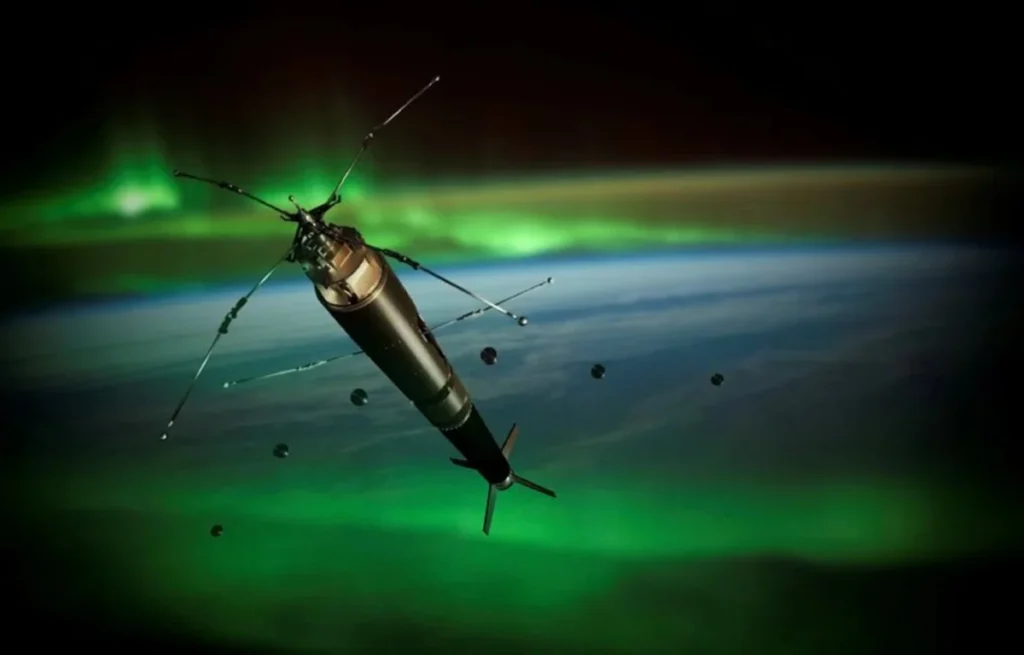
The recent 4DSpace-Daedalus (ICI-5b) mission, a testament to Norway’s burgeoning capabilities in space weather research, exemplifies Prodex’s direct impact. Coordinated by the University of Oslo and partially funded through Prodex, this mission involved the launch of a 12-meter Norwegian sounding rocket from the Andøya Space Centre on March 11th, 2026. The rocket, equipped with sophisticated on-board instruments and releasable subpayloads, ascended into an auroral substorm, a dramatic display of Earth’s interaction with solar activity.

The primary objective of the 4DSpace-Daedalus mission was to gather unprecedented data concerning turbulence within highly charged plasma in the Earth’s upper atmosphere, as well as in the neutral regions. The collected data is now undergoing rigorous analysis, with the ultimate aim of advancing our comprehension of space weather phenomena – the dynamic conditions in space that can affect satellites, communication systems, and even power grids on Earth. Furthermore, the mission seeks to illuminate fundamental processes governing energy transfer and interconnections within the complex dynamics of the upper polar atmosphere, a region particularly susceptible to solar influence. This research holds significant implications for space situational awareness and the protection of critical space-based infrastructure.
Comet Interceptor Mission: A Pan-European Effort in Cometary Exploration
Prodex is playing an instrumental role in equipping ESA’s ambitious Comet Interceptor mission, a pioneering endeavor aimed at studying a pristine comet that has never before ventured into the inner solar system. This mission’s unique approach involves intercepting a long-period comet, providing scientists with an unparalleled opportunity to examine material from the very edges of our solar system, largely untouched by the Sun’s influence.
Among the key contributions facilitated by Prodex are instruments developed by Poland and Estonia. Poland’s Space Research Centre Polish Academy of Science (Centrum Badań Kosmicznych PAN) has developed the DFP-B2 instrument, a crucial component for Probe B2 of the Comet Interceptor spacecraft. Concurrently, Estonia, through Tartu University, has developed the Optical Periscopic Imager for Comets (OPIC), a sophisticated instrument designed to capture high-resolution images of cometary nuclei and their surrounding environments. Both instruments are nearing delivery to the prime contractor for the mission, marking a significant step towards the spacecraft’s assembly and integration.
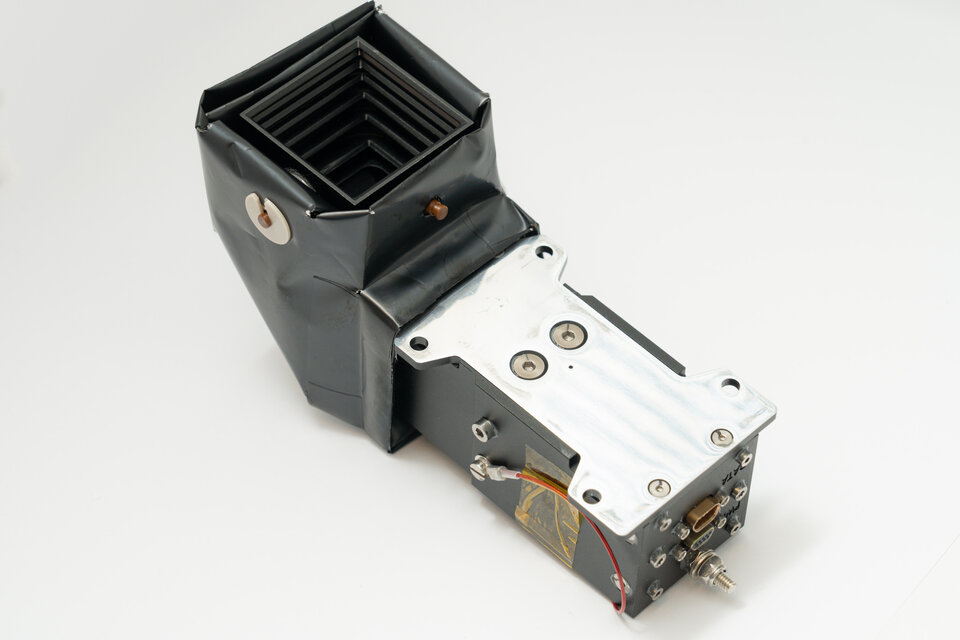
Further bolstering the Comet Interceptor mission, Prodex is supporting the development of additional instruments from Switzerland, Belgium, and Poland, slated for delivery this year. These include the MANiaC instrument, the CoCa instrument, the RMA instrument, and the DFP-A instrument. This collaborative, multi-national approach to instrument development for a single mission underscores Prodex’s effectiveness in fostering cross-border scientific and industrial partnerships.
Envision Mission to Venus: Probing the Secrets of the Second Planet
Belgium’s contribution to ESA’s Envision mission, a comprehensive study of Venus, is another significant success story for Prodex. The programme has a substantial involvement in Envision, managing 16 contracts dedicated to the development of VenSpec-H, an advanced infrared spectrometer. This sophisticated instrument will be instrumental in analyzing the atmospheric composition of Venus, a planet whose dense atmosphere and runaway greenhouse effect present a compelling case study for understanding planetary climate evolution. The data gathered by VenSpec-H is expected to provide critical insights into Venus’s atmospheric dynamics, geological history, and the potential for past or present habitability.
Smile Mission: Enhancing our Understanding of Space Weather’s Impact
ESA’s Solar wind Magnetosphere Ionosphere Link Explorer (Smile) mission, launched on May 19th, 2026, is set to significantly enhance our understanding of space weather and its profound impact on Earth and its surroundings. This ambitious mission relies on several key instruments developed with the crucial support of the Prodex programme. Smile’s scientific objectives include investigating the complex interactions between the solar wind and Earth’s magnetosphere, providing valuable data that will contribute to more accurate space weather forecasting and mitigation strategies. The successful launch of Smile, with its Prodex-supported instrumentation, marks another significant milestone in collaborative European space science.

A Milestone Celebration: 40 Years of Prodex Excellence
This year marks a significant milestone for the Prodex programme, as it celebrates its 40th anniversary since its founding in 1986. To commemorate this occasion and acknowledge its enduring legacy, a three-day celebratory event is being organized in Switzerland. This gathering will bring together delegations and representatives from all 20 Prodex participating states: Austria, Belgium, Switzerland, Czech Republic, Denmark, Estonia, Spain, Finland, Greece, Hungary, Ireland, the Netherlands, Norway, Poland, Portugal, Romania, and Slovenia. Approximately 200 participants are expected to attend, fostering discussions on past achievements, current challenges, and the future vision for European space science instrumentation development.
Broader Implications and Future Outlook
The consistent growth in funding for Prodex, as evidenced by the significant increase in commitments at the Ministerial Council 2025, speaks volumes about its strategic importance. This programme is not merely a funding mechanism; it is a vital engine for scientific discovery and a powerful catalyst for economic growth and technological innovation within Europe. By enabling research institutes and industries to participate in world-class space missions, Prodex cultivates a highly skilled workforce, fosters a competitive industrial base, and positions Europe at the forefront of global space exploration and scientific understanding.
The programme’s success in supporting diverse missions, from planetary science and space weather to fundamental physics and Earth observation, highlights its adaptability and its crucial role in achieving ESA’s overarching scientific objectives. As European nations continue to invest in space, Prodex will undoubtedly remain a cornerstone, facilitating the development of the next generation of scientific instruments and experiments that will push the boundaries of human knowledge and explore the mysteries of the universe. The 40th anniversary serves as a moment to reflect on these achievements and to look forward to a future where Prodex continues to be instrumental in shaping the landscape of European space science.