Researchers at the University of Cambridge have created a groundbreaking new technique that uses light instead of toxic chemicals to modify complex drug molecules, a discovery poised to accelerate drug development and significantly enhance the efficiency of medicine design. Published on March 12 in the prestigious journal Nature Synthesis, the study introduces what the team terms an "anti-Friedel-Crafts" reaction, fundamentally altering a cornerstone of organic chemistry. This innovative method promises to streamline the pharmaceutical pipeline, reducing costs, waste, and the environmental footprint associated with bringing new medicines to market.
Reimagining a Chemical Classic: The "Anti-Friedel-Crafts" Approach
The heart of this breakthrough lies in its departure from traditional Friedel-Crafts chemistry, a set of reactions crucial for forming carbon-carbon bonds, the molecular backbone of countless organic compounds, including pharmaceuticals. Developed in the late 19th century by Charles Friedel and James Crafts, these reactions are indispensable in industrial organic synthesis but typically demand harsh laboratory conditions, often requiring powerful chemical reagents, strong acids, or heavy metal catalysts. Such stringent requirements mean that Friedel-Crafts reactions are usually performed early in the drug manufacturing process, necessitating numerous subsequent chemical steps to build the final, intricate drug molecule. This conventional sequencing inherently limits flexibility and often leads to considerable material and time expenditure.
The new Cambridge method ingeniously reverses this paradigm. Instead of building from simple precursors under harsh conditions, it allows researchers to make precise modifications to already complex drug molecules much later in their development. This is a crucial distinction, as it bypasses the need to dismantle and painstakingly rebuild a molecule, a process that can consume months of research time and resources.
LED-Activated Synthesis: Precision and Efficiency Under Mild Conditions
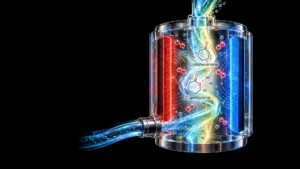
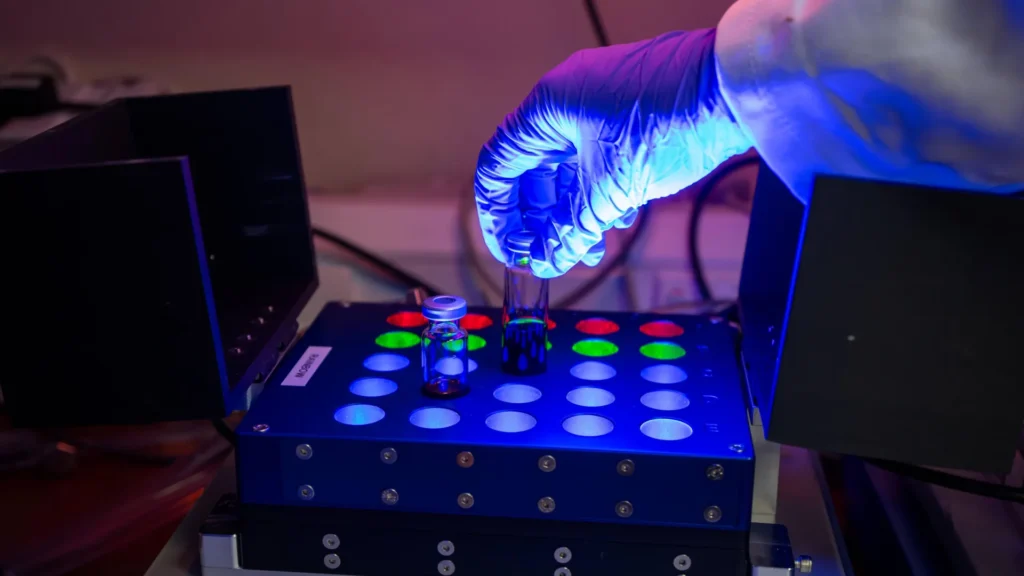
At the core of the innovation is a reaction activated by an LED lamp at ambient temperature, eschewing the reliance on heavy metal catalysts or extreme conditions. When light initiates the reaction, it triggers a self-sustaining chain process that forms critical carbon-carbon bonds. These bonds are forged under remarkably mild conditions, without the need for toxic or costly reagents that are typically associated with such transformations. This "mildness" is not merely an academic advantage; it has profound practical implications for the pharmaceutical industry.
In practical terms, this approach liberates chemists from the arduous task of rebuilding large molecular structures. Imagine a complex molecular jigsaw puzzle where one piece needs a slight alteration. Traditionally, one might have to deconstruct a significant portion of the puzzle to reach and modify that single piece, then reassemble everything. The Cambridge technique is akin to being able to precisely modify that single piece in situ, without disturbing the surrounding structure. This capability is particularly transformative for complex molecules that have historically proven exceptionally difficult to modify.
David Vahey, first author of the study and a PhD researcher at St John’s College, Cambridge, underscored this point: "We’ve found a new way to make precise changes to complex drug molecules, particularly ones that have been exceptionally difficult to modify in the past. Scientists can spend months rebuilding large parts of a molecule just to test one small change. Now, instead of doing a multistep process for hundreds of molecules, scientists can start with their hit and make small modifications later on." He further elaborated, "This reaction lets scientists make precise adjustments much later in the process, under mild conditions and without relying on toxic or expensive reagents. That opens chemical space that has been hard to access before and gives medicinal chemists a cleaner, more efficient tool for exploring new versions of a drug."
Catalyzing Faster Drug Discovery and Sustainable Manufacturing
The implications for the pace and cost of drug discovery are substantial. Reducing the number of synthesis steps directly translates to lower chemical consumption, decreased energy use, and a smaller environmental footprint for drug development. This also significantly compresses the timelines for research and development, potentially shaving months or even years off the journey from lab to patient. Given that the average cost to develop a new drug is estimated to be over $2.6 billion and takes 10-15 years, any innovation that can accelerate this process and reduce costs is of immense value.
The reaction exhibits remarkable selectivity, allowing chemists to target and modify one specific part of a molecule without inadvertently altering other sensitive areas. This precision is paramount in medicinal chemistry, as even minor structural changes can profoundly influence a medicine’s efficacy, its biological behavior within the body, or its propensity to produce undesirable side effects. This high functional-group tolerance means that the technique can modify one region of a molecule while leaving other functional groups—which are often critical for a drug’s activity—untouched. This makes the reaction particularly useful for late-stage optimization, a critical phase of drug discovery where scientists fine-tune molecules to enhance their performance, potency, and safety profile.
Furthermore, by avoiding heavy metals, harsh reaction conditions, and lengthy synthesis pathways, the approach is inherently "greener." It has the potential to dramatically reduce toxic waste generation and energy consumption in pharmaceutical manufacturing. These environmental benefits align with the growing global emphasis on sustainable chemistry and are increasingly important as the chemical industry strives to mitigate its ecological impact. The global pharmaceutical market, valued at over $1.5 trillion, is under increasing pressure to adopt more sustainable practices, making such innovations highly relevant.
Inspired by Nature: A Foundation in Sustainable Chemistry
The research leading to this breakthrough emerged from the laboratory of Professor Erwin Reisner at Cambridge, renowned for its work in developing chemical systems inspired by natural processes like photosynthesis. Professor Reisner’s team specifically investigates methods to harness sunlight to convert waste materials, water, and greenhouse gases like carbon dioxide into useful chemicals and fuels. This foundational commitment to sustainable chemistry provides the intellectual bedrock for the "anti-Friedel-Crafts" discovery.
Professor Reisner, Professor of Energy and Sustainability in the Yusuf Hamied Department of Chemistry and the lead author of the study, emphasized the broader significance of the work: "This is a new way to make a fundamental carbon-carbon bond and that’s why the potential impact is so great. It also means chemists can avoid an undesirable and inefficient drug modification process." He further articulated the challenge and the potential, stating, "Transitioning the chemical industry to a sustainable industry is arguably one of the most difficult parts of the whole energy transition." This new method represents a tangible step towards that ambitious goal.
To validate the technique’s practical applicability, the researchers rigorously tested the reaction on a wide array of drug-like molecules. They also demonstrated its adaptability for continuous flow systems, which are standard in industrial chemical production for efficiency and scalability. Crucially, the team collaborated with AstraZeneca, a leading pharmaceutical company, to evaluate whether the technique could meet the stringent practical and environmental requirements of large-scale pharmaceutical manufacturing. This industrial partnership underscores the immediate relevance and potential for real-world implementation of this laboratory discovery.
Serendipity in Science: A Breakthrough Born from a "Failed" Experiment
Perhaps one of the most compelling aspects of this discovery is its origin story – a testament to the role of serendipity and keen observation in scientific advancement. The breakthrough began with an entirely unexpected laboratory result, echoing the genesis of many famous scientific milestones, from X-rays and penicillin to Viagra and modern weight loss medications.
David Vahey recounted the pivotal moment: "Failure after failure, then we found something we weren’t expecting in the mess — a real diamond in the rough. And it is all thanks to a failed control experiment." He had been testing a photocatalyst, a substance that uses light to accelerate chemical reactions. In a control experiment, where the photocatalyst was deliberately omitted, he astonishingly discovered that the reaction worked just as effectively, and in some instances, even better without it.
Initially, the unusual product appeared to be an error, a mistake that could have easily been dismissed. However, instead of ignoring it, the researchers chose to investigate further. Professor Reisner highlighted the critical importance of this decision: "Recognizing the value in the unexpected is probably one of the key characteristics of a successful scientist." Vahey’s willingness to question the anomaly, rather than discard it, proved to be the turning point. "David could have dismissed it as a failed control," Reisner noted. "Instead, he stopped and thought about what he was seeing. That moment, choosing to investigate rather than ignore it, is where discovery happens."
The Synergistic Power of AI in Chemical Discovery
Beyond the serendipitous discovery, the team leveraged cutting-edge artificial intelligence to further accelerate and understand the new reaction. After deciphering the underlying chemistry, they collaborated with Trinity College Dublin to develop machine learning models capable of predicting precisely where the reaction would occur on entirely new molecules, even those never before tested in a laboratory.
Professor Reisner elaborated on the increasingly vital role of AI: "We generate enormous amounts of data, and increasingly we use artificial intelligence to help analyze it. We have an an algorithm that can predict reactivity. AI helps because we don’t need chemists to do endless trial and error, but an algorithm will only follow the rules it has been given. It still takes a human being to look at something that appears wrong and ask whether it might actually be something new."
By learning patterns from vast datasets of known chemical reactions, the AI system can simulate possible outcomes before physical experiments are even conducted. This predictive capability allows researchers to identify promising molecules more quickly and with significantly less trial and error, a process that traditionally consumes vast amounts of time and resources. This human-AI partnership exemplifies the future of scientific research, where intuition and curiosity complement powerful computational tools.
For David Vahey, the discovery provides scientists with an invaluable new capability for drug discovery and development. He optimistically stated, "What industry and other researchers do with it next — that’s where the future impact lies. For us, the lab is mostly average to bad days. The good days are very good days." Professor Reisner echoed this sentiment, adding, "As a chemist, you only need one or two good days a year — and those can come from a failed experiment."
A Legacy of Accidental Discoveries in Science
The Cambridge team’s experience underscores a recurring theme throughout scientific history: profound breakthroughs often emerge from unexpected observations or "failed" experiments. This serendipitous nature of discovery has shaped our understanding of the world and led to transformative innovations.
Here are 10 famous examples of accidental scientific discoveries that have reshaped human knowledge and progress:
- X-rays (1895): Wilhelm Conrad Röntgen discovered X-rays while studying electrical currents flowing through glass tubes. He noticed that a nearby screen began glowing unexpectedly, revealing a new type of radiation that allowed doctors to see inside the human body without surgery, revolutionizing medical diagnostics.
- Radioactivity (1898): Marie Curie, building on Henri Becquerel’s initial observations, noticed that certain uranium minerals produced much more radiation than uranium alone could explain. This surprising finding led to the discovery of polonium and radium, establishing the field of nuclear physics and chemistry and paving the way for radiation therapy.
- Vulcanized Rubber (1839): Charles Goodyear accidentally discovered vulcanization when a mixture of natural rubber and sulfur fell onto a hot stove. Instead of melting, the rubber became strong and elastic. This process made rubber practical for industrial uses, enabling the development of tires, waterproof materials, and countless other products.
- Penicillin (1928): Alexander Fleming famously discovered penicillin after a mold (Penicillium notatum) accidentally contaminated a laboratory petri dish and killed surrounding bacteria. This observation led to the development of the first widely used antibiotic, transforming modern medicine and saving millions of lives.
- Teflon (1938): Chemist Roy Plunkett accidentally created Teflon (polytetrafluoroethylene) while experimenting with refrigerant gases. He found a white, waxy substance coating the inside of a cylinder, which proved to be extremely slippery and heat-resistant. It later became widely used in nonstick cookware and numerous industrial applications.
- Super Glue (1942): Harry Coover was attempting to develop transparent plastics for gun sights during World War II when he instead created a substance that bonded instantly to nearly any surface. Initially dismissed as too sticky, it was later marketed as "Super Glue" and became widely used in homes, manufacturing, and even medicine for wound closure.
- LSD (1943): Swiss chemist Albert Hofmann accidentally absorbed a small amount of lysergic acid diethylamide (LSD), a compound he had synthesized five years earlier, and experienced its powerful psychological effects. This discovery played an important role in early neuroscience research and later became controversial in popular culture.
- Pulsars (1967): Graduate student Jocelyn Bell Burnell noticed repeating radio signals while analyzing telescope data, initially dismissing them as interference. These signals turned out to be the first evidence of pulsars, rapidly spinning neutron stars that opened a new field of astrophysics and provided crucial insights into stellar evolution.
- Viagra (1990s): Researchers at Pfizer were studying a drug called sildenafil, intended to treat angina (chest pain), when male participants in clinical trials reported an unexpected side effect. This compound was later developed as Viagra, becoming widely prescribed for erectile dysfunction and revolutionizing treatments for sexual health.
- Weight Loss Injections (2021): Scientists developing treatments for Type 2 diabetes discovered that drugs mimicking the hormone GLP-1 (glucagon-like peptide-1) also caused significant weight loss. Medications such as Ozempic and Mounjaro, originally created for diabetes management, were subsequently developed to treat obesity, marking a major paradigm shift in approaches to weight management.
The Cambridge team’s "anti-Friedel-Crafts" reaction now stands as a contemporary testament to this rich tradition of scientific discovery, demonstrating that curiosity, rigorous investigation, and an open mind to the unexpected remain fundamental drivers of progress. The long-term impact of this light-powered chemical revolution is poised to be as significant for drug development as these historical breakthroughs were for their respective fields.