Materials scientists at Purdue University have achieved a significant breakthrough, successfully reshaping the internal atomic structure of cobalt-aluminum (CoAl) intermetallics at extremely small scales. This innovative approach has yielded a material that combines ultra-high strength with substantial plasticity, a property previously elusive in this promising class of materials. The research, published in Science Advances, promises to revolutionize the design and performance of components for demanding applications in aerospace, energy, and defense sectors.
The Enduring Challenge of Intermetallics: Strength Versus Brittleness
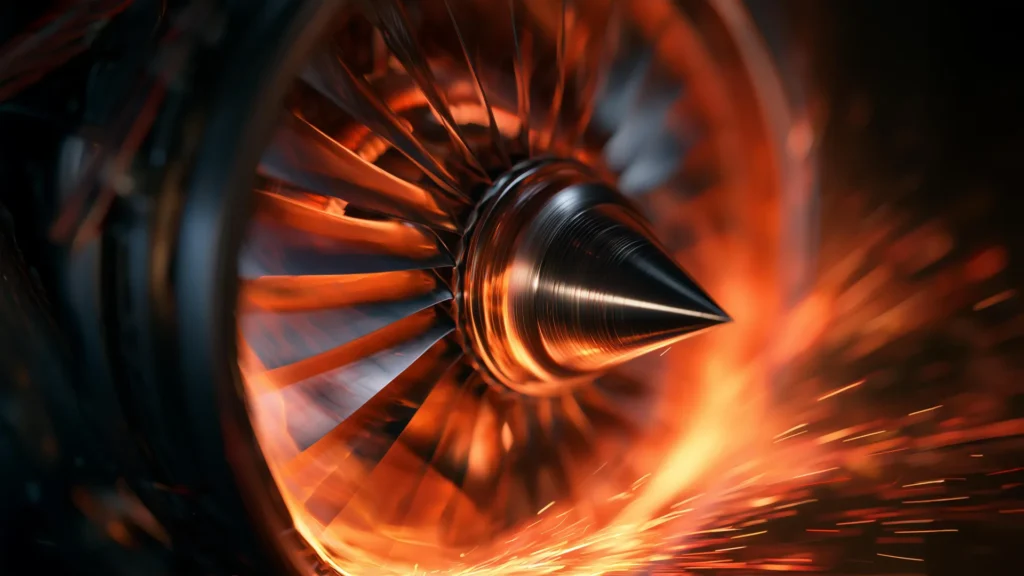
Intermetallics represent a fascinating and critically important group of solid materials, distinguished by their precise, highly ordered crystal structures formed from two or more metallic elements. Unlike conventional alloys where atomic arrangements can be more randomized, intermetallics possess a specific stoichiometry and atomic ordering, which underpins their remarkable intrinsic properties. These include exceptional strength, resistance to high temperatures, and a formidable defense against creep – the insidious, slow deformation that materials undergo when subjected to prolonged heat and stress. These characteristics make them ideal candidates for the most arduous engineering environments, such as the hot sections of jet engines, the demanding conditions within gas turbines, advanced energy storage systems, and high-performance automotive components.
Despite their allure, intermetallics have historically been plagued by a severe drawback: extreme brittleness, particularly at room temperature. This inherent lack of ductility has been a formidable barrier to their widespread adoption and the fabrication of complex shapes. A brittle material, by definition, has very little capacity to deform under stress before fracturing. For engineers, this translates to significant manufacturing challenges, as brittle materials are difficult to machine, shape, or form into intricate components. More critically, it poses a safety risk in operational environments, where unexpected sudden fracture under load can lead to catastrophic failures. The challenge has long been to impart plasticity—the ability to permanently change shape without breaking—without compromising their superior strength and other high-temperature attributes.
A New Paradigm for Engineering Plasticity
Previous efforts to address the brittleness of intermetallics, specifically CoAl, typically involved modifying their chemical composition, adjusting their microstructure through various heat treatments, or alloying them with other metals. While these methods offered incremental improvements, they largely failed to achieve the desired balance of strength and ductility. The primary limitation stemmed from an inability to generate and sustain a sufficiently high density of dislocations within the material’s crystal lattice.
Dislocations are, paradoxically, often referred to as "defects" in a crystal structure, representing microscopic irregularities where atoms are misaligned from their perfectly ordered pattern. However, in the context of mechanical properties, these "defects" are crucial for ductility. They act as carriers of plastic deformation, allowing metals to yield and change shape under extreme force by sliding past each other, rather than fracturing. For a material like CoAl to exhibit significant plasticity at room temperature, it requires an abundance of these mobile dislocations.
The team at Purdue University, led by Xinghang Zhang, a professor in the School of Materials Engineering and corresponding author, alongside collaborators Haiyan Wang, the Basil S. Turner Professor of Engineering, and Ke Xu, a postdoctoral researcher and first author, unveiled a novel strategy to overcome this fundamental limitation. Their research, titled "Plasticity in brittle intermetallics enabled by framework of amorphous interfaces and preexisting dislocations," presents a dual-pronged approach that fundamentally alters how CoAl deforms.
"Bulk CoAl intermetallics are a high-strength compound with immense potential for next-generation materials in turbine blades for aeroengines," stated Professor Zhang. He elaborated on the practical implications: "High-strength, plastically deformable CoAl alloys could enable engines and turbos to spin at higher speeds while safely sustaining greater centrifugal forces, directly translating to improved performance, efficiency, and potentially, reduced weight."
The Synergistic Power of Dislocations and Amorphous Interfaces
The Purdue innovation rests on two critical elements introduced during the material’s fabrication:
-
Direct Introduction of High-Density Dislocations: Unlike traditional methods, the researchers employed magnetron sputtering deposition, a non-equilibrium fabrication process. This technique allows for the creation of the material from alloy vapor directly into a solid thin film. By carefully controlling the sputtering parameters, they were able to directly introduce a significantly higher density of dislocations into the CoAl intermetallic than is achievable through conventional casting methods, which typically involve cooling molten material. This pre-existing network of dislocations provides the initial pathways for deformation.
-
Framework of Amorphous Interfaces (FAIs): This represents the truly groundbreaking aspect of their work. The researchers designed and incorporated a framework of amorphous aluminum cobalt binary interfaces within the CoAl structure. These FAIs are essentially flexible internal boundaries within the material that initially lack the highly ordered crystal structure of the surrounding CoAl. Instead, they exist in a more disordered, amorphous state. The genius of this design lies in their dynamic role during deformation. As the CoAl material experiences stress and begins to deform, parts of these amorphous interfaces undergo partial crystallization. Crucially, this crystallization process actively promotes the nucleation and proliferation of new dislocations within the adjacent CoAl layers. This dynamic generation of dislocations at the interfaces acts as a continuous source of plasticity, allowing the material to absorb significant strain without fracturing.
"In this study, we show that CoAl can exhibit significant plasticity at room temperature, offering a new, alternative approach to improve the plastic deformation capability in CoAl," explained Ke Xu. This mechanism represents a paradigm shift, moving beyond simply trying to "fix" brittleness to actively engineering ductility into the material’s very architecture.
Unprecedented Mechanical Performance: A New Benchmark
The combination of pre-introduced dislocations and the dynamic dislocation generation facilitated by the FAIs resulted in an intermetallic with truly exceptional mechanical properties. Rigorous testing revealed that the engineered CoAl intermetallic achieved a staggering yield strength of 6 GPa (gigapascals). To put this into perspective, 6 GPa is approximately six to ten times higher than the yield strength of high-strength structural steel, a material commonly used in robust construction and engineering applications. Yield strength is a critical metric, defining the maximum stress a material can withstand before it begins to deform permanently.
What makes this achievement particularly remarkable is that despite this ultra-high strength, the CoAl material also demonstrated a substantial 15% plastic strain under compression at room temperature. This signifies its ability to deform significantly and permanently without cracking or breaking. This simultaneous attainment of extreme strength and notable plasticity at room temperature is an engineering holy grail for intermetallics.
"This combination of ultrahigh mechanical strength and outstanding plasticity make the current CoAl nanolaminate system one of the best intermetallic systems reported to date," emphasized Xu, underscoring the significance of their findings within the broader field of materials science. The material’s ability to deform plastically while maintaining such immense strength opens up entirely new possibilities for material design and application.
Visualizing Deformation: From Macro to Atomic Scale
To thoroughly understand and validate the mechanical behavior of their novel CoAl intermetallics, the Purdue team employed sophisticated characterization techniques. They conducted in situ mechanical testing inside a scanning electron microscope (SEM). This advanced method allowed the researchers to observe the material as it deformed in real-time under controlled stress, tracking its behavior with micrometer precision. Such direct observation is invaluable for correlating applied forces with observable changes in the material’s microstructure.
Further insights were provided through a collaboration with Professor Yashashree Kulkarni and her PhD student Anand Mathew from the University of Houston. They utilized molecular dynamics simulations, a powerful computational tool that models the interactions of atoms and molecules over time. These simulations offered an atomic-level perspective, revealing the intricate processes occurring within CoAl during deformation. The simulations confirmed that the frameworks of amorphous interfaces indeed crystallized during deformation, just as hypothesized. Moreover, they vividly illustrated dislocations nucleating at these interfaces and then moving into the surrounding CoAl layers, providing compelling evidence for the proposed mechanism by which the material could deform plastically without rapid fracturing.
Charting the Future: Scaling for Industrial Impact
The success of these experiments firmly establishes that specially designed layer interfaces can dramatically enhance the plastic deformability of CoAl. The researchers are now poised to transition their findings from laboratory-scale prototypes to industrial-scale applications. The immediate next step involves applying the same concept to bulk CoAl nanocomposites, which would be suitable for larger-scale production and use.
"We will also be testing the concept using other intermetallics, with the goal of establishing the general applicability of FAIs for improving plasticity in this metal class," said Xu. This broader investigation aims to demonstrate that the FAI concept is not limited to CoAl but can be a general strategy for enhancing ductility across a wider range of inherently brittle intermetallic compounds.
The next phase of this ambitious research will be spearheaded by Professor Zhang’s Nanometal Group. This group is renowned for its interdisciplinary approach, integrating advanced material synthesis techniques, in situ nanomechanical testing, and sophisticated atomic-scale microstructure analysis to develop metallic materials that embody both exceptional strength and remarkable deformability. Professor Zhang’s broader research portfolio also encompasses nanomaterial synthesis, the study of radiation damage in nanostructured materials, the mechanical behavior of nanostructured metals, and the development of various functional materials.
Profound Implications for Advanced Technology Sectors
The ramifications of this breakthrough extend across numerous high-tech industries, promising to unlock new levels of performance and efficiency. The ability to produce stronger and more ductile intermetallics has profound consequences for:
- Aerospace: This is perhaps one of the most immediate and impactful beneficiaries. Improved turbine blades, capable of withstanding higher temperatures and rotational speeds, could lead to more powerful, fuel-efficient, and lighter aircraft engines. This directly translates to reduced operational costs, increased range, and lower carbon emissions. The enhanced durability would also contribute to longer service intervals and improved safety.
- Energy Generation: In gas turbines used for power generation, more robust and creep-resistant intermetallics could enable higher operating temperatures and pressures, significantly boosting energy conversion efficiency and reducing reliance on fossil fuels. They could also play a role in advanced nuclear reactor designs and components for renewable energy systems.
- Defense Technologies: The defense sector consistently demands materials with superior performance for armor, missile components, and high-performance parts for military aircraft and ground vehicles. Ductile, ultra-strong intermetallics could lead to lighter, more resilient defense systems.
- Space Exploration: Materials designed for space applications must endure extreme temperatures, radiation, and mechanical stresses. Ductile intermetallics could be instrumental in developing more reliable and durable components for spacecraft, rockets, and exploration vehicles, pushing the boundaries of deep-space missions.
- Automotive Industry: Lighter yet stronger components could revolutionize vehicle design, leading to improved fuel economy, enhanced safety features, and potentially longer-lasting engines and transmissions.
- Advanced Manufacturing: The increased plasticity makes these materials significantly easier to process and shape into complex geometries, reducing manufacturing costs and waste, and enabling the creation of more sophisticated designs that were previously impossible with brittle materials.
"Ductile intermetallics will significantly boost our capabilities for designing advanced materials for aerospace and outer space, energy and defense applications," affirmed Professor Zhang, encapsulating the transformative potential of their research.
This groundbreaking research was primarily supported by funding from the National Science Foundation’s Metals and Metallic Nanostructures program, highlighting the critical role of fundamental scientific investment in driving innovation that promises to reshape the technological landscape. The ability to precisely control material properties at the atomic level opens a new chapter in materials engineering, moving closer to the ideal of designing materials with tailored properties for specific, high-stakes applications.