The world of high-end watch auctions recently witnessed a spectacular display of collector fervor as a unique white gold Cartier Cheich wristwatch achieved an astonishing $3.4 million at Sotheby’s Hong Kong. This landmark sale not only solidifies Cartier’s enduring prestige in the horological market but also sets a new benchmark for the brand’s timepieces at auction, eclipsing previous records and underscoring the insatiable demand for rare and historically significant watches. The auction also saw another Cartier model, a Pebble, set its own record, though the day was marked by an unusual withdrawal of another Pebble lot due to a startling serial number discrepancy.
Cartier Cheich Shatters Records in Hong Kong
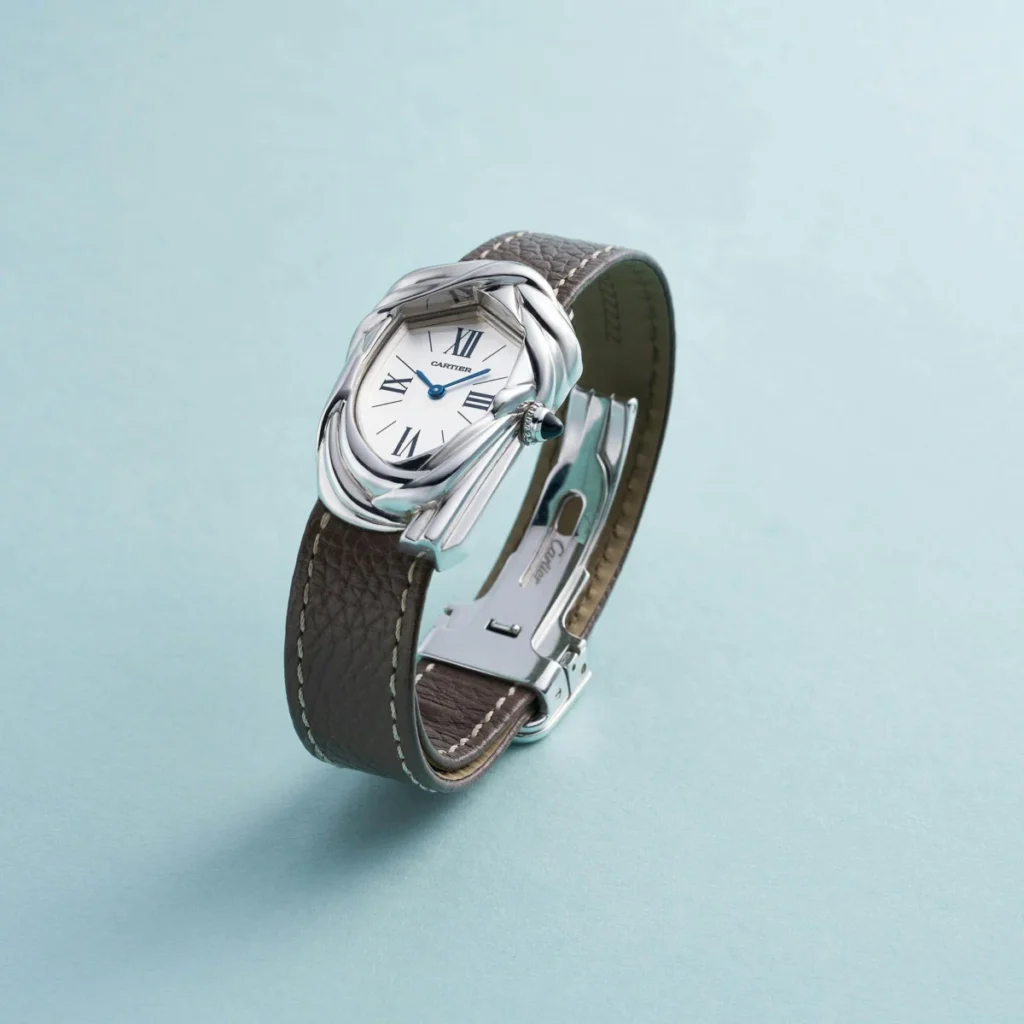
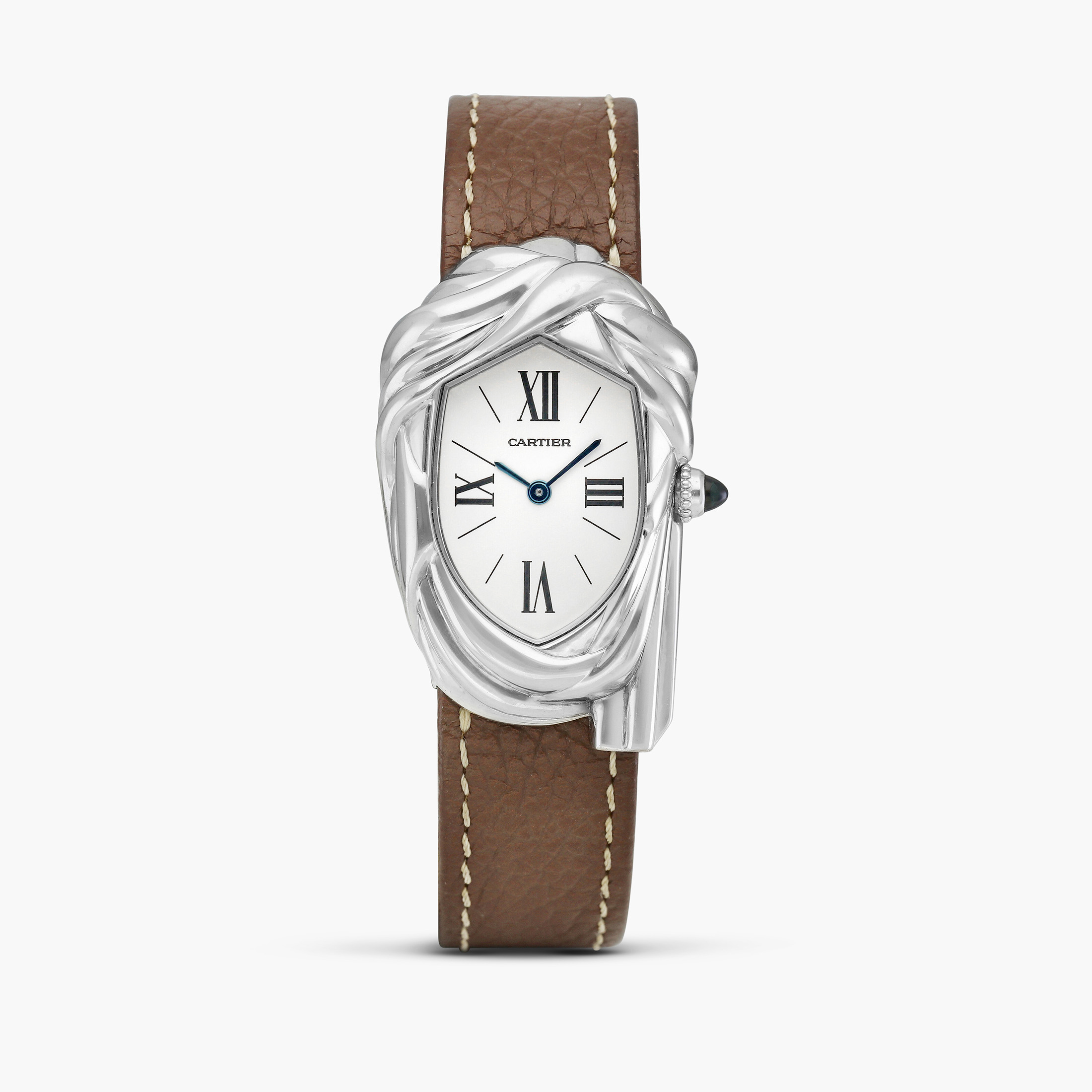
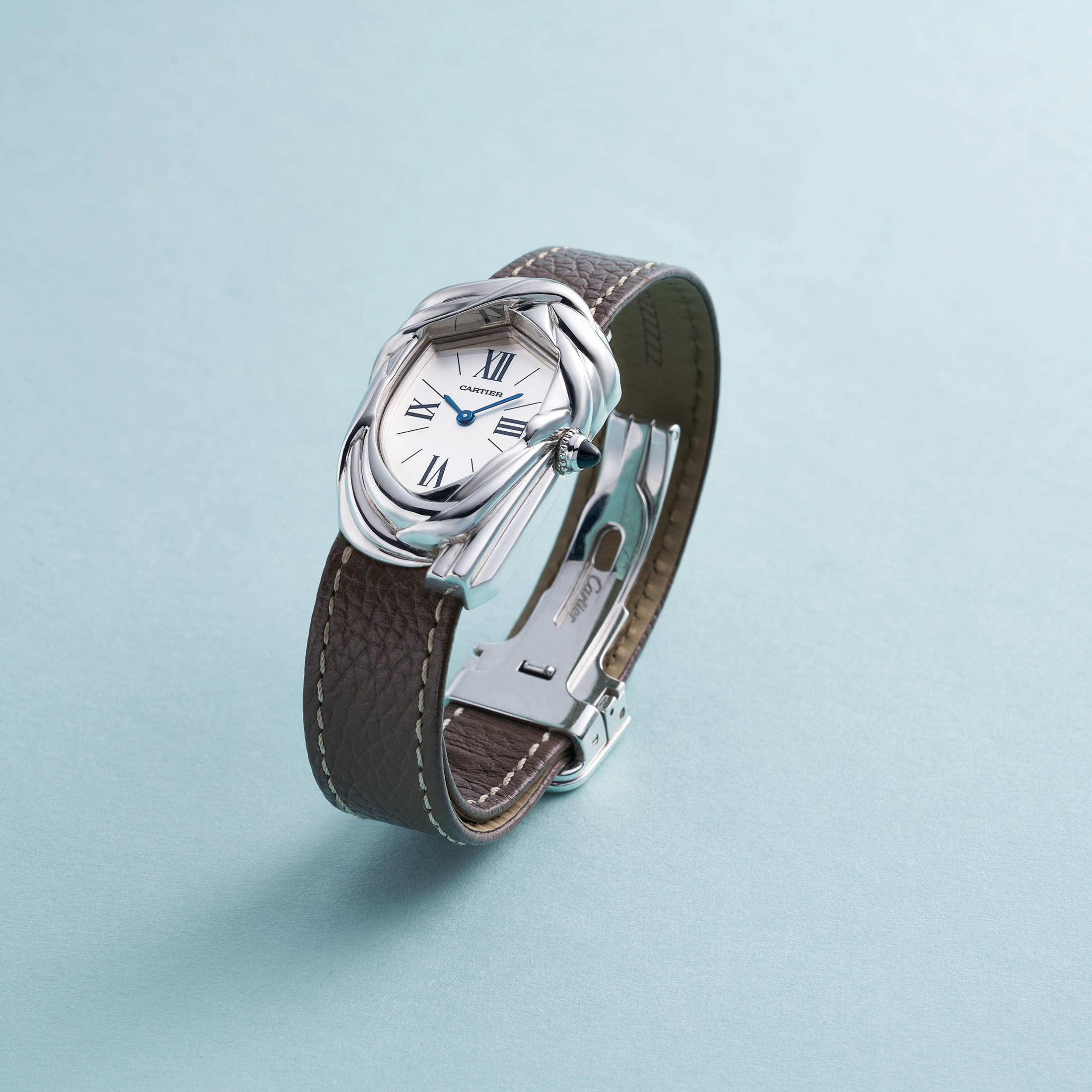
The star of the Sotheby’s ‘Important Watches’ auction was undoubtedly the Cartier Cheich, a model with a storied past intrinsically linked to one of the most challenging and iconic motorsport events in history: the Paris-Dakar Rally. The unique white gold iteration, a one-off piece created in 2010, captivated bidders, culminating in a nine-minute bidding war that pushed the final price to HK$26,520,000, equivalent to approximately $3,413,124 USD. This figure decisively surpasses the previous record for a Cartier wristwatch, which stood at around $2 million for a London Cartier Crash sold earlier in the year.
The surge in value for the Cheich is a testament to its extreme rarity and unique provenance. Only five such Cheich models are known to exist, and this particular piece, distinguished by its white gold casing and quartz movement, was a bespoke commission. The intense competition among online, telephone, and in-person bidders at the Hong Kong sale highlights a growing segment of the market prioritizing exclusivity and historical narrative alongside the inherent craftsmanship of a timepiece.

The Legendary Cartier Cheich and the Paris-Dakar Rally
The narrative behind the Cartier Cheich is as compelling as its market performance. The Paris-Dakar Rally, founded in 1978 by motorcycle racer Thierry Sabine, was a legendary test of endurance, navigation, and engineering, covering vast distances across diverse terrains. Cartier, an early supporter of the event, established the "Cartier Challenge" in 1983, spearheaded by the brand’s then-president, Alain-Dominique Perrin. This challenge offered a unique prize: a specially designed wristwatch awarded to any competitor who managed to win the same category in consecutive years.
The Cheich, named after the traditional blue headscarves worn by the nomadic Tuareg people of the Sahara Desert, was the embodiment of this prestigious award. It was never made available for public sale, adding to its allure and exclusivity. The trophy was only claimed once, by Belgian motocross champion Gaston Rahier, who achieved back-to-back victories in the motorcycle category in 1984 and 1985. The rally and the associated Cartier Challenge were tragically curtailed following Sabine’s death in a helicopter crash in 1986.
Of the four original gold Cartier Cheich watches believed to have been produced with mechanical movements, two are preserved in Cartier’s heritage museum. The whereabouts of one example, once owned by Thierry Sabine, remain unknown and are presumed lost. Gaston Rahier’s own trophy watch was later sold at auction by Sotheby’s in 2022 to collector Eric Ku for approximately $1.1 million. The recent sale of the 2010 white gold unique piece further cements the Cheich’s status as a highly coveted collector’s item.

A Bespoke Masterpiece for a Dedicated Collector
The Cartier Cheich that commanded the record price at Sotheby’s Hong Kong was not one of the original Paris-Dakar Challenge trophies but a specially commissioned piece from 2010. This unique watch was created for Giorgio Seragnoli, a prominent figure in the watch collecting community, co-author of the esteemed "Cartier Bianco" book, and a recognized connoisseur of white metal Cartier timepieces. Seragnoli’s collection is noted for its depth and focus on rare, often white metal, Cartier creations.
The commissioned Cheich measures 38mm in length and 27mm in width, a size that reflects the era of its creation while maintaining the distinctive aesthetic of the original design. It was presented with a sophisticated brown leather strap, a bespoke presentation box, and a certificate unequivocally labeling it as "No. 1 of 1," underscoring its singular nature. This bespoke commission, combined with its visual appeal and the enduring mystique of the Cheich lineage, clearly resonated with the discerning collectors present at the auction.
The Cartier Pebble: Another Record Achieved Amidst Unforeseen Complications
The Sotheby’s auction was not solely defined by the Cheich. A Cartier London Midi Pebble, dating from approximately 1973 or 1974, also achieved a remarkable result, selling for HK$3.8 million, or about $494,000 USD. This figure represents a new auction record for any Pebble model, surpassing a previous sale at Phillips in 2021 for around $450,000. The Pebble, known for its unconventional, rounded case design, has seen a significant rise in collector interest, driven by its avant-garde aesthetic and its place in the innovative period of Cartier’s London production.
However, the day’s excitement was tempered by an unexpected development that led to the withdrawal of another Cartier lot. Sotheby’s announced the removal of a Cartier London Maxi Pebble, lot 2241, from its auction. The reason for this decision was the discovery that this particular watch shared the exact same case serial number as another Cartier London Maxi Pebble slated for sale at Monaco Legend Auctions in October.
A Serial Number Mystery: Collaboration and Investigation
In a joint statement, Sotheby’s and Monaco Legend Auctions revealed their collaborative decision to withdraw both watches from their respective sales. This unprecedented move was made to allow for comprehensive further research into the discrepancy. Andrea Parmegiani, a watch specialist at Monaco Legend, commented on the situation, stating that the group intends to open and meticulously disassemble the watches for a closer examination. Furthermore, they plan to gather additional archival material and information directly from Cartier regarding its London production and operational procedures during the relevant period.
Parmegiani emphasized the importance of this investigation for the broader Cartier market and for these exceptionally rare Pebble models. "These two watches are in no rush to be sold," Parmegiani stated. "It is incredibly important for the Cartier market and for these two Pebbles, because they are exceedingly rare and exceedingly gorgeous examples of Cartier Heritage London watches, to be sold at their very best, so there is no rush." This measured approach underscores the commitment of both auction houses and the involved parties to maintaining the integrity and value of these significant timepieces. The collaboration and transparency demonstrated by both Sotheby’s and Monaco Legends in addressing this issue have been commended.
Broader Implications for the Watch Market
The record-breaking sale of the Cartier Cheich and the significant price achieved by the Pebble underscore several key trends in the contemporary watch market. Firstly, the enduring desirability of iconic brands like Cartier, particularly for pieces with unique histories and limited production numbers, remains exceptionally strong. The narrative associated with a watch, whether it’s its connection to a legendary sporting event or its avant-garde design from a specific era, significantly contributes to its market value.
Secondly, the incident with the matching serial numbers on the Cartier Pebbles highlights the critical importance of provenance and meticulous authentication in the high-stakes world of watch auctions. While the discovery was disruptive, the swift and transparent action taken by the auction houses demonstrates a commitment to upholding standards and protecting collectors. The ensuing investigation promises to shed further light on Cartier’s historical production practices, potentially enriching the collective knowledge base of vintage Cartier enthusiasts and experts.
The dual record-setting performance and the intriguing serial number mystery serve as a compelling narrative for the watch collecting world. They illustrate both the immense financial potential and the inherent complexities involved in the trade of ultra-rare timepieces. As the market continues to evolve, the stories behind these watches, coupled with rigorous authentication and transparent dealings, will undoubtedly remain central to their sustained value and appeal. The watch community will be keenly awaiting further developments regarding the Cartier Pebble serial number enigma and will continue to track the remarkable trajectory of Cartier’s legacy in the auction arena.