The global defense landscape is experiencing an unprecedented period of transformation, driven by rapid advancements in military technology across air, land, sea, and cyber domains. Nations worldwide are investing heavily in cutting-edge systems, from extended-endurance submarines and hypersonic weapons to sophisticated counter-drone solutions and autonomous combat vehicles. This surge in innovation reflects an evolving geopolitical environment, characterized by heightened strategic competition and the imperative to maintain or gain a technological edge. The intersection of emerging technologies and military applications is not only redefining defense strategies but also influencing global conflicts and the very nature of warfare.
Undersea Prowess and Naval Modernization
Naval capabilities are undergoing a significant overhaul, with a particular focus on enhancing stealth, endurance, and strike power beneath the waves. One of the most remarkable feats of modern engineering is the ability of nuclear submarines to operate submerged for months without surfacing. This unparalleled endurance is achieved through sophisticated nuclear propulsion systems that generate power for propulsion and life support, eliminating the need for frequent refueling or atmospheric oxygen. These strategic assets provide extended deterrence capabilities, allowing them to patrol vast oceanic areas undetected, serving as critical platforms for intelligence gathering and long-range precision strikes. Their operational independence ensures persistent presence in contested waters, fundamentally altering naval power projection dynamics.
Beyond nuclear capabilities, advancements in conventional submarine technology are also noteworthy. A powerful 2,400-ton submarine equipped with Air-Independent Propulsion (AIP) is poised to significantly boost the naval power of a key U.S. ally. AIP systems allow non-nuclear submarines to operate without access to atmospheric oxygen for extended periods, dramatically increasing their submerged endurance and stealth compared to traditional diesel-electric boats. This makes them exceptionally difficult to detect, particularly in littoral environments, offering enhanced capabilities for reconnaissance, anti-submarine warfare, and special operations. The deployment of such advanced conventional submarines underscores a global trend towards building more versatile and resilient undersea fleets.
Concurrently, major navies are undertaking comprehensive fleet modernization programs. The 9,200-ton USS Pinckney, a prominent U.S. Arleigh Burke-class destroyer, is heading for a major overhaul. This extensive maintenance and upgrade program is part of a broader strategy by the U.S. Navy to enhance the combat readiness and technological capabilities of its destroyer fleet. Such overhauls typically involve upgrading combat systems, sensors, propulsion, and communications, ensuring these vital surface combatants remain at the forefront of maritime defense for decades to come. These investments are crucial for maintaining naval superiority and projecting power globally.
In a parallel development, China’s submarine crews are reportedly leveraging extensive acoustic databases of warship sounds to improve target tracking. This sophisticated approach involves compiling and analyzing the unique acoustic signatures of various naval vessels, enabling Chinese submarines to more accurately identify, classify, and track potential targets. This method significantly enhances their situational awareness and engagement capabilities, posing a considerable challenge to adversary fleets. This highlights the critical importance of acoustic intelligence in modern undersea warfare and reflects China’s determined efforts to bolster its naval prowess, particularly in contested regions like the South China Sea. China has also reportedly backed former U.S. President Donald Trump’s suggestion for battleships, claiming that large-caliber naval guns can effectively counter emerging drone swarms, pointing to a potential blend of traditional and modern defense strategies.
Missile Systems and Advanced Air Defense
The realm of missile technology and air defense is witnessing rapid evolution, driven by the need to counter increasingly sophisticated threats and project power with precision. Kratos’ ARRAV-B ballistic missile target recently completed its 43rd successful flight, stress-testing the U.S. Navy’s SPY-6 radar tracking system. These advanced target missiles simulate adversary ballistic missile threats, providing crucial real-world data for the development and validation of next-generation missile defense systems. The consistent success of such tests is vital for ensuring the effectiveness of defensive capabilities against hypersonic and ballistic threats, which are becoming faster and more maneuverable. The SPY-6 radar, a cornerstone of the U.S. Navy’s air and missile defense architecture, relies on these rigorous tests to refine its detection and tracking algorithms, ensuring it can protect naval assets and critical infrastructure.
On the offensive front, a new long-range missile, dubbed "Anthem," has broken cover with an impressive 440+ pound payload and an ambitious goal of 5,000+ units. The development of such high-payload, long-range missiles signals a renewed focus on enhancing precision strike capabilities and expanding the reach of conventional deterrence. These missiles are designed to neutralize high-value targets at extended ranges, offering military planners greater flexibility and reducing risk to manned platforms. The stated production goal indicates a significant commitment to fielding these weapons in large numbers, suggesting a strategic intent to overwhelm adversary defenses and ensure overwhelming firepower.
Missile interceptor technology is also seeing substantial investment. The 22-mile range PAC-3 interceptor system is central to a record $4.7 billion deal aimed at expanding production plants in Arkansas by 2027. The Patriot Advanced Capability-3 (PAC-3) missile is a highly effective "hit-to-kill" interceptor designed to defend against tactical ballistic missiles, cruise missiles, and aircraft. This massive investment underscores the growing demand for advanced air and missile defense systems globally, driven by proliferation concerns and regional instabilities. Expanding production capabilities ensures a steady supply of these critical interceptors, bolstering the air defense posture of the U.S. and its allies.
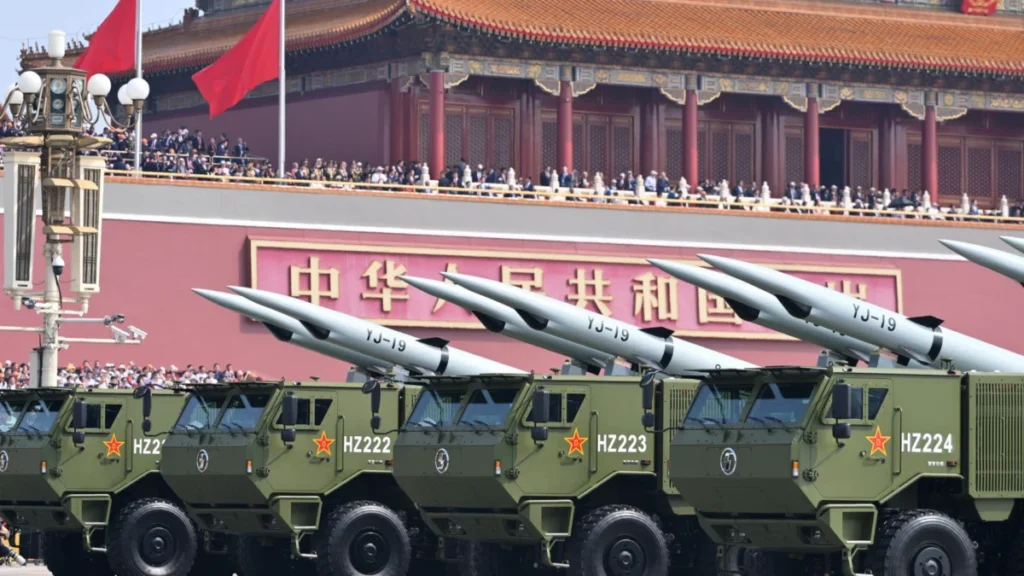
Looking to the future, a U.S. breakthrough in materials science could dramatically accelerate the production of hypersonic shields and rocket parts. Hypersonic technology, capable of traveling at speeds exceeding Mach 5, represents a significant challenge to existing air defense systems. This breakthrough promises to reduce manufacturing times from potentially months to a fraction of that, accelerating the development and deployment of hypersonic weapons and defensive countermeasures. The ability to rapidly produce components for hypersonic systems could be a game-changer, impacting strategic stability and potentially ushering in a new era of high-speed warfare.
Regionally, China’s neighbor is reportedly close to developing both unguided and laser-guided 70-mm rocket systems from Thales. These versatile rocket systems offer cost-effective precision strike capabilities for various platforms, including helicopters and light attack aircraft. Such developments can enhance regional military capabilities, providing agile and precise firepower for counter-insurgency operations, close air support, and engaging light armored vehicles. Meanwhile, China has deployed missile-armed trainer jets to operate over the contested Scarborough Shoal, a move widely interpreted as an attempt to intimidate the Philippines and assert its territorial claims in the South China Sea. This deployment highlights the increasing militarization of disputed areas and the use of air power to exert regional influence.
The Rise of Drone Warfare and Counter-Drone Innovations

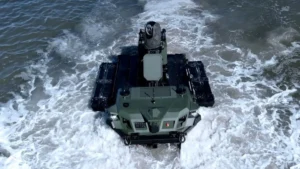
The proliferation of drones has fundamentally reshaped modern conflict, leading to a parallel surge in the development of sophisticated counter-drone strategies. The U.S. Army is set to bolster its obstacle breaching capabilities with autonomous vehicles. These robotic systems are designed to navigate hazardous terrains, detect and clear mines, and neutralize other battlefield obstacles, significantly reducing the risk to human personnel. The integration of autonomy in such critical and dangerous tasks represents a major step towards robotic warfare, promising enhanced efficiency and soldier safety in complex combat environments.
Directed energy weapons (DEWs) are emerging as a primary solution for countering drone threats. A new armored vehicle equipped with a 50 kW laser weapon is planned for counter-drone missions, developed by Hanwha. This powerful laser system can engage and neutralize multiple drone targets with speed and precision, offering a cost-effective alternative to traditional missile-based air defense. The integration of such systems onto mobile platforms enhances their deployability and responsiveness in various operational scenarios. In a notable success, the U.S. Army has deployed an Xbox-operated laser system that has reportedly disabled cartel drones, reducing drone flights by 75%. This innovative application of commercial technology for military purposes demonstrates adaptability and the effectiveness of directed energy against smaller, commercially available drones used by non-state actors for surveillance or illicit activities.
Kinetic counter-drone systems are also being rapidly adopted. The US Navy has selected the 9-mile-range VAMPIRE system, designed to kill drones using 70mm rockets. The Vehicle-Agnostic Modular Palletized ISR Rocket Equipment (VAMPIRE) system offers a rapidly deployable and adaptable solution for short-range air defense against unmanned aerial systems. Its modular nature allows it to be integrated onto various platforms, providing immediate counter-drone capabilities where needed. Similarly, the U.S. Marines are set to receive highly mobile Tempest vehicles specifically designed to counter battlefield drones. These vehicles combine mobility with advanced sensors and effectors to detect, track, and neutralize drone threats in dynamic combat environments, providing critical protection for ground forces. The widespread adoption of these systems underscores the urgent need to address the pervasive threat posed by both state and non-state actors employing drones.
Aerospace Modernization and Strategic Infrastructure
In the aerospace sector, modernization efforts are focused on improving safety, performance, and strategic reach. Boeing is equipping a safer flight control system in U.S. special operations Chinook helicopters (MH-47G). These upgrades are critical for enhancing the operational reliability and safety of these vital heavy-lift helicopters, which perform high-stakes missions in challenging environments. Improved flight control systems reduce pilot workload, enhance maneuverability, and increase survivability, ensuring that special operations forces can be deployed and extracted effectively.
To support the growing demand for advanced military aircraft, Pratt & Whitney is investing $25 million to expand its military aircraft engine plant. This significant investment aims to boost production capacity and efficiency for critical engine components, ensuring the timely delivery of powerplants for various U.S. military aircraft, including advanced fighter jets and transport planes. Such expansions are crucial for maintaining industrial capacity and supporting ongoing modernization programs across the air force.
Strategic infrastructure development is also evident, particularly in major global powers. China is constructing giant desert hangars at its secretive Lop Nur base, reportedly for its J-36 fighter jets and stealth bombers. Satellite imagery and intelligence analysis suggest these large, fortified hangars are designed to protect high-value aircraft from satellite surveillance and potential precision strikes. The expansion of such facilities at a remote, strategically important location like Lop Nur indicates China’s ongoing efforts to enhance its air force’s operational capabilities, survivability, and readiness for future conflicts, particularly involving advanced stealth platforms.
Cutting-Edge Navigation and Sensor Technology
The ability to navigate and operate without reliance on traditional GPS systems is a critical area of research and development, especially given the vulnerability of GPS to jamming and spoofing. The U.S. military has achieved a significant milestone by successfully demonstrating GPS-free navigation during a 4-hour ocean flight using quantum sensors. This breakthrough represents a major leap forward in resilient navigation technology. Quantum sensors, which rely on fundamental physical properties, offer unparalleled precision and are immune to the electromagnetic interference that can disrupt GPS signals. This capability is vital for ensuring uninterrupted operations in GPS-denied environments, providing a robust alternative for submarines, aircraft, and ground vehicles, and enhancing the stealth and survivability of critical military assets in a contested battlespace.
Geopolitical Ramifications and Future Outlook
These widespread advancements in military technology have profound geopolitical implications. They contribute to a complex web of deterrence, influence global power balances, and inform potential future conflict scenarios. The pursuit of military innovation is shaped by slow procurement cycles, tight budgetary constraints, and difficult trade-offs between capability, cost, and reliability. Modern militaries are tasked with developing, acquiring, and deploying technologies that can effectively address existing threats while anticipating future ones, often under immense political pressure.
The "Military" category, as a field of study, examines how these pressures shape design choices, testing standards, and deployment timelines. It highlights why some programs endure for decades while others are canceled after billions in expenditure. The focus extends beyond hardware to encompass software, integration, training, maintenance, and doctrine, all of which are crucial for a system to perform as intended in environments where failure has serious consequences.
The ongoing absorption of emerging technologies such as AI, drones, cyber tools, space-based assets, and advanced manufacturing into existing forces is a complex process. Legacy platforms, interoperability challenges, fragile supply chains, and extensive training requirements often slow down or distort the impact of new capabilities. However, the trajectory is clear: militaries are moving towards greater autonomy, enhanced precision, and integrated, multi-domain operations.
Beyond the technical aspects, military innovation directly influences geopolitics, arms control, and global stability. The ethical questions surrounding autonomous weapon systems, the potential for civilian risk, and the establishment of regulatory boundaries are integral parts of this ongoing conversation. Rather than viewing military power as a mere spectacle, a deeper understanding of its function involves tracking what is being fielded, tested, quietly failing, and what today’s strategic choices suggest about the conflicts of tomorrow. The continuous race for technological supremacy defines the modern era of defense, ensuring that the intersection of engineering and security remains a critical focal point for global stability.