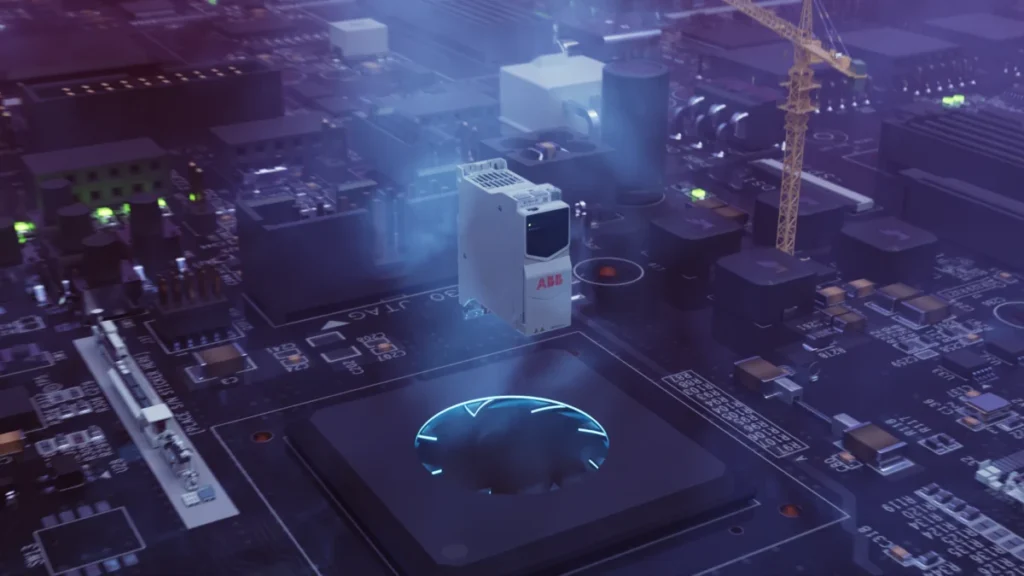
Global industrial practices are at a critical juncture, with recent data revealing a stark decline in global circularity to a mere 6.9%. This alarming figure, highlighted by the most recent Circularity Gap Report, signals that industries worldwide are consuming resources at a pace far outstripping their recuperation capabilities. This unsustainable trajectory poses profound environmental and structural challenges for businesses, jeopardizing long-term competitiveness and demanding an urgent re-evaluation of industrial paradigms. At the forefront of potential solutions lies the widespread adoption and redefinition of "premium" for industrial motor drives, such as Variable Frequency Drives (VFDs), which can significantly bridge this widening resource gap.
The imperative for change is underscored by experts like Anne Franzas, Global Product Manager for Circularity at ABB, who emphasizes the critical role of efficient motor drives in fostering a more sustainable industrial ecosystem. The current linear economic model, characterized by "take-make-dispose," is demonstrably failing to meet the demands of a growing global population and finite planetary resources. The Circularity Gap Report, an annual assessment by Circle Economy, has consistently tracked this decline, noting that the global economy was 9.1% circular in 2018, dropping to 8.6% in 2020, and further to 7.2% in 2022, before reaching the current low of 6.9%. This downward trend illustrates a systemic failure to transition towards a circular economy where resources are kept in use for as long as possible, maximum value is extracted from them whilst in use, and products and materials are recovered and regenerated at the end of their service life.
The Evolving Definition of ‘Premium’ in Industrial Automation
For manufacturers and operators in the motor-driven automation sector, VFDs represent long-life infrastructure assets that are integral to countless industrial processes. Their design, service life, and material efficiency directly influence energy consumption, operational uptime, and waste generation over decades of use. Traditionally, the concept of "premium" for industrial equipment, including VFDs, has often been narrowly defined by initial purchase price and immediate energy efficiency ratings. However, the current resource crisis and environmental imperatives demand a more expansive definition. A truly premium VFD must now encompass durability, inherent reliability, material-efficient design, and the inherent ability to retain value and functionality throughout multiple life cycles. This holistic view moves beyond mere transactional cost to embrace the total environmental and economic impact across the entire product lifecycle.
The shift in perspective is not merely an ethical consideration but a strategic necessity. Long-term competitiveness for industrial enterprises increasingly hinges on their capacity to design and deploy industrial assets that consume fewer resources, possess extended lifespans, and, crucially, preserve Critical Raw Materials (CRMs). CRMs, such as rare earth elements, cobalt, lithium, and platinum group metals, are indispensable components in modern technologies, including advanced electronics found in VFDs. Their supply chains are often volatile, geographically concentrated, and prone to geopolitical disruptions, making their efficient use and recovery a central strategic priority for industries worldwide.

Circularity: A Design-First Principle
Circularity, particularly in the context of industrial drives, is frequently misconstrued as an end-of-life consideration—a process primarily focused on recycling or disposal. However, for complex industrial equipment like VFDs, genuine circularity begins much earlier: at the foundational levels of design, material selection, and projected operating life. This design-first philosophy means that equipment must be conceived with fewer dependencies on virgin CRMs, engineered for longer lifetimes, possess higher recoverability rates, and offer clearer traceability of components and materials throughout their existence.
For drive manufacturers, embedding circularity into their core operations translates into several key design and operational mandates:
- Reduced Material Dependency: Designing components and entire units with minimal use of CRMs, exploring alternative materials, and optimizing material composition.
- Enhanced Durability and Reliability: Engineering for extended operational lifespans through robust construction, advanced thermal management, and comprehensive testing protocols that anticipate and mitigate degradation mechanisms. This means reliability is not just an engineering target but a fundamental resource-conservation strategy.
- Modularity and Upgradeability: Implementing modular architectures that allow for easier repair, component replacement, and performance upgrades, thereby extending the overall service life of the drive without necessitating full unit replacement.
- Disassembly and Recoverability: Designing products that can be easily disassembled at the end of their primary life, facilitating the recovery, refurbishment, or recycling of valuable materials and components.
- Transparency and Traceability: Establishing robust systems for tracking material origins, component lifecycles, and end-of-life pathways to ensure responsible management and maximize recovery rates.
Recent redesign initiatives by leading suppliers in the industrial automation sector exemplify this approach. They demonstrate how principles of modularity and lightweight construction can significantly reduce overall material demand. For instance, designing VFDs with fewer, more robust parts, or utilizing advanced composite materials where appropriate, not only lessens the environmental footprint but also often boosts installation flexibility and reduces transportation costs. ABB, for example, conducts extensive quality and reliability testing at facilities like its Helsinki laboratory. These rigorous tests involve electron microscopy, accelerated aging processes, and exposure to extreme vibration and corrosion to meticulously investigate component degradation mechanisms. Such research directly informs design improvements, ensuring VFDs are engineered for maximum longevity and optimal preservation of CRMs.
The Unrivaled Impact of Energy Efficiency

While material circularity is crucial, the biggest circularity impact of VFDs undeniably stems from their energy efficiency capabilities. Globally, a significant proportion of industrial motors—estimated to be over 40% of the world’s electricity consumption—still operate "direct-on-line" (DOL). This means they run at full speed regardless of the actual load conditions, often relying on mechanical throttling to adjust output. This operational inefficiency represents one of the largest untapped opportunities for industrial decarbonization.
Variable frequency drives precisely control motor speed and torque, matching the motor’s output to the exact requirements of the application. This speed control can dramatically reduce a motor’s energy consumption, typically by 25% to 70%, depending on the application and load profile. Beyond direct energy savings, VFDs also boost process yield, reduce wear and tear on mechanical systems (extending the life of pumps, fans, and compressors), and eliminate unnecessary electricity use. The ripple effect of increased drive adoption rates is therefore profound, serving as one of the most effective ways to reduce total lifecycle material and energy consumption across diverse industrial sectors. This makes VFDs not just an energy-saving device, but a critical tool for systemic resource conservation.
Beyond Initial Efficiency: Long-Term Performance and Adaptability
However, even the most impressive initial efficiency ratings only tell part of the story. A truly "premium" drive must perform reliably over the long term, delaying replacement cycles and minimizing costly downtime. This long-term reliability directly reduces the pressure on critical raw material supply chains by extending the useful life of existing assets. This focus on enduring performance and minimal resource consumption throughout a product’s lifespan is the very core of circular design.
Furthermore, in an era of rapid technological evolution, VFDs must be designed to remain relevant and adaptable. Customer requirements, digital ecosystems, and regulatory expectations are constantly evolving. Modular, forward- and backward-compatible architectures are essential. Such designs reduce the need for complete system replacements when requirements change, ensuring that CRM-intensive components can remain in productive use for longer periods. For instance, upgradable electronics and cooling modules, coupled with firmware-based performance enhancements, can significantly extend a drive’s usefulness without consuming new materials for an entirely new unit. Digital diagnostics also play a crucial role by preventing premature replacements, optimizing maintenance schedules based on actual condition rather than fixed intervals, and thereby avoiding the wasteful usage of spare parts.

Closing the Loop: End-of-Life Management
When an industrial drive eventually reaches the true end of its operational life, the circular economy model dictates that its materials and components are not discarded but reclaimed. Through sophisticated take-back and remanufacturing programs, valuable resources can be reintroduced into the production cycle. This ensures that the technical and material value embedded within these complex units is not lost to waste streams, but rather cycled back into the economy, minimizing the demand for virgin materials and mitigating environmental impact. Such programs are not merely about recycling; they involve careful disassembly, assessment, refurbishment, and reassembly to bring products back to "as new" or "better than new" condition, maximizing their inherent value.
The Economic and Environmental Imperatives
In a world grappling with constrained material supplies, rising energy costs, and an escalating climate crisis, the strategic importance of CRM-efficient and energy-efficient drives cannot be overstated. They are not only environmentally responsible choices but also strategically indispensable for businesses aiming for resilience and profitability.
Industrial motors and their associated drives convert over 40% of global electricity into motion. This staggering figure highlights their enormous potential to accelerate the global green transition. However, this potential can only be fully realized if adoption rates increase significantly, particularly in the vast number of currently under-automated DOL applications. Equally important is the commitment to engineering these drives for genuine circular material flows. This dual approach—increased adoption of efficient technology and the circular design of that technology—offers a powerful pathway for end-users to simultaneously boost operational performance and profitability while contributing to a leaner, cleaner, and more sustainable industrial landscape. The redefinition of "premium" for industrial drives is therefore not just a technical upgrade, but a fundamental shift towards an industrial future built on responsibility, resilience, and resourcefulness.






