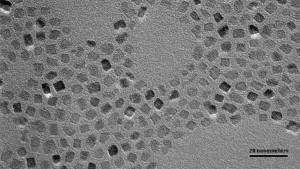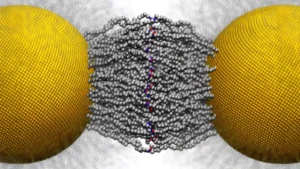
Nanocrystals have emerged as a cornerstone of modern materials science, with their remarkable properties, particularly those of quantum dots, playing a pivotal role in inspiring the 2023 Nobel Prize in Chemistry. These microscopic crystalline structures, often billions of times smaller than a human hair, exhibit unique behaviors that have revolutionized fields ranging from electronics to medicine. Despite their immense potential, the ability to engineer nanocrystals has historically been confined to a limited spectrum of materials, presenting a significant bottleneck for innovation. However, a groundbreaking advancement by chemists at the University of Chicago and Argonne National Laboratory is poised to shatter these limitations, opening the door to a new era of nanomaterial development.
This pioneering research, detailed in the prestigious journal Nature, introduces a novel method for the synthesis of nanocrystals from metal nitrides. This class of materials, known for its robust technological applications, had previously resisted conventional nanocrystal fabrication techniques. The implications of this breakthrough are far-reaching, promising to expand the frontiers of electronics, flexible lighting, advanced medical implants, and countless other cutting-edge technologies.
Unlocking the Potential of Metal Nitride Nanocrystals
Metal nitrides represent a cornerstone of contemporary technological infrastructure, already integral to a vast array of applications. Gallium nitride (GaN), a prime example, is a ubiquitous component in modern lighting systems, powering everything from energy-efficient LED bulbs that illuminate our homes and cities to the vibrant displays on our laptops and smartphones. The stability and efficiency of GaN have made it indispensable in these areas.
The transformation of these resilient materials into nanocrystals offers a paradigm shift in their utilization. Currently, metal nitrides are primarily confined to rigid film formats, limiting their integration into more dynamic and adaptive technologies. However, by reducing them to the nanoscale, these materials could be seamlessly incorporated into polymers, enabling the creation of flexible electronic components. Furthermore, their potential for inkjet printing could revolutionize additive manufacturing processes, allowing for precise deposition of nitride-based materials onto diverse substrates. This could pave the way for wearable electronics, integrated sensors within fabrics, and other applications previously unimaginable with conventional nitride forms.
Dmitri Talapin, the Ernest DeWitt Burton Distinguished Service Professor of Chemistry and Molecular Engineering at the University of Chicago and a senior scientist at Argonne, emphasized the transformative nature of this discovery. "This expands the boundaries of the field beyond what were previously fundamental constraints, and lays the foundation for the use of nitrides as nanomaterials," he stated. "We were able to show how to make a series of nearly a dozen materials that could not be synthesized by traditional methods."
The Significance of Nanoscale Properties
The utility of nanocrystals stems from their unique quantum mechanical properties that emerge when materials are reduced to the nanoscale. At this scale, where millions or even billions of nanocrystals can fit on a single fingernail, the electronic and optical behaviors of a substance can change dramatically. For instance, some materials that appear opaque at the bulk level can become highly emissive at the nanoscale, producing vibrant light. Others can exhibit significantly enhanced catalytic activity, accelerating chemical reactions with unprecedented efficiency.
Theoretically, the synthesis of nanocrystals should be achievable from an almost limitless array of elements and compounds. However, practical limitations have historically restricted researchers to a comparatively narrow range of materials. The challenge lies in controlling the precise atomic arrangement and growth kinetics required to form stable, well-defined nanocrystals. Many materials, due to their inherent chemical bonding characteristics, have proven recalcitrant to this level of manipulation.
It was this very challenge that spurred Ruiming Lin, a graduate student at UChicago and the lead author of the Nature paper, and the researchers in Professor Talapin’s laboratory to explore new avenues. Their attention was drawn to metal nitrides, a class of compounds formed by the fusion of metals with nitrogen. These materials are renowned for their exceptional strength, biocompatibility, and remarkable resistance to both high temperatures and corrosive environments. These very attributes, while making them ideal for demanding applications, also render them exceptionally difficult to process into the delicate structures of nanocrystals.
Overcoming the Challenge of Strong Atomic Bonds
The fundamental hurdle in synthesizing metal nitride nanocrystals lies in the inherent strength of the chemical bonds between metal and nitrogen atoms. During the process of crystal formation, atoms and ions must have sufficient mobility to rearrange and settle into their optimal positions within the evolving lattice structure. This dynamic process is akin to a carefully choreographed dance, where each atomic partner must be able to shift and adjust before finding its place. In metal nitrides, however, the exceptionally strong bonds between metal and nitrogen act as rigid anchors, severely restricting this atomic rearrangement.
"If bonds cannot break during this process, that’s a death sentence for nanocrystals," explained Professor Talapin. "Once you make an incorrect bond, everything goes south." This inherent rigidity means that attempts to form nanocrystals using conventional methods often result in amorphous aggregates or unstable structures that quickly decompose.
The research team’s success in overcoming this formidable obstacle was predicated on two critical innovations. Firstly, they built upon prior research that demonstrated the efficacy of using molten salts as a reaction medium. Molten salts, in this context, provide a unique liquid environment that can help stabilize the nascent nanocrystals as they form, preventing their premature degradation.
The second, and perhaps most crucial, advancement involved a meticulous exploration of reaction conditions. The researchers systematically investigated various combinations of temperature and ammonia pressure, seeking a precise "sweet spot." This optimal regime, achieved through extensive experimentation, allowed for a delicate balance: the bonds between metal and nitrogen atoms were sufficiently weakened to permit controlled breaking and reforming, enabling the crystal lattice to organize itself into the desired nanocrystalline structure. This approach represented a significant departure from established conventions in the field.
"This process is very unusual — it goes against every bit of common sense in the field," Professor Talapin remarked. "We had to entirely rethink the approach." This recalibration of fundamental principles underscores the novelty and ingenuity of their work.
A New Family of Nanocrystal Materials
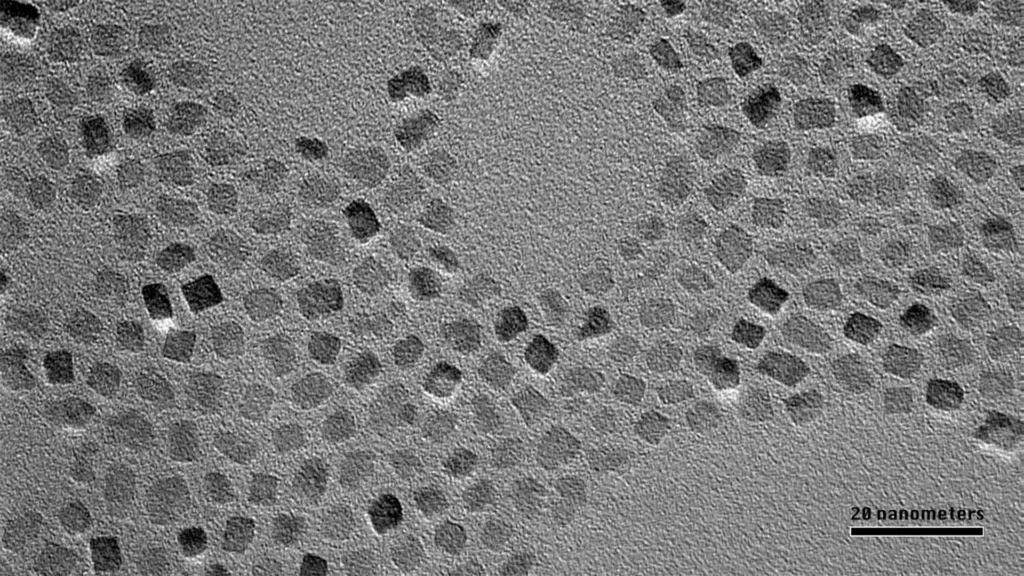
The groundbreaking method proved to be remarkably versatile, extending its reach beyond gallium nitride. The research team successfully synthesized nanocrystals from a range of other technologically significant metal nitrides. These include titanium nitride (TiN), widely recognized for its biocompatibility and use in medical implants such as orthopedic devices and dental prosthetics; niobium nitride (NbN), a critical material for high-performance superconducting magnets used in MRI machines and particle accelerators; and molybdenum nitride (MoN), a valuable catalyst in various industrial chemical processes.
The economic viability and widespread availability of these nitride materials further amplify the impact of this discovery. By rendering them into nanocrystal forms, researchers anticipate a dramatic expansion in their application spectrum. This could translate into more durable and biocompatible medical implants, more efficient and compact superconducting devices, and novel catalytic systems for cleaner industrial production.
"I remember the first time I looked through the electron microscope and saw those crystals," shared Ruiming Lin, reflecting on the culmination of their efforts. "You always hope something you discovered will wind up in applications. I think there will be many uses."
Timeline of Discovery and Development
While the precise timeline of the research project is not fully detailed in the provided text, the development likely involved several stages:
- Early 2020s (estimated): Initial exploration of metal nitrides as a target material for nanocrystal synthesis, driven by their technological importance and the known challenges in their fabrication. This phase would have involved extensive literature review and preliminary theoretical modeling.
- Mid-2020s (estimated): Focused experimental work, building on existing knowledge of molten salt synthesis. This would have involved numerous trials to identify suitable reaction conditions, including varying temperatures and pressures.
- Late 2020s (estimated): Identification of the "sweet spot" for synthesizing the first successful metal nitride nanocrystals, likely starting with a well-known nitride like GaN. This would have been a critical breakthrough moment.
- Ongoing (estimated): Expansion of the method to synthesize nanocrystals from a variety of other metal nitrides, systematically testing different compositions and characterizing the resulting materials. This phase would have involved collaboration between UChicago and Argonne National Laboratory.
- Recent Publication (as indicated by the article): Dissemination of findings through publication in Nature, marking the official announcement of the breakthrough to the scientific community.
Broader Implications and Future Outlook
The ability to synthesize nanocrystals from metal nitrides represents a significant leap forward in materials science, with profound implications across numerous sectors.
- Electronics: The development of flexible and printable nitride-based nanomaterials could lead to a new generation of electronic devices, including bendable displays, flexible solar cells, and wearable sensors. The inherent robustness of nitrides could also enhance the durability and performance of traditional electronic components.
- Biomedical Applications: The biocompatibility of materials like TiN nanocrystals opens up exciting possibilities for advanced medical implants, drug delivery systems, and nanoscale diagnostic tools. Their enhanced surface area at the nanoscale could improve osseointegration in bone implants or facilitate targeted drug release.
- Energy Technologies: NbN nanocrystals could contribute to more efficient and compact superconducting magnets, vital for fusion energy research and advanced particle accelerators. MoN nanocrystals, with their catalytic properties, could play a role in developing more sustainable chemical processes and fuel cells.
- Advanced Manufacturing: The potential for inkjet printing of nitride nanocrystals could revolutionize additive manufacturing, enabling the creation of complex, high-performance components with unprecedented precision and on-demand fabrication.
The research was supported by significant funding from various government agencies and collaborations, including the U.S. Department of Energy, the Samsung QD Cluster Collaboration, the National Science Foundation, and the Air Force Office of Scientific Research. This multi-faceted support underscores the perceived importance and potential impact of this research.
The scientific team also leveraged the advanced facilities available at the University of Chicago and Argonne National Laboratory, including the UChicago-based National Science Foundation Materials Research Science and Engineering Center, the UChicago Soft Matter Characterization Facility, and Argonne’s Center for Nanoscale Materials. Access to these state-of-the-art resources was instrumental in the successful execution and characterization of this complex research.
The successful development of this novel synthesis method by the University of Chicago and Argonne National Laboratory team marks a pivotal moment in materials science. By unlocking the potential of metal nitrides at the nanoscale, this breakthrough promises to fuel innovation and drive the development of transformative technologies for years to come, echoing the profound impact of quantum dots on the scientific landscape.
Additional Contributors and Acknowledgements
The study benefited from the contributions of several other researchers from the University of Chicago. These include Ningxin Jiang, Wooje Cho, Zirui Zhou, Di Wang, Justin Ondry, Zehan Mi, James Cassidy, Alex Hinckle, Alexander Filatov, and John S. Anderson. Their collective efforts were essential in bringing this complex project to fruition.