The field of materials science is currently witnessing a paradigm shift as researchers at the Massachusetts Institute of Technology (MIT) have successfully challenged two decades of established scientific dogma. For more than 20 years, the consensus among nanotechnologists was that the only way to organize nanoparticles into precise, predictable structures was through the use of rigid molecular connectors. However, a new study published in Nature Materials reveals that the exact opposite—utilizing extremely flexible, "floppy" connectors—allows for the creation of advanced materials with unprecedented structural variety and control.
Led by Rob Macfarlane, the Richard P. Simmons (1953) Professor in Metallurgy at MIT’s Department of Materials Science and Engineering, the research team has demonstrated that flexible polymer chains can act as self-adjusting guides for nanoparticle assembly. This discovery provides a new set of tools for engineers to build "designer materials" from the bottom up, potentially transforming industries ranging from semiconductor manufacturing to targeted drug delivery.
The Historical Challenge of Nanoparticle Assembly
To understand the magnitude of this breakthrough, one must first look at the fundamental goals of materials science. At its core, the discipline is based on the premise that the arrangement of a material’s smallest components—its atoms or molecules—dictates its macroscopic properties. When scientists work with nanoparticles, which typically range from 1 to 100 nanometers in size, they are essentially trying to build a macroscopic "Lego" set where the individual bricks are too small to be seen or handled directly.
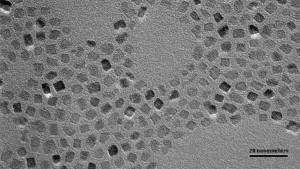
Nanoparticles are highly valued because they possess unique optical, electrical, and chemical properties that differ from bulk materials. For instance, gold nanoparticles do not look gold; depending on their size and arrangement, they can appear red or purple and exhibit unique catalytic behaviors. The challenge has always been "superlattice" formation: getting billions of these nanoparticles to arrange themselves into a repeating, three-dimensional grid.
For the past twenty years, the standard approach to solving this problem has involved "structural DNA nanotechnology" or rigid chemical linkers. The logic was simple: if you want a specific structure, you must use a rigid connector to hold the particles at specific angles and distances. Any flexibility was viewed as a defect that would lead to a "collapsed" or disordered mass of particles rather than a functional crystal.
Defying Two Decades of Scientific Dogma
The MIT team, including PhD candidate Nicholas Sbalbi and collaborators from the University of Delaware, decided to test the limits of this rigidity requirement. Professor Macfarlane noted that while rigid connectors work, they are often "bespoke"—meaning a connector designed for one type of particle or one specific environment will not work for another. This lack of versatility has long been a bottleneck in moving nanotechnology from the laboratory to the factory floor.
"It’s exciting to have a new tool that is so counterintuitive," Macfarlane said of the new findings. "It’s the exact opposite of what the dogma has been for 20 years: that you need to make connector ligands rigid, and any deviation causes assembly to fail. We showed if you just crank it all the way to the opposite extreme, it works just as well."
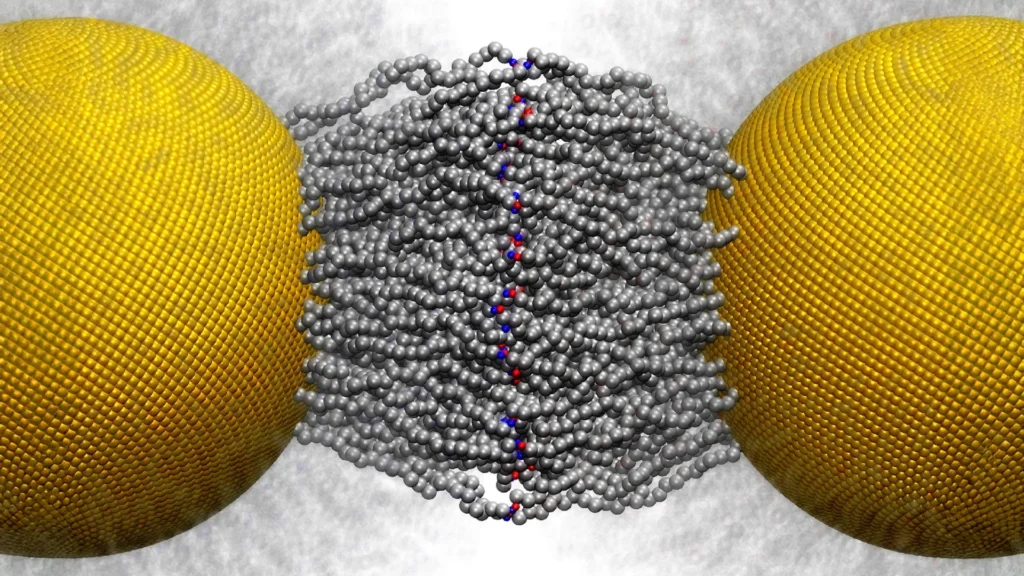
By using highly flexible polymer ligands, the researchers allowed the nanoparticles to "negotiate" their own positions. Instead of being forced into a pre-determined spot by a stiff rod, the particles used the flexibility of the polymers to find the most thermodynamically stable arrangement. This spontaneous reorganization allows for a level of structural diversity that rigid connectors simply cannot achieve.
The Mechanics of Flexibility and Electrical Charge
The technical heart of the discovery lies in the interplay between polymer length and electrical charge. The team equipped their nanoparticles with long, flexible polymer chains that terminated in a specific electrical charge—either positive or negative.
In traditional chemistry, valency refers to the number of chemical bonds an atom can form. In the world of nanoparticle assembly, valency refers to how many neighboring particles a single nanoparticle can connect to. By adjusting the length of the flexible polymer chains and the size of the nanoparticle core, the MIT researchers found they could precisely tune this valency.
When particles with opposite charges are mixed, the flexible connectors naturally reach out to find a partner. Because the polymers are so flexible, they can bend and stretch to maximize the number of stable bonds. Crucially, the team discovered that by limiting the number of possible connections through the physical dimensions of the polymers, they could force the particles to form "open" structures.
In previous assembly methods, nanoparticles tended to default to "close-packed" arrangements—essentially sticking together as tightly as possible, like oranges in a crate. While these dense structures are stable, they are not always useful. Many of the most desirable properties in photonics and catalysis require "open" lattices, where there is significant space between the particles. The flexible-ligand approach allows scientists to create these low-density, high-utility structures for the first time without complex, specialized synthesis.
Chronology of the Research and Experimental Validation
The development of this system was not an overnight success but the result of years of refinement within the Macfarlane Lab. The timeline of the project highlights a move from theoretical modeling to empirical proof:
- Phase One: Polymer Engineering: The lab spent several years developing methods to attach specific polymer chains to various nanoparticle cores, ensuring the bonds were strong enough to survive the assembly process.
- Phase Two: Computational Modeling: In collaboration with Arthi Jayaraman (formerly of the University of Delaware) and doctoral student Stephen Kronenberger, the team used computer simulations to predict how flexible, charged chains would behave. The simulations suggested that flexibility could, theoretically, lead to stable lattices.
- Phase Three: Experimental Testing: Nicholas Sbalbi led the experimental efforts at MIT, testing different combinations of particle sizes and polymer lengths.
- Phase Four: Discovery of New Crystals: The team observed the formation of crystal structures that had never been documented in nanoparticle literature. These were not just variations of old structures, but entirely new "superlattices."
The experimental data confirmed that by simply changing the ratio of the polymer chain length to the nanoparticle diameter, the researchers could switch between different types of crystal symmetries. This represents a massive leap in "programmable" matter.
Broader Impact and Industrial Applications
The implications of being able to control nanoparticle arrangements with such ease are vast. By decoupling the properties of the individual particle from the assembly process, the MIT team has created a "universal assembly kit."
Photonics and Optical Computing
In the field of photonics, the way a material interacts with light is determined by the spacing of its components. By creating open-frame superlattices, researchers can engineer materials that trap, reflect, or bend light in specific ways. This is essential for the development of faster optical computers and highly efficient solar cells.
Chemical Catalysis and Manufacturing
In chemical manufacturing, catalysts are used to speed up reactions. The efficiency of a catalyst is often tied to its surface area. The open, porous structures created by flexible connectors provide much higher surface areas than traditional dense-packed particles, potentially leading to more efficient fuel production and carbon capture technologies.
Medicine and Sensors
For medical applications, such as targeted drug delivery or high-sensitivity diagnostic sensors, the ability to organize nanoparticles into specific 3D shapes is critical. The flexible connector method allows for the creation of "cages" or "frameworks" that can hold biological molecules or respond to environmental triggers within the human body.
Analysis of Future Scalability
While the research is currently centered in a laboratory setting, the use of polymers and electrical charges makes this method inherently more scalable than DNA-based methods. DNA-mediated assembly, while precise, is expensive and sensitive to temperature and pH levels. Polymers, by contrast, are widely used in industrial manufacturing and are far more robust.
The study’s findings suggest that we are entering an era of "Customizable Designer Materials." Instead of settling for the materials nature provides, engineers can now start with a list of desired properties—such as a specific refractive index or a certain level of electrical conductivity—and work backward to design the necessary nanoparticle superlattice.
Institutional Support and Collaborative Effort
This breakthrough was a multi-institutional effort, reflecting the interdisciplinary nature of modern materials science. Along with the MIT contingent—including undergraduate Hana Shinzawa and Matthew Ye—the University of Delaware provided critical computational insights.
The research was funded by a coalition of high-level government agencies, including the National Science Foundation (NSF), the Department of Energy (DOE), and both the U.S. Army and U.S. Navy. The interest from defense and energy departments underscores the strategic importance of advanced materials in national security, from lightweight armor to next-generation energy storage.
As the findings move toward commercial exploration, the Macfarlane Lab continues to investigate how these flexible bonds behave under different environmental stresses. The discovery that "floppiness" is a feature rather than a bug has opened a new frontier in the quest to master the smallest building blocks of our world. By embracing the flexibility of molecular bonds, scientists have finally found a way to create the rigid, reliable structures of the future.