The groundbreaking cinematic achievements of "Avatar," the highest-grossing film of all time, did more than transport audiences to the lush, alien moon of Pandora; it catalyzed a paradigm shift in filmmaking itself, pioneering the burgeoning field of virtual production. This innovative methodology, which seamlessly integrates diverse technologies such as performance capture, expansive LED virtual environments, and advanced 3D imaging, is fundamentally reshaping the landscape of modern cinema. While millions have marveled at the visual spectacle of films like "Avatar," only a select few truly grasp the intricate technological wizardry that underpins these productions. Bridging this knowledge gap and exposing aspiring filmmakers to this cutting-edge magic is the core mission of Daniel Pillis, an alumnus of the MIT Media Lab (SM ’24) and now an assistant professor at Emerson College.
The Genesis of a Revolution: Understanding Virtual Production
Virtual production represents a convergence of traditional filmmaking techniques with real-time game engine technology, visual effects (VFX), and advanced digital tools. Its roots can be traced back to early experiments with motion control cameras and digital compositing, but it truly began to blossom with the sophisticated performance capture techniques employed in films like "The Lord of the Rings" trilogy and, most notably, James Cameron’s "Avatar" in 2009. "Avatar" famously used a ‘virtual camera’ system, allowing Cameron to visualize actors’ motion-captured performances within the digital environment in real-time, blurring the lines between pre-production, principal photography, and post-production. This capability fundamentally altered the director’s ability to conceptualize and execute complex scenes, moving beyond green screens to a more integrated, iterative workflow.
Beyond "Avatar," the field has evolved dramatically, particularly with the advent of large-scale LED video walls that display photorealistic digital environments. This allows actors to perform within a dynamic, interactive virtual set, eliminating the need for extensive green screen work and offering immediate visual feedback to the cast and crew. This "in-camera VFX" approach significantly reduces post-production time and costs while enhancing the realism of reflections and lighting on set. Prominent examples of virtual production’s current capabilities include Disney+’s "The Mandalorian," which utilized Industrial Light & Magic’s "StageCraft" technology to create expansive, believable alien worlds, and various other blockbuster films and television series that leverage these techniques for efficiency and creative freedom. The global virtual production market, valued at approximately $2.5 billion in 2022, is projected to reach over $10 billion by 2030, demonstrating a compound annual growth rate (CAGR) exceeding 20%, underscoring the industry’s rapid adoption and the escalating demand for skilled professionals in this domain.
Bridging Academia and Industry: Daniel Pillis’s Vision
Daniel Pillis, a fervent advocate for integrating advanced technology into cinematic education, articulates the critical importance of human element in this digital evolution. "Motion capture, like that pioneered in ‘Avatar,’ forms an essential bridge between authentic human movement and digital technology," Pillis explains. "In this increasingly digital age, where artificial intelligence is becoming an integral part of film studio workflows, technologies that preserve and enable the authenticity of human expression and performance are becoming paramount." His educational philosophy centers on ensuring that students are not just consumers of technology but creators who understand its nuances and potential to enhance storytelling.
As an assistant professor at Emerson College, Pillis actively incorporates these principles into his filmmaking curriculum. Recognizing the imperative to provide hands-on experience with high-end virtual production tools, he orchestrates a unique cross-institutional collaboration. Each semester, his undergraduate and graduate students embark on a journey across the Charles River to the Massachusetts Institute of Technology (MIT), where they gain unparalleled access to the sophisticated capabilities of the MIT.nano Immersion Lab. This initiative is designed to demystify the complex processes of virtual production and empower students to create their own digital narratives using professional-grade equipment typically beyond the reach of academic institutions.
The Heart of Innovation: MIT.nano Immersion Lab’s Unparalleled Capabilities
Pillis’s connection to the MIT.nano Immersion Lab predates his faculty position at Emerson. During his graduate studies at the MIT Media Lab, under Professor Hiroshi Ishii’s Tangible Media group, Pillis first encountered the lab’s potential. Collaborating with colleague Georine Pierre (SM ’24), he spearheaded a pioneering Haitian folklore dance project. This endeavor involved creating a motion capture-driven simulation of traditional Haitian folkloric dance, specifically the sacred Yanvalou dance. The project aimed to build a living archive, allowing participants to interact with an AI-driven ancestral avatar animation, showcasing the lab’s capacity to merge cultural heritage with cutting-edge technology. This foundational experience solidified Pillis’s understanding of the Immersion Lab’s unique value.
Upon joining Emerson’s faculty, Pillis immediately recognized the Immersion Lab as an ideal resource to elevate his students’ learning experiences. "The level of high-end film production support offered by the Immersion Lab is typically out of reach for so many students who would greatly benefit from integrating this technology into their practice," Pillis emphasizes. "The facility stands alone – it’s incredibly well-equipped, unique in its offerings, and remarkably, accessible even to those outside of MIT. There truly is nothing else like it in the Boston area."
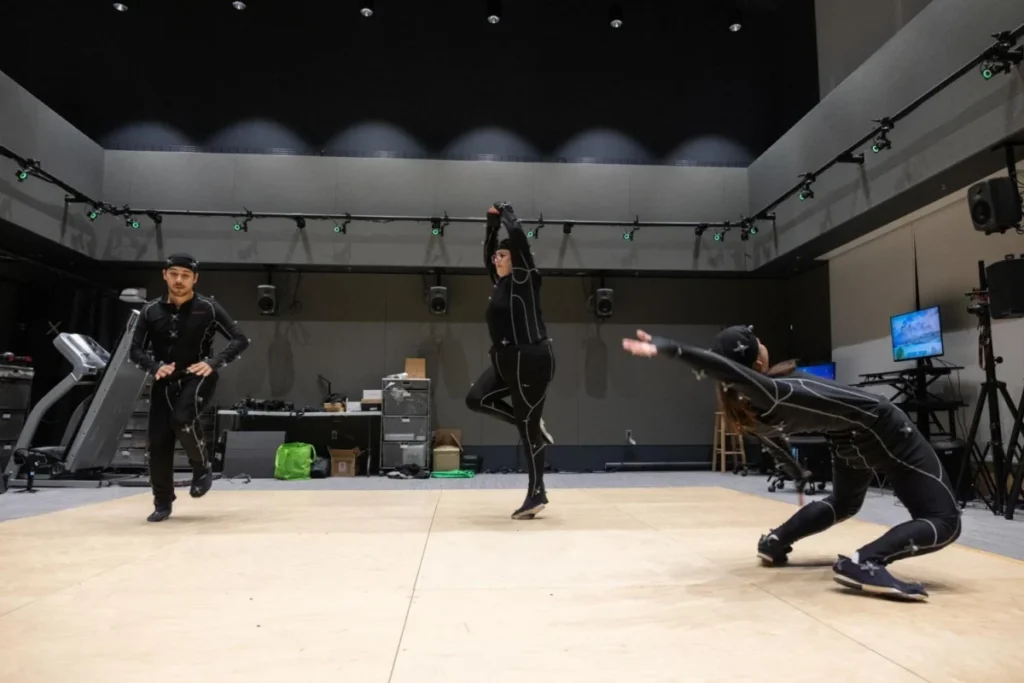
The MIT.nano Immersion Lab is a state-of-the-art facility, designed to foster interdisciplinary research and creative exploration. At its core for motion capture is a robust 28-camera OptiTrack system, capable of precisely tracking nuanced movements. This system, coupled with sophisticated real-time rendering capabilities, allows students to don full-body motion-capture suits and instantly see themselves transformed into virtual characters on a computer screen. This immediate visual feedback is crucial; students can generate virtual avatars that dance, engage in combat, or even play musical instruments like The Beatles, and then modify or refine their character’s movements in real-time. The granular data captured is then taken back to Emerson, where it forms the basis for their final short film projects, culminating in productions that consistently exceed initial student expectations.
Talis Reks, who manages the MIT.nano Immersion Lab, attests to the transformative impact of the collaboration. "It has been truly gratifying to support this course and to witness the profound curiosity and ingenuity students bring to the stage," Reks states. "This class vividly demonstrates the extensive range of what our lab can offer, stretching far beyond traditional scientific research and deeply into the realms of art and the performing arts." The lab’s infrastructure supports not only advanced technological research but also creative applications, making it a pivotal resource for future storytellers.
A Semester Across the River: The Emerson-MIT Learning Experience
The journey for Emerson students begins with theoretical instruction at their campus, covering the principles of virtual production, motion capture, and digital storytelling. However, the theoretical truly comes alive during their dedicated sessions at the MIT.nano Immersion Lab. Students arrive, often with pre-planned scenarios or character concepts, eager to inhabit their digital counterparts. The process involves meticulous setup, ensuring the motion-capture suits are correctly fitted and calibrated with the OptiTrack system. Once equipped, the lab transforms into a dynamic performance space where students, many without formal acting training, become their own avatars.
The immediate feedback loop is a game-changer. Unlike traditional animation or VFX pipelines where results are seen much later, the Immersion Lab’s real-time capabilities allow students to experiment, refine, and perform iteratively. This direct interaction fosters a deeper understanding of how physical performance translates into digital animation. "They really get into it," Reks observes. "These students are not necessarily trained as actors, but the moment they see themselves embodied as virtual characters, with the realistic, granular movement enabled by motion capture, they fully immerse themselves in performing." This immersion not only enhances their technical skills but also cultivates a new appreciation for the performance aspect of digital character creation. The data collected—ranging from skeletal movement to subtle gestures—forms the raw material that students then painstakingly integrate into their final short films, often using industry-standard software back at Emerson. This hands-on, end-to-end experience provides a comprehensive understanding of the virtual production workflow.
From Classroom to Cutting Edge: Student Triumphs and Industry Recognition
Over the past two academic years, more than 60 Emerson College students have benefited from the unique opportunity to utilize the Immersion Lab for Pillis’s class. The tangible results of this collaboration are evident in the caliber of student projects and the recognition they have garnered.
One notable success story is Nick Forsch, an Emerson undergraduate student whose project, "Enter," earned him an EVVY Award nomination. The EVVY Awards, Emerson College’s equivalent of the Emmy Awards, celebrate student excellence in creativity, quality, and professionalism, judged by a panel of industry experts. "Enter" is a compelling short film that explores the narrative of a human character transported into a digital realm to encounter an artificial intelligence. Forsch credits the MIT.nano Immersion Lab for the professional polish and technical sophistication of his work. "Being able to use the MIT.nano Immersion Lab truly elevated my project," Forsch states. "I was incredibly excited to submit it for an EVVY, confident that the technology underpinning my work was of a truly professional caliber." This recognition underscores the program’s ability to equip students with the skills and tools necessary to produce industry-standard content, directly preparing them for competitive careers.
Another exemplary project came from undergraduate student Evan Costa, who embarked on an ambitious virtual recreation of The Beatles’ iconic performance on "The Ed Sullivan Show." Costa meticulously captured the individual performances of each musician, then reconstructed a simulated version of 1950s television aesthetics, blending historical context with advanced digital techniques. His dedication and skill have not gone unnoticed; Costa is slated to join the MIT Learning Engineering and Practice Group, led by principal research scientist John Liu in the Department of Mechanical Engineering, as an intern this summer. This internship will allow him to further explore virtual production, bridging his academic learning with cutting-edge research. "Having the opportunity to gather motion-capture data within the Immersion Lab provided me with more than just advanced technology for my project; it offered invaluable insight into an often-unseen world of creativity," Costa reflects. "Modern storytelling exists across a wide spectrum of mediums, from film to video games, and witnessing the inner workings of this process has profoundly deepened my passion for virtual production." His trajectory exemplifies the direct career pathways forged by this unique educational partnership.
Shaping the Future: The Broader Impact and Industry Implications
The collaboration between Emerson College and the MIT.nano Immersion Lab carries significant implications for the future of filmmaking education and the broader entertainment industry. In an era where technological fluency is as crucial as artistic vision, programs like Pillis’s are vital in preparing the next generation of storytellers. The demand for professionals skilled in virtual production, real-time rendering, motion capture, and AI-driven content creation is rapidly outstripping supply. Educational initiatives that provide hands-on experience with these tools directly address this industry need, ensuring that graduates are job-ready and possess a competitive edge.
Furthermore, this partnership highlights the growing interdisciplinary nature of cinematic arts. Virtual production inherently blurs the lines between computer science, engineering, visual arts, and performance. By fostering an environment where students engage with sophisticated technology and artistic expression simultaneously, the program cultivates holistic creators capable of navigating complex technical and creative challenges. It also champions the democratization of high-end production tools, which traditionally have been exclusive to large studios with immense budgets. By making facilities like the Immersion Lab accessible, MIT is not only advancing research but also contributing to the development of a more diverse and innovative talent pool.
The success of this program also reinforces MIT’s commitment to extending its research capabilities beyond traditional scientific boundaries into the arts and humanities. It showcases how a state-of-the-art research facility can serve as a catalyst for creative exploration and professional development in seemingly disparate fields, proving the immense value of cross-disciplinary collaboration in higher education.
Looking Ahead: Evolving Curricula and Expanding Horizons
The impact of this pioneering collaboration is set to deepen further. In the upcoming academic year, Daniel Pillis and Talis Reks plan to expand the curriculum, leveraging even more advanced Immersion Lab technologies. Their vision includes introducing students to sophisticated techniques such as facial animation, detailed hand and finger tracking, and multi-modal data capture. This will allow for the creation of even more nuanced and lifelike digital performances. Furthermore, they aim to delve into the emerging field of interactive generative motion capture, where AI and real-time systems can dynamically respond to and augment human performance. These advancements will continue to push the boundaries of what Emerson students can achieve, ensuring they remain at the forefront of virtual production innovation as they gear up for their next set of groundbreaking digital productions. The ongoing evolution of this partnership promises to continue producing highly skilled, creatively ambitious filmmakers poised to shape the future of storytelling.