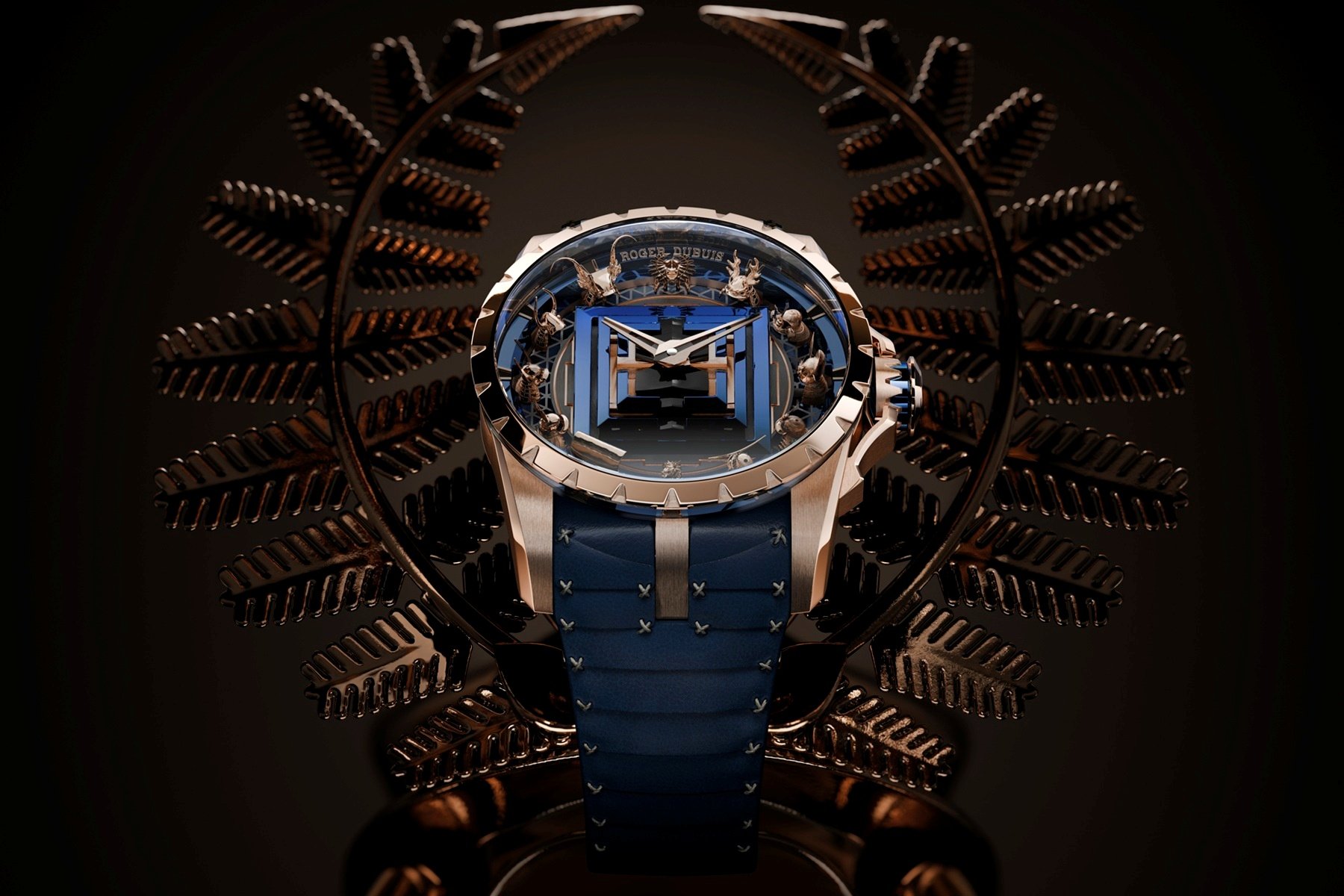
Roger Dubuis, a maison renowned for its avant-garde approach to haute horlogerie, has unveiled its latest masterpiece, the Excalibur The Kabuto Legacy. This exquisite timepiece diverges from its previous inspirations, notably the Arthurian legends, to embark on a profound journey into the heart of 17th-century Japanese history. The collection draws heavily from the transformative era of the Tokugawa Shogunate, a pivotal period that reshaped Japan into a unified and prosperous nation. Crafted with the brand’s signature high-watchmaking expertise and artisanal prowess, the limited edition of 28 watches serves as a wearable testament to the enduring cultural symbols of that age, including the iconic Edo Castle and the esteemed 12 samurai commanders, each represented by their distinctive kabuto (helmets) and kamon (crests). This is not merely a watch; it is an educational narrative meticulously etched into time.
For those less versed in the intricate tapestry of Japanese history, or perhaps unfamiliar with the critically acclaimed television drama Shōgun, Roger Dubuis offers a compelling horological lesson. The Geneva-based brand transports the wearer to Edo, the former name for present-day Tokyo, during the 17th century. This era was defined by the rise of Tokugawa Ieyasu (1543–1616), a formidable samurai from the Minamoto clan. His decisive victory at the Battle of Sekigahara in 1600 marked a watershed moment, ushering in the Tokugawa Shogunate and initiating over 250 years of relative peace and stability for Japan. From his seat of power in Edo, Ieyasu orchestrated a remarkable societal metamorphosis. The nation transitioned from a fractured landscape of warring feudal domains into a meticulously governed entity characterized by a robust economy, a flourishing culture, and a deep-seated appreciation for the art of craftsmanship. This period laid the foundational stones for many of the traditions and artisanal practices that continue to define Japan today, a legacy that Roger Dubuis masterfully encapsulates within its Excalibur The Kabuto Legacy.
A New Pantheon of Timekeeping: The Excalibur The Kabuto Legacy Unveiled
Since 2013, Roger Dubuis has consistently captivated collectors with its artful limited-edition timepieces, often featuring meticulously crafted miniature knights adorning their dials. The Excalibur The Kabuto Legacy marks a significant evolution, replacing the 12 Arthurian knights with the elaborate helmets and crests of 17th-century Japanese samurai. These warriors, the elite military nobility and professional class of pre-industrial Japan, embody a rich history of honor, skill, and dedication. The Excalibur The Kabuto Legacy, priced at €413,500 / US$385,500 / CHF 339,500 (excluding taxes), is a strictly limited edition of 28 pieces. It stands as an exuberant, highly detailed tour de force, unparalleled in the world of haute horlogerie, offering a narrative that is as profound as it is visually stunning.
The Heart of Edo: A Dial Depicting a Nation’s Rebirth
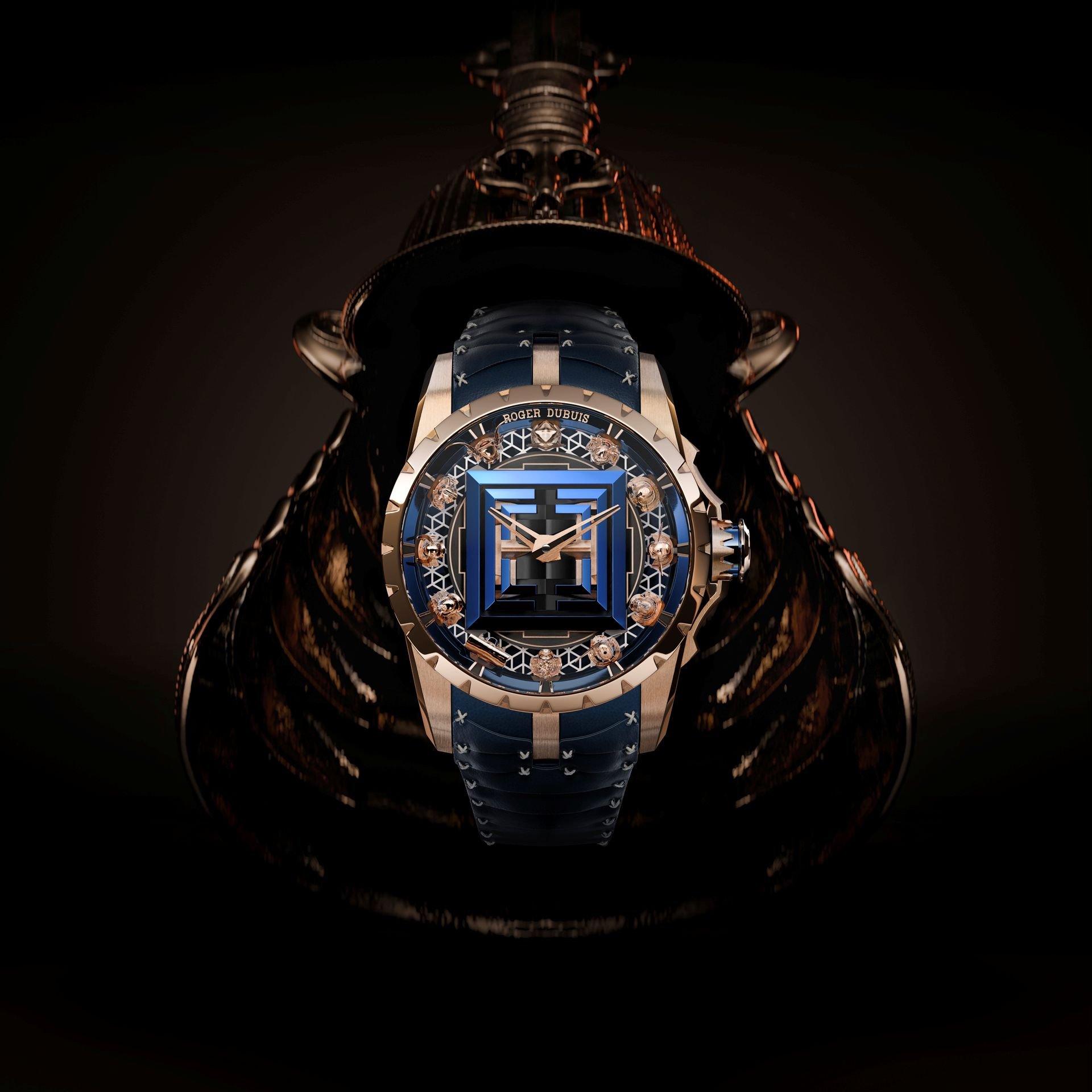
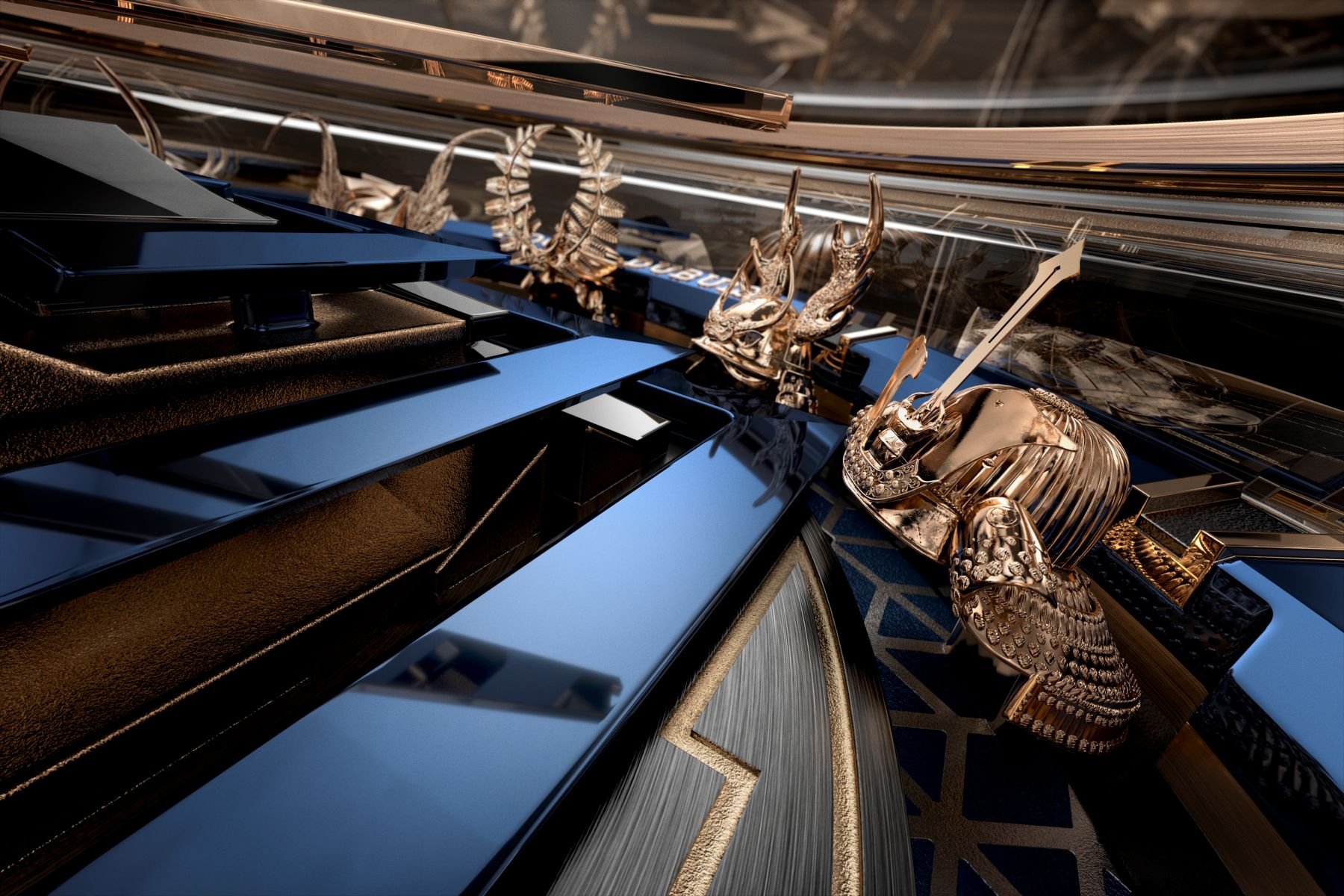
At the epicenter of the Excalibur The Kabuto Legacy’s dial lies a captivating, three-dimensional representation of Edo Castle. Rendered in a sophisticated interplay of pink gold, black PVD, and blue CVD, this architectural marvel symbolizes the restored order and the central power of a reformed society. The deep indigo hue, prevalent in the dial’s design, pays homage to the traditional dye deeply intertwined with samurai attire and the broader spectrum of Japanese craftsmanship. Encircling the castle is a perfectly formed circle, an emblem of solidarity and the foundational principle of lasting harmony that characterized the Tokugawa era.
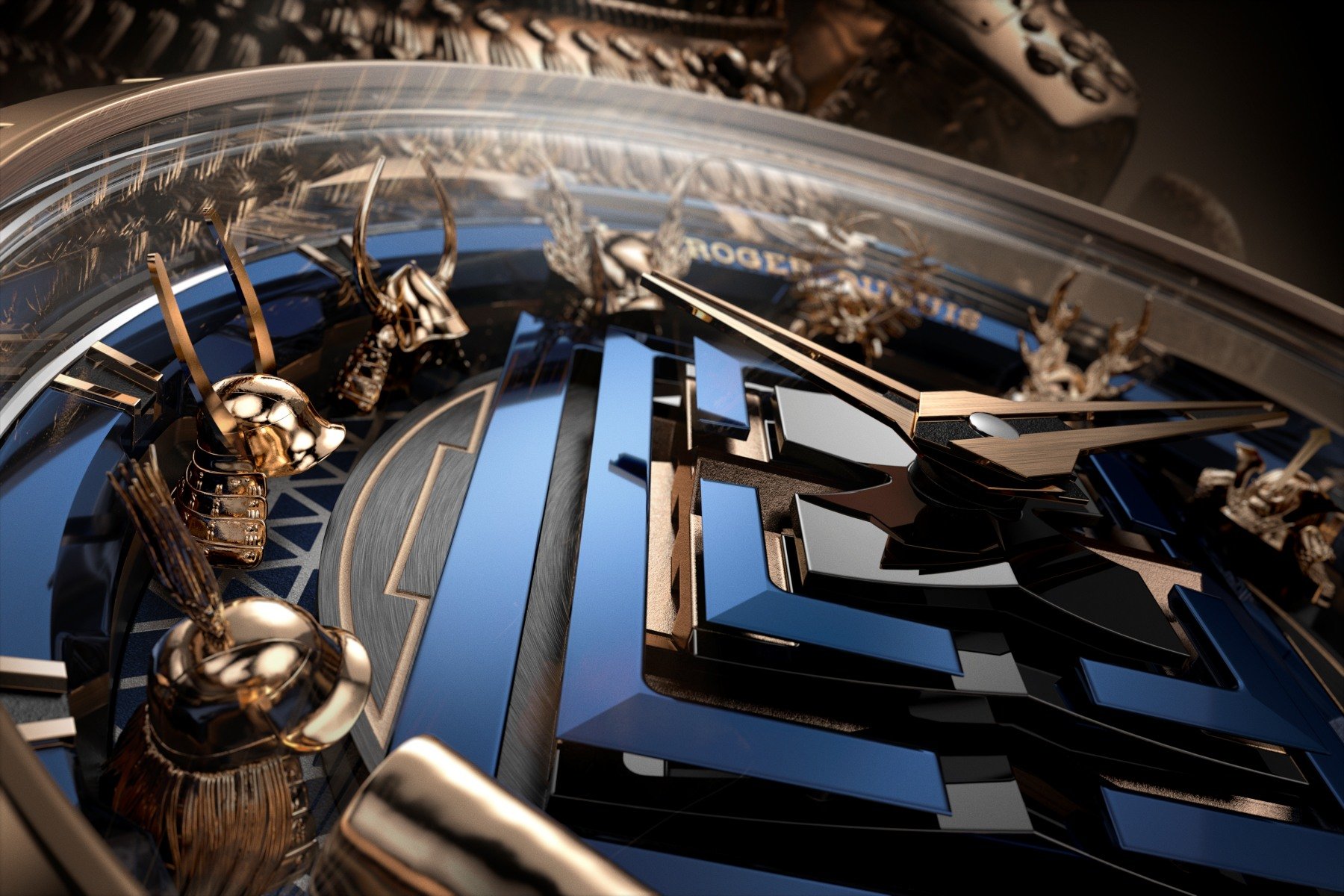
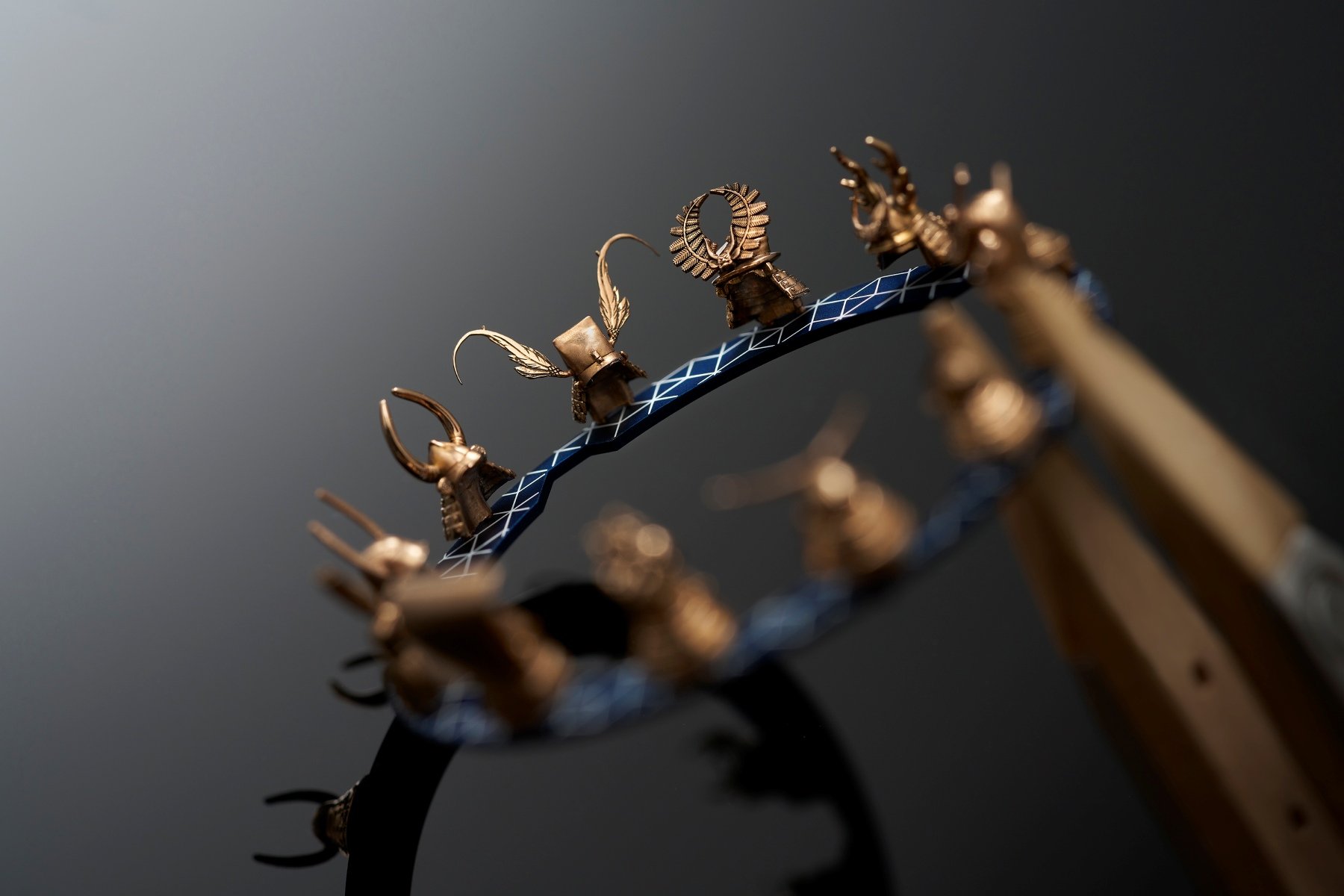
This circle serves as a canvas for the 12 distinct kabuto, each a miniature work of art representing legendary samurai commanders. While not all 12 can be detailed here, their significance is undeniable. At the 12 o’clock position, befittingly, sits Tokugawa Ieyasu himself. His kabuto is adorned with a distinctive fern crest, a potent symbol of success, resilience, and longevity – qualities that defined his reign. Flanking Ieyasu are the renowned Four Heavenly Kings of the Tokugawa (Tokugawa-shitenn), his most trusted generals, each meticulously depicted. At 1 o’clock, we find Honda Tadakatsu, a warrior celebrated for his unwavering loyalty and unparalleled battlefield prowess. His iconic antlered helmet, a symbol of divine protection, is one of the most recognizable in samurai history.
Emblems of Power and Virtue: Decoding the Samurai Crests
Further illustrating the depth of this historical narrative, the watch continues to unveil its symbolic language. At 2 o’clock, Sakai Tadatsugu is represented, embodying wisdom and steadfast leadership, crucial attributes for a key figure in establishing the Tokugawa government. His kabuto features a sword-shaped crest, signifying righteousness and the triumph of good over evil. Moving to the 4 o’clock position, Sakakibara Yasumasa is depicted, a commander lauded for his sound judgment and tactical acumen. His helmet, embellished with a sword motif, reflects martial virtue and the symbolic ability to discern truth from deception. Completing this esteemed quartet at the 9 o’clock position is Ii Naomasa, recognized as one of the era’s most accomplished commanders and diplomats. His striking kabuto has become an enduring emblem of courage and fearless leadership, a testament to his formidable presence on and off the battlefield.
The intricate craftsmanship involved in creating these miniature kabuto is a testament to Roger Dubuis’ dedication to métiers d’art. Each helmet is hand-finished and meticulously detailed, capturing the essence of historical designs. The kamon, or family crests, associated with each samurai are also incorporated, offering another layer of historical and familial identity to the timepiece. These crests are not merely decorative; they are historical markers that provide insight into the lineage and status of the individuals represented.
The Unseen Powerhouse: The RD821 Caliber
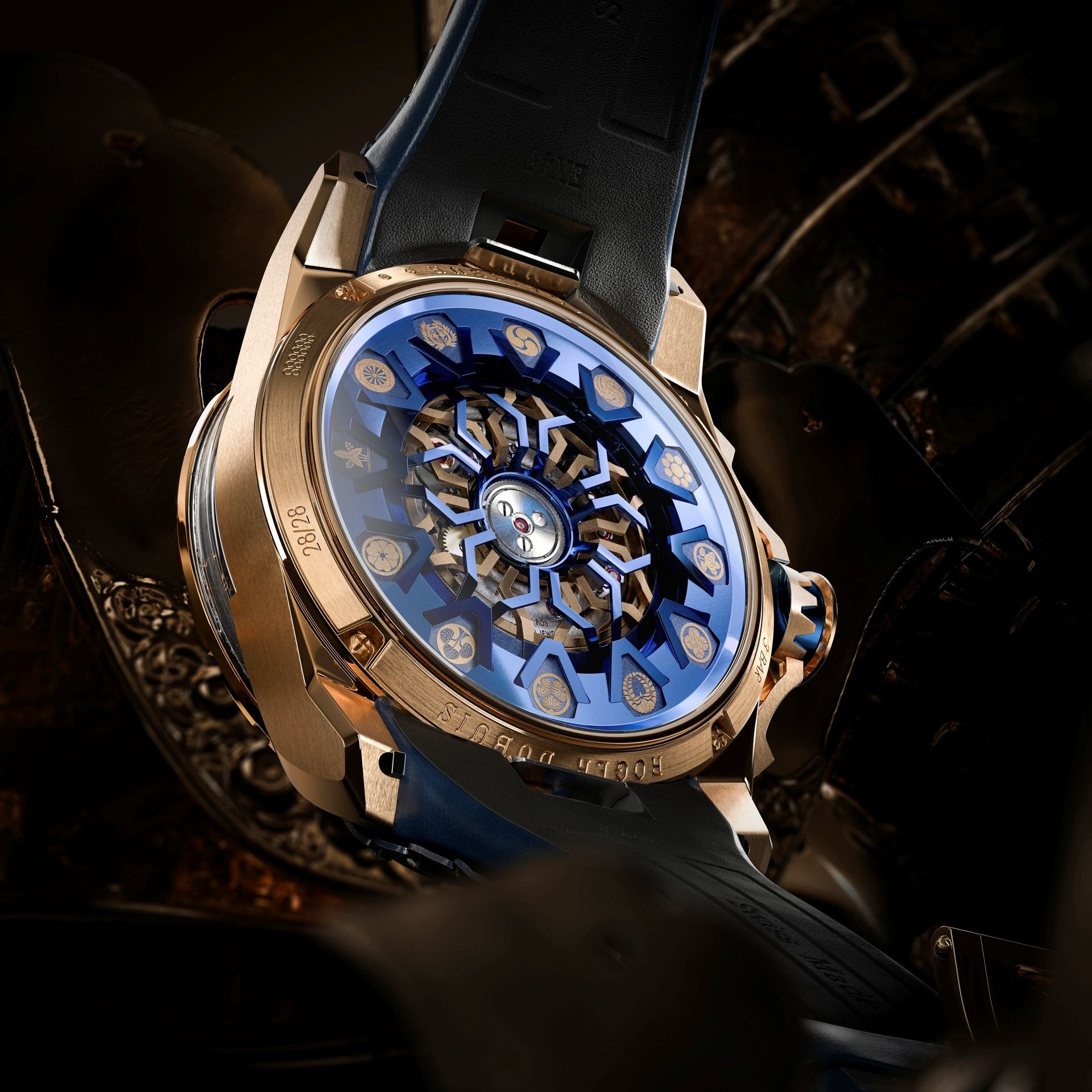
Beyond its breathtaking aesthetic, the Excalibur The Kabuto Legacy is a formidable timepiece driven by the in-house automatic RD821 caliber. Housed within the substantial 45mm x 16.87mm pink gold case, this movement is a marvel of engineering and finishing. It offers a respectable 48-hour power reserve, ensuring reliable timekeeping. What truly sets the RD821 apart is its decoration: it undergoes no fewer than 14 distinct finishing techniques, a rigorous process that underscores Roger Dubuis’ commitment to horological excellence. The movement proudly bears the Poinçon de Genève (Geneva Seal), a mark of exceptional quality and provenance, akin to the purely decorative elements adorning the Excalibur The Kabuto Legacy itself, further solidifying the expected level of craftsmanship from the brand.
The transparent case back of the watch provides an unobstructed view of the intricate movement, revealing a striking blue rotor. More significantly, it features the crests of all 12 generals, meticulously laser-engraved onto a blue-coated pink gold ring. This detail serves as a constant reminder of the historical figures honored by the watch, transforming the case back into a miniature exhibition of samurai heritage. Further enhancing the connection to traditional Japanese craftsmanship, the Excalibur The Kabuto Legacy is presented on an indigo calfskin strap. Its stitched segments are artfully designed to emulate the protective layering of traditional samurai armor, adding another tactile and visual dimension to the timepiece.
A Legacy of Craftsmanship and Historical Resonance
The creation of the Excalibur The Kabuto Legacy is more than just a product launch; it is an initiative that bridges the worlds of haute horlogerie and historical commemoration. Roger Dubuis’ decision to focus on the Tokugawa Shogunate reflects a growing appreciation within the luxury sector for meticulously researched and culturally significant narratives. This collection, limited to only 28 pieces, ensures its exclusivity and positions it as a highly coveted item for collectors who value both technical mastery and profound storytelling.
The pricing of the Excalibur The Kabuto Legacy places it firmly in the ultra-high-end segment of the watch market, a segment where exceptional craftsmanship, rare materials, and unique narratives command a premium. The cost reflects not only the precious metals and complex movement but also the extensive hand-finishing and artistic execution required to bring the historical elements to life on the dial. This investment secures not just a timepiece, but a piece of wearable art with a deeply rooted historical context.
Broader Implications and Future Trajectories
The Excalibur The Kabuto Legacy signifies a thoughtful expansion of Roger Dubuis’ thematic inspirations. By delving into Japanese history, the brand taps into a rich wellspring of cultural symbolism and aesthetic traditions. This move could signal a broader trend for luxury watchmakers to explore diverse historical and cultural narratives, offering collectors more than just timekeeping devices, but rather capsules of history and art. The success of such endeavors often hinges on the authenticity of the narrative and the impeccable execution of the design, both of which appear to be hallmarks of this latest Roger Dubuis release.
The meticulous detail in the kabuto and kamon, coupled with the historical context provided, elevates the watch from a mere luxury item to an educational artifact. It invites wearers and observers to engage with Japanese history, fostering a deeper appreciation for the era of the samurai and the enduring legacy of the Tokugawa Shogunate. As the watch world continues to evolve, such culturally resonant and artistically ambitious creations are likely to gain increasing prominence, appealing to a discerning clientele that seeks depth and meaning in their luxury acquisitions. The Excalibur The Kabuto Legacy stands as a prime example of how horology can serve as a powerful medium for cultural exchange and historical preservation.
Watch Specifications
- Model: Excalibur The Kabuto Legacy
- Dial: Three-dimensional representation of Edo Castle in pink gold with black PVD and blue CVD coatings on roof, shot-blasted elements, and laser-engraved floor. Blue ring with 12 hand-crafted and manually finished samurai kabuto (helmets) in pink gold, and blue double-sided flange.
- Case Material: 18K pink gold with brushed and polished finishes.
- Case Dimensions: 45mm (diameter) × 16.87mm (thickness).
- Case Back: 18K pink gold with sapphire crystal and blue flange with 12 laser-engraved samurai kamon (crests), affixed with four screws.
- Movement: RD821: automatic with manual winding, 28,800vph (4Hz) frequency, 48-hour power reserve, 172 components, 33 jewels, rhodium, rose gold, and blue CVD platings, manually finished with 14 distinct techniques, Poinçon de Genève.
- Strap: Indigo leather with stitched elements reminiscent of samurai armor and 18K pink gold butterfly clasp.
- Functions: Time only (hours, minutes).
- Price: €413,500 / US$385,500 / CHF 339,500 (ex. taxes).
- Special Note(s): Limited to 28 pieces.