This groundbreaking research, spearheaded by the University of Warwick and published in the prestigious journal Nature Communications, marks a pivotal moment in the quest to reconcile quantum mechanics with Einstein’s theory of general relativity. For decades, the theoretical concept of "spacetime fluctuations" has existed as a phantom limb of quantum gravity theories, a necessary consequence of trying to unify the universe’s fundamental forces, yet one that has remained tantalizingly out of experimental reach. This new framework provides a concrete roadmap, translating abstract theoretical predictions into measurable signals, thereby bringing some of the most profound questions in physics firmly into the realm of empirical verification.
The Elusive Nature of Spacetime Fluctuations: A Historical Context
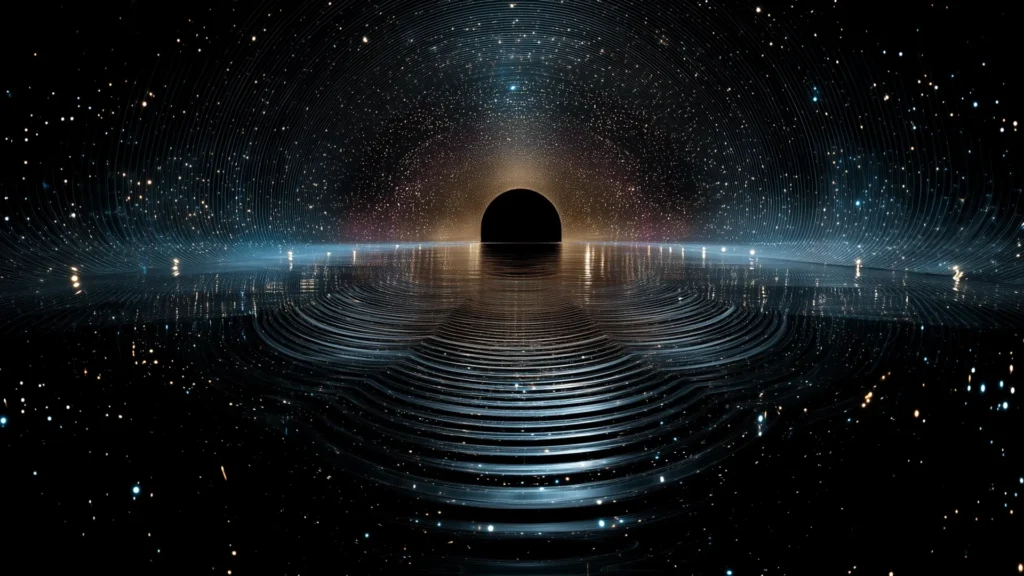
The notion of spacetime fluctuations traces its origins back to the mid-20th century, notably through the work of American theoretical physicist John Archibald Wheeler. Wheeler, a prolific contributor to general relativity and quantum theory, proposed the concept of "quantum foam" in the 1950s and 60s. He theorized that at incredibly small scales – specifically, at the Planck length (approximately 1.6 x 10⁻³⁵ meters) – spacetime would not be smooth and continuous, as described by classical general relativity, but rather a chaotic, bubbling sea of virtual particles and tiny, ephemeral distortions. This "quantum foam" or "spacetime foam" would represent the inherent uncertainty and probabilistic nature of the quantum world manifesting in the very fabric of space and time.
The theoretical underpinning for these fluctuations arises from the fundamental incompatibility between quantum mechanics and general relativity. Quantum mechanics successfully describes the universe at microscopic scales, dealing with discrete energy levels, wave-particle duality, and inherent uncertainties. General relativity, on the other hand, describes gravity as the curvature of spacetime caused by mass and energy, operating beautifully at macroscopic scales. However, when one attempts to apply quantum principles to gravity, or general relativistic principles to the quantum realm (such as inside a black hole or at the very beginning of the universe), the theories break down. A theory of quantum gravity is needed to bridge this gap, and many leading candidates—such as String Theory, Loop Quantum Gravity, and various emergent gravity models—predict the existence of these minute, random spacetime distortions.
The significant challenge for experimental physicists has been the sheer diversity of these theoretical predictions. Different quantum gravity models posit different characteristics for these fluctuations: their energy spectrum, their spatial correlation, their temporal behavior, and their amplitude. This lack of a unified signature has left experimentalists in a quandary, akin to searching for a needle in a haystack without knowing what the needle looks like. The scales involved are also astronomically small, making direct detection incredibly difficult.
Bridging the Divide: A Unified Experimental Framework
The research team, led by Dr. Sharmila Balamurugan, Assistant Professor at the University of Warwick and the study’s first author, has ingeniously addressed this problem by developing a unified framework that categorizes spacetime fluctuations. Instead of chasing specific theoretical predictions, the team grouped these fluctuations into three main categories based on their observable behavior across space and time. This categorization provides a systematic approach, allowing experimentalists to design and interpret searches without being tied to a single, potentially incorrect, theoretical model.
"Different models of gravity predict very different underlying trends in the random spacetime fluctuations, and that has left experimentalists without a clear target," Dr. Balamurugan explained. "Our work provides the first unified guide that translates these abstract, theoretical predictions into concrete, measurable signals. It means we can now test a whole class of quantum-gravity predictions using existing interferometers, rather than waiting for entirely new technologies. This is an important step towards bringing some of the most fundamental questions in physics firmly into the realm of experiment."
For each of these three categories, the researchers have identified clear, measurable patterns that could be detected using highly sensitive instruments known as laser interferometers. These instruments, designed to detect minute changes in distance, are ideally suited for probing the subtle wiggles in spacetime that these fluctuations represent.
Interferometers: The Vanguard of Spacetime Detection
Laser interferometers are among the most precise measuring devices ever constructed, capable of detecting displacements far smaller than the diameter of an atomic nucleus. Their principle relies on splitting a laser beam into two paths, sending them along separate arms, and then recombining them. If there is any minute change in the length of one arm relative to the other—caused, for instance, by a passing gravitational wave or, in this new context, a spacetime fluctuation—the interference pattern of the recombined beams will change.
The most famous examples of these instruments are the kilometer-scale detectors of the Laser Interferometer Gravitational-Wave Observatory (LIGO) in the United States, and its counterparts Virgo in Italy and KAGRA in Japan. These colossal facilities, with arms stretching several kilometers, were instrumental in the historic first direct detection of gravitational waves in 2015, confirming a major prediction of Einstein’s general relativity a century after its formulation. LIGO’s unprecedented sensitivity, capable of detecting changes in length equivalent to a fraction of the width of a proton over four kilometers, makes it an ideal candidate for searching for spacetime fluctuations.
Beyond these large-scale observatories, the new framework also applies to smaller, tabletop experimental setups. The research highlights the potential of emerging projects like QUEST (Quantum Experiment for SpaceTime) and GQuEST (Gravitational Quantum Experiment for SpaceTime), being developed at Cardiff University in the UK and Caltech in the USA, respectively. These next-generation interferometers, though smaller in scale, are designed to push the boundaries of quantum precision and might offer complementary avenues for detection, particularly at higher frequencies or different types of correlations than large-scale detectors.
Dr. Sander Vermeulen, a co-author from Caltech, emphasized the instrumental role of these detectors: "Interferometers can measure spacetime with extraordinary precision. However, to measure spacetime fluctuations with an interferometer, we need to know where—i.e., at what frequency—to look, and what the signal will look like. With our framework, we can now predict this for a wide range of theories. Our results show that interferometers are powerful and versatile tools in the quest for quantum gravity."
Key Insights and Experimental Implications
The study’s findings offer several critical insights for experimental design and interpretation:
- Targeted Searches: By grouping fluctuations into categories and identifying distinct signatures for each, the framework allows experimentalists to conduct more targeted searches, significantly improving the chances of detection compared to blind searches across vast parameter spaces.
- Optimizing Existing Technology: A major implication is that existing interferometer technology, particularly those designed for gravitational wave detection, can be repurposed or optimized for quantum gravity searches without requiring entirely new, purpose-built instruments. This accelerates the pace of research by leveraging billions of dollars already invested in facilities like LIGO.
- Understanding Experimental Noise: The framework also offers a way to distinguish potential spacetime fluctuation signals from mundane sources of experimental noise. By understanding the expected signatures, researchers can better filter out spurious signals and focus on genuine physical phenomena.
- Guidance for Future Instruments: For next-generation detectors like QUEST and GQuEST, the framework provides valuable guidance for their design and operational parameters, ensuring they are optimized to detect the specific types of fluctuations predicted.
This research moves the field from a state of theoretical abundance and experimental confusion to one of focused inquiry. It transforms the abstract problem of quantum gravity into a series of concrete experimental questions that can be addressed with current and near-future technology.
A Flexible Tool for Broader Applications in Fundamental Physics
An important strength of this novel framework lies in its inherent flexibility and model independence. It does not presuppose the validity of any single quantum gravity theory or a specific explanation for how spacetime fluctuations arise. Instead, it only requires a mathematical description of the proposed fluctuations and detailed information about the measurement setup. This adaptability makes it a powerful tool not only for quantum gravity research but also for investigating other fundamental physics phenomena.
For instance, the framework can be applied to:
- Stochastic Gravitational Waves: These are a background hum of gravitational waves from numerous unresolved astrophysical sources (like binary black holes or the early universe) or even exotic physics. The framework could help in distinguishing different components of this background.
- Dark Matter Signals: Certain theoretical models propose that dark matter particles could interact with or cause subtle perturbations in spacetime, which might manifest as signals detectable by interferometers. The unified approach could help characterize such signals.
- Experimental Noise Characterization: Understanding the expected signatures of fundamental spacetime fluctuations can also help researchers better characterize and mitigate various sources of experimental noise in high-precision measurements, leading to cleaner data for all types of investigations.
Professor Animesh Datta, Professor of Theoretical Physics at Warwick and a co-author of the study, highlighted this versatility: "With this methodology, we can now treat any proposed model of spacetime fluctuations in a consistent, comparable way. In the coming years, we can use this to design smarter tabletop interferometers to confirm or refute possible theories of quantum or semiclassical gravity and even test new ideas about dark matter and stochastic gravitational waves." This adaptability ensures that the framework will remain relevant even as new theoretical models emerge or existing ones are refined.
Funding and Collaborative Efforts: The Engine of Discovery
This ambitious work was made possible through significant financial backing and international collaboration. The research received funding from the UK Science and Technology Facilities Council (STFC) under its "Quantum Technologies for Fundamental Physics" program (Grant Numbers ST/T006404/1, ST/W006308/1, and ST/Y004493/1). The Leverhulme Trust also provided crucial support through research grants ECF-2024-124 and RPG-2019-022. These grants underscore the strategic importance placed by funding bodies on pushing the boundaries of fundamental physics and leveraging emerging quantum technologies.
The collaborative nature of the project, bringing together expertise from the University of Warwick, Caltech, and Cardiff University, exemplifies the interdisciplinary effort required to tackle such complex scientific challenges. Theoretical insights from Warwick were combined with experimental expertise from Caltech and Cardiff, creating a synergistic environment essential for this breakthrough.
The Road Ahead: Towards a Quantum Theory of Gravity
The publication of this unified approach marks a significant milestone in the long and arduous journey towards a complete quantum theory of gravity. While direct experimental evidence of spacetime fluctuations remains elusive, this framework provides the essential tools and a clear direction for the next generation of experiments. The ability to translate abstract theoretical concepts into concrete, measurable signals is precisely what is needed to move quantum gravity from the realm of pure speculation into the domain of empirical science.
The implications are profound. If spacetime fluctuations are indeed detected, it would provide the first direct experimental evidence for the quantum nature of gravity, ushering in a new era of physics. It would validate decades of theoretical work and offer crucial clues for refining our understanding of the universe at its most fundamental level. Conversely, if repeated, sensitive searches yield no such signals, it would constrain existing theories, forcing physicists to reconsider their models and potentially open entirely new avenues of theoretical exploration.
The scientific community now watches with anticipation as experimentalists, armed with this new guide, embark on what promises to be one of the most exciting hunts in modern physics: the search for the elusive quantum foam, the very fabric of reality itself.