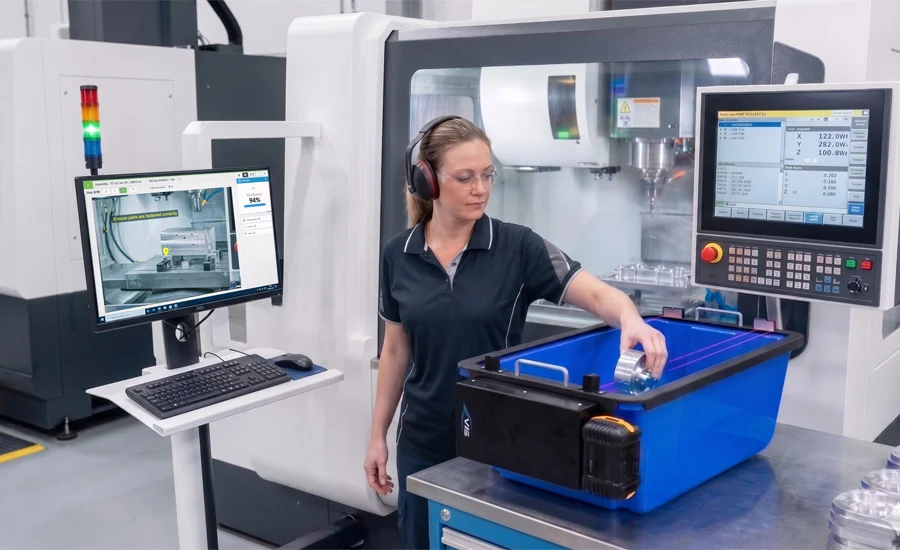
In today’s dynamic manufacturing landscape, software has ascended to a role as critical as the physical machinery on the factory floor, driving product assembly with unparalleled precision, efficiency, and intelligence. Far from being a mere辅助tool, digital solutions are now the central nervous system of modern production, helping manufacturers navigate a complex array of applications from meticulous error-proofing at individual workstations to sophisticated real-time analysis of entire assembly lines and sprawling global plants. This profound shift towards digital integration and automation was vividly demonstrated at The ASSEMBLY Show, a premier event that brings together industry leaders and innovators to unveil the latest advancements shaping the future of industrial production. The event served as a crucial platform for showcasing how cutting-edge software solutions are not just optimizing existing processes but fundamentally redefining operational paradigms, moving the industry closer to the vision of Industry 4.0 and smart factories. Attendees were presented with a comprehensive overview of enterprise resource planning (ERP) systems, manufacturing execution systems (MES), quality management software (QMS), and digital work instructions, all designed to enhance productivity, quality, and adaptability in an increasingly competitive global market.
The Dawn of Digital Transformation: Software’s Central Role in Modern Manufacturing
The evolution of manufacturing has seen several transformative eras, from mechanization to mass production and automation. We are currently in the midst of the fourth industrial revolution, or Industry 4.0, characterized by the convergence of information technology and operational technology. This paradigm shift emphasizes interconnectivity, real-time data analysis, machine learning, and artificial intelligence to create highly flexible, efficient, and intelligent production systems. At the heart of this transformation is advanced software, which acts as the orchestrator of complex processes, enabling seamless communication between machines, systems, and human operators. The ASSEMBLY Show highlighted this evolution, demonstrating how software is no longer a peripheral component but a foundational element of any successful manufacturing strategy.
The demand for sophisticated software solutions stems from several critical industry challenges: the need for greater product customization, shorter product lifecycles, increasing global supply chain complexity, and a growing shortage of skilled labor. Manufacturers are seeking tools that can not only streamline operations but also provide actionable insights, improve quality control, reduce waste, and enhance workforce productivity and safety. The solutions presented at The ASSEMBLY Show offered a glimpse into how these challenges are being met head-on through innovation, with a particular focus on integrating disparate systems, leveraging AI for predictive analytics, and empowering frontline workers with intuitive, real-time information.
Ujigami’s MES: Breaking Down Language Barriers on the Plant Floor

One of the significant innovations showcased was Ujigami’s Product Direct Manufacturing System, featuring an automatic language translation capability within its Manufacturing Execution System (MES). In today’s globalized manufacturing environment, facilities often employ a diverse workforce speaking multiple native languages. This linguistic diversity, while enriching, can pose substantial operational challenges, including slower training times, inconsistencies in process execution, and an elevated risk of errors due to miscommunication. Traditional methods often rely on manual translation efforts, which are time-consuming, prone to inaccuracies, and costly.
Ujigami’s new feature directly addresses these issues by automatically delivering operator-facing production content in the correct language across the plant floor. The system intelligently identifies each operator’s native language and instantaneously presents critical information—such as work instructions, quality alerts, and process guidance—in a format they can easily understand. This eliminates the need for manual translation, ensuring that instructions are clear, consistent, and immediately accessible at the point of work. The benefits extend beyond individual operators; the system’s ability to display multiple languages simultaneously aids supervisors and team leaders in reviewing instructions, offering assistance, and maintaining uniformity across diverse teams.
Combined with Ujigami’s existing capabilities in real-time mistake-proofing, comprehensive traceability, and active controls, the automatic language translation feature significantly enhances operational efficiency and quality. It supports faster employee onboarding, improves standardization of processes, strengthens quality control mechanisms, promotes safer execution of tasks, and increases overall workforce flexibility. By bridging communication gaps, Ujigami helps manufacturers embed quality into every stage of their production processes, leading to reduced rework, fewer defects, and a more engaged, productive workforce. A representative from Ujigami, commenting on the innovation, hypothetically stated, "Our automatic language translation is a game-changer for global manufacturers. It ensures every operator, regardless of their native tongue, receives precise, actionable guidance, fostering a safer, more efficient, and truly standardized production environment." (Ujigami, Booth 1223, www.ujigami.com)
Unipoint Software: Digitizing Quality Inspections for Real-Time Insights
The shift from manual, paper-based processes to digital solutions is particularly impactful in quality control. Unipoint Software’s Inspection Mobile exemplified this trend by automating incoming, in-process, and final inspections. This mobile solution allows users to capture inspection results electronically using any internet-enabled tablet or laptop, instantly updating the uniPoint database. This represents a significant leap forward from the traditional "pen and paper" approach, which is often slow, susceptible to human error, and lacks real-time visibility.
The advantages of digitizing inspection results are manifold. First, it creates a permanent, tamper-proof electronic record of every inspection, crucial for compliance, auditing, and historical analysis. Second, and perhaps most critically, it enables instant notification of stakeholders when nonconforming conditions are identified. This dramatically reduces the time between problem identification and corrective action, minimizing potential production disruptions and material waste. By capturing data directly at the source, the software eliminates redundant data entry at a computer, freeing up valuable time for quality personnel to focus on analysis and improvement rather than administrative tasks.

The true mobility offered by Inspection Mobile empowers employees to perform quality checks where the work happens—inspecting their own work on the plant floor or verifying incoming supplier materials directly at the loading dock. This distributed approach fosters a culture of quality ownership and proactive problem-solving. Furthermore, by eliminating fragile paper forms that can be damaged, lost, or filled with ambiguous data, Unipoint’s solution ensures data integrity and consistency, saving both time and money. A Unipoint Software spokesperson highlighted this, stating, "Inspection Mobile isn’t just about going paperless; it’s about empowering our customers with real-time quality intelligence, accelerating decision-making, and significantly enhancing traceability across their entire supply chain." (Unipoint Software, Booth 1518, www.unipointsoftware.com)
DIRAC Inc.’s BuildOS: Bridging the Gap Between Design and Production
One of the persistent challenges in complex manufacturing environments is the fragmented nature of data across different enterprise systems. Design data resides in CAD/PLM systems, production plans in MES, and business logic in ERP. DIRAC Inc.’s BuildOS software offers a robust solution by creating a seamless connection between these critical systems, ensuring they "speak the same language." This is particularly vital for manufacturers producing a high volume of diverse products, managing numerous parts, and frequently iterating on designs.
BuildOS establishes a "one living model" approach where any change in design or process automatically updates all downstream systems. This eliminates manual data transfers, reduces the risk of errors, and accelerates the entire product development and manufacturing lifecycle. The process typically begins with engineers uploading a CAD file (supporting standard formats like STEP, SLDASM, and JT). The software loads the model and bill of materials, presenting it in an interactive viewer while preserving the CAD hierarchy or recommending an optimal assembly order. Alternatively, it can connect directly to a PLM system, automatically pulling in new product releases or engineering changes. This intelligent mapping of new designs into existing processes ensures that revisions reuse previous work, preventing the need to start from scratch.
The Virtual Build Workflow is a cornerstone of BuildOS, transforming raw CAD files into comprehensive, living manufacturing models. It automatically sequences assembly steps, flags potential collisions before they reach the shop floor, condenses repetitive steps into logical clusters, kits, or combinations, and identifies logical subassemblies based on part relationships. Engineers gain a consolidated view of the entire build process and all requirements. From this model, the software can generate detailed work instructions, line flows, and routings, including 3D animations for enhanced clarity. During production, BuildOS can monitor line balancing and work center allocation against routings, collect execution data and shop-floor feedback (errors, suggestions) tied to specific work orders or serial numbers, and analyze actual versus standard cycle times to drive continuous improvement initiatives. A DIRAC Inc. representative emphasized the impact: "BuildOS closes the loop between engineering and manufacturing, ensuring design intent translates flawlessly to the factory floor, minimizing costly errors and accelerating time-to-market." (DIRAC Inc., Booth 1309, www.diracinc.com)
Visual Knowledge Share Ltd.’s VKS Connected Worker Platform: AI-Enhanced Human-Centric MES

Recognizing that human operators remain central to manufacturing, Visual Knowledge Share Ltd. presented its VKS Connected Worker Platform, an AI-enhanced human-centric Manufacturing Execution System (MES). This platform provides shop-floor operators with interactive, step-by-step visual guidance, error-proof validations, advanced data collection capabilities, and seamless integration with various hardware and other enterprise systems. The core idea is to augment human capabilities with digital intelligence, making complex tasks simpler and more consistent.
The VKS platform leverages AI in several key areas. AI-driven operational dashboards translate live shift data into plain-language insights, allowing supervisors and managers to quickly grasp performance trends and make informed decisions. An innovative video-to-SOP (Standard Operating Procedure) conversion technology transforms raw video recordings of processes into structured digital work instructions, significantly reducing the time and effort required to create and update documentation. The platform also features instant language translation and automated text box sizing, further enhancing its usability in diverse operational settings.
By combining interactive visual instructions with real-time data capture, VKS ensures consistent execution across every workstation, minimizing process variation. Integrated quality checks enforce compliance directly at the workstation, preventing errors before they propagate. Furthermore, VKS Edge automates data collection and validation from tools, sensors, and PLCs, creating a unified ecosystem that captures invaluable tribal knowledge, accelerates employee onboarding, and provides complete operational traceability across the entire production lifecycle. This holistic approach empowers workers, enhances quality, and ensures that critical knowledge is retained and shared effectively. A VKS spokesperson highlighted, "Our platform is designed to make every operator an expert, providing them with the exact knowledge they need, when they need it, while capturing invaluable data for continuous improvement. It’s about elevating the human element in advanced manufacturing." (Visual Knowledge Share Ltd., Booth 1031, https://vksapp.com)
Epicor Software Corp.: ERP Redefined with an Agentic AI Stack
Enterprise Resource Planning (ERP) systems are foundational to managing business processes, and Epicor Software Corp. unveiled a significant advancement by integrating an "Agentic AI Stack" into its ERP software. This innovation represents a leap towards more autonomous and intelligent enterprise systems, where a network of vertical AI agents can execute work directly within the software. The architecture is built on two key components: Epicor Lux and Epicor Prism Agent Foundry.
Epicor Lux serves as the consistent framework for agent design, governance, and security. It ensures that all AI agents built within the Epicor ecosystem adhere to established standards, maintaining a consistent user experience and robust security protocols. As the control framework for agentic innovation, Lux is designed to facilitate dynamic communication between people and AI agents within ERP systems, while keeping users informed about context, confidence levels, and potential consequences, thus ensuring a "human-in-the-loop" approach.

Epicor Prism Agent Foundry provides a guided, self-service workspace that empowers customers and partners to build and customize vertical AI agents directly within the Epicor platform. This enables organizations to leverage their unique data to create agents tailored to their specific business goals, fostering an increasingly open agentic ecosystem. Customers can orchestrate complex workflows and visibility tooling across the ERP system, with their agents operating safely within Epicor’s enterprise governance guardrails. With over 30 agents already available, this platform promises to revolutionize how businesses interact with their ERP systems, automating routine tasks, providing predictive insights, and supporting more agile decision-making across various functions like supply chain management, production scheduling, and customer relationship management. An Epicor representative elaborated, "Our Agentic AI Stack is about transforming ERP from a system of record to a system of intelligence and action. It allows our customers to unlock unprecedented levels of automation and insight, truly personalizing their ERP experience with AI that works for them." (Epicor Software Corp., Booth 305, www.epicor.com/en-us)
CSP US Inc.: A Connected Platform for Error-Free Assembly
Achieving "error-free assembly" is the holy grail for many manufacturers, and CSP US Inc.’s Manufacturing OS software offers a comprehensive solution to this ambitious goal. This connected platform integrates a plant’s machines, operators, and quality records into a single, cohesive system, bringing shop floor operations, quality management, and compliance documentation together. This holistic approach ensures that problems are identified and corrected in real-time, as the work is happening, rather than relying on final inspection, which often leads to costly rework or scrap.
The software excels at gathering data directly from diverse sources on the plant floor, including machines, controllers, sensors, and measuring equipment. It leverages common communication standards such as OPC UA, Modbus, MQTT, and Open Protocol, ensuring broad compatibility with existing infrastructure. Crucially, it exchanges information with a manufacturer’s existing business systems (for production, inventory, product designs), adding new capabilities without necessitating the replacement of legacy systems.
Production and quality data are centrally stored in a secure, unalterable format, guaranteeing traceability and retrievability for years to come. This centralized, organized data is invaluable, not only for compliance but also as a rich source for artificial intelligence tools, enabling advanced analytics like predicting equipment failures before they occur. At the operator level, Manufacturing OS replaces static paper instructions with dynamic digital ones displayed on screens at each workstation. It guides employees step-by-step through a job, confirming correct order and specification completion, and automatically adjusting to specific product variants. Each completed step is recorded in real-time, building a comprehensive production record without manual data entry.
A unique feature is the software’s ability to check assembly tools themselves, particularly for critical joining processes like screwdriving, riveting, and crimping. It verifies that tools operate within specified parameters and that resulting joints meet requirements. This can be done for hand tools pre-line and for permanently installed tools during production, measuring torque and rotation angle directly. Automatic documentation of results provides irrefutable evidence that every critical fastener was installed correctly, moving beyond statistical sampling to 100% verification—a significant advantage for industries with stringent quality and safety requirements. A CSP US Inc. spokesperson affirmed, "Our Manufacturing OS empowers manufacturers to move beyond defect detection to defect prevention. By connecting every element of the assembly process, we enable true error-free production and unprecedented levels of quality assurance." (CSP US Inc., Booth 1443, www.csp-sw.com)

CADDi: Unleashing the Power of Manufacturing Data with AI
The sheer volume of data generated in manufacturing is immense, yet often remains fragmented across departments, locations, and disparate systems. CADDi addresses this critical challenge by analyzing and connecting this scattered data, transforming it into a cohesive, enterprise-wide asset. The software is designed to ingest diverse manufacturing data, irrespective of its system origin or format, interpret it using proprietary analysis technology, and then convert it into "AI-ready data."
CADDi’s core innovation lies in its ability to give meaning to and connect data across the value chain, within each company’s unique business context. The output is a "data map" that allows AI to understand relationships, trace necessary information, and validate findings with underlying evidence. The software comprises several powerful modules:
- CADDi Explorer: A data discovery platform that enables users to search across enterprise-wide information, connecting related data across time, functions, and locations. This facilitates quick access to knowledge and insights, with granular access controls ensuring governed data use for all stakeholders.
- CADDi Agent: An autonomous AI agent capable of analyzing manufacturing data and supporting decisions. It uses internal information, company experience, and decision criteria to handle real-world tasks such as part standardization, cost reduction, and quality-impact analysis, while enforcing permissions.
- CADDi Composer: A design reuse simulator that identifies optimal baseline products and configurations from similar past designs. It assesses quality, cost, and delivery risks associated with changes, automatically capturing design intent for future reuse, leading to faster, repeatable decisions and reduced rework.
- CADDi ALM (Asset Lifecycle Management): Transforms equipment specifications, inspection records, repair histories, and operational knowledge into reusable assets. When equipment fails, AI suggests causes and corrective actions based on past cases, accelerating recovery. Accumulated data informs equipment modifications and generates checklists for future designs.
- CADDi Process Review: A production readiness control tower that generates initial PFMEA (Process Failure Mode and Effects Analysis) drafts from product drawings and process data. After engineer review, AI identifies inconsistencies across control plans, quality control sheets, and work instructions, improving future PFMEAs.
- CADDi Design Review: Centralizes cross-functional reviews directly on drawings, CAD models, and schematics. AI-assisted checks and complete tracking of comments, revisions, and approvals reduce missed issues and rework.
- CADDi Cost Review: Gathers historical purchases, quotes, similar items, and cost breakdowns to assess price reasonableness, adjusting for factors like exchange rates. It structures cost details from various formats for comparison, helping buyers identify price drivers.
- CADDi Quote: Centralizes the RFQ (Request for Quote) process from supplier selection to award. AI recommends suppliers based on history, and normalizes quotes, lead times, and terms for side-by-side comparison.
A CADDi spokesperson articulated the company’s vision: "We believe the true power of manufacturing data lies in its connectivity. CADDi provides the intelligence layer to transform fragmented information into a strategic asset, enabling smarter decisions across the entire value chain." (CADDi, Booth 219, https://caddi.com)
Broader Implications: The Future of Manufacturing is Integrated and Intelligent
The innovations showcased at The ASSEMBLY Show collectively paint a vivid picture of the future of manufacturing: a landscape dominated by integrated, intelligent, and highly adaptable systems. The overarching implication is a accelerated movement towards truly smart factories where every process, machine, and worker is connected and optimized.

Industry 4.0 and Digital Transformation: These software solutions are not just incremental improvements; they are foundational pillars of Industry 4.0. They enable the seamless flow of data from design to production, quality control, and even post-sales service, creating a digital thread that enhances visibility and control across the entire product lifecycle. This digital transformation is crucial for manufacturers to remain competitive, respond quickly to market changes, and innovate at an unprecedented pace.
Workforce Augmentation and Upskilling: Far from replacing human workers, these technologies aim to augment their capabilities. Solutions like Ujigami’s language translation and VKS’s visual guidance empower frontline operators, reduce training times, and ensure consistent performance. The shift means that workers will increasingly interact with intelligent systems, requiring new skill sets focused on data interpretation, system management, and collaborative problem-solving. This necessitates robust training programs and a commitment to continuous learning within manufacturing organizations.
Economic Impact and Competitive Advantage: The economic benefits of adopting such advanced software are substantial. Real-time quality control, error-proofing, and predictive maintenance lead to reduced scrap, less rework, and lower operational costs. Improved process efficiency and faster product development cycles translate into quicker time-to-market and increased profitability. For nations and companies, investing in these technologies is paramount for maintaining a competitive edge in the global manufacturing arena.
Future Trends and Challenges: The trajectory points towards even deeper integration of AI, machine learning, and IoT. We can anticipate more sophisticated predictive analytics, generative design capabilities that automate parts of the engineering process, and hyper-personalization of products driven by demand-side data. However, challenges remain, including the significant upfront investment in technology, the complexities of data security and cybersecurity, ensuring interoperability between diverse systems from different vendors, and managing organizational change to embrace new ways of working.
In conclusion, The ASSEMBLY Show served as a powerful testament to the transformative power of software in modern manufacturing. The showcased innovations—from intelligent MES systems breaking down language barriers to AI-driven data analysis platforms—underscore a clear message: the future of industrial assembly is digital, integrated, and intelligent. Manufacturers who embrace these advancements will be best positioned to navigate the complexities of the global economy, drive efficiency, enhance quality, and foster a more resilient and innovative production ecosystem. The journey towards fully realized smart factories is ongoing, and software will undoubtedly continue to be the primary engine driving its progress.