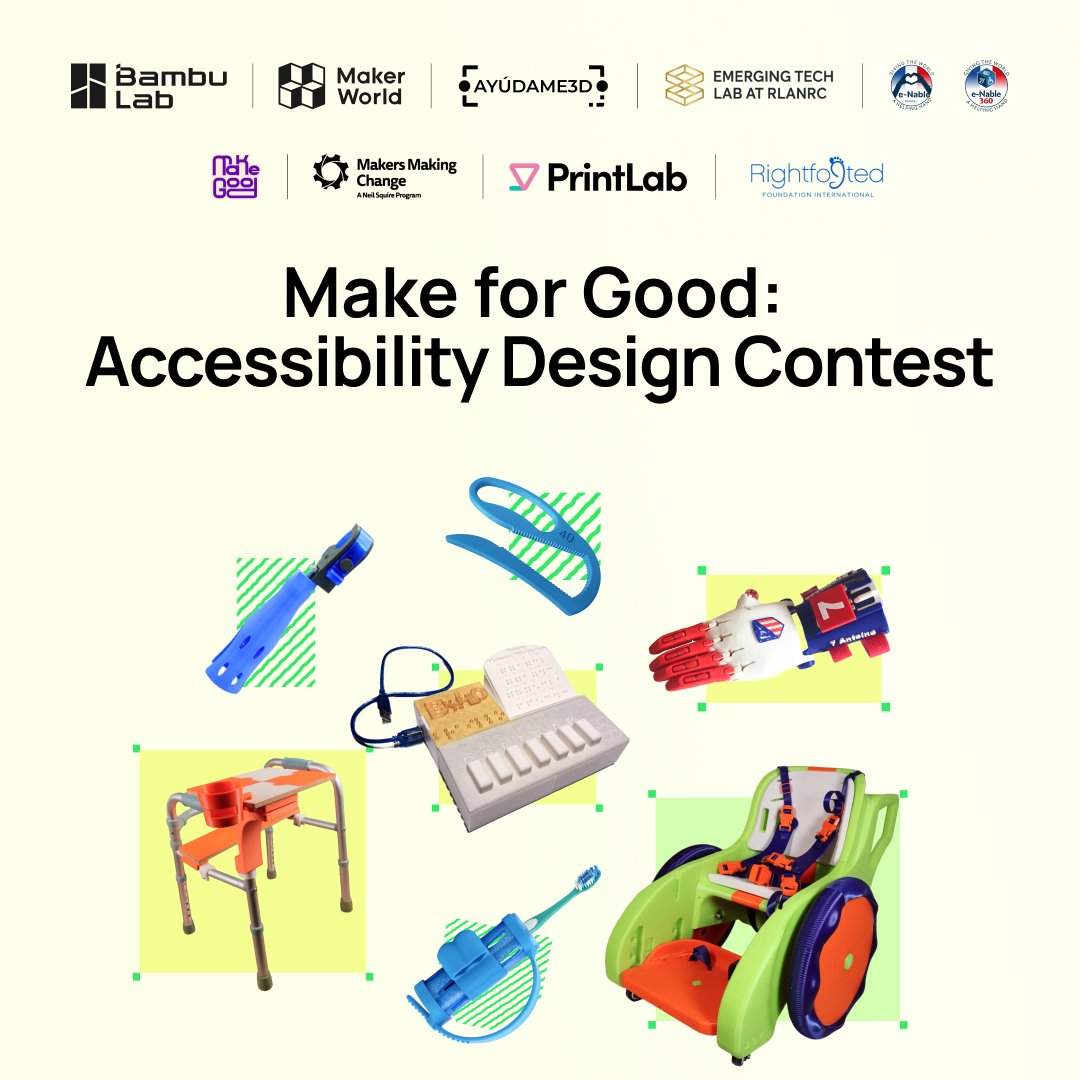
In a significant move to leverage the power of collaborative design for social impact, Bambu Lab’s popular 3D model platform, MakerWorld, has launched the "Make for Good: Accessibility Design Contest." This global initiative, running through December 2026, unites the platform’s rapidly growing user base with seven leading accessibility organizations, aiming to generate innovative 3D printed solutions for individuals with disabilities. The contest underscores a growing trend in the additive manufacturing industry, where technology is increasingly being harnessed to address real-world challenges and improve quality of life.
Launched in 2023, MakerWorld has quickly become a prominent hub for 3D model sharing, attracting a substantial community of designers and enthusiasts. By early 2026, the platform reported an impressive milestone of approximately 10 million monthly active users. This widespread engagement has prompted Bambu Lab to expand MakerWorld’s role beyond a simple repository of digital designs, transforming it into a dynamic ecosystem for collaborative problem-solving. The "Make for Good" contest represents a pivotal step in this evolution, channeling the collective creativity of millions towards a critical humanitarian cause.
The contest challenges makers worldwide to design and submit practical, 3D printable accessibility aids, guided by 24 specific design briefs. These briefs, meticulously developed by the partner organizations, are rooted in the lived experiences of individuals with disabilities, ensuring that the proposed solutions address genuine needs. The overarching sentiment of the initiative is captured on the contest page: "Everyone deserves tools that make everyday life a little easier. This contest invites you to turn real accessibility needs into practical, printable solutions." This ethos resonates deeply within the 3D printing community, which has a long-standing history of contributing to assistive technology development.
A History of 3D Printing in Assistive Technology
The application of 3D printing in creating custom assistive devices has been a burgeoning field for years. Individuals and organizations have consistently turned to additive manufacturing to produce bespoke solutions that cater to unique needs, ranging from simple modifications for daily tasks to complex adaptive equipment. Examples abound: customized grips for utensils to aid those with tremors, specialized attachments for gaming controllers, adaptive tools for individuals with limited hand function, and even prosthetic limbs designed with personalized aesthetics and functionality. This history of innovation sets a strong precedent for the "Make for Good" contest, building upon a foundation of community-driven problem-solving.
The contest’s design briefs are not abstract concepts; they are born from direct collaboration with individuals facing daily challenges. Each brief provides a comprehensive overview, detailing the context of use, target user demographics, specific design goals, existing solutions (and their limitations), and user preferences. These detailed requirements ensure that the designs submitted are not only technically feasible but also highly relevant and user-centric. Among the diverse range of needs highlighted are a foot-operated bike helmet buckle, an adaptive car key turner, a toe-operated toothpaste squeezer, and a customizable wheelchair storage system, illustrating the breadth of everyday challenges that can be addressed through innovative 3D printing.
Collaborating for Impact: The Partner Organizations
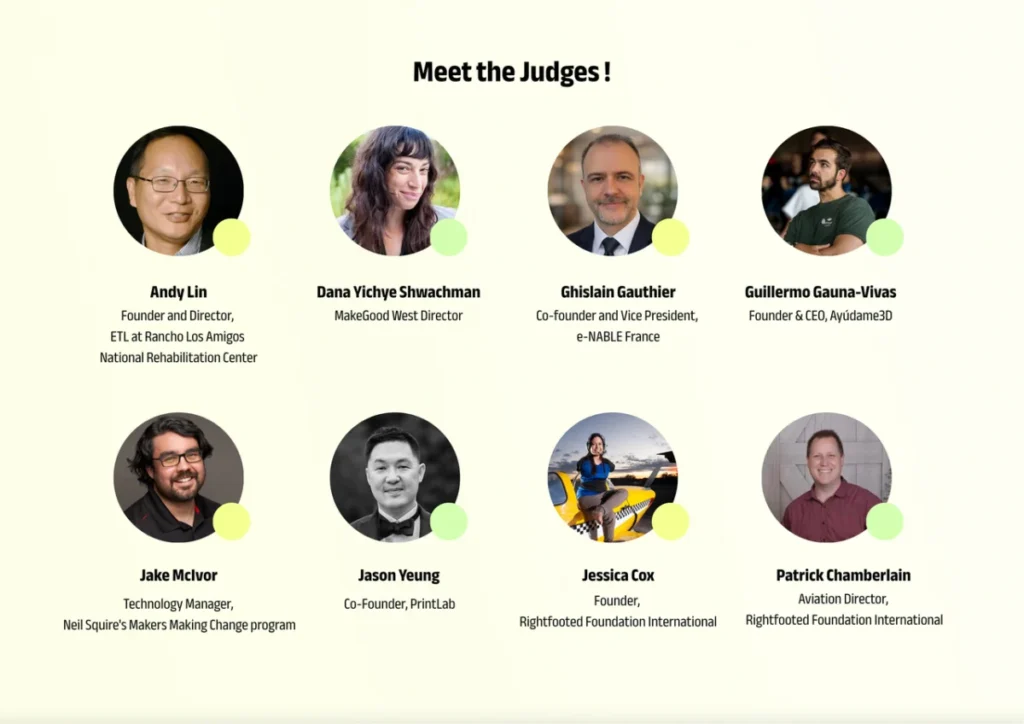
The "Make for Good" contest is spearheaded by Bambu Lab in partnership with seven distinguished accessibility organizations, each bringing unique expertise and a deep understanding of user needs. These partners are instrumental in defining the design challenges and evaluating the submissions.
-
Ayúdame3D (Spain): Since 2017, Ayúdame3D has been a pioneer in delivering 3D printed assistive devices, referred to as "trésdesis" (a portmanteau of "three" and "disability"), to over 1,000 individuals across more than 70 countries. For this challenge, Ayúdame3D has specifically requested designs for a tool that enables ponytail tying with one hand and a toothbrush that can be held without requiring a pinch grip. Their extensive experience highlights the global demand for such personalized solutions.
-
E-Nable France: As part of the expansive global E-Nable community, E-Nable France focuses on providing 3D printed prosthetic hands and arms. Their contribution to the "Make for Good" contest is a call for a one-handed kitchen toolkit designed to facilitate independent cooking. This initiative directly addresses the need for greater autonomy in daily living activities for individuals with upper limb differences.
-
MakeGood (U.S.): This nonprofit organization is dedicated to delivering free, custom assistive technology to people with disabilities, exemplified by their work on projects like the Toddler Mobility Trainer. For the current contest, MakeGood seeks innovative designs for a pickleball paddle holder tailored for individuals experiencing weakened hand and arm musculature.
-
PrintLab (UK): Known for its educational offerings in 3D CAD and 3D printing, PrintLab has previously organized its own successful assistive technology design challenge, the "Make:able Challenge." For the MakerWorld contest, PrintLab is focusing on a unique challenge: designing a tabletop game that can be enjoyed by a young individual with cerebral palsy alongside their friends, promoting social inclusion and recreational opportunities.
-
Makers Making Change (Canada): This program, operating under the Neil Squire Society, acts as a vital bridge connecting volunteer makers with disabled individuals requiring assistive technology. Their requests for the "Make for Good" challenge are multifaceted, including a guitar pick that remains secure with a limited grip, a specialized knitting needle support for stroke patients, and an aid for managing marker caps with one hand.

-
Emerging Tech Lab (ETL) at Rancho Los Amigos National Rehabilitation Center (U.S.): The ETL functions as an innovation hub, collaborating with rehabilitation professionals and individuals with disabilities to create practical assistive devices using 3D printing and other digital fabrication methods. Their focus includes devices that eliminate the need for squeezing grips, such as reaching tools.
-
Rightfooted Foundation International (RFI) (U.S.): Founded by Jessica Cox, who was born without arms and navigates daily life using her feet, RFI champions individuals without arms. The organization focuses on practical tools, skill development, education, and advocacy. For this challenge, RFI has posed specific needs arising from Cox’s personal experiences: an aid for putting on the second sock after the first is on, addressing the loss of friction, and a more convenient method for cleaning up after a service dog, as current methods require holding the bag precariously.
Addressing Specific Needs: Design Briefs in Detail
The design briefs submitted by these organizations offer a granular look at the everyday hurdles faced by individuals with disabilities. For instance, the request for a foot-operated bike helmet buckle addresses a common difficulty for individuals with limited hand dexterity, who may struggle with the small clasps. Similarly, the adaptive car key turner aims to simplify a routine task that can become a significant obstacle for those with reduced grip strength or mobility in their hands. The toothpaste squeezer designed for toe operation is a testament to the ingenuity required to adapt common items for different functional abilities.
The complexity of needs varies, with some requests focusing on simple, single-function aids, while others envision more comprehensive systems. The customizable wheelchair storage system, for example, requires a design that can be adapted to various wheelchair models and user preferences, highlighting the importance of modularity and personalization in assistive technology.
Timeline and Judging Process
The "Make for Good: Accessibility Design Contest" commenced with its launch and will continue accepting submissions until November 15th, UTC. Following the submission deadline, a rigorous judging process will commence. Judges from each of the participating organizations will meticulously review the entries. A shortlisted group of designs will then undergo a critical phase of real-world testing. Selected models will be 3D printed and provided to users with disabilities for hands-on evaluation. The feedback gathered from these testing sessions will be a pivotal factor in determining the final winners. This iterative process, involving user feedback, is crucial for ensuring that the winning designs are not only innovative but also practical and truly beneficial.
Broader Implications and Community Impact
The "Make for Good" contest, by utilizing the expansive reach of MakerWorld, has the potential to foster a deeper sense of empathy and understanding within the maker community regarding the daily barriers faced by people with disabilities. The sheer volume of participants expected, drawn from MakerWorld’s 10 million monthly active users, significantly increases the likelihood of discovering groundbreaking solutions. Furthermore, the collaborative nature of the platform encourages knowledge sharing and the development of open-source designs, which can be replicated and adapted globally.
The organizations involved are committed to amplifying the contest’s reach. They will actively promote the challenge within their respective countries and beyond, offering support and resources to participants. Ayúdame3D and RFI, for example, plan to distribute winning devices to communities worldwide, extending the impact beyond the contest itself. The ETL’s involvement ensures that the designs are sensitive to the everyday environments and lived experiences of the intended users. PrintLab’s provision of a comprehensive "Challenge Toolkit," originally developed for its "Make:able Challenge," and Makers Making Change’s "OpenAT Design Guide" and templates, offer valuable resources to guide makers in their design process, ensuring a focus on practical, open-source assistive technology.
Awards and Recognition
The "Make for Good" contest is structured to recognize a wide range of contributions, moving beyond a single winner to celebrate diverse achievements. A total of 618 winners are slated to be recognized. All winning files will be integrated into open design libraries and disseminated through established volunteer networks, maximizing their accessibility and utility.
Specifically, 14 individuals will receive the UGC Award (Social Media and MW Community) consisting of 100 MakerWorld points. An additional 80 participants will be honored with Shortlist Awards, each receiving 500 MakerWorld points. Furthermore, 500 individuals will earn the "Make For Good Recognition" along with a MakerWorld Achievements Badge. The pinnacle of the awards will be the 24 Grand Prize Winners, with one winner selected for each design brief. These individuals will receive a highly coveted Bambu Lab A1 Combo 3D printer, empowering them to continue their contributions to the field of assistive technology.
The initiative highlights that the challenges addressed are often overlooked by those without disabilities. The simple act of putting on a sock or picking up a dropped item can require extraordinary effort for individuals with certain impairments. As Qianye, Creator Operations at MakerWorld, aptly stated, "These are not hypothetical users. Jessica already walks her dog. Someone in a ward at Rancho already drops something and has to ask a stranger to pick it up. The question for makers is very small and very specific: can you print the missing piece so that person does not have to ask?" This sentiment encapsulates the core purpose of the "Make for Good" contest: to empower individuals by providing them with the tools to overcome everyday obstacles, thereby enhancing their independence, dignity, and overall quality of life through the innovative application of 3D printing technology.