Stellantis’s Street and Racing Technology (SRT) division has achieved a significant engineering feat, developing a working prototype system designed to eradicate turbo lag in its forced-induction engines. Dubbed "eBoost Air," this innovative technology employs an electric compressor to deliver immediate low-end boost, effectively bridging the crucial responsiveness gap that conventional exhaust-driven turbochargers often struggle to overcome. This advancement, detailed in a recent internal development report and observed in prototype testing, promises to redefine the driving experience for performance-oriented vehicles within the Stellantis portfolio.
The eBoost Air system is built upon three fundamental components: a sophisticated 48-volt electric compressor, an electronically actuated bypass valve, and a dedicated energy storage device. This intricate setup is strategically integrated upstream of the twin turbochargers within Stellantis’s potent 3.0-liter Hurricane High Output inline-six engine. During instances of immediate acceleration demands from a standstill or at low engine speeds, the electronically controlled bypass valve intelligently reroutes the intake air through the e-compressor. This proactive measure ensures that the engine receives a surge of compressed air without the delay typically associated with waiting for exhaust gases to spin the turbochargers to their optimal operating speed.
Bridging the Gap: The Mechanics of eBoost Air
The operational efficacy of the eBoost Air system is demonstrated by its ability to generate up to 10 PSI of boost pressure within an astonishingly brief 650 milliseconds. This rapid response allows the engine to achieve approximately 90 percent of its maximum torque almost instantaneously upon driver input. This pre-emptive air delivery by the electric compressor serves a dual purpose: not only does it provide immediate thrust, but it also effectively pre-spools the larger, exhaust-driven turbochargers. By the time the engine’s revolutions per minute (RPM) increase and sufficient exhaust pressure is generated to sustain independent boost, the bypass valve seamlessly transitions the airflow back to the conventional intake path, ensuring continuous and powerful acceleration.
Initial testing of the eBoost Air prototype has been conducted within a fifth-generation Jeep Grand Cherokee, a vehicle that already benefits from the considerable power of the Hurricane HO engine. In these prototype trials, the eBoost Air system has demonstrated its capability to operate in distinct bursts, typically lasting around three seconds. This duration is currently dictated by the limitations of the existing energy storage technology employed in the prototype. Beyond the palpable improvement in transient throttle response, the integration of these new hardware modifications, coupled with refined engine calibration, has resulted in substantial power increases when compared to the standard 550-horsepower Hurricane HO engine.
Quantifiable Performance Gains and Development Timeline
The performance enhancements observed in the prototype are striking. The eBoost Air-equipped engine is currently pushing an output of approximately 640 horsepower, a significant leap from the standard configuration. Torque figures have also seen a dramatic rise, climbing from the baseline 531 lb-ft to an impressive estimated 600 lb-ft. These gains are achieved concurrently with a slight reduction in the engine’s static compression ratio, a strategic adjustment that likely complements the more aggressive boost management and revised engine tuning employed in the prototype.
The swift development timeline of the eBoost Air system underscores the dedication and expertise within the SRT engineering department. Engineers successfully transitioned the concept from its initial ideation phase to a fully operational running prototype in a remarkably short span of just seven weeks. This accelerated development cycle suggests a clear and focused objective to bring this groundbreaking technology to fruition.
Future Prospects and Potential Applications
While the successful demonstration of the eBoost Air prototype is a significant milestone, Stellantis has yet to formally announce its production intentions for the system. The company has not definitively stated whether the eBoost Air technology will be integrated into future production vehicles, offered as part of aftermarket crate engine packages, or adapted for smaller engine applications, such as the Hurricane four-cylinder variant. The decision on its production rollout will likely hinge on a comprehensive evaluation of manufacturing costs, long-term reliability, regulatory compliance, and market demand.
Broader Context: The Evolution of Forced Induction
The pursuit of eliminating turbo lag is a long-standing objective in automotive engineering. Historically, engineers have explored various solutions, including twin-charging (combining a supercharger and a turbocharger), variable geometry turbochargers (VGT), and increasingly sophisticated engine management software. However, each of these approaches has presented its own set of compromises, whether in terms of complexity, cost, packaging, or the ultimate degree of lag elimination.
The eBoost Air system represents a potentially disruptive innovation in this evolutionary path. By leveraging the instantaneous power delivery of electric motors, it offers a more direct and potentially more efficient method of addressing the low-end torque deficit inherent in traditional turbocharging. The integration of a 48-volt electrical architecture, which is becoming increasingly prevalent in modern vehicles for supporting mild-hybrid systems and other electrical demands, provides a robust foundation for such an electric-driven boost solution.
Supporting Data and Industry Trends
The automotive industry’s ongoing focus on improving fuel efficiency and reducing emissions, while simultaneously enhancing performance, creates a fertile ground for technologies like eBoost Air. By enabling smaller displacement engines to deliver the power and responsiveness of larger naturally aspirated units, or by significantly boosting the output of existing engines, Stellantis could position its vehicles favorably in a competitive market.
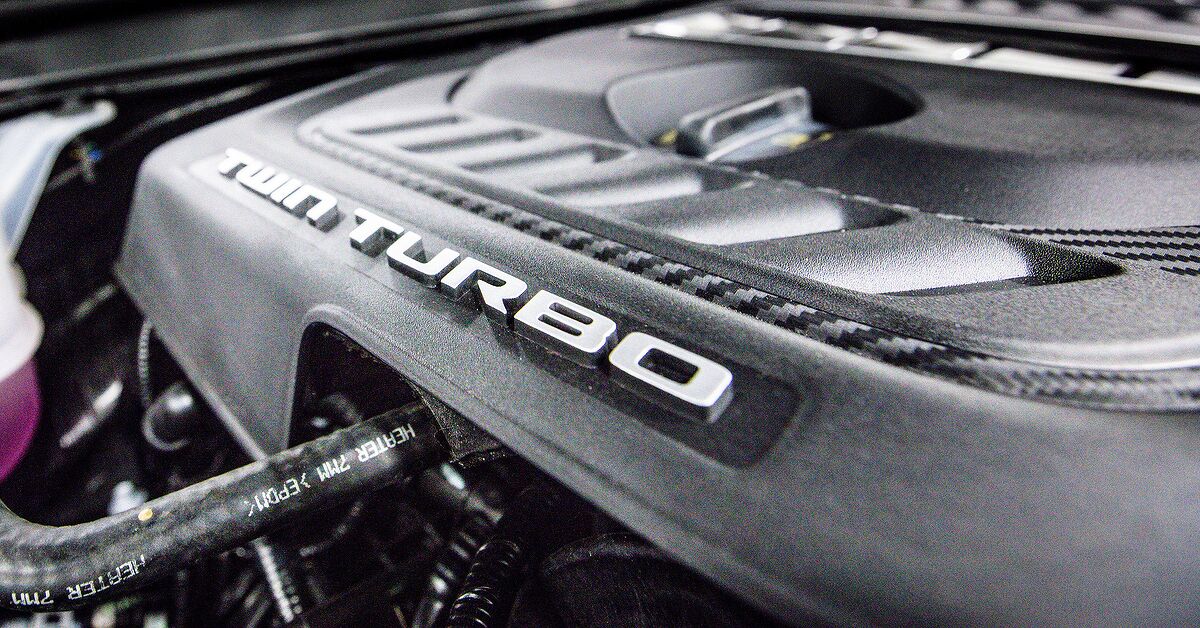
The 3.0-liter Hurricane HO engine itself is a testament to modern powertrain development, already producing 550 horsepower and 531 lb-ft of torque in its standard form. This engine, which debuted in models like the Jeep Grand Wagoneer and Ram 1500 TRX, is designed for high-performance applications. The eBoost Air system, by pushing this already formidable engine towards 640 horsepower and 600 lb-ft of torque, demonstrates the significant headroom for performance enhancement that this platform possesses.
Expert Analysis and Potential Implications
From an engineering perspective, the eBoost Air system addresses a fundamental thermodynamic challenge. Turbochargers, by their nature, rely on the kinetic energy of exhaust gases to spin. At low engine speeds, exhaust flow is insufficient to quickly spool the turbocharger, leading to the characteristic delay in power delivery. The electric compressor bypasses this limitation entirely, providing immediate air pressure. The subsequent "pre-spooling" of the exhaust turbochargers is a clever secondary benefit, ensuring a smoother transition and sustained power delivery as the engine revs up.
The implications of a successful production implementation of eBoost Air are far-reaching. For performance enthusiasts, it promises a more engaging and responsive driving experience, eliminating the frustrating pause between pressing the accelerator and feeling the surge of power. For manufacturers, it offers a pathway to achieve higher power outputs from smaller, potentially more fuel-efficient engines, a critical consideration in meeting increasingly stringent global emissions standards. Furthermore, it could differentiate Stellantis vehicles in a crowded automotive landscape, offering a unique technological advantage.
The energy storage aspect of the system is a key area for further development and potential cost reduction. Current battery technology and charging capabilities will dictate the duration and intensity of eBoost Air’s operation. As battery technology advances and the cost of high-performance electric components decreases, the system’s potential for wider application will undoubtedly increase.
Conclusion: A Glimpse into the Future of Engine Performance
The development of the eBoost Air system by Stellantis SRT represents a significant stride forward in the ongoing quest to optimize internal combustion engine performance. By ingeniously combining electric and exhaust-driven forced induction, SRT engineers have created a prototype that not only effectively eliminates turbo lag but also unlocks substantial power and torque gains. While the future production status of eBoost Air remains to be seen, its successful demonstration offers a compelling glimpse into the innovative technologies that will shape the driving experience of performance vehicles in the years to come. The automotive world will be closely watching Stellantis as they determine the next steps for this promising advancement.