Tesla, the pioneering electric vehicle manufacturer, has announced a significant integration of SpaceX’s Starlink satellite internet service directly into its upcoming Cybercab robotaxi. This development, revealed through a series of posts on the social media platform X, positions the Cybercab as potentially the first autonomous vehicle to leverage high-speed internet from space for its operations. However, the announcement has been met with a degree of bewilderment from industry observers and analysts, given Tesla’s long-standing emphasis on the self-sufficiency of its autonomous driving systems.
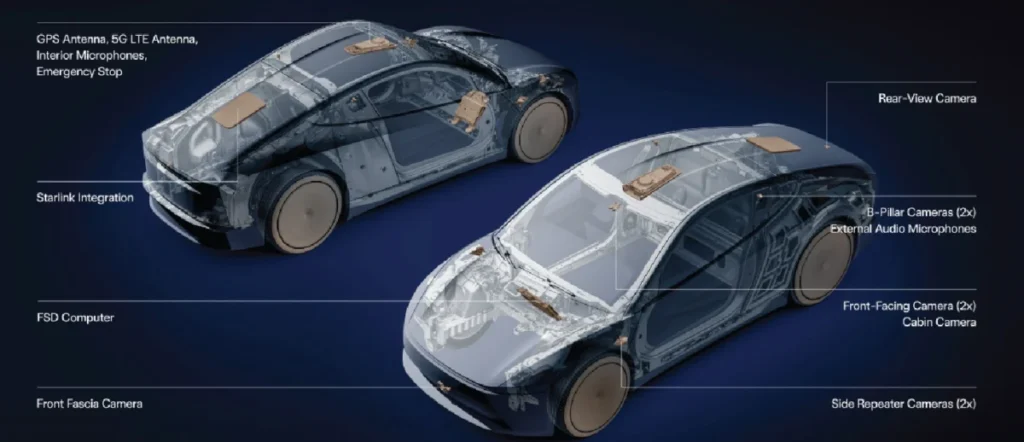
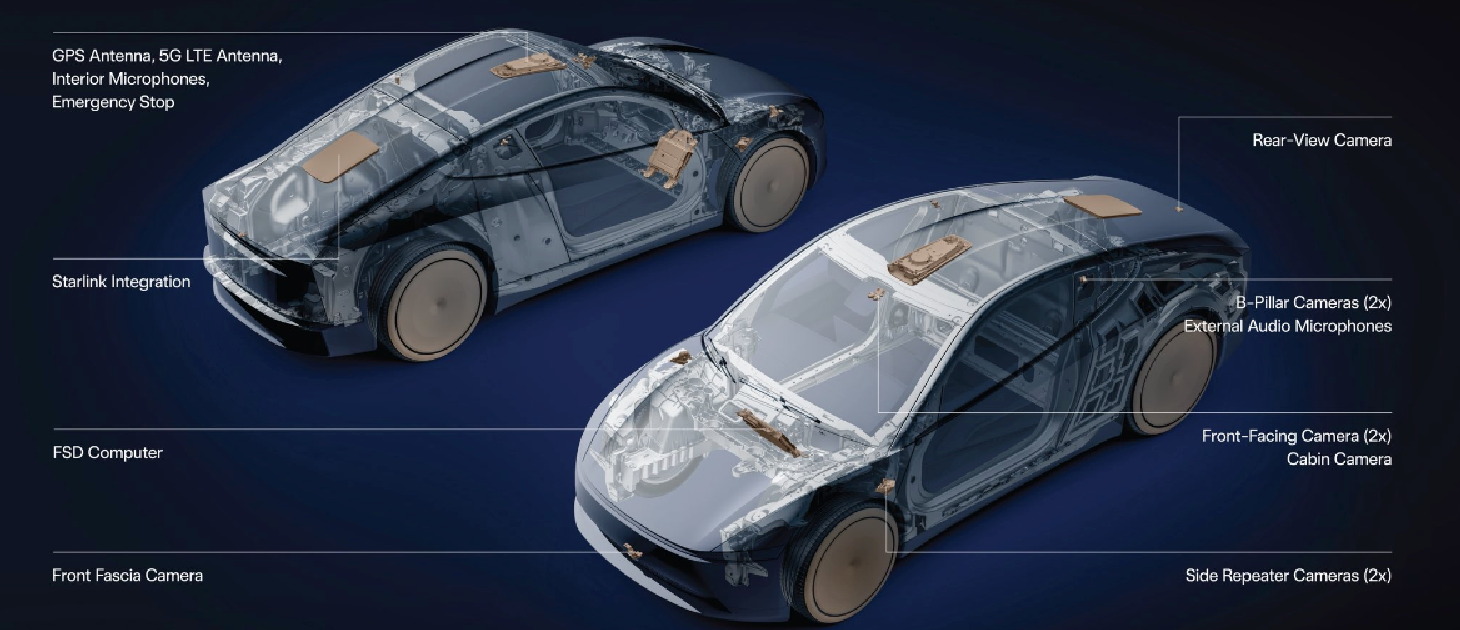
The integration was first highlighted by Starlink itself, with a post stating, "High-speed internet from space for the future of autonomous vehicles." Tesla followed with a more concise statement: "Starlink V5 directly integrated in Cybercab." Accompanying these announcements was a cutaway diagram of the Cybercab, clearly illustrating a Starlink antenna situated within the vehicle’s roof structure, adjacent to callouts for cameras and sensors. Notably, neither company has provided a detailed explanation for the necessity of this satellite connectivity, particularly for a vehicle designed to operate autonomously using its own onboard computing power.
Unpacking the Official Statements and the Underlying Question of Need
The brevity of the official announcements has fueled speculation. Starlink’s statement frames the integration as a forward-looking solution for autonomous vehicles, while Tesla’s post specifically mentions "Starlink V5," suggesting a particular version or iteration of the satellite technology. The accompanying graphic serves as visual confirmation, depicting the Starlink integration as a distinct component within the vehicle’s architecture.
The immediate question arising from this announcement, as raised by prominent figures in the automotive and tech sectors, is the fundamental "why." If Tesla’s self-driving system, known as Autopilot and Full Self-Driving (FSD), operates entirely on the vehicle’s AI hardware – in the Cybercab’s case, the AI4 compute platform – and is designed to function without a constant data connection, then the need for a satellite internet uplink becomes less apparent for core driving functions. Tesla’s philosophy has consistently centered on creating vehicles that can perceive, plan, and execute driving maneuvers independently, rendering them resilient even in areas with poor or no cellular reception. This independence is often cited as a key differentiator and safety feature.
The implications of this integration are further complicated by the current production status of the Cybercab. Reports indicate that Tesla is actively building the Cybercab even before it has received regulatory approval for widespread commercial deployment or autonomous operation without a human driver. This timing raises questions about whether the Starlink integration is a feature intended for current production models or a planned enhancement for future iterations. The lack of explicit clarification leaves room for interpretation, potentially indicating a long-term vision rather than an immediate operational requirement.

Tesla’s Autonomous System: A Foundation of Onboard Intelligence
To understand the industry’s perplexity, it’s crucial to revisit the operational principles of Tesla’s self-driving technology. The system relies on a sophisticated suite of cameras, radar, and ultrasonic sensors that feed data into the vehicle’s powerful onboard computer. This computer processes the information in real-time, creating a 3D representation of the environment, identifying potential hazards, and making driving decisions. The system is architected to function as a closed loop, minimizing reliance on external data streams for its primary driving tasks. This design choice is fundamental to Tesla’s approach, ensuring that the vehicle remains operational even if its communication link is interrupted.
While the core driving function is designed to be connection-agnostic, connectivity does serve several important ancillary purposes for Tesla vehicles. These include:
- Live Routing and Navigation: Real-time traffic updates and dynamic route adjustments enhance efficiency and passenger experience.
- Fleet Dispatch and Management: For commercial applications like robotaxis, a robust communication link is essential for receiving ride requests, managing vehicle availability, and optimizing fleet deployment.
- Remote Support: In the event of a vehicle malfunction or breakdown, connectivity allows Tesla service teams to diagnose issues remotely, potentially guiding the vehicle to a service center or providing remote assistance.
- Over-the-Air (OTA) Updates: Crucial software updates that enhance performance, introduce new features, and address security vulnerabilities are delivered wirelessly.
- Passenger Entertainment: Streaming services and in-car infotainment systems depend on a stable internet connection.
The introduction of Starlink connectivity could theoretically enhance the reliability of these secondary functions, particularly in areas where cellular coverage is historically weak or inconsistent. Starlink’s network of satellites offers a broader reach, potentially providing a more consistent connection in remote or rural environments where cellular towers are sparse.
The Geographical Disconnect: Where Cybercabs Operate Today
However, the current operational footprint of Tesla’s robotaxi service presents a significant counterpoint to the rationale for satellite internet. Tesla’s unsupervised robotaxi service is presently confined to densely populated urban areas within specific geofenced zones. These initial deployment areas include parts of Austin, Houston, and Dallas in Texas, along with a limited mapped region in Miami, Florida. These are precisely the types of locations where cellular infrastructure is typically robust and widespread, offering high-speed data services.
The primary advantage of satellite internet, such as Starlink, lies in its ability to bridge connectivity gaps in rural, remote, and underserved areas where terrestrial cellular networks struggle to provide reliable service. Tesla’s robotaxi operations, as they stand today, are not operating in these challenging environments. This creates a scenario where the satellite link is being integrated to solve a connectivity problem that the Cybercab, in its current operational context, does not encounter.
This apparent mismatch raises questions about the immediate practical benefits of the Starlink integration for the current phase of Cybercab deployment. While the technology itself is advanced and promises future potential, its application in the existing operational framework appears to address a problem that is either non-existent or minimal.
A More Probable Explanation: Business Synergies and Financial Considerations
Given the apparent lack of immediate operational necessity, many analysts are looking towards a simpler, albeit potentially more complex, explanation: the intricate web of business interests interconnected by Elon Musk, the founder and CEO of both Tesla and SpaceX. This perspective suggests that the integration of Starlink into the Cybercab fleet could be driven by strategic business objectives rather than purely by operational requirements.
Elon Musk has a history of fostering synergies between his various ventures. Tesla has made significant financial investments in xAI, an artificial intelligence company founded by Musk. SpaceX subsequently absorbed xAI in a substantial deal, a move that has been analyzed as potentially benefiting Tesla’s financial position and strategic direction. There has also been considerable discussion and scrutiny regarding a potential merger or closer alignment between Tesla and SpaceX, a scenario that some observers have characterized as a pattern of "self-dealing" involving Musk’s companies, potentially facilitating substantial financial transactions between them.
In this context, bolting a Starlink terminal into every Cybercab represents a potential recurring revenue stream for SpaceX, paid for by Tesla’s burgeoning robotaxi fleet. This would create a direct financial benefit for SpaceX, which is actively expanding its Starlink service. For Tesla, it could be seen as an investment in securing a future connectivity solution, even if its immediate utility is questionable. This interpretation aligns with a pattern of Musk leveraging the resources and customer base of one company to bolster another, particularly when they share common leadership and strategic interests.
Electrek’s Analysis: A Glimpse into Future Redundancy or a Preemptive Business Move?
From the perspective of ensuring operational reliability, the integration of a satellite fallback for a fully autonomous vehicle that loses its cellular link in a dead zone is a legitimate and forward-thinking goal. Redundancy in communication systems is paramount for the safe and continuous operation of any fleet, especially one composed of vehicles without human oversight. If a Cybercab were to encounter an unexpected loss of cellular service in a critical situation, a satellite link could potentially maintain essential communication, allowing for safe navigation or a controlled stop.

However, the current reality of Tesla’s robotaxi operations appears to significantly lag behind this potential need. Tesla is currently operating a relatively small number of vehicles in a limited number of urban centers that are already well-served by cellular networks. The company has not yet reached a stage where connectivity issues pose a significant impediment to its existing operations.
The announcement of a satellite integration at this juncture, for a vehicle that is not yet widely deployed and whose core driving functionality does not depend on external connectivity, could be interpreted as a proactive measure. It preemptively addresses a future problem that may not materialize for years, while simultaneously creating a new revenue stream for another of Elon Musk’s companies. This move, while technically feasible and potentially beneficial in the long term, raises questions about the prioritization of resources and the strategic timing of such integrations.
The broader implications of this partnership extend beyond mere technical integration. It signals a deepening relationship between Tesla and SpaceX, two of the most prominent companies in Musk’s portfolio. As Tesla continues to push the boundaries of autonomous driving and electric mobility, and SpaceX aims to revolutionize global internet access, their collaboration on the Cybercab project could pave the way for further innovations and business models that blur the lines between transportation and satellite communications.
As the autonomous vehicle landscape matures, the need for robust and ubiquitous connectivity will undoubtedly increase. While the immediate necessity of Starlink for the current Cybercab fleet remains debatable, the integration serves as a clear indication of Tesla’s commitment to exploring all avenues to ensure the future success and reliability of its ambitious robotaxi service. The long-term impact will depend on Tesla’s ability to scale its robotaxi operations into areas where Starlink’s unique capabilities truly shine, and on the continued evolution of both autonomous driving technology and satellite internet infrastructure.